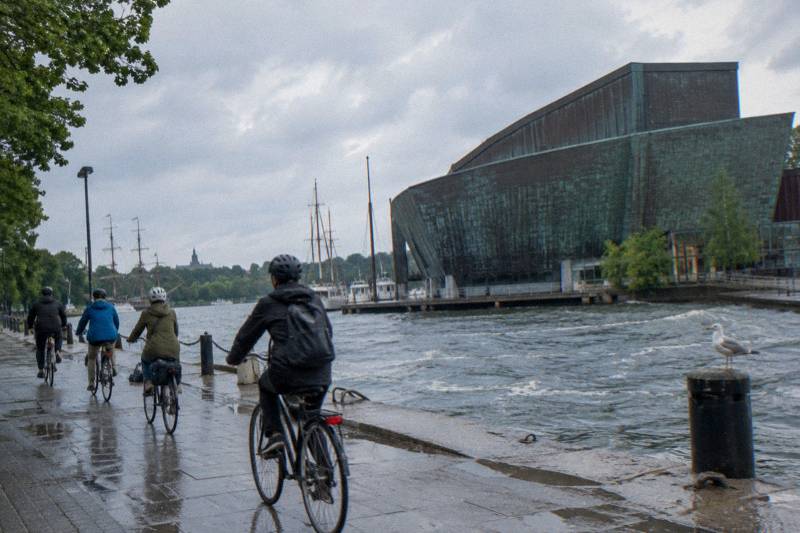
Are There Self-Guided Bike Tours In Sweden?
No stand-alone self-guided day tour is sold among Stockholm's guided rides, but Sweden's cycle network makes self-guiding easy. Here is what exists and how to plan it.
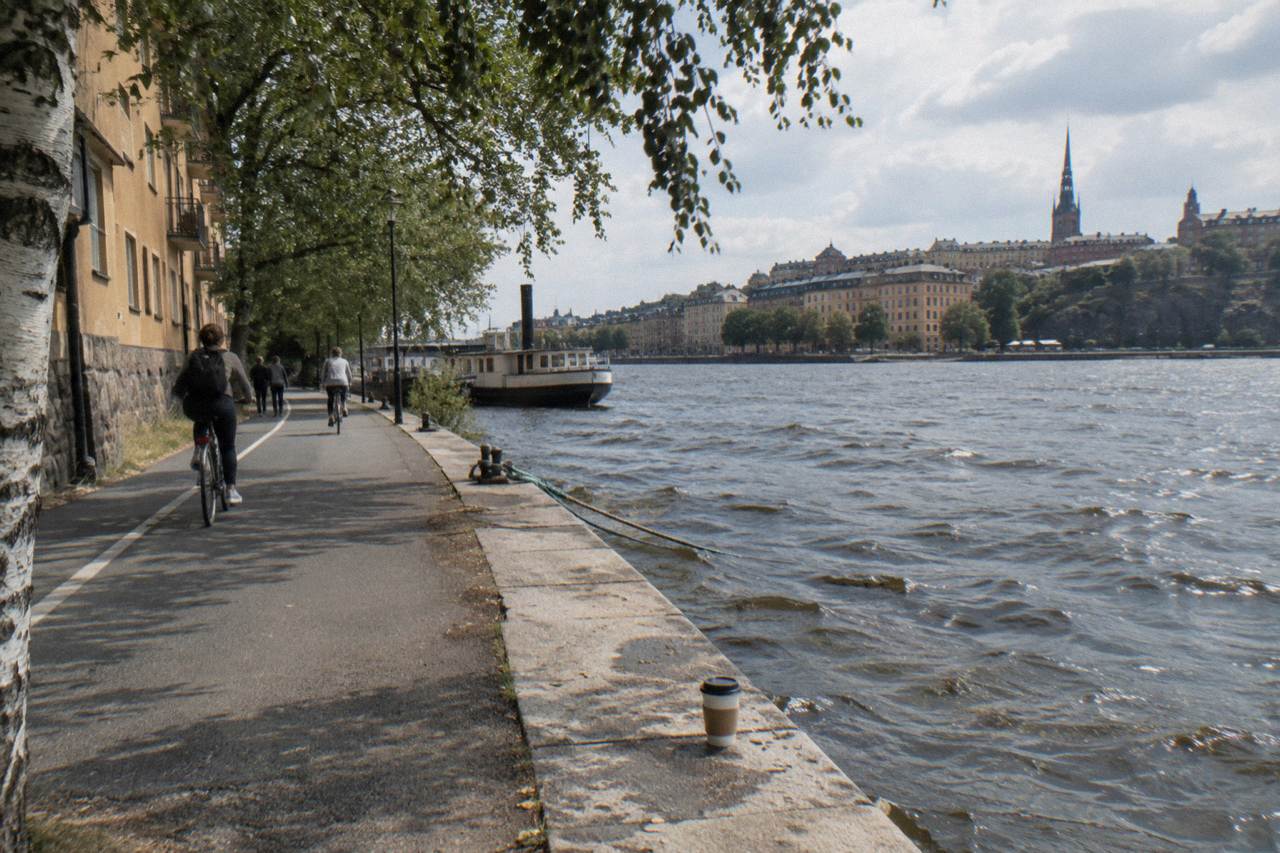
No. No operator in Stockholm's current guided-ride selection sells a stand-alone self-guided bike day tour. What Sweden sells instead is guided rides, 2 to 5 hours long, plus a cycle network of roughly 1,170 km around Stockholm that makes self-guiding entirely practical. Many riders do both: one guided day to learn the layout, then their own route on day two.
The short answer surprises people who have cycled in the Netherlands or Denmark, where self-guided day packages are a standard product. In Sweden the commercial offer clusters around guided group rides, and the genuinely self-guided products that do exist are multi-day cycling holidays in the archipelago region, booked directly with holiday specialists rather than as a city day tour. For a single day in Stockholm, the realistic split is a guided ride or a route you build yourself.
That second option is more attractive than it sounds. Stockholm has about 117 mil of cycle routes, in the city's own counting: dedicated cycle lanes, combined pedestrian and cycle paths, and marked cycle fields on regular streets. The city has also been investing. New wider lanes opened on Vasabron in June 2026, Sveavägen got 2.5 m wide cycle lanes in May 2026, and a widened canal-side path at Riddarholmen opened two months ahead of schedule. The infrastructure is there; the missing piece is a commercial wrapper, and that wrapper has not appeared in the current selection of rides.
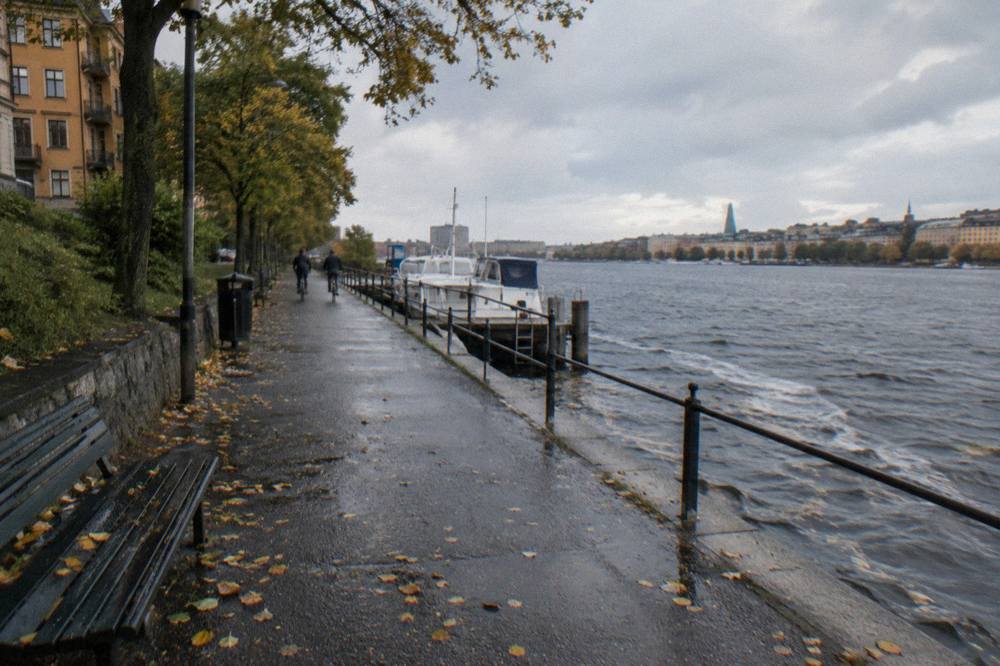
If your heart is set on riding without a guide, the practical answer is a two-part plan. Book one of the guided rides, such as the Stockholm guided bike tour, a 2 to 3 hour shared ride, or the City Bike Tour with Premium Bikes, a 3 hour option on higher-spec machines. Then take what you learned, rent again, and ride your own loop the next morning. The guided half de-risks the city; the self-guided half gives you the freedom you came for.
What Does A Guided Stockholm Ride Actually Include?
Guided rides in Stockholm run 2 to 5 hours, mostly as shared group tours, with the bike provided and a helmet included on most options, and a guide setting the route and pace. The 3 hour premium-bike option and the 5 hour forest ride with sauna and lunch sit at the two ends. Where a detail such as a stop list is not named, check the booking page.
The core city product is the guided bike tour, a 2 to 3 hour shared ride through the central islands. The listing describes a guide-led route, and the inclusion flags show bike and helmet provided. Because it is shared, you ride with whoever books that slot, which is part of the appeal for solo travellers and part of the constraint for anyone wanting to set their own pace. It is also the ride most often recommended as a first-day orientation: you finish with a mental map of Norrmalm, Gamla Stan, Södermalm and Djurgården that no paper guide quite delivers.
The premium-bike version stretches to 3 hours and, as the name says, puts you on better machines. It is the pick for riders who already know they will feel the difference between a basic rental and a proper city bike over three hours. The forest tour is the outlier: 5 hours, a sauna, and a homemade lunch, taking you out of the city entirely. These are three genuinely different days, which matters when you are deciding what to book before self-guiding on your own.
How Would You Self-Guide Using Stockholm's Cycle Network?
You self-guide by renting a bike and using the marked network, roughly 1,170 km of cycle routes in Stockholm alone, of which about 36 mil are primary routes signed as continuous corridors. The city's first signed "Stockholm cycle line", the Hässelby strand into the centre, opened in May 2026 with distance markings and painted lanes, so route-following without a guide is getting easier every season.
The network is the reason self-guiding works here at all. The city's own cycling portal counts the routes and publishes the primary corridors, and the signage programme is expanding: the first line of the new signed network was inaugurated in May 2026 with new signs, distance markers and road markings. That is the kind of infrastructure that lets a visitor follow a corridor without a route app open the whole time.
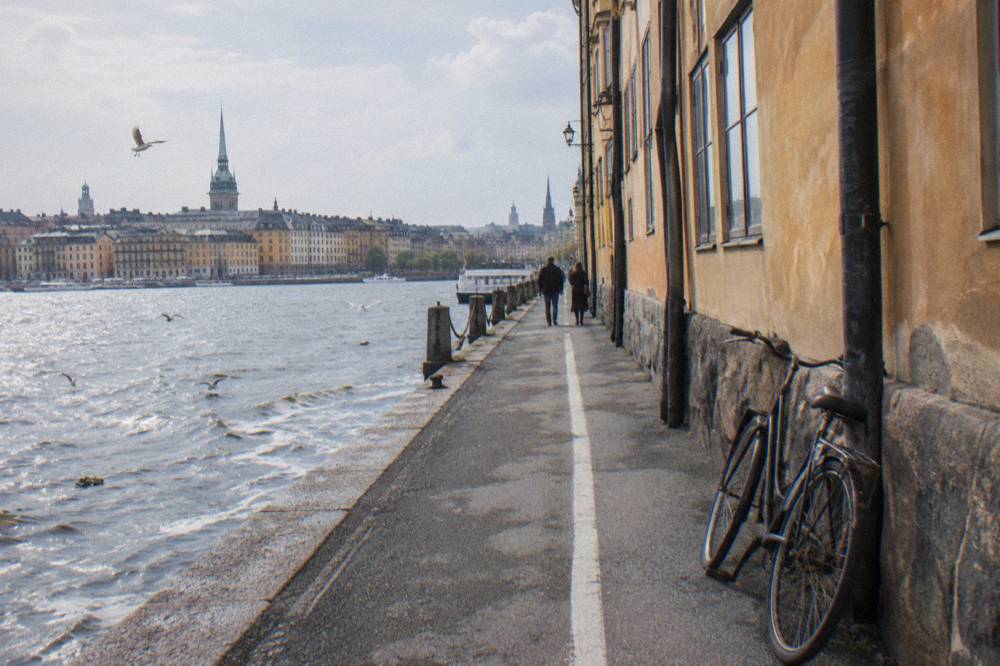
A realistic self-guided day in Stockholm stitches together the islands: the central grid, the Gamla Stan shoreline paths, the bridges to Södermalm, and the royal park on Djurgården, which the city's own guidance recommends bicycles for exploring. Nothing in that loop needs a guide, a ticket or a reservation. What it needs is a rented bike, a basic grasp of the local rules, and the awareness that Gamla Stan's inner pedestrian streets require riding at walking pace and yielding to everyone on foot. For more on that district, see the Gamla Stan riding guide.
Maintenance is a real strength. The city sweeps and salts around 38 mil of cycle paths through the winter, enough to keep bare-path riding possible down to about -6 C, according to the city's traffic information service. Winter cycling is not a fringe activity here; it is a planned, budgeted service, which is worth knowing if your trip falls outside the summer peak.
Can You Combine Cycling With Ferries And Public Transport?
Yes, with limits. Regular bikes are never allowed on SL buses, the metro or the city trams, but they are permitted on commuter trains and several light-rail lines outside weekday rush hours, and on SL's commuter boats including the Djurgården ferry, subject to space, at no extra charge for a standard bike. E-bikes face tighter rules and must sit on deck.
The ferry rule is the one self-guided riders use most. The Djurgården ferry is an ordinary SL commuter boat, and SL's rules state plainly that taking a bike on the commuter boats costs nothing extra, with staff judging whether there is space. That single rule turns a self-guided day into a loop: ride out along one shore, ferry back across the water with the bike, and continue from a different part of the city. E-bikes must be placed outdoors on deck, and if deck space runs out you remove the battery and use the deck container.
| Transport | Regular bike | E-bike | Notes |
|---|---|---|---|
| SL buses, metro, city trams | Not allowed | Not allowed | Full-size bikes prohibited at all times |
| Commuter trains (pendeltåg) | Allowed off-peak | Restrictions apply | Cannot board or alight at some central stations |
| Tvärbanan light rail | Allowed off-peak, use stands | Not allowed at any time | Non-electric bikes only |
| Commuter boats incl. Djurgården ferry | Allowed subject to space | Allowed, on deck | No extra charge for a standard bike |
The rush-hour exclusions matter for planning. A self-guided morning that ends near a commuter rail station at 08:30 does not let you board with a bike; the same station at 10:00 does. Check the operator's current conditions before building a tight itinerary, because the off-peak windows are defined by the transport authority and can change between seasons.
One caveat from the table deserves a second look: even off-peak, commuter trains do not let bikes board or alight at some central stations, so a ride that finishes near one of them may need a short extra stretch to a station where boarding with a bike is allowed. For e-bike riders the rail options are narrower still: Tvärbanan bars e-bikes at any time, and commuter trains apply their own e-bike restrictions, which leaves the boats, with e-bikes outdoors on deck, as the most dependable leg of an electric loop.
The same idea scales up beyond the city water. Out in the archipelago, Waxholmsbolaget's boats apply a comparable rule: regular bikes travel free when there is space, and e-bikes go on deck. That is what makes the longer self-guided trips practical, since a typical island hopping itinerary runs to about 220 km across 5 riding days, with ferries doing the island-to-island links. Back in the city, roughly 1,170 km of cycle routes spanning dedicated paths, shared paths and cycle lanes leaves plenty of choice for the outbound shore leg before the ferry home.
Shared e-bikes shift the maths one more time. Voi and Bolt were announced on 19/12/2025 as the operators of Stockholm's shared bicycle e-bike service, so a rider who runs into a closed rule, on a tram or at a full deck, can simply finish the ride there rather than carry the bike anywhere.
What About Multi-Day Self-Guided Cycling Holidays?
Genuine self-guided products do exist in Sweden, but as multi-day cycling holidays rather than city day tours. Specialist holiday operators run self-guided archipelago packages with daily departures from mid-May to mid-September, with luggage transfers and ferry crossings built into the itinerary, booked directly with the operator rather than as a same-day city product.
This is the honest nuance in the answer. If you search for self-guided cycling in Sweden and find pages of results, most of them are these holiday packages: five or so riding days through the archipelago, staying in guesthouses, with the operator moving your luggage between stops. The 2026 season ran from mid-May to mid-September with daily departures on some programmes, and the same operators publish identical 2027 season windows, which tells you the model is established rather than experimental.
What these holidays are not is a drop-in replacement for a half-day city ride. They are a week-long commitment, priced per person per package, and their logistics (ferries, beds, luggage) are the product. For a visitor with two days in Stockholm, the guided-then-independent plan from earlier is the better fit. For a visitor with a week, the archipelago packages are the closest thing Sweden has to the classic self-guided touring product, and worth researching directly with the specialists who run them.
When Is The Best Season To Cycle In Sweden?
The main cycling season runs May to September, when Stockholm's average daily highs sit between 16 and 24 C and daylight stretches from 15 to 18.5 hours per day. June has the longest days at about 18.5 hours; July is the warmest month; and August is the wettest of the summer at about 66 mm of rain on the 1991 to 2020 normals. Winter riding is possible but is a different kind of trip.
The seasonal shape matters more for self-guided riding than for guided tours, because you are the one deciding when to set out and how far to go. On the SMHI 1991 to 2020 normals, Stockholm's summer is milder than many visitors expect: July averages a high of 23.6 C against a low of 14.8 C, and even September holds a 16.6 C average high with nearly 13 hours of daylight. The trade-off is rain: July and August both average above 61 mm, so a summer week should include a rain plan, and the site's guide to riding in the rain covers what that means in practice.
| Month | Avg high C | Avg low C | Precip mm | Daylight hours |
|---|---|---|---|---|
| May | 16.5 | 7.1 | 34.0 | 17.0 |
| June | 20.8 | 11.6 | 61.7 | 18.5 |
| July | 23.6 | 14.8 | 61.5 | 17.7 |
| August | 22.1 | 14.2 | 66.2 | 15.5 |
| September | 16.6 | 10.2 | 53.3 | 12.8 |
Shoulder months reward the flexible. April climbs to a 10.7 C average high with 14.5 hours of daylight and less rain than midsummer, and October at 10.1 C is still rideable with layers. The first snow in Stockholm typically falls in late November on the long-run statistics, and from there the story changes: the city salts its cycle network through winter, so locals keep riding, but a visitor on a rental bike in January is signing up for a 1 C average high and seven hours of daylight. Seasonal rental counters reflect this, with some opening only from May to September.
What Are The Rules You Need To Know Before Riding?
The rules that matter most: helmets are compulsory only for riders under 15, lights and reflectors are required when riding in darkness, a bell and working brakes are required at all times, and on pedestrian streets such as Gamla Stan's core you must ride at walking pace and yield to pedestrians. Fines run from 500 kr for small equipment offences to 1,500 kr for running a red light.
For a self-guided rider these rules are not footnotes; they are the difference between a smooth day and a fine. The Swedish police publish the fine levels, and they are enforced rather than theoretical. The equipment rules are the easiest to satisfy: any legitimate rental bike will have a bell and brakes, and from autumn onwards you should confirm the lights work before an evening ride, because riding unlit in darkness is itself a 500 kr fine. Money figures are in Swedish kronor; these are regulatory fines, not tour prices, and do not convert them.
| Rule | Requirement | Fine if breached |
|---|---|---|
| Helmet | Compulsory under 15 only | Parents can be fined for carrying a child without one |
| Lights and reflectors | Required in darkness | 500 kr |
| Bell and brakes | Required at all times | 500 kr |
| Riding on a pavement | Use the cycle lane where one exists | 500 kr |
| Pedestrian street speed | Walking pace, yield to pedestrians | 1,000 kr above walking pace |
| Red light | Stop | 1,500 kr |
Two Stockholm-specific points deserve emphasis. E-scooters are banned in Gamla Stan except along two named waterfront streets, and cycles on the district's pedestrian streets must proceed at walking pace, so plan your Old Town passage as a slow roll or a walk beside the bike. And if you are riding an e-bike, the legal definition matters: pedal assistance cutting out at 25 km/h and a motor of at most 250 W continuous rated power keeps it classified as an ordinary bicycle under the transport agency's rules, which is exactly what the rental fleets and the city's shared e-bike services operate within. The shared service itself is run commercially by Voi and Bolt, announced by the city in December 2025, but shared bikes are a paid service, not a free one.
How Do You Choose Between Guided And Self-Guided?
Choose a guided ride if you want the route, the pacing and the equipment handled, or if you have under two days in the city. Choose self-guiding if you have a third day, want to linger, or want to reach places a group loop skips. For most first-time visitors the strongest plan is one guided day followed by one independent day, because the guide effectively hands you the map on day one.
The economics tilt toward guiding for short stays. A 2 to 3 hour guided ride compresses the city's geography into a single morning, and the inclusion of bike and helmet removes the rental-counter legwork. The private option, a 3 hour private guided tour, buys you route control and a guide's full attention, which suits families and riders with specific interests; the site's page on private bike tours breaks down when that premium pays off.
Self-guiding wins on freedom, and the freedom is real: no set start time, no group pace, and the ability to stop for an hour on Djurgården or detour to a café on Södermalm. The cost of that freedom is that every rule, route decision and repair is yours. The strongest version of the plan, and the one Stockholm Bike Tours would point most visitors toward, is the guided-first sequence. Ride the guided tour, note where the guide took you and where you wished you had stopped, then repeat the loop independently at your own pace with the pieces you missed.
The e-bike question cuts across both. An e-bike city tour, 2 hours 30 minutes on assisted machines, widens who can join a guided ride, and an e-bike rental does the same for a self-guided day. The site's comparison of e-bikes and classic bikes covers the trade-offs; the short version is that assist flattens Södermalm's hills and extends range, at a price premium.
Common Questions About Self-Guided Bike Tours In Sweden
Are There Self-Guided Bike Tours In Sweden?
Not as a city day product. Stockholm's bookable rides are guided, 2 to 5 hours, shared or private. Genuine self-guided products exist as multi-day holiday packages in the archipelago, typically running mid-May to mid-September with luggage transfers included.
Can I Ride In Stockholm Without A Guide?
Yes. The city has about 117 mil of cycle routes, signed primary corridors, and winter maintenance on the main network. Rent a bike, follow the marked paths, and observe the rules: lights in darkness, a bell and brakes at all times, and walking pace on Gamla Stan's pedestrian streets.
Do I Need A Helmet In Sweden?
Only riders under 15 must wear one by law; an adult carrying a child without a helmet can be fined. Most guided tour listings include a helmet; check the booking page., and wearing one on a self-guided ride is the sensible default.
Can I Take My Bike On A Ferry In Stockholm?
Yes, on SL's commuter boats including the Djurgården ferry, subject to space and at no extra charge for a regular bike. E-bikes must go on deck. Bikes are never allowed on SL buses, the metro or the city trams.
When Is The Cycling Season In Sweden?
May to September is the core season, with average highs of 16 to 24 C and up to 18.5 hours of daylight in June. Winter riding is possible on salted cycle paths, but it is a different kind of trip, and some rental counters open only from May to September.