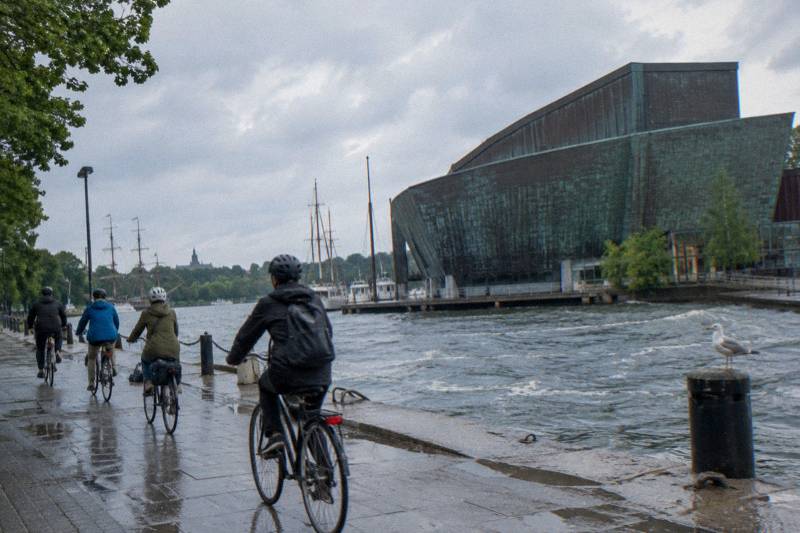
What Happens To A Stockholm Bike Tour In The Rain?
Stockholm sees rain in every season, and most guided rides still go ahead in light rain. Here is what changes, what to pack, and when to reschedule instead.
Short answer
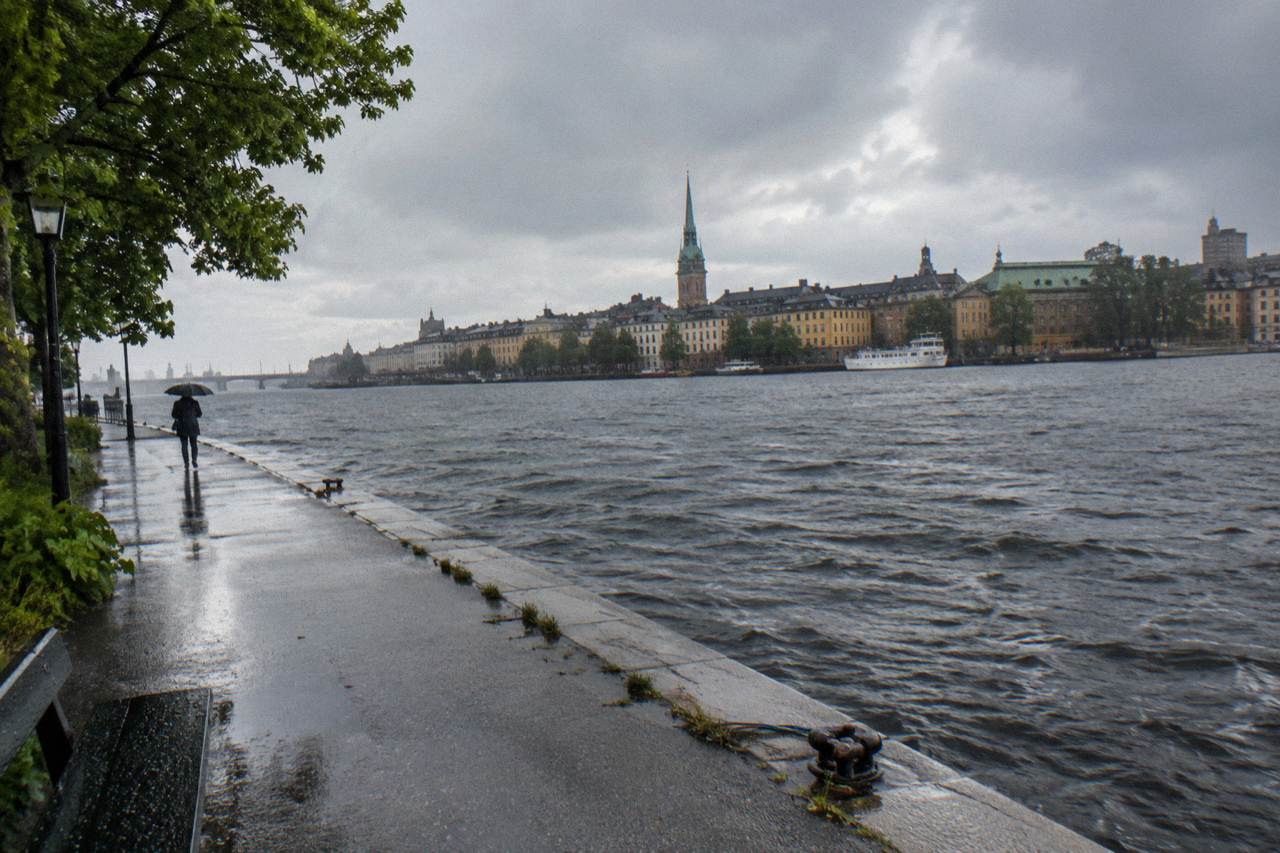
Most Stockholm guided bike rides run in light rain, since the city maintains its cycle network year-round and rides only stop for genuinely unsafe conditions. August is the wettest month at 66 mm of normal precipitation, February to April the driest at 27 to 29 mm. Check the booking page cancellation terms before you ride; many options allow free cancellation.
Rain is part of Stockholm life. The city averages 547 mm of precipitation across the year, spread over every month, and the cycle network of roughly 1,170 km is maintained with that reality in mind: the city sweeps and salts about 38 mil of cycle paths to keep them rideable in cold and wet conditions. A rainy forecast therefore does not automatically mean a cancelled ride. What it usually means is a different ride, with different clothes, different light and a city that looks quietly different at walking pace or under grey sky.
This page walks through what actually happens when rain meets a guided ride: how operators handle wet weather, what to wear, which parts of a Stockholm route feel different, how the rules interact with rain and darkness, and when rescheduling is the better call. Every price and policy detail that is not fixed here should be checked on the booking page, because cancellation terms vary between operators and are the one thing that decides how much a rainy day costs you. The short version is encouraging: this is a city built for riding in weather, and most visitors who arrive braced for a washout leave having enjoyed the quiet that rain brings to the busiest streets.
What Actually Happens When Rain Meets A Guided Ride?
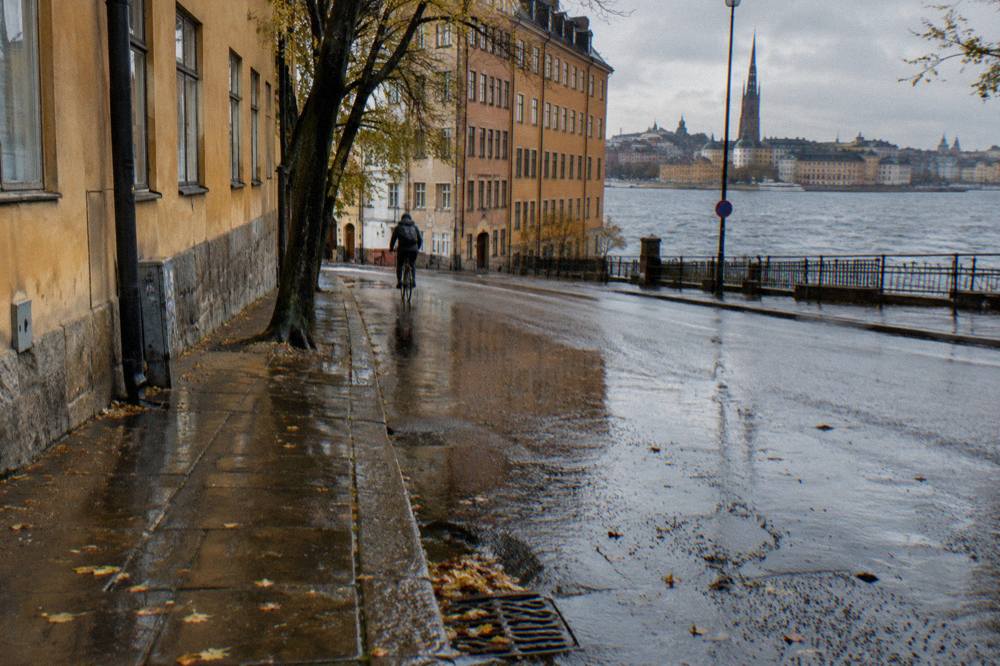
Light rain almost never stops a Stockholm guided ride: operators treat ordinary showers as normal Nordic weather, rides run year-round including the wetter months of June through August, and plans change only for genuinely unsafe conditions such as ice, storms or flooding. Expect comfort to shift on a wet day, not the fundamental plan, and remember the final call always rests with the operator.
The practical reality is that Stockholm's rain is often light and intermittent rather than torrential. The wettest month in the 1991 to 2020 normals is August at 66 mm, which works out to a modest daily average spread across the month, not monsoon conditions. Summer rain tends to arrive in short showers between bright spells. A ride that starts wet can easily finish in sunshine, and guides plan stops with shelter in mind, including museum forecourts, covered arcades and café stops.
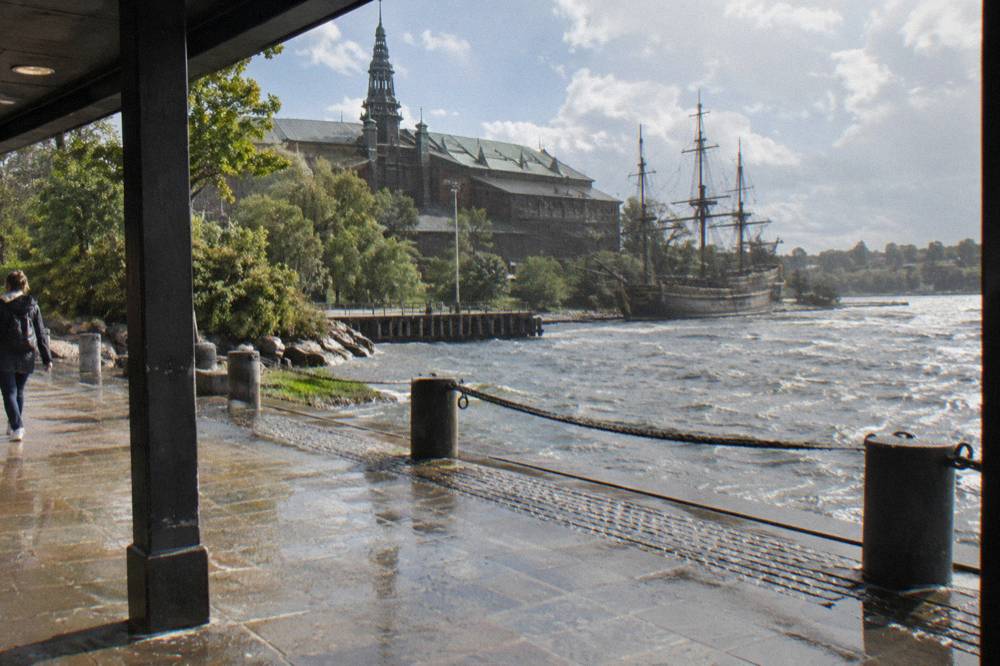
What changes in rain is comfort, not the route. Bridges such as Slussbron, with its eastbound single 3 m path and double westbound 6 m path, stay open in rain, and so do the widened paths on Sveavägen. Some listing inclusions help here: a rain poncho appears in some inclusion lists, so check what your chosen ride provides before buying gear you may not need. Guides also slow the pace on cobbles and painted surfaces, which get slippery when wet. Gamla Stan's pedestrian streets already require cycling at walking pace and yielding to pedestrians, and rain is one more reason that rule matters.
It helps to understand the local attitude. Stockholmers commute by bike through autumn drizzle and late-season cold because the infrastructure is built for it, with about 117 mil of cycle routes across the city, and guided rides inherit that culture. Guides carry the local knowledge a visitor lacks: which lane floods, which stretch of waterfront catches the wind, and where the nearest covered stop sits on the route. That is arguably the strongest argument for a guided ride over a solo rental on a doubtful day, since you get someone else's weather sense along with the bike.
Do Stockholm Rides Get Cancelled For Rain, And What Are The Terms?
No, light rain alone does not cancel Stockholm guided rides, since operators describe running in normal weather and reserve changes for unsafe conditions. What a wet day costs you comes down to the cancellation terms on each booking page, which vary by product; many Stockholm options include free cancellation, so check the window before you book and match it to how fixed your travel dates are.
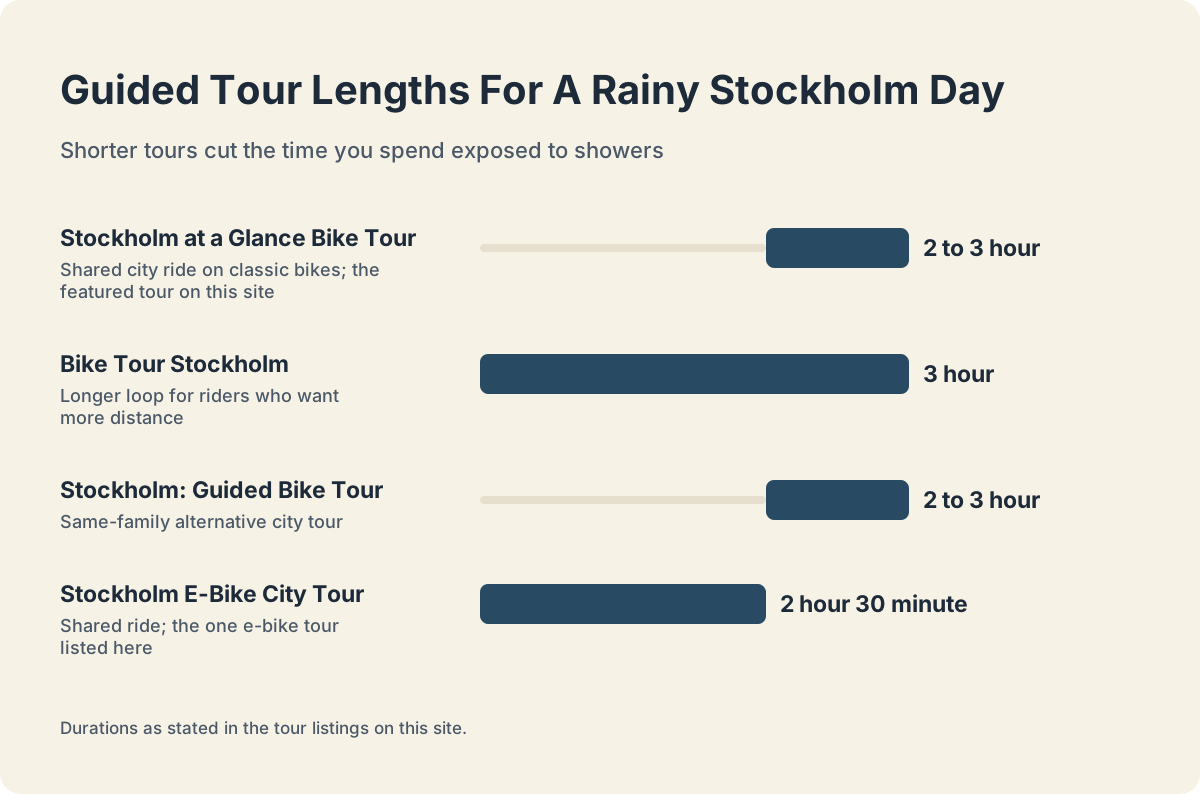
The trio below spans the main format choices a rainy-day rider weighs: the Stockholm at a Glance Bike Tour, a 2 to 3 hour shared city ride, the 3 hour Bike Tour Stockholm for a longer loop, and the 2 to 3 hour Stockholm: Guided Bike Tour as a same-family alternative. Their ratings and review counts differ, from 4 to 1,120 reviews; each booking page shows the current figures.
Between them these rides cover the classic city loop, the longer three-hour format and a mid-length alternative, so the rain question is really about which cancellation window fits your travel flexibility. If your dates are fixed and the forecast is uncertain, a product with free cancellation gives you the option to rebook a drier day without losing the fare. If your dates are loose, you can simply pick the better morning and go, which is the cheaper strategy in every sense.
The featured ride here, the Stockholm at a Glance Bike Tour, runs 2 to 3 hours on shared classic bikes, and that length is the whole reason it works in rain: short enough that wet streets stay manageable. A wet hour and a half is bearable; a wet five hours is a different proposition. Read more in the city guided bike tours overview and check the meeting point and inclusions, which the booking page states for each departure. Check availability on the operator's live listing once you know your dates.
What Should You Wear And Bring For A Wet Stockholm Ride?
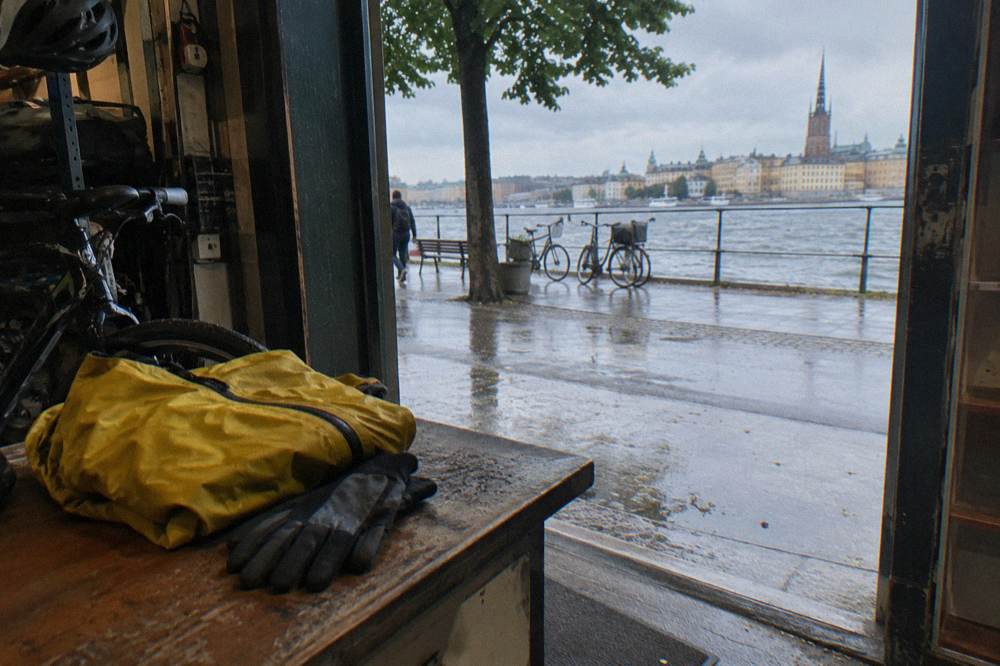
Short answer: layers, a real rain shell, and nothing that soaks through, because Stockholm rain rarely comes with deep cold outside winter but wind on a wet bridge chills fast. A breathable waterproof jacket over a warm mid-layer beats an umbrella, which is useless on a moving bike. Water-resistant shoes or spare socks change the whole day, gloves keep hands functional on brakes, and you should check whether your ride includes a poncho before packing one.
The layering logic matters more than any single item. Rain riding fails at the points where water meets skin for a long time: hands, feet and the gap between jacket collar and helmet. A cap under the helmet keeps rain off glasses and forehead. Thin liner gloves keep brake fingers working even in a July shower. And a dry bag for your phone matters more than anything on the list above it, because no pocket on a city bike is trustworthy in a downpour.
| Item | Why It Matters In Rain | Notes |
|---|---|---|
| Waterproof shell | Blocks wind and rain without trapping sweat | Hood or cap under the helmet |
| Mid-layer | Bridges temperature swings between showers | Fleece or light wool |
| Water-resistant shoes | Wet feet end a ride faster than wet shoulders | Spare socks in a bag |
| Gloves | Grip and warmth on wet brakes | Thin liners work in summer rain |
| Dry bag or zip bag | Protects phone and camera | Trust no pocket in a downpour |
| Poncho | Backup if the shell fails | Some rides include one; check inclusions |
Two legal details belong in your packing plan. Lights and reflectors on a bike are required in darkness only, and with roughly 8 hours 50 minutes of daylight in Stockholm in early November, a late afternoon ride can cross into that requirement, with a 500 kr fine for riding unlit in the dark. A bell and working brakes are mandatory at all times. Guides check their own bikes, but if you rent privately, both are on you. Swedish kronor, by the way, is the currency those fines are quoted in; do not convert them mentally against tour prices.
If riding in the wet appeals less the longer you think about it, an e-bike changes the equation: less sweat, less effort, and the same rain shell. The Stockholm E-Bike City Tour, a 2 hour 30 minute shared ride, is the only dedicated e-bike tour on the roster, and its listing states what is included.
Which Parts Of A Stockholm Route Feel Different In Rain?
Short answer: cobbles, bridges and Gamla Stan change most, while park paths and waterfront lanes change least. Wet cobblestones in the Old Town are slippery and are legally walking-pace territory in any case. Bridges funnel wind and spray in a way that surprises first-time visitors. Djurgården's park lanes drain well and stay pleasant in light rain, tree cover softens a shower, and the waterfront paths on Södermalm ride much as they do in the dry.
Gamla Stan deserves specific caution. City rules for its inner streets make them pedestrian streets with cycles at walking pace, yielding to pedestrians, and e-scooters are banned there except along Munkbroleden and Skeppsbron. Rain makes the stones slicker and the rule more sensible, so expect a guide to dismount or slow to a crawl through Stortorget and the lanes around it, whatever the weather. The square itself received new vehicle barriers in November 2026, low granite planters that also narrow the usable surface slightly.
Djurgården is the reward for riding in unsettled weather. The island's car restrictions through the warmer season, Djurgårdsbommen closed to most vehicles on weekends and Vasabommen daily between late April and late September, mean the lanes stay calm, and the free-to-roam royal park costs nothing whether it rains or shines. The SL ferry to the island takes bikes at no extra charge subject to space, a fact our one day bike and ferry plan builds a full day around. Museums on the island, including the Vasa Museum with its new Vasa Walk audio route from October 2026, are paid attractions but excellent rain shelters mid-ride.
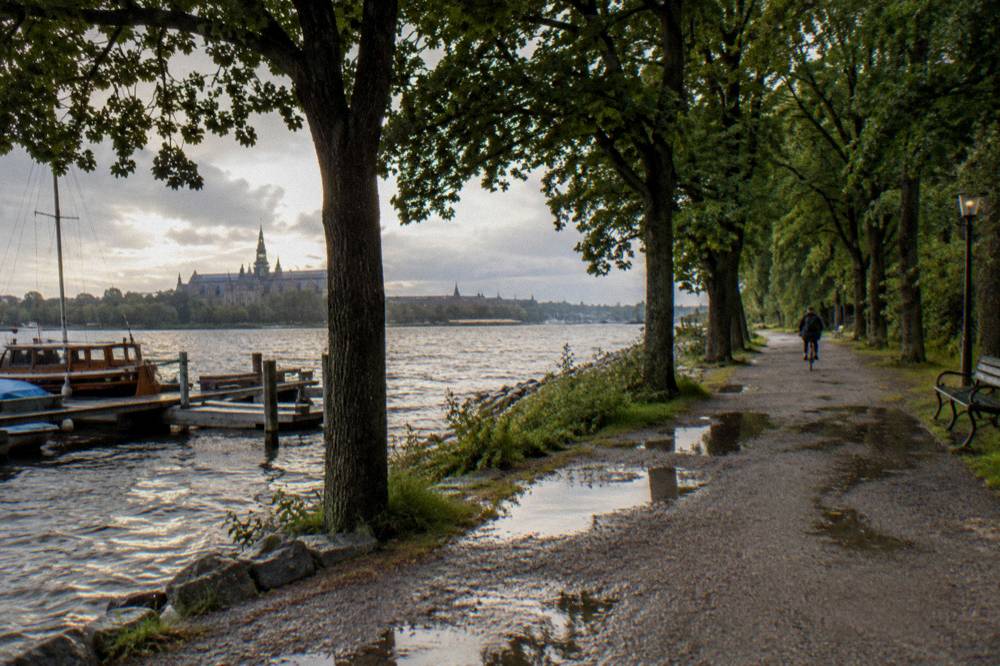
Rain also empties the postcard streets in a way sunshine never does. The waterfront stretch between the Old Town and Södermalm, which can feel crowded on a bright July afternoon, goes quiet under cloud, and the light off a wet harbour is the light photographers come to Stockholm for. A grey day on a bike here is not a consolation prize; it is a different version of the same city, with the reflections doing half the work of the scenery.
How Do Rain, Cold And Darkness Change The Rules Of The Road?
Rain changes nothing in the rules: the same laws apply wet or dry, so use the cycle path where one exists, keep right, and walk your bike through pedestrian zones. Darkness is different, since lights and reflectors become mandatory once it falls, with a 500 kr fine if missing, and by late autumn it arrives mid-afternoon, while salting down to about minus 6 C keeps paths rideable.
The fine schedule is fixed whatever the weather. Riding a red light is 1,500 kr, ignoring a stop sign or riding too fast in a walking zone is 1,000 kr, and missing equipment, sidewalk riding or riding against a one-way street is 500 kr each. The Swedish Police cycling rules page lays these out, and the Transportstyrelsen cycle rules page covers equipment in detail, which is why we link them rather than paraphrase loosely: Polisen cycling rules and Transportstyrelsen cycle regulations.
| Rule | Applies | Fine |
|---|---|---|
| Missing lights or reflectors in darkness | Darkness only | 500 kr |
| Missing bell or brakes | At all times | 500 kr |
| Riding on a sidewalk | Always | 500 kr |
| Faster than walking pace in a pedestrian zone | Always | 1,000 kr |
| Running a red light | Always | 1,500 kr |
| Helmet missing on a rider under 15 | Always | Fine to the adult, not the child |
Winter maintenance is the part visitors underestimate. Ahead of the darker months the city confirmed it sweeps and salts around 38 mil of cycle paths, expanded in recent seasons, and the traffic authority recommends year-round cycling with the right gear and tires, as its own autumn note explains: Trafiken.nu on cycling in darker times. For a deeper treatment of the rules themselves, our cycling rules in Stockholm guide covers them without the rain lens.
On a guided ride most of this is handled for you: the operator supplies the bike, the bell and the brakes, and the guide sets a pace suited to the surface. Where the rules become your business is before and after the ride, if you keep the bike for your own exploring, and in the dark weeks from November onward, when a late finish can put you on an unlit path for the ride home.
Which Months Bring The Most And Least Rain?
June through August bring the most rain, averaging 61 to 66 mm each in the 1991 to 2020 normals, while February through April are the driest months at 27 to 29 mm. No month is truly dry, however, and these figures are long-run averages rather than forecasts for any given year.
| Month | Avg high C | Avg low C | Precip mm | Daylight hours |
|---|---|---|---|---|
| January | 1.0 | -2.9 | 37.0 | 7.0 |
| February | 1.2 | -3.2 | 29.4 | 9.3 |
| March | 4.7 | -1.1 | 27.3 | 11.9 |
| April | 10.7 | 2.6 | 29.2 | 14.5 |
| May | 16.5 | 7.1 | 34.0 | 17.0 |
| June | 20.8 | 11.6 | 61.7 | 18.5 |
| July | 23.6 | 14.8 | 61.5 | 17.7 |
| August | 22.1 | 14.2 | 66.2 | 15.5 |
| September | 16.6 | 10.2 | 53.3 | 12.8 |
| October | 10.1 | 5.5 | 51.4 | 10.2 |
| November | 5.4 | 1.9 | 47.6 | 7.7 |
| December | 2.5 | -1.2 | 47.8 | 6.2 |
One wrinkle worth knowing: the first snow cover of at least 1 cm in Stockholm falls, on average, around 26 November. That is snow, not rain, and it changes the conversation from waterproofs to tires. The summer of 2026 was Sweden's coolest as a whole since 2017 but still above the 1991 to 2020 normal, so recent experience tracks the table rather than diverging from it. For month-by-month planning, the Stockholm weather by month guide extends this table with what it means for riding.
Read the table with intent rather than alarm. The difference between the wettest month, August at 66 mm, and the driest, March at 27 mm, is real but modest; this is not a city with a rainy season to avoid. What the table actually argues is that daylight, not precipitation, should set your calendar. A June ride with 18.5 hours of daylight shrugs off a shower; a December ride with 6.2 hours leaves no margin for one.
When Should You Reschedule Instead Of Riding In The Rain?
Reschedule for ice, storms, all-day heavy rain, or November darkness that swallows a short visit, but not for ordinary showers, since light rain, grey sky, and damp paths are rideable with the right clothes and the city's paths are maintained for exactly that. If a drier alternate day fits your stay and your booking has free cancellation, moving is usually the better experience; if not, a shorter ride in rain beats no ride at all.
Practical rule of thumb: match the format to the forecast. On a doubtful day, the 2 to 3 hour Stockholm at a Glance format limits your exposure; on a solidly wet day that you still want to spend outdoors, the 5 hour Forest Bike Tour with Sauna and Homemade Lunch is built around the idea that you will get wet and then get warm, with a sauna and lunch as the payoff, subject to its stated terms on the booking page.
For the shortest outing, the Wooden Bicycle Tour is a 2 hour shared ride on wooden-framed bikes; its listing says it needs good weather and offers a new date or full refund if cancelled for poor weather.
The last practical point is timing within the day. Summer rain in Stockholm often arrives in afternoon pulses, and daylight in June runs to 18.5 hours, so a morning departure frequently rides clear of the showers. In November, with 7.7 hours of daylight, the same trick has no room to work, and a midday start is the only one that avoids darkness on both ends. Ask the operator about morning versus afternoon departures when you book; the listing states the times on offer.
Whichever way the forecast breaks, Stockholm Bike Tours exists because this city rewards two wheels in almost any weather, and the trio below covers the formats most rain-day riders end up choosing between.
Common Questions About Rain On A Stockholm Ride
What Actually Happens When Rain Meets A Guided Ride?
Light rain almost never stops a Stockholm guided ride. Operators run year-round and treat ordinary showers as normal weather, cutting rides short only for unsafe conditions such as ice or storms. Comfort changes, the route mostly does not.
Do Stockholm Rides Get Cancelled For Rain, And What Are The Terms?
Rarely for light rain. What a wet day costs you depends on the cancellation terms on the booking page, which vary by product; many Stockholm options carry free cancellation, so read them before booking.
What Should You Wear And Bring For A Wet Stockholm Ride?
A breathable waterproof shell over a mid-layer, water-resistant shoes or spare socks, gloves and a dry bag for your phone. Check whether your ride includes a rain poncho before packing one.
Which Parts Of A Stockholm Route Feel Different In Rain?
Cobbles in Gamla Stan become slippery and are walking-pace streets in any case, and bridges funnel wind and spray. Djurgården's park lanes drain well and stay pleasant, and waterfront paths change least.
Which Months Bring The Most And Least Rain?
June through August are wettest at 61 to 66 mm each in the 1991 to 2020 normals, and February through April are driest at 27 to 29 mm. These are normals, not forecasts.
When Should You Reschedule Instead Of Riding In The Rain?
Reschedule for ice, storms or all-day heavy rain, and for November darkness that swallows a short visit. If dates are fixed, a shorter ride in light rain is usually still a good day out.