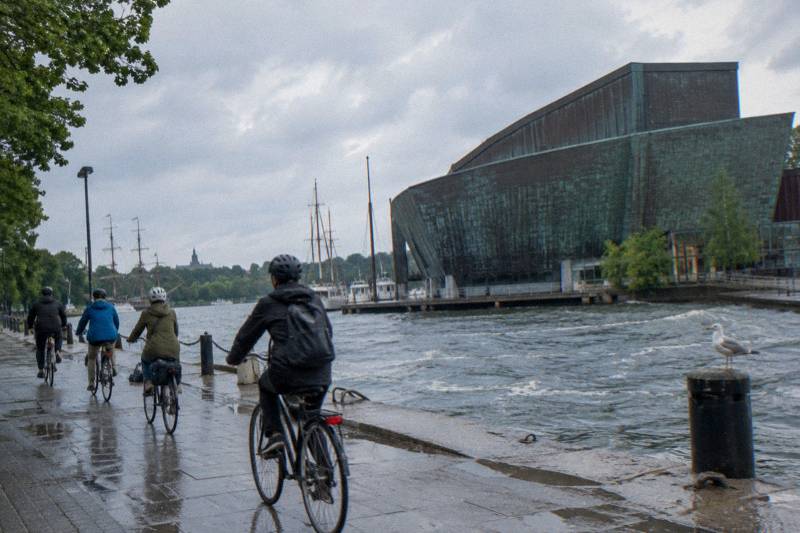
Gamla Stan By Bike: Where You Can Ride And Where To Walk
Gamla Stan looks made for a bike and then punishes you for trying. The island's inner streets are pedestrian zones where cycling at anything above walking pace carries a 1,000 kr fine, so the honest plan is a loop that rides the edges, walks the core, and lets a guided tour handle the rest.
Short answer
You can cycle into and around Gamla Stan on its edge streets, but the inner pedestrian streets are reported to require walking pace with priority to people on foot, and riding faster there carries a 1,000 kr fine in Swedish kronor. Ride the perimeter, walk Stortorget and the alleys, or take a guided tour that routes around the restrictions.
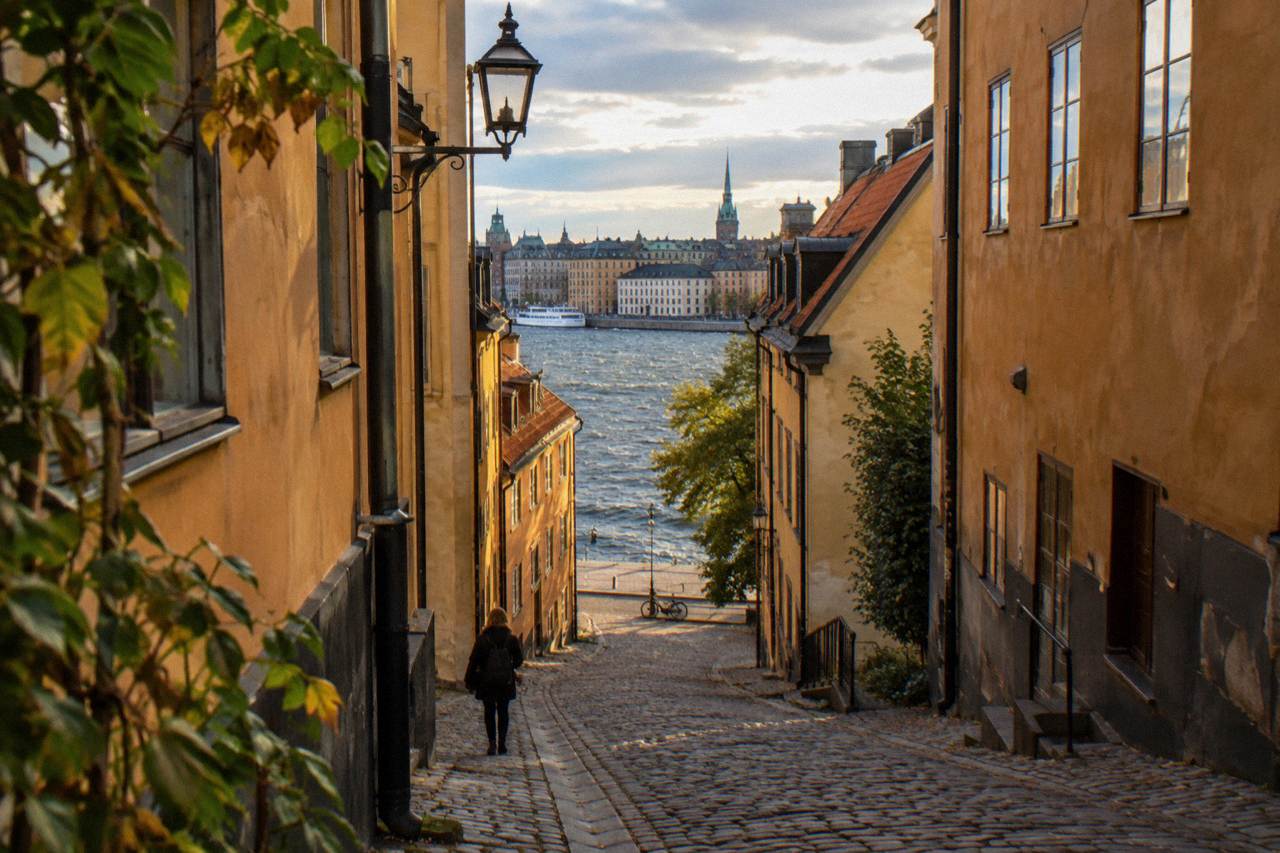
Gamla Stan is the island most visitors picture when they picture Stockholm: merchant houses in rust red and ochre, cobbles that hum under thin tires, and a tangle of alleys that narrow until you are walking your bike whether you planned to or not. The island rewards bikes on its rim and punishes them in its core. That tension is the whole subject of this page.
The rules are genuinely restrictive and genuinely enforced on paper. The inner streets of Gamla Stan are pedestrian streets where cycles are reported to proceed at walking pace and yield to pedestrians, per the city's traffic regulations, and riding faster than walking pace in such a zone carries a 1,000 kr fine (Swedish kronor). The surrounding quays and bridges, by contrast, are ordinary streets with ordinary cycle provision, and the freshly widened path along Riddarholmskanalen has made the island's western edge one of the more pleasant bits of central cycling in the city.
This guide walks through exactly where the bike works, where it does not, what changed on the island's cycle paths recently, and whether a guided ride is the smarter way to see the Old Town at all. Along the way it covers the routes onward to Djurgården and Södermalm, because almost nobody visits Gamla Stan in isolation, and the connections are half the reason a bike helps here.
Can You Actually Cycle Through Gamla Stan?
Yes, but only around it. The inner streets of Gamla Stan are pedestrian streets where the city's rules, as reported on the official traffic regulations page, require cycles to move at walking pace and give way to pedestrians, with a 1,000 kr fine for riding faster. The quays and perimeter streets carry normal cycling. So the working answer is: ride the rim, walk the core.
The distinction matters more than most first-time visitors expect. Gamla Stan is small, roughly a few blocks deep, and its tourist heart, Stortorget and the lanes around it, sits in the middle where the pedestrian rules bite hardest. The city's rules page also notes a vehicle ban without permit in the inner parts between 11:00 and 06:00, with through traffic forbidden between 06:00 and 11:00 except deliveries. Those hours affect cars and delivery traffic more than tourists, but they signal how the city treats the island's core: a place for feet.
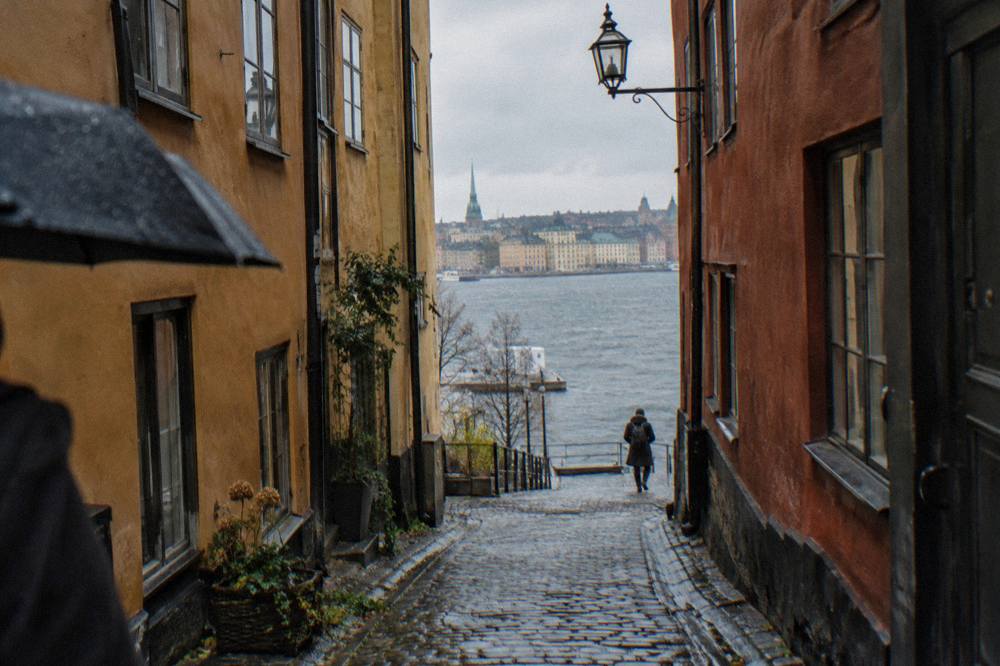
On the edges it is a different story. Skeppsbron along the water on the east, Munkbroleden on the west, and the bridge approaches north and south are all rideable, and the e-scooter rules give a useful map of the same logic: shared e-scooters are banned in Gamla Stan except along Munkbroleden and Skeppsbron, precisely because those are the streets built to carry light vehicles. A cyclist following the same perimeter logic gets the island's best views, the water on one side and the facades on the other, without ever breaking stride.
If you want the full legal detail and the current street-by-street signage, the city publishes it at its Gamla Stan traffic regulations page, and that page is the authority on any conflict between what a blog says and what a sign on the corner says. For the broader picture of where bikes sit in Swedish road law generally, see our guide to the cycling rules that apply city-wide.
Where Must You Dismount And Walk Your Bike?
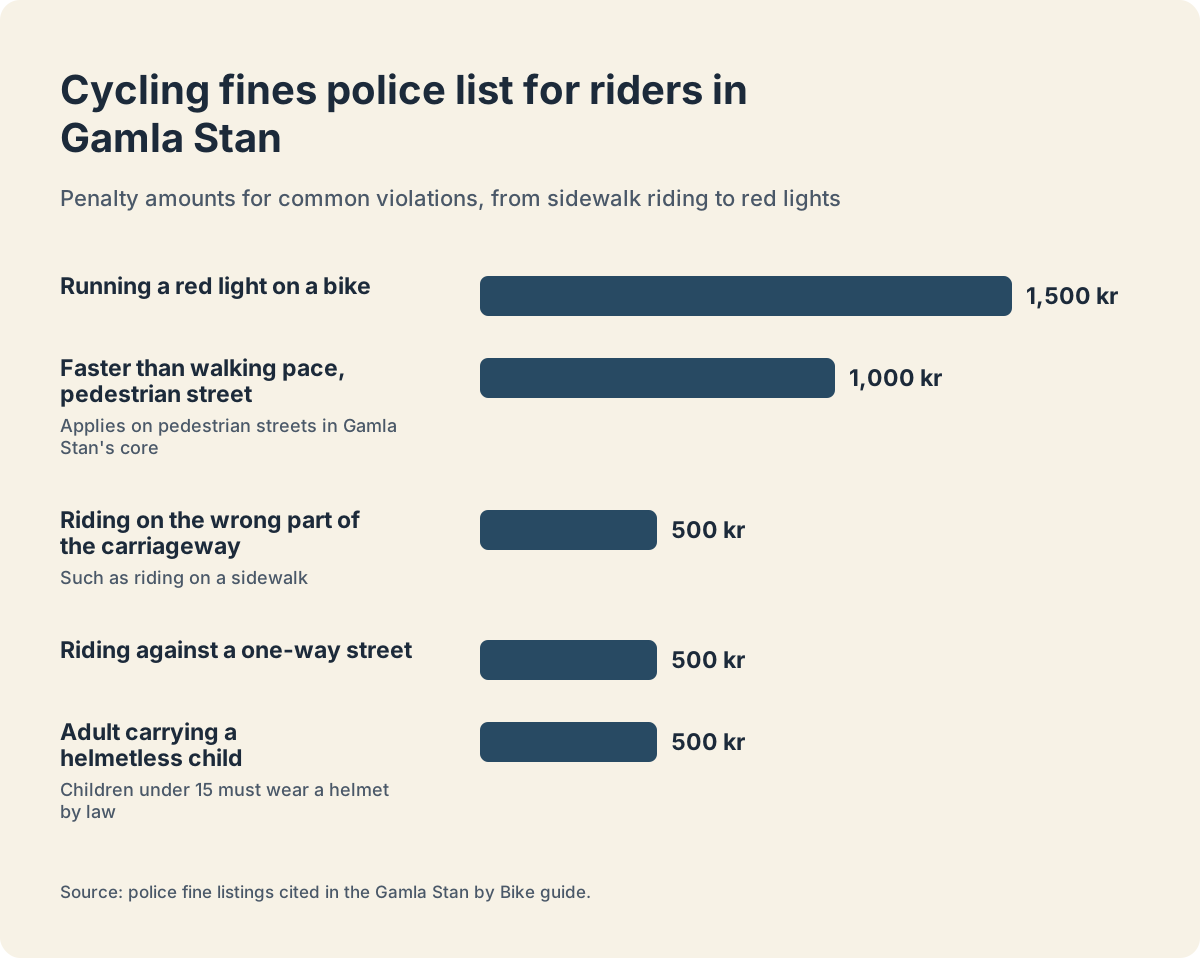
In practice: Stortorget and the alleys off it, the lanes around the Royal Palace's south side, and any street signed as a pedestrian zone. The rule reported by the city is walking pace and yielding to pedestrians, and police list a 1,000 kr fine for exceeding walking pace in these zones. When in doubt, walk it; the alleys are short.
The good news is that Gamla Stan's walk-only territory is compact. Stortorget, the main square with the old stock exchange building, is the obvious centre, and the alleys radiating from it, Köpmangatan, Svartmangatan, Stora Nygatan and friends, are where the crowds thicken and the cobbles get vicious. These are streets built for foot traffic, not for handlebars, and in July they are full enough that walking pace is not a legal fiction but a physical necessity.
One fresh wrinkle: Stortorget received new vehicle barriers in a project that started in October 2026 and was scheduled to complete by mid-November 2026, ahead of the Christmas market season. The installation, three low round planters with granite walls plus new seating and greenery, is designed to close the square to vehicles more permanently. For a cyclist this simply confirms the trend: the core is for people on foot, and the physical infrastructure now says so too.
| Zone in Gamla Stan | Cycling status | What to do |
|---|---|---|
| Stortorget and central alleys | Pedestrian streets, walking pace reported rule | Dismount and walk |
| Skeppsbron (east quay) | Ordinary street, cycling normal | Ride, enjoy the water view |
| Munkbroleden (west side) | Ordinary street, cycling normal | Ride, links to Riddarholmskanalen path |
| Bridges to Norrmalm and Södermalm | Cycle provision on bridge approaches | Ride, use marked lanes |
| Palace surrounds | Mixed, signed zones | Follow signs, expect to walk parts |
The penalties for getting it wrong are real, if modest. Police list 500 kr for riding on the wrong part of the carriageway such as a sidewalk, 1,000 kr for faster than walking pace on a pedestrian street, 1,500 kr for running a red light on a bike, and 500 kr for riding against a one-way street. None of these will ruin a holiday, and none of them need to happen, because the walking zones announce themselves with crowds and signage well before you reach them.
That is the honest case for letting someone else plan the route. Several guided rides include the Old Town on their loop, among them the Stockholm at a Glance Bike Tour, a 2 to 3 hour shared classic-bike ride, the Stockholm: Guided Bike Tour, 2 to 3 hours on a standard bike, and The Wooden Bicycle Tour in Stockholm, a 2 hour shared ride on wooden-frame bikes that makes the equipment itself part of the story. A guide plans the route around the pedestrian core, which is the local knowledge you would otherwise acquire by mistake.
Prices and current availability for each sit on the operator's booking page rather than in any fixed print, and the inclusions, bike type, helmet policy, vary by tour, so read the booking page for the specifics before choosing.
Is A Guided Ride Better Than Walking The Old Town?
For the Old Town core alone, walking wins: the alleys are short, the rules force walking pace anyway, and a bike adds friction. For Gamla Stan plus Djurgården plus Södermalm in one outing, a guided ride covers ground no walk can, and the guide's route solves the pedestrian-zone puzzle for you.
This is the decision most readers of this page are actually making, and the honest answer is that it depends on ambition. A visitor with two hours and one interest, the Old Town itself, should walk it. The island's core is a five-minute walk from end to end. A visitor who wants the Old Town, the royal park on Djurgården, and the viewpoints of Södermalm in a single morning is choosing between a bike and a lot of transit, and the bike wins that comparison on the edges even while losing it on the cobbles.
Weigh the two options properly in our longer comparison of walking versus biking in Stockholm, but the short version for this island: the tour format earns its price on the connecting streets, not inside the pedestrian zone. Guides also handle timing, and timing matters here. The Old Town between cruise-arrival hours and dinner is a different place from the Old Town at nine in the morning, and a guide who knows the difference is quietly valuable.
There is also a format question. A conventional city ride like Bike Tour Stockholm, 3 hours, shared, classic bikes, treats the Old Town as one chapter of a bigger story. The Stockholm: Forest Bike Tour with Sauna and Homemade Lunch goes the other way entirely: 5 hours, fat bikes, forest trails outside the city core with a sauna and a cooked lunch built in, a product for the day you want Sweden rather than souvenir streets. Different tools, different days, and nothing stops a visitor from doing both on one trip.
For families there is a further wrinkle worth naming: children under 15 must wear a helmet by Swedish law, and an adult carrying a helmetless child can be fined 500 kr. Any reputable tour supplies helmets for kids; confirm it on the booking page. Our page on family and kids bike tours in Stockholm covers the child-friendly options in detail.
| Option | Time needed | Strengths | Trade-off |
|---|---|---|---|
| Walk Gamla Stan alone | 2 to 3 hours | Alleys at leisure, no rules to worry about | Nothing else covered |
| Self-guided bike loop | Half day | Flexibility, ride the rim and Djurgården | You solve routing and rules yourself |
| Guided city bike tour | 2 to 3 hours | Legal route, commentary, bike included | Set schedule, less alley time |
| Private guided tour | 3 hours | Custom pace and route, your group only | Higher price basis per group |
What Has Changed On The Riddarholmskanalen Cycle Path?
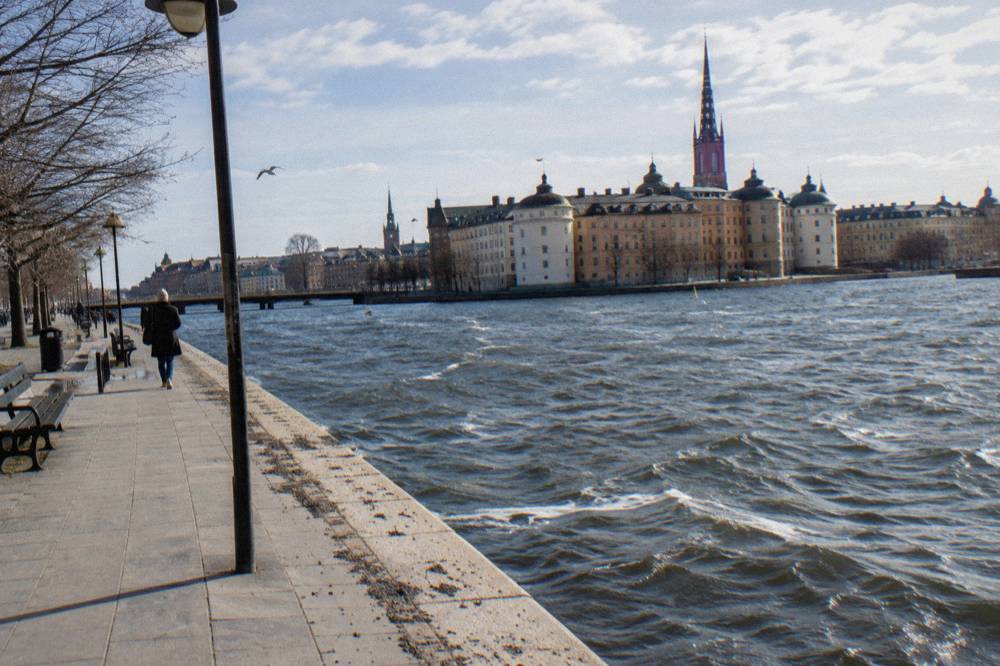
A lot, recently. The cycle path along Riddarholmskanalen on Gamla Stan's western edge was widened in a project that began in February 2025, and the new path opened on 17 April 2026, two months ahead of schedule, with better lighting, wider surfaces and rounded curves. It is now the best cycling approach to the island.
The project closed the lane between the Gamla Stan metro station and Vasabron during the works, with detours via Munkbron, and the early opening was reported with the improvements spelled out: wider paths, improved lighting, rounded curves. For a cyclist this is the single most consequential piece of cycling news on the island, because the western edge is where the island connects to the wider network, and a cramped, poorly lit lane there shaped every approach from the north.
The details of the project, including the detour history and the final layout, are on the city's project page for the Riddarholmskanalen widening. One more connection is coming: a new pedestrian and cycle bridge over Söderström at Slussen, linking Södermalm and Gamla Stan, is planned to open in early 2027, which will add a second comfortable bike link to the island's south side. Until then the existing Slussbron cycle paths carry the traffic, a single 3 m lane eastbound and a double 6 m lane westbound.
Context helps here. Stockholm runs roughly 1,170 km of cycleways of one kind or another, per the city's own cycling pages, and the national park landscape of Djurgården plus the quays of Gamla Stan sit inside one of the denser parts of that network. The island is not an outlier with hostile infrastructure; it is a walk-first core inside a ride-everywhere city, and the recent spending, the canal widening, the new bridge planned at Slussen, confirms the city is investing in exactly the rim-riding pattern this guide describes.
How Do You Ride From Gamla Stan To Djurgården And Södermalm?
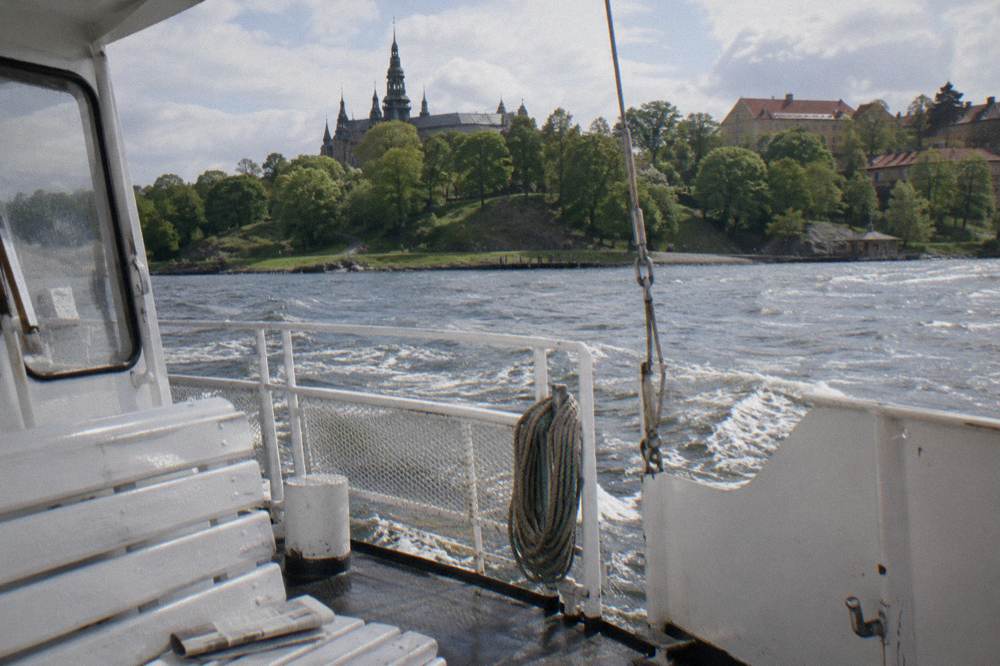
North over the bridges to the mainland network, south over Slussbron to Södermalm, and east to Djurgården either by bridge or by the Djurgården ferry from Slussen, which takes bikes at no extra cost subject to space, per the transport authority's rules. Every onward route is ordinary, signposted cycling.
The Djurgården ferry deserves its own sentence because it delights people: it is a public ferry line, integrated into ordinary Stockholm transit ticketing, and the transport authority states plainly that taking a regular bike on the commuter ferries costs nothing extra, always subject to space, with staff judging what fits. E-bikes go out on deck. No fare figure is printed here because the transit fare structure is its own subject, but the bike itself is free aboard. Our dedicated page on taking a bike on the Djurgården ferry works through the practical details.
Once on Djurgården the character changes completely. The royal park's car-free lanes through Nationalstadsparken are the opposite of Gamla Stan's alleys, wide, leafy, and made for wheels, and the island rewards a full loop past the museums. Note one seasonal pattern: the Djurgårdsbommen and Vasabommen barriers closed the island's entry points to most vehicles on spring-to-autumn weekend and daily windows in 2026, with exceptions for buses, taxis and permit holders, which made the island quieter still for cyclists. Plan that day with our guide to riding Djurgården end to end.
Södermalm, south across the water, is the hillier half of the equation. For riders who would rather not climb it on leg power alone, the Stockholm E-Bike City Tour, 2 hours 30 minutes on shared e-bikes, is the only dedicated e-bike product in the city's guided lineup, and an e-bike flattens Södermalm's slopes. Under Swedish rules an e-bike counts as an ordinary bicycle when its motor assists only pedalling, cuts out at 25 km/h and rates at most 250 W, which is the e-bike class legally ridden as a bicycle in Sweden.
For riders comfortable on a regular bike, the full-city option is Bike Tour Stockholm: 3 hours, shared, classic bikes, a loop broad enough to stitch the Old Town, the islands and the viewpoints into one guided narrative. It is the tour we would point someone at who wants Gamla Stan explained rather than merely traversed, with the routing, the pace and the equipment handled by the operator.
| Destination from Gamla Stan | Best bike route | Notes |
|---|---|---|
| Djurgården | Ferry from Slussen, or bridges east then north | Bike free aboard ferry subject to space |
| Södermalm | Slussbron cycle paths south | Green wave at 20 km/h on some streets |
| Norrmalm and the centre | Bridges north from the island's tip | New Vasabron northbound lane opened June 2026 |
| Riddarholmen | Western edge path | Widened path opened April 2026 |
When Is The Best Time Of Day To Ride The Old Town?
Early morning, before roughly ten, and evening after the day-trippers thin out. Crowds, not weather, are the constraint: the SMHI 1991 to 2020 normals show pleasant summer averages, but the pedestrian streets jam at midday, and the walking-pace rule becomes moot when you could not go faster than walking pace anyway.
The weather half of the answer is easy because Stockholm's climate is cooperative in the main season. Using the SMHI 1991 to 2020 normals for Stockholm, July averages a high of 23.6 C against a low of 14.8 C, June gives 18.5 hours of daylight per day, and the driest stretch runs February to April at roughly 27 to 29 mm of precipitation per month, with August the wettest at 66 mm. May through September is the comfortable window, and June's long evenings let you ride the quays at eleven at night in daylight.
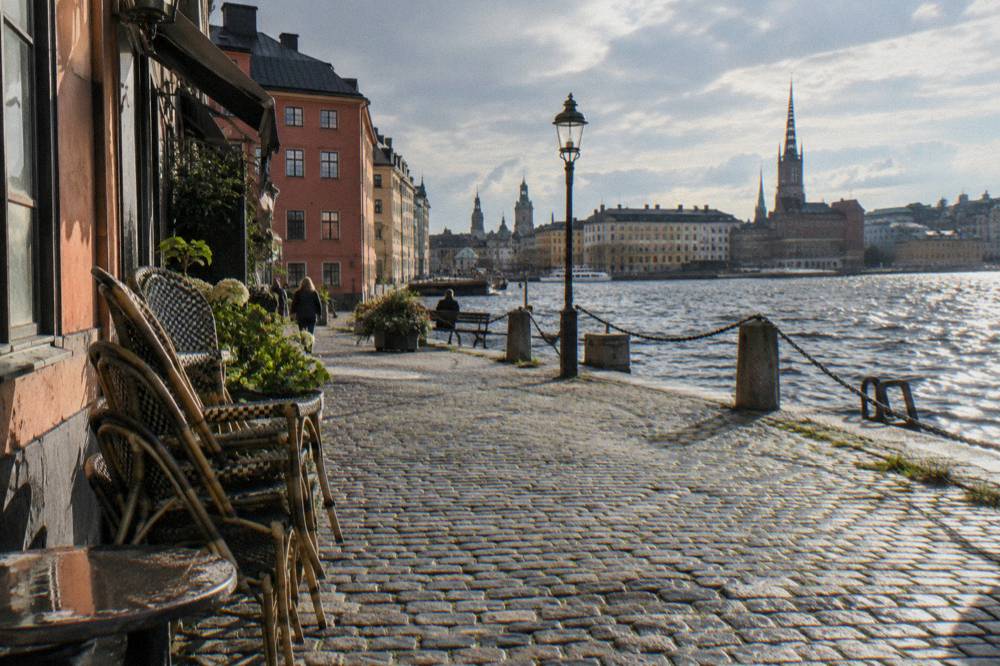
The crowd half matters more. The Old Town's alleys at nine on a June morning are close to empty, the cafés on Stortorget are setting out chairs, and a cyclist rolling Skeppsbron has the waterfront to themselves. By noon the same streets are a slow river of people, and by mid-afternoon in peak season the walking-pace rule is enforced by bodies rather than bylaw. Winter inverts the problem: the city reports sweeping and salting a large share of its cycle network through the dark months to keep winter riding possible, and December's normals, a 2.5 C average high, 6.2 hours of daylight, describe a cold, dim but workable ride if you dress for it. Lights are legally required in darkness, front white and rear red, visible at 300 m.
| Month | Avg high C | Daylight hours per day | Riding character |
|---|---|---|---|
| May | 16.5 | 17.0 | Season starting, long evenings |
| June | 20.8 | 18.5 | Best light, peak crowds in core |
| July | 23.6 | 17.7 | Warmest, busiest alleys |
| August | 22.1 | 15.5 | Warm but wettest month, 66 mm |
| September | 16.6 | 12.8 | Quieter, cooler, good value window |
| December | 2.5 | 6.2 | Cold and dim, lights required, salty paths |
Pair the timing with the right equipment question, classic bike or e-bike, using our breakdown of choosing an e-bike or a classic bike for a Stockholm tour. On flat Gamla Stan and the quays a classic bike is plenty; the case for the motor arrives on Södermalm's slopes.
Whatever the hour, the pattern from the top of this page holds: the rim is a ride, the core is a walk, and the recent infrastructure spending, the widened canal path, the barrier-quieted square, the bridge coming to Slussen, has made the rim better every year. Plan around that split and the Old Town on two wheels stops being a frustration and becomes what it should be, the best-connected few blocks in the city.
Common Questions About Cycling In Gamla Stan
Can You Cycle In Gamla Stan?
Yes, on the edge streets such as Skeppsbron and Munkbroleden, which are ordinary streets with normal cycling. The inner pedestrian streets are reported to require cycles to move at walking pace and yield to pedestrians, so in practice you ride the rim and walk the core.
Is It Illegal To Cycle Through Gamla Stan's Pedestrian Streets?
Not illegal to cycle them, but the city's reported rules require walking pace and priority for pedestrians, and police list a 1,000 kr fine for riding faster than walking pace in such zones. In the busiest alleys the crowds enforce the pace anyway.
Do I Need To Wear A Helmet In Gamla Stan?
Swedish law requires a helmet only for children and young people under 15; there is no helmet law for adults. An adult carrying a child without a helmet can be fined 500 kr. Guided tours typically supply helmets, but check the booking page to confirm.
What Is The Fine For Cycling On The Sidewalk In Stockholm?
Police list 500 kr for riding on the wrong part of the carriageway, such as a sidewalk. Riding faster than walking pace on a pedestrian street carries 1,000 kr, and running a red light on a bike carries 1,500 kr.
Can I Take My Bike On The Ferry To Djurgården?
Yes. The Djurgården ferry is a public service, and the transport authority states that taking a regular bike costs nothing extra, always subject to space and staff judgment. E-bikes are placed out on deck.
Should I Take A Guided Bike Tour Of The Old Town Or Walk It Myself?
Walk it if the Old Town is your only goal; the core is small and walk-only in effect. Take a guided ride, such as a 2 to 3 hour shared city tour, if you want Gamla Stan plus Djurgården and Södermalm in one outing with the routing handled for you.