Can You Take A Bike On The Ferry To Djurgården?
Yes, you can take a bike on the Djurgården ferry at no extra charge, subject to space. Here is how the rule works, what happens with e-bikes, and how to plan the day.
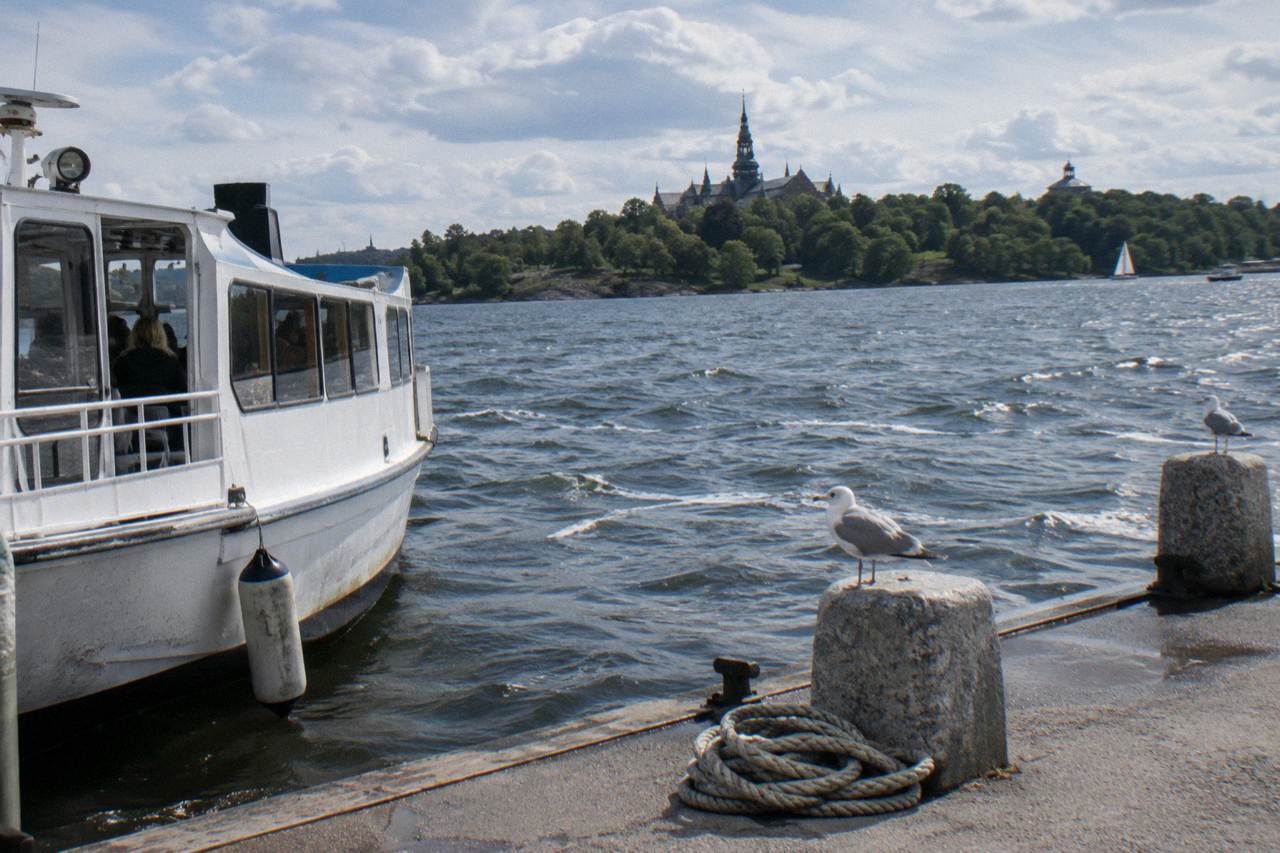
Yes, you can take an ordinary bicycle on the Djurgården ferry at no extra charge, provided there is space on board. The ferry is part of Stockholm's public transport system, and the operator's own rules state that taking a bike on the commuter boats, the Djurgården ferry included, costs nothing extra. Staff on board judge space and safety, and can refuse a bike or send it to a later departure.
That single sentence answers the question, but the practical reality deserves a little more attention. The Djurgården ferry, known locally as the Djurgårdsfärjan, runs as line 82 between Slussen on Södermalm and Djurgården, the island park that holds the Vasa Museum, Skansen, ABBA The Museum and large stretches of royal parkland. It is a year-round public service, and because it is a commuter boat rather than a tourist cruise, bicycles are treated as legitimate passengers under the same rules that cover the wider ferry network. The official cycling rules for Stockholm public transport spell this out in plain terms: you can bring a bike on the commuter boats, and it always depends on whether there is space.
Two conditions matter more than any other. First, the crew has the final word. On a busy summer afternoon, when families, prams and day-trippers crowd the deck, a cyclist may simply be asked to wait for the next boat. This is not a refusal to serve you; it is a space judgement, and the rules say so explicitly. Second, the no-extra-charge rule applies to a regular bike. E-bikes follow a slightly different path, which we cover in full further down, and cargo bikes, tandems and other bulky machines are a different conversation again on some operators.
Why does this matter for a cycling day out? Because Djurgården is one of the most pleasant places to ride in Stockholm, and the ferry is the most direct way to fold it into a loop that starts in the old town or on Södermalm. Rather than ride out and back on the same bridges, you can pedal to Slussen, float across the water, and spend your energy on the island's car-light lanes instead. A guided ride such as the Stockholm: Guided Bike Tour, a 2 to 3 hour shared tour, covers Djurgården with a local guide who handles the route-finding, and it pairs neatly with a ferry leg before or after if you want to extend the day on your own.
For travellers weighing a structured option against self-direction, the three rides below each include Djurgården's island terrain in different formats and time frames.
One planning note before the detail: the ferry runs year-round and frequently, but check SL's own pages for the current timetable and fares if your day is tight. Treat the boat as frequent rather than timed, arrive without a hard deadline, and check the operator's pages on the day if your itinerary is tight.
How The Bike Rule Works On The Djurgården Ferry
The rule for a standard bike is simple: no extra charge, subject to space, with crew discretion. The ferry is classified as a commuter boat within the public transport system, and the published rules state that bringing a bike costs nothing extra on these boats. E-bikes must be placed outdoors on deck, and if deck space runs out, the battery comes off and goes in the on-board container.
The wording deserves attention because it answers the questions people actually ask at the dock. "It always depends on whether there is space" is the operative phrase. A bike is never guaranteed a spot the way a ticketed passenger is. In practice this rarely causes trouble outside peak summer weekends and event days, but it shapes how you should plan: build slack into the schedule, keep the bike easy to roll on and off, and do not arrive mid-conversation on a phone with panniers half unpacked.
The e-bike procedure is the part most riders miss. Electric bikes go on the open deck rather than inside the cabin, which makes sense when you consider that the public transport operator has tightened rules across the whole network around lithium batteries. On all services, charging any lithium vehicle on board is banned outright, a rule published in November 2024 alongside an outright ban on e-scooters in the metro due to fire risk. If the deck is full and there is no space for the bike itself, the stated procedure is to remove the battery and place it in the container provided on deck. It is a small logistical wrinkle, but knowing it in advance turns a moment of confusion at the gangway into a thirty-second task.
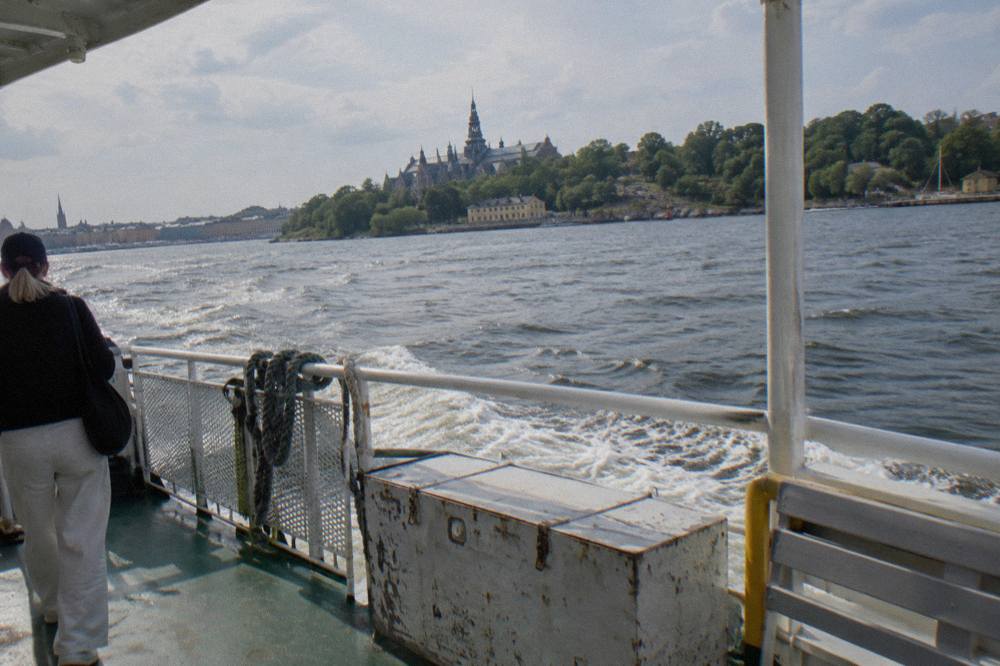
A second question follows the first: do you need a separate ticket for the bike? No. The no-extra-charge rule means the bike travels under the same conditions as your own journey, and you take it on board at your own risk. The rules are explicit on that last point as well: passengers bringing bikes accept responsibility for them during the crossing. Treat the boat as a moving bridge with a rail, keep a hand on the machine in crowds, and the risk stays theoretical.
| Situation | What the rules say | Practical takeaway |
|---|---|---|
| Standard bike, space available | No extra charge on commuter boats including the Djurgården ferry | Roll on, keep it handy, hold it in crowds |
| Standard bike, boat full | Staff can refuse or direct you to a later departure | Build slack into the day |
| E-bike | Placed outdoors on deck | Board via the deck door, not the cabin |
| E-bike, no deck space | Remove the battery and place it in the deck container | Bring a battery key or tool if your model needs one |
| Charging a lithium vehicle on board | Banned on all services | Charge before you leave |
The table above also explains why guided tours have quietly become a popular way to see this stretch of water. The Stockholm at a Glance Bike Tour, a 2 to 3 hour shared ride, removes the ferry question from your day entirely by routing through the islands with a guide, and Stockholm Nature's Bike Tour Stockholm covers similar ground over 3 hours for riders who want a longer loop.
Is a ferry-and-bike day better with a guide or on your own? For a first visit with limited time, the structured option saves route-planning in a city whose bridges and quays can confuse. For a relaxed second day, the self-directed loop described below is hard to beat.
Where The Ferry Fits In A Bike Loop Of The City
The classic move is to ride from the city centre or Södermalm to Slussen, take the ferry across to Djurgården with the bike, then loop back over the bridges through Gamla Stan. This turns a there-and-back ride into a circuit and puts the island's car-light lanes in the middle of your day rather than at the end of an out-and-back.
Slussen is the natural embarkation point because it is also one of the city's most rebuilt and improved cycling intersections. A new pedestrian and cycle bridge over Söderström, linking Södermalm and Gamla Stan, is planned to open in early 2027, and the existing Slussbron cycle paths, a single 3 m eastbound lane and a double 6 m westbound lane, remain in use until then. Approaching the ferry dock on two wheels is therefore straightforward from either side of the water, and the widened Riddarholmskanalen cycle path on the Gamla Stan side, which opened in April 2026 two months ahead of schedule with better lighting and wider lanes, has made the northern approach noticeably calmer than it was during the construction years.
Once across, the island rewards slow riding. Djurgården sits inside the Royal National City Park, and the city's own cycling resources recommend bicycles as the way to explore it. Two seasonal restrictions shape car traffic rather than bike traffic: the Djurgårdsbommen and Vasabommen barriers closed to most vehicles on weekends through the summer season, with exceptions for buses, taxis and permit holders, which in practice leaves the island's interior unusually quiet for cycling precisely when the museums are busiest. If your visit falls in the colder half of the year, the barriers are open again and shared lanes carry more cars, so the waterfront paths become the better riding choice.
The return leg options are worth knowing before you commit. Riding back west from Djurgården toward the city crosses Djurgårdsbron into Östermalm or dips south over to Södermalm, and either way the route passes museum-frontage traffic in summer. Cyclists who prefer a guided hand for the return can join the Stockholm: Guided Bike Tour, which the listing describes as a 2 to 3 hour shared classic-bike ride, and riders curious about a distinctive machine can look at The Wooden Bicycle Tour in Stockholm, a 2 hour shared ride on wooden-frame bikes, as a format contrast to the standard city tour.
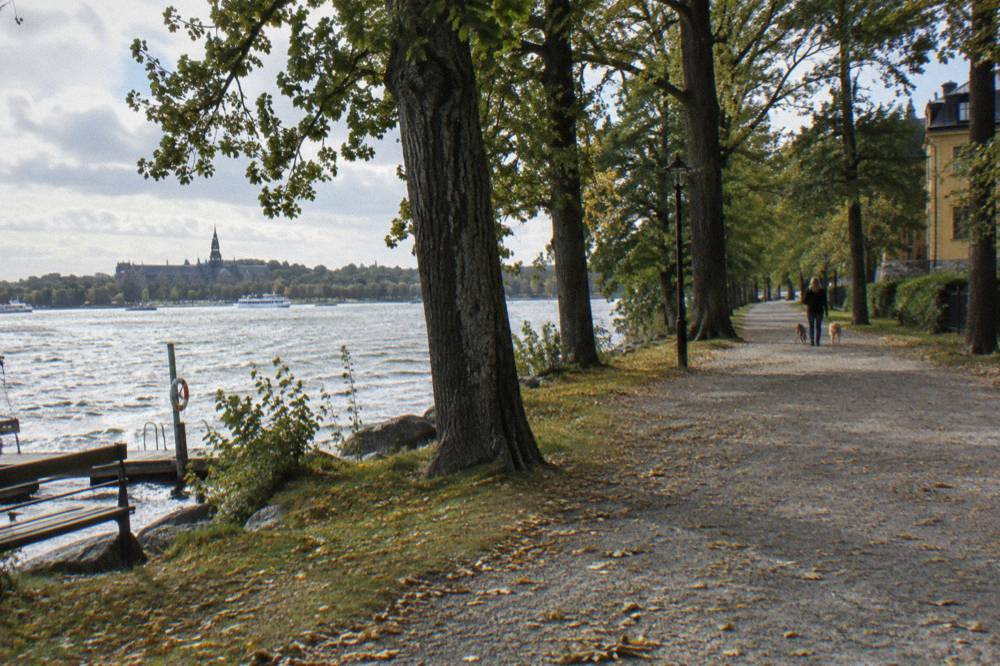
For a fuller treatment of the island itself, the companion guide to riding Djurgården by bike breaks down the lanes, the museum cluster and the quiet northern shore. And if the walking-versus-cycling question is live in your group, the comparison of a walking tour versus a bike tour in Stockholm sets out the trade-offs honestly.
Bikes, Buses And Trains: The Wider Rules That Catch Visitors Out
The Djurgården ferry is the friendly edge of a stricter picture: ordinary bikes are banned from SL buses, the metro and the city's trams and light rail lines, with narrow exceptions on a few outer rail services. If the ferry is full, you cannot switch to the metro with your bike, so the realistic fallbacks are riding the bridges or locking up and coming back for the bike.
The prohibition is unambiguous in the official rules: you may never take an ordinary bike on buses, in the metro or on the other trams and local rail lines, including the Spårväg City and Nockebybanan. Non-folded bikes are permitted on commuter trains and the Saltsjöbanan outside weekday rush hours, with boarding restrictions at certain central stations, and non-electric bikes are allowed on the Tvärbanan outside rush hours where they must be secured in the on-board stands. E-bikes are banned from the Tvärbanan at all times. Folded bikes under 120 cm travel as luggage on most services, which is why some visitors plan around a folding rental for multi-day stays. The full index of guides sits on Stockholm Bike Tours.
For a single-day visitor whose plan is a loop of the harbour and Djurgården, the practical reading is this: the ferry is not just the most scenic way across the water with a bike, on several corridors it is the only public-transport way at all. Plan the day around riding the bridges and floating the crossing, and the restrictions never bite.
| Service | Ordinary bike | Notes |
|---|---|---|
| Djurgården ferry (commuter boats) | Allowed, no extra charge | Subject to space; crew discretion |
| Buses and metro | Not allowed | Ban covers all ordinary bikes |
| Spårväg City, Nockebybanan | Not allowed | Same prohibition |
| Tvärbanan | Non-electric only, off-peak | Must use on-board stands; e-bikes banned |
| Commuter trains, Saltsjöbanan | Allowed off-peak | Restrictions at certain central stations |
| Folded bikes under 120 cm | Allowed on most services | Treated as luggage |
Two further rules shape behaviour on the water's edge. Shared e-bikes and e-scooters operated by Voi and Bolt, announced as the city's shared-bike operators in December 2025, are a rental option rather than a free one, and shared bikes are not part of the free half of a Stockholm day. And in Gamla Stan, whose inner streets are pedestrian streets around the clock, cycles move at walking pace and yield to pedestrians, a rule the city's traffic pages state plainly; treat the old town as a place to dismount and wander rather than ride through. The city's own guide to bicycle rules and equipment covers the national requirements, including the helmet rule for riders under 15 and the requirement for lights in darkness only.
What Awaits On The Other Side Of The Crossing
Djurgården's headline attractions are the Vasa Museum, Skansen and ABBA The Museum, all clustered near the ferry's landing point, but the island's free layer is the park itself: royal woodland, waterfront lanes and the northern shore's quiet trails. Museums and Skansen charge entry, so treat them as booked extras and the park as the free spine of the visit.
Recent openings give the island fresh pulls. The Vasa Museum launched a "Vasa Walk" audio guide on 29 October 2026, starting outside the museum, crossing Djurgården and ending on Beckholmen, which pairs naturally with a bike-and-ferry day since it covers ground you will already be riding. ABBA The Museum opened a new "Dancing Queen" exhibition for the band's 50th anniversary, running year-round. Further out on Södermalm, which sits on the ferry's home side of the water, Fotografiska's exhibition programme runs into 2027, though that is a bridge ride away rather than a ferry hop.
Seasonal events shape timing. Skansen's Christmas market opens on 27 November 2026 and runs Fridays to Sundays until 20 December, twelve market days in total, which makes the ferry-and-bike circuit an attractive late-autumn plan: the crossing is short, the island's lanes are rideable in cold weather, and the city states that it sweeps and salts its cycle network into the darker months. The city reported in October 2026 that around 38 mil of cycle paths get sweep-salting to keep them in bare-weather condition through winter.
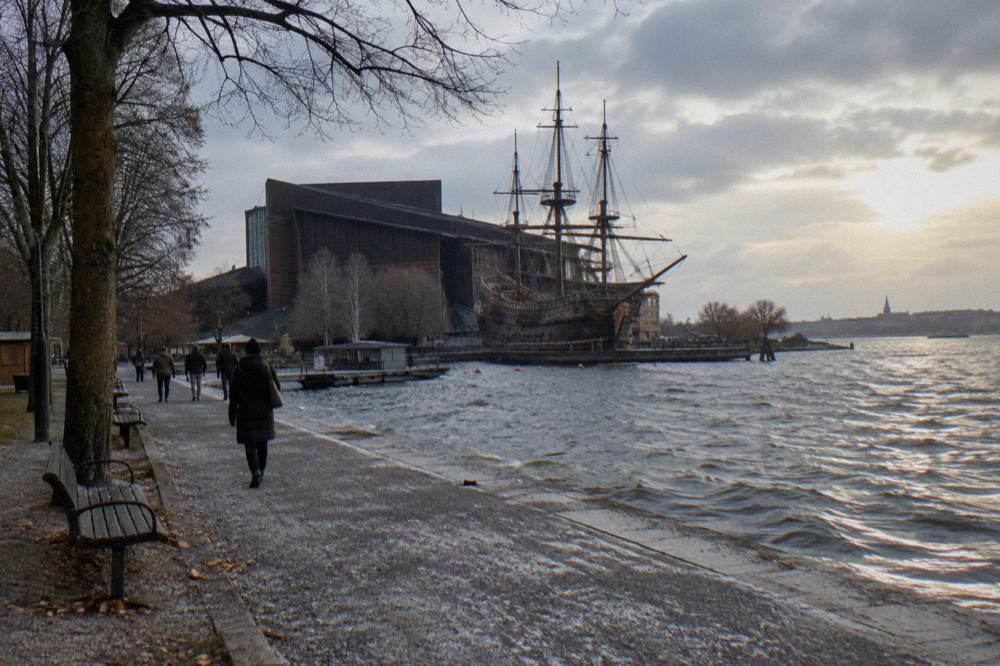
For riders who want the island interpreted rather than explored solo, the tour formats divide cleanly. The Stockholm at a Glance Bike Tour is the shorter shared option at 2 to 3 hours, The Wooden Bicycle Tour in Stockholm runs 2 hours on wooden-frame bikes, and the Stockholm: Guided Bike Tour spans 2 to 3 hours with the option details on the booking page. Each is a shared classic-bike format with a guide; check each booking page for meeting points, inclusions and current pricing, since those details sit with the operator.
When To Ride The Ferry Loop: Weather And Season
The comfortable riding window runs from late May into early September, when the 1991 to 2020 normals show average daily highs of 16.5 to 23.6 C and 15.5 to 18.5 hours of daylight. The ferry runs year-round, and the city salts its cycle paths through winter, so the loop is possible in any month, just with gloves.
The normals table tells the story of the shoulder seasons better than any forecast. May averages a high of 16.5 C against 34 mm of precipitation; June reaches 20.8 C with the longest days at 18.5 hours of daylight; July peaks at 23.6 C. August is the wettest month of the set at 66.2 mm, which matters for a day built around an open-deck crossing, and by November the average high falls to 5.4 C with 7.7 hours of daylight. These are averages, not promises: they describe the climate, not your Saturday.
| Month | Avg high C | Avg low C | Precip mm | Daylight hours per day |
|---|---|---|---|---|
| May | 16.5 | 7.1 | 34.0 | 17.0 |
| June | 20.8 | 11.6 | 61.7 | 18.5 |
| July | 23.6 | 14.8 | 61.5 | 17.7 |
| August | 22.1 | 14.2 | 66.2 | 15.5 |
| September | 16.6 | 10.2 | 53.3 | 12.8 |
| October | 10.1 | 5.5 | 51.4 | 10.2 |
Riders considering the colder months should read the city's own framing: winter cycling is encouraged with the right equipment, and the city's traffic information pages describe sweep-salting of cycle paths to keep them rideable as darkness lengthens. Lights are legally required in darkness only, and the fine for riding unlit after dark is 500 kr. On the guided side, winter e-bike tours with studded tires and provided gear are listed as available in Stockholm from July 2026 availability onward, which extends the season for visitors who want a machine and equipment matched to the conditions.
Whatever the month, the circuit holds together the same way: ride to Slussen, roll the bike onto the ferry at no extra charge if there is space, spend the middle of the day on Djurgården's lanes, and bridge home through Gamla Stan at walking pace in its pedestrian core. It is the shape of a day that first-time visitors repeat to friends, and the ferry, free for the bike and frequent in practice, is the hinge that makes it a loop instead of a line.
Common Questions About The Djurgården Ferry
Can You Take A Bike On The Ferry To Djurgården?
Yes. Bikes travel on the Djurgården ferry, a public commuter boat, at no extra charge, provided there is space on board. Staff judge space and safety and can direct a bike to a later departure. E-bikes go on the open deck, with the battery removed into the deck container if deck space runs out.
Do You Pay Extra For A Bike On The Djurgården Ferry?
No. The operator's rules state that bringing a regular bike on the commuter boats costs nothing extra. The passenger's own ticket covers the journey, and the bike travels at the owner's risk. No fare figure is reproduced here; check the operator's pages for ticketing details.
Can You Take An E-Bike On The Ferry?
Yes, with a placement rule: e-bikes must be positioned outdoors on deck rather than inside the cabin. If there is no deck space for the bike, the stated procedure is to remove the battery and place it in the container on deck. Charging any lithium vehicle on board is banned on all services.
Can You Take A Bike On The Metro Or A Bus Instead?
No. Ordinary bikes are banned on SL buses, the metro and the city's trams and light rail, including the Spårväg City and Nockebybanan. Narrow exceptions exist on some outer rail services off-peak, but for the Djurgården corridor the ferry is the public-transport option for a bike.
What Happens If The Ferry Is Full?
Staff can refuse the bike or send it to a later departure, since space judgement sits with the crew. Build slack into the day, especially around summer weekends and event days, and have the island's bridge approaches as a riding fallback.
Is Djurgården Good For Cycling Once You Are Off The Ferry?
Yes. The island sits in the Royal National City Park, its lanes are recommended for exploring by bike, and seasonal vehicle barriers on Djurgårdsbommen and Vasabommen kept most cars out on summer weekends, leaving the interior quiet. Museums and Skansen charge entry; the park and waterfront lanes are free to ride.