Djurgården By Bike: Skansen, Vasa And The Royal Park
Djurgården is the green island where Stockholm keeps its museums, its royal park and its calmest cycle paths, and a bike is the natural way to see all of it in one loop.
Short answer
Djurgården is a royal park island reachable by bike over bridges or by the Djurgården ferry, which carries bikes at no extra cost when there is space. Cycle paths run the length of the island past Skansen, the Vasa Museum and quiet bays. Guided rides covering the island run 2 to 3 hours; check the booking page for prices.
Djurgården is the island where Stockholm puts its biggest attractions and then surrounds them with forest. Skansen, the Vasa Museum and ABBA The Museum all sit inside a royal park that city sources describe as ideal cycling ground, and the layout rewards two wheels: the museums cluster at one end, the quiet bays and oak woods stretch for the rest. This page lays out the loop as a ride, the paths that carry it, and the guided options if you would rather follow someone who knows the shortcuts. Stockholm counts about 1,170 km of cycleways across the city, per the city's own cycle network pages, and Djurgården holds some of the pleasantest kilometres of them.
What Is Royal Djurgården And Why See It By Bike?
Royal Djurgården is a royal park island east of the city centre, home to Skansen, the Vasa Museum and ABBA The Museum, and its scale is the argument for a bike: the attractions sit at one end while the rest of the island is car-light forest and shoreline path, so a ride covers ground a walking visit cannot. The island belongs to the Royal National City Park, and a reporting guide on Stockholm's e-scooter rules notes bicycles are the recommended way to explore it. Riding means you can move from the museum cluster to the quiet northern shore in minutes rather than an afternoon.
The island has always been built for slow movement. Djurgårdsbommen and Vasabommen, the gates that control vehicle access, were closed to most traffic on weekends and daily peak periods through the 2026 season per the Royal Djurgården visitor information, with exceptions for buses, taxis and permit holders. Cyclists are not the target of those closures. The effect is an island where the default vehicle for a day out is increasingly a bike, either your own two feet on pedals or a rented frame from the seasonal hire stand that opened for the 2026 season on 30 April with classic three-speed city bikes.
For planning, think of Djurgården in three parts. The western edge, around Djurgårdsbron bridge and the museum cluster, is where most visitors spend their time. The southern shoreline path runs past the amusement park grounds toward the ferry landing at Allmänna gränd. The northern and eastern reaches, toward Blockhusudden and the oak woodland, are where the crowds thin and the ride starts to feel like the countryside, minutes from the centre. If the museum cluster is your main priority, the Vasa Museum and Skansen bike-day plan shows how to fit both headliners around a ride through the quieter northern reaches.
Where Do The Cycle Paths On Djurgården Run?
The cycle paths on Djurgården follow the island's shorelines in two linked directions: a southern waterside route runs from Djurgårdsbron past the museums and the ferry landing, while quieter forest roads head north and east toward Blockhusudden. All the stretches connect, so you never need to touch a main road. The city's network pages count Djurgården's paths within the roughly 1,170 km of Greater Stockholm cycleways, and the island's car restrictions keep the shared surfaces calm even in July.
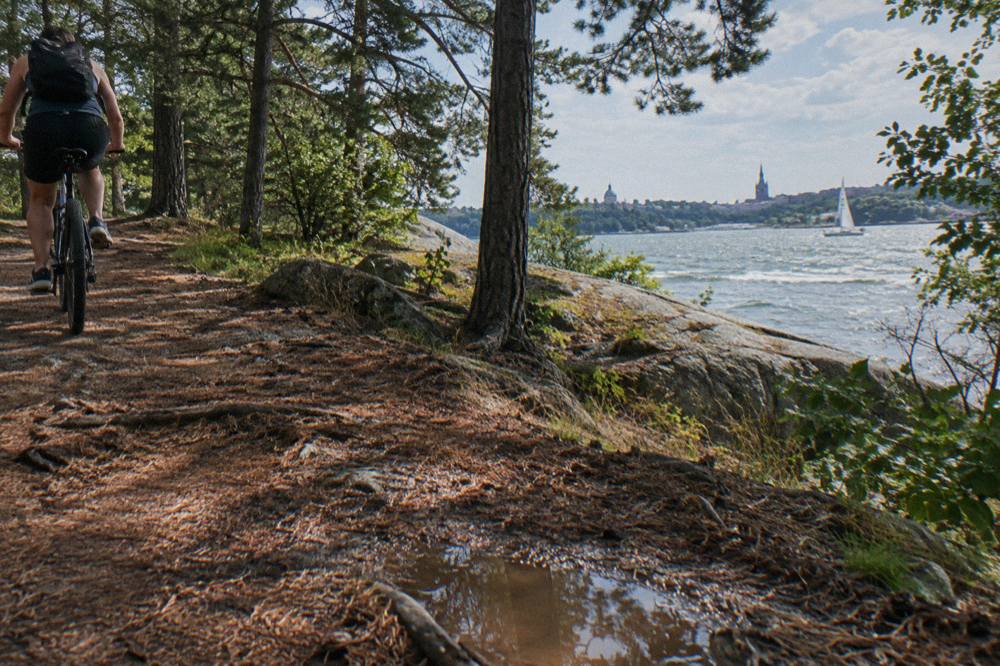
A practical loop starts at Djurgårdsbron, the bridge from Narvavägen, and follows the southern shore west to east. You pass the Vasa Museum, Skansen's entrances and the amusement park, then the path turns inland and north around the bay at Djurgårdsbrunn. From there forest roads carry you east to Blockhusudden at the island's tip, and the return runs the island's spine back toward the bridge. Nothing on that route demands a road bike; a city bike with three gears, the type the seasonal island hire stand lists, handles it.
Two local conditions are worth knowing before you set off. The Riddarholmskanalen path widening on the Gamla Stan side finished in April 2026, two months early per local reporting, which makes the approach from the old town smoother. And on the island itself, no specific e-scooter bans are listed for Royal Djurgården or neighbouring Skeppsholmen in the reporting guide to city rules, so shared bikes and scooters operate there under the general rules. If you would rather not route-plan at all, a guided ride does it for you:
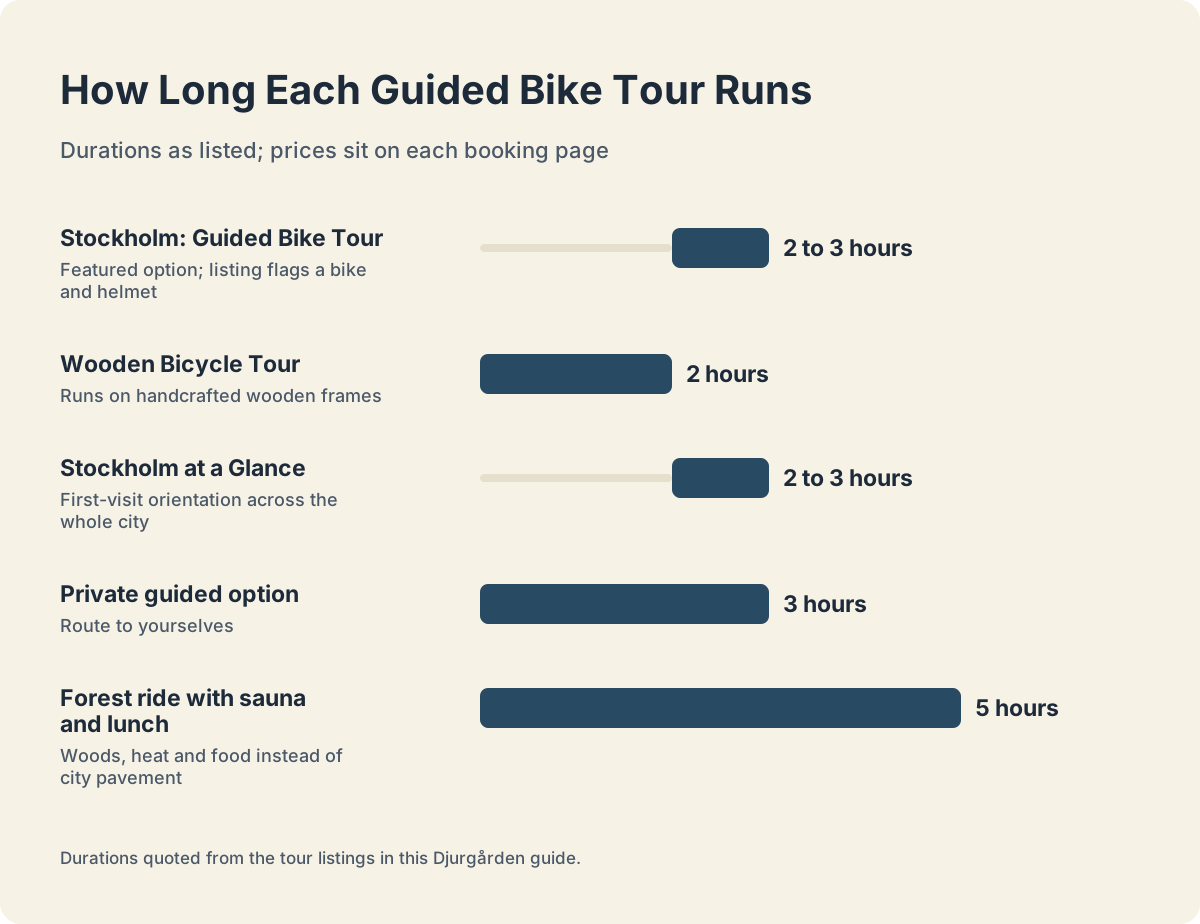
All three cover city ground, including the Djurgården approach. The Stockholm: Guided Bike Tour takes 2 to 3 hours and lists a bike and helmet; the Wooden Bicycle Tour is a 2 hour ride on handcrafted frames; and Stockholm at a Glance works as a 2 to 3 hour first-visit orientation. As outdoor rides, their listings note good weather is needed, with a new date or full refund if cancelled for poor conditions. Prices sit on the booking pages rather than in fixed print here, because operators adjust them by season.
One thing not to expect: separate express lanes. Djurgården's paths are shared with pedestrians, and the island's walking-speed zones near the museum entrances mean you slow to a stroll and yield, exactly as on Gamla Stan's pedestrian streets, where the city's rules require walking pace and priority for people on foot. For a deeper look at the old town side of the crossing, see our guide to Gamla Stan by bike.
How Long Does A Djurgården Bike Loop Take?
There is no official distance figure for the loop in the city's sources, so treat any kilometre count you read online with care; in practice the island is compact enough that the museum end, the eastern forest and the return fit comfortably inside a half day, with stops dictating the clock far more than the riding. Guided tours that include Djurgården in a city circuit run 2 to 3 hours, which tells you the island itself does not eat a whole day. Riders who want to linger at Skansen or the Vasa Museum should budget those museum hours on top.
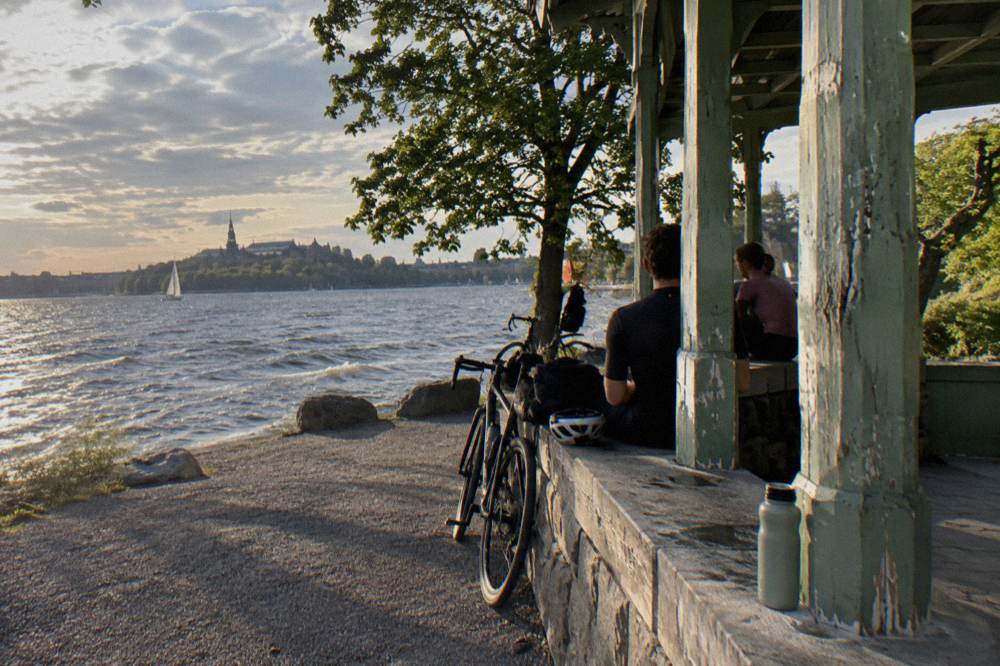
How you split the time is the real decision. Three ways to split the day:
| Version | Time on the island | What it includes |
|---|---|---|
| The quick loop | Under 2 hours | Bridge in, southern shore to Djurgårdsbrunn, return through the forest spine |
| The full circuit | Half a day | The quick loop plus Blockhusudden and stops at viewpoints |
| Museums plus riding | A full day | The loop plus Skansen and the Vasa Museum, at their own entry terms |
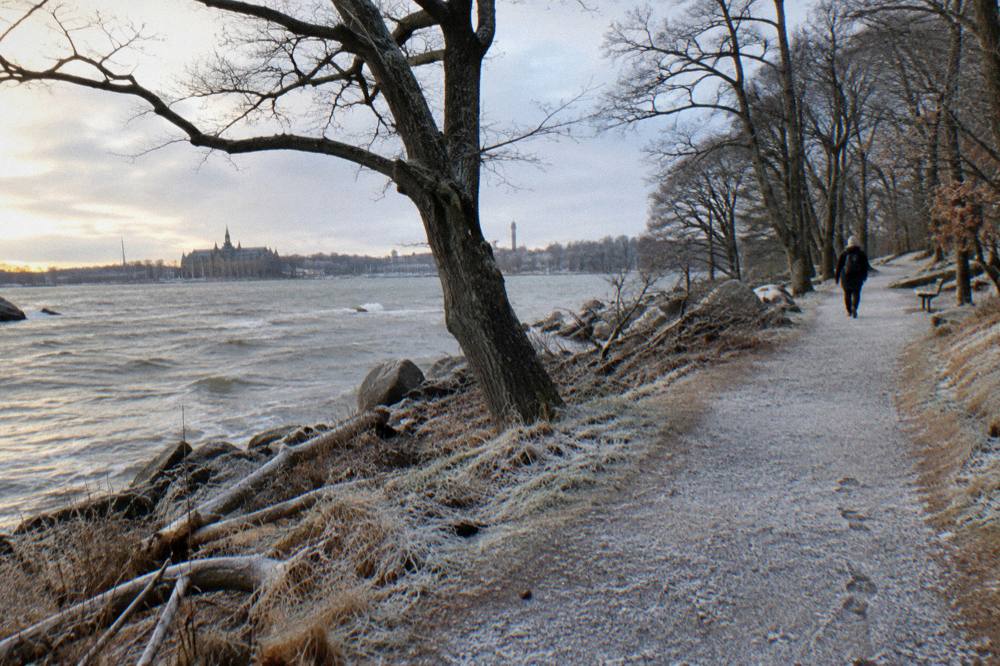
Daylight sets the ceiling outside summer. Stockholm's June days average 18.5 hours of daylight against 7.0 in January, per the SMHI 1991 to 2020 normals, so a November loop is a short-afternoon affair and a June one can run late into the evening. The city's traffic operator notes cycle paths are swept and salted through the dark months down to about minus 6 C, so winter riding on maintained routes is possible with the right gear, though the island's forest paths are not all in that maintained set.
If the planning itself sounds like work, a guided ride absorbs it, and the tour below is the one this site features for the island:
What Do Guided Bike Tours Cover On Djurgården?
Guided rides that touch Djurgården fold the island into a wider city circuit of 2 to 3 hours: expect the bridge approach, the southern shoreline past the museum fronts and often the quieter eastern forest, with the guide's commentary doing the work a map cannot; exact stops vary, so treat the listing's own itinerary as the promise. The Stockholm: Guided Bike Tour is the featured option here, running 2 to 3 hours as a shared classic-bike ride, and its listing flags a bike and helmet in the inclusions. Where a listing names no specific stops, none should be assumed.
The differences between the guided formats matter more than price lists do. The Wooden Bicycle Tour in Stockholm runs 2 hours on wooden bicycles, which turns the bike itself into part of the sight; Stockholm at a Glance runs 2 to 3 hours and suits first-visit riders who want the whole city's geography explained, Djurgården included. Riders weighing the electric question can compare formats in our guide to e-bike or classic bikes for a Stockholm tour, since only one product in the city's tour lineup is a dedicated e-bike ride.
Beyond the standard formats, two further listings stretch the definition of a Djurgården day. A private guided option runs 3 hours with the route to yourselves, and a forest ride with sauna and homemade lunch runs 5 hours, trading city pavement for woods, heat and food. Those suit visitors who want Djurgården's calm as the whole point rather than one stop among many; details and prices sit on each booking page.
A walk covers less ground, plainly. Djurgården plus Södermalm in the same morning is a bike-scale plan, and the trade-offs are laid out in our piece on walking tour or bike tour in Stockholm. What a guided ride adds over independent pedalling is the commentary and the confidence of someone who knows which path the construction works have closed this month.
Can You Take A Bike On The Djurgården Ferry?
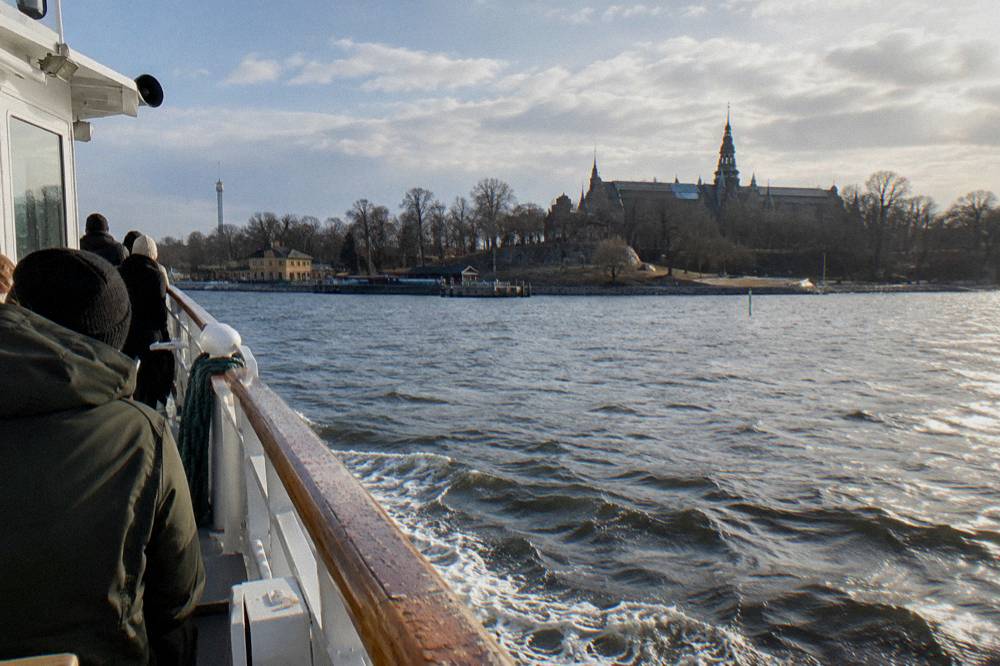
Yes: the Djurgården ferry, SL line 82 between Slussen and Djurgården, carries bikes at no extra cost when there is space, per SL's own rules; staff judge space and safety on the spot and can point you to the next departure, and e-bikes travel on deck. The ferry runs year-round as a commuter boat service integrated with SL ticketing, which makes it the most useful shortcut on the island: ride over Djurgårdsbron, loop the island, and float back to Södermalm with the bike beside you.
The wider bike-on-public-transport picture is stricter. Full-size bikes are never allowed on SL buses, the metro or the city's tram lines per the SL rules for travelling with a bike, with limited permissions on commuter trains and some light-rail lines outside rush hours. The ferry is the exception that matters for this island, and the practical detail is the deck rule for e-bikes: they stay outdoors, and if deck space runs out you remove the battery and place it in the deck container. No ferry fare figure appears in the verified sources, so check SL's own pages for the current ticket.
Planning a day that combines the boat and the pedals is common enough that we keep a separate answer for it in can you take a bike on the ferry to Djurgården, including the waxholmsbolaget rules if you continue further out into the archipelago, where a regular bike also travels free if space allows and bulky bikes are charged as goods.
What Rules Apply To Cycling On Djurgården?
National cycling rules apply across Djurgården: ride on the cycle path where one exists, keep right, and equip your bike with working brakes and a bell at all times plus lights after dark. Children under 15 must wear a helmet, walking-pace zones require you to slow and yield, and fines range from 500 kr for missing equipment to 1,500 kr for running a red light. Those figures come from the police and Transportstyrelsen cycling pages, and they hold on Djurgården's shared paths exactly as on city streets.
| Rule | Requirement | Fine if broken |
|---|---|---|
| Helmet | Mandatory under 15 only | 500 kr for an adult carrying an unhelmeted child |
| Bell and brakes | Required at all times | 500 kr |
| Lights and reflectors | Darkness only, visible at 300 m | 500 kr |
| Pedestrian streets | Walking pace, yield to pedestrians | 1,000 kr for speeding |
| Red light | Stop | 1,500 kr |
The island specifics are gentler than the mainland's. E-scooters are banned in Gamla Stan's core except along two quayside streets, but no equivalent ban is listed for Djurgården, and bicycles are explicitly recommended there in the reporting guide to city e-scooter rules. The seasonal vehicle gates at Djurgårdsbommen and Vasabommen, which closed the island's entrance roads to most cars through the 2026 season, do not restrict cyclists at all. The one behaviour that matters is pace near the museum entrances in summer, when the shared surfaces fill with families and the walking-pace rule is both law and courtesy.
Helmet law deserves precision, because the myths travel further than the rule. Adults ride bare-headed legally; the requirement covers everyone under 15, and an adult carrying a helmetless child can be fined 500 kr, per the police cycling page. Guided tours supply helmets as part of their inclusions where the listing flags it, which sidesteps the question for families. Our full rulebook piece covers the rest in cycling rules in Stockholm.
What Is Open On Djurgården Through The Year?
The island's headline museums and Skansen run year-round, and the autumn of 2026 added fresh reasons to go: the Vasa Museum launched its Vasa Walk audio guide on 29 October, ABBA The Museum opened a 50th-anniversary Dancing Queen exhibition, and Skansen's Christmas market runs Fridays to Sundays from 27 November to 20 December. None of those entries is free, and no entry prices appear in the verified sources, so check each venue's own page; the riding, the park and the shoreline cost nothing.
| Draw | Status | Season notes |
|---|---|---|
| Vasa Museum and Vasa Walk | Audio walk launched 29 October, crossing Djurgården to Beckholmen | Museum open year-round |
| ABBA The Museum, Dancing Queen | 50th-anniversary exhibition | Open year-round |
| Skansen Christmas market | 12 market days, Fri and Sat 10:00 to 17:00, Sun 10:00 to 16:00 | 27 November to 20 December |
| Island bike hire stand | Opened 30 April for the season, 3-speed city bikes | May Thu to Sun 10:00 to 17:00, daily in peak summer, weekends only in September |
| Stockholm bike event | Held on Södra Djurgården | 6 September 2026 edition |
The event calendar gives the island a second life beyond the museums. A bike event took place on Södra Djurgården on 6 September 2026, listed among Royal Djurgården's official events, and the island's roads hosted club races on the northern side through spring. For visitors these matter mainly as atmosphere: a summer Sunday on Djurgården smells of food stalls and sounds like bells, and the riding is better for it.
Winter resets the balance. Shared e-bikes are not free and the hire stand closes, but the city's traffic operator confirms maintained commuter cycle routes keep being swept and salted through the dark months, and guided winter e-bike rides run in the city with winter tires and gear included. The museums, the market and the sauna-style forest tours carry the season.
When Is The Best Season To Ride Djurgården?
By the SMHI 1991 to 2020 normals, the sweet spot is May to September: average highs climb from 16.5 C in May to 23.6 C in July, June delivers 18.5 hours of daylight, and the wettest month is August at 66 mm, so the odds favour a dry, long ride most of the season. April and October still ride well at around 10 C averages, with about 14.5 hours of daylight in April and 10 in October, and they come with thinner crowds at the museum gates.
| Month | Avg high C | Precip mm | Daylight hours |
|---|---|---|---|
| April | 10.7 | 29.2 | 14.5 |
| May | 16.5 | 34.0 | 17.0 |
| June | 20.8 | 61.7 | 18.5 |
| July | 23.6 | 61.5 | 17.7 |
| August | 22.1 | 66.2 | 15.5 |
| September | 16.6 | 53.3 | 12.8 |
| October | 10.1 | 51.4 | 10.2 |
Those are climate normals, not forecasts, and Stockholm's weather does occasionally break its own averages: the summer of 2026 was the coolest for Sweden as a whole since 2017 while still sitting above the 1991 to 2020 normal, per SMHI's seasonal summary. Layered clothing beats a wardrobe bet either way, and our guide on what to wear on a Stockholm bike tour covers the seasons piece by piece, with a separate plan for wet days.
Timing within the day matters as much as the month. The museum cluster peaks around midday, especially on cruise-ship days, while the eastern forest paths stay quiet almost regardless. Riding the loop early and doing museums in the afternoon, or the reverse in June when daylight runs past 21:00, is the standard local trick. The seasonal hire stand's own hours, weekends only in September, quietly signal when the island's riding season is considered to end.
Three guided rides that suit a Djurgården-first visit, each one bookable with free cancellation:
Whichever way you ride it, Djurgården is the part of Stockholm where a bike is least optional and most rewarded, and the island repays an early start, a ferry back and no schedule at all. This Stockholm Bike Tours guide covers the island end to end; the rest of the site covers every other district the same way.
Common Questions About Djurgården By Bike
Can You Cycle Around Djurgården?
Yes. Cycle paths and quiet forest roads ring the island, bicycles are the recommended way to explore it per reporting on city rules, and guided city rides of 2 to 3 hours routinely include it. No official loop distance is published, so budget by time and stops rather than kilometres.
How Do I Get To Djurgården With A Bike?
Ride in over Djurgårdsbron bridge from Östermalm, or take the Djurgården ferry, SL line 82 from Slussen, which carries bikes at no extra cost when space allows, with e-bikes placed on deck. Full-size bikes are not permitted on SL buses, the metro or city trams.
Do Bike Tours Go To Djurgården?
Yes. Shared guided rides of 2 to 3 hours, including the Stockholm: Guided Bike Tour, Stockholm at a Glance and the 2-hour Wooden Bicycle Tour, cover city circuits that take in the island's shoreline. Stops vary by departure, so treat each listing's itinerary as the definitive one.
Is Djurgården Car-Free?
Not fully, but vehicle access is restricted: Djurgårdsbommen and Vasabommen closed to most vehicles on weekends and daily peak periods through the 2026 season, with exceptions for buses, taxis and permit holders. Cyclists and pedestrians are unaffected.
What Does It Cost To Visit Djurgården Itself?
Nothing: the park, the paths and the shoreline are free to ride and wander. The museums and Skansen charge entry, and no entry prices appear in this site's verified sources, so check each venue directly. Bike hire and guided tours are priced on their booking pages.
When Is Skansen's Christmas Market On?
The market runs 27 November to 20 December, Fridays and Saturdays 10:00 to 17:00 and Sundays 10:00 to 16:00, 12 market days in all. November and December riding on the island is possible on maintained paths with lights and warm layers.