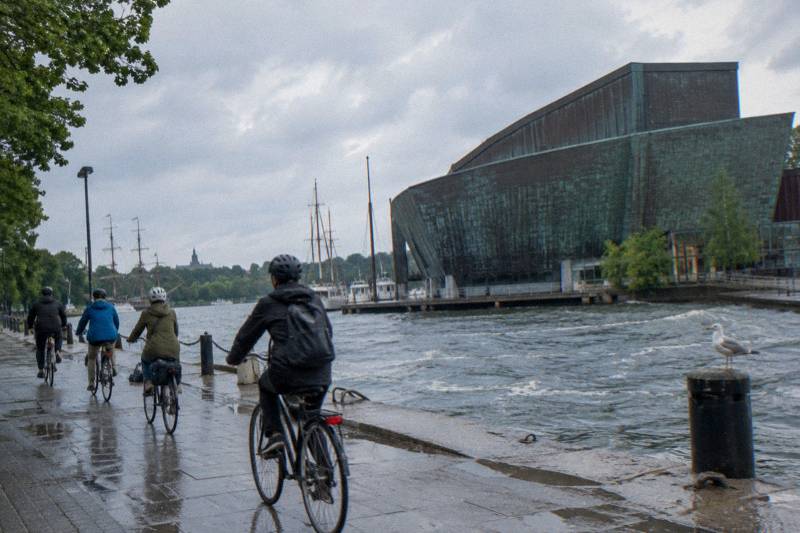
Is A Walking Tour Or A Bike Tour Better In Stockholm?
A practical comparison of walking tours and guided bike tours in Stockholm: ground covered, districts that suit each, durations, seasons and how to combine both in one day.
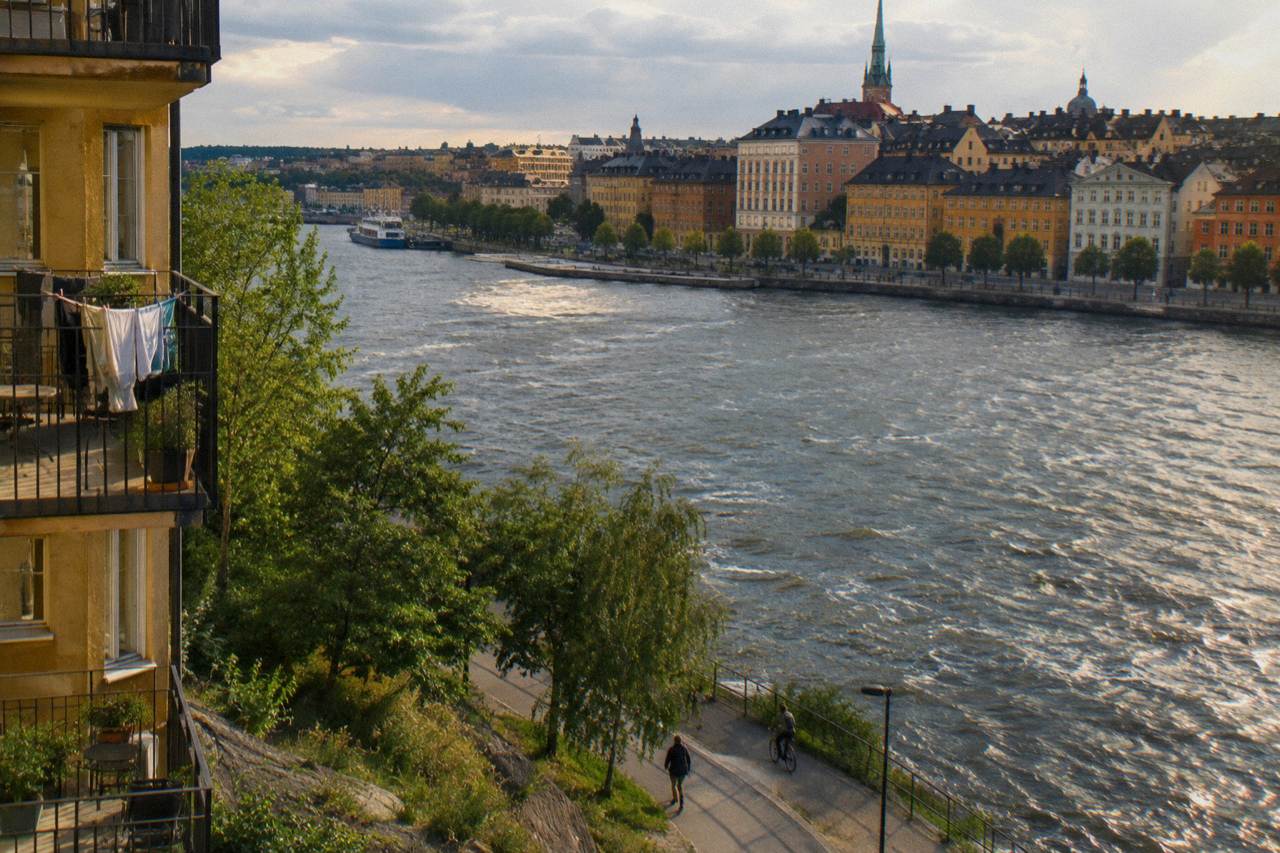
Neither wins outright, because Stockholm splits cleanly in two: Gamla Stan's car-free core is better walked at the pace the law effectively demands, while Djurgården, Södermalm and the bridges between them open up on a bike. A 2 to 3 hour guided ride covers multiple islands in one outing; a walking tour of the Old Town goes deeper into one. Most visitors get the most from doing half a day of each. If Copenhagen is also on your shortlist, our comparison of the two Scandinavian capitals shows why cycling gives Stockholm the edge.
The honest answer starts with geography. Stockholm is built across fourteen islands, and the distances between the things visitors want to see are longer than they look on a map. Gamla Stan, the Old Town, is compact and largely pedestrianised, with rules that push cyclists to walking pace on its inner streets. Djurgården, the royal park island where the Vasa Museum and Skansen sit, is green, spread out and criss-crossed by bike paths. Södermalm's viewpoints and neighbourhoods sit on a ridge with real distances between them.
That split is why this question has a real answer rather than a shrug. A walking tour and a bike tour in Stockholm are not two versions of the same product. They are two different products suited to two different halves of the city, and the guided options on offer reflect that: the classic guided bike tours run 2 to 3 hours and move between islands, while the free-form and paid walking options concentrate on the Old Town's lanes and squares.
This article compares them on the ground each covers, the time each takes, the rules that shape them, and the seasons that favour them. Where a detail like a price or a specific stop is not fixed, the guidance is simple: check the booking page, because operators adjust both. The city has roughly 1,170 km of cycleways, lanes and paths, per the city's own cycling pages, and most of the visitor-relevant network sits within a short ride of the centre.
For readers who already know they want a guided ride, the three options below are the natural starting points: the classic guided tour, a shorter city overview ride, and a wooden-bicycle tour that is a format contrast rather than a distance contest.
What A Stockholm Walking Tour Covers
A Stockholm walking tour concentrates on Gamla Stan and the immediate centre: Stortorget, the palace, the narrow lanes and the harbour edges. Walking suits this district because its inner streets are pedestrian streets where cycles must yield to people and move at walking pace. Depth, not distance, is what a walk buys you.
Gamla Stan is the classic territory of a stockholm walking tour, and for good reason. The island's inner streets are pedestrian streets with a round-the-clock parking ban, and the city's traffic rules for the district require anyone cycling there to proceed at walking pace and give way to pedestrians, with vehicle restrictions in force through the day. In practice, a bike in the Old Town's core is a bike you are pushing or crawling on. A guide on foot, by contrast, can stop mid-lane, gather a group, and talk about a building without holding up anyone.
What a good walk delivers here is detail. Stortorget, the main square, received new vehicle barriers in a project that began in October 2026 and was due to complete by mid-November, ahead of the Christmas market season; the square's granite and planters are part of a deliberate slow-down of the district. The palace, the cathedral, the merchant lanes and the water edges all sit within a few minutes of each other. A walking guide layers history onto places you would otherwise photograph and pass.
The centre beyond Gamla Stan extends a walk's reach slightly: Norrmalm's streets, the Riddarholmen island viewpoint, and the edges of Södermalm across the bridge. But the further a walking itinerary stretches from the Old Town, the more it becomes a commute. That is the structural limit of the format, and it is not a criticism of guides, it is geometry.
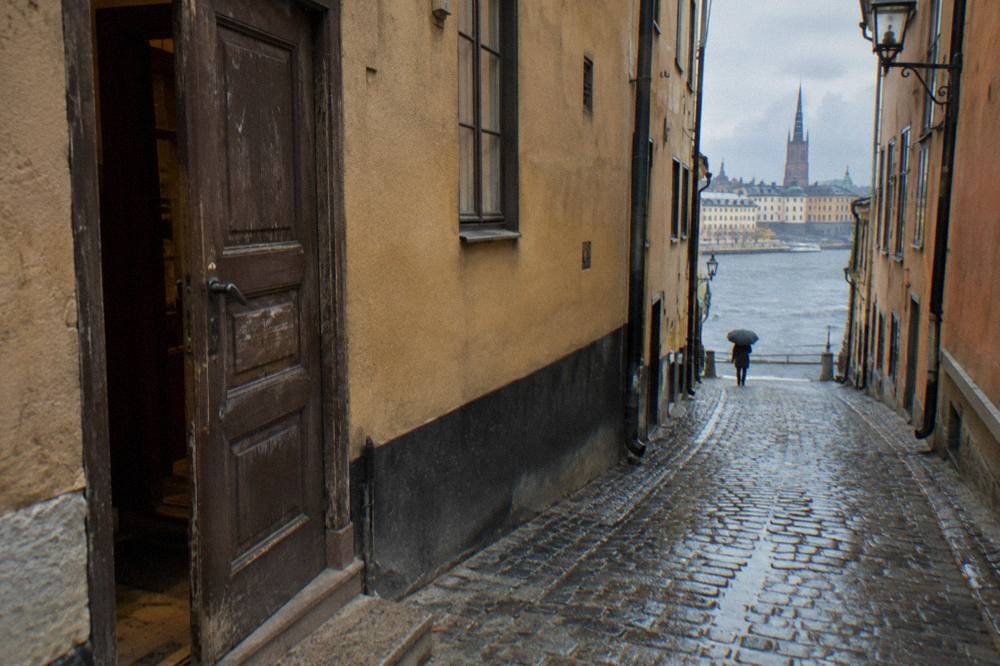
One more point in walking's favour: the city's rules explicitly put pedestrians first in this district, and e-scooters are banned in Gamla Stan except along Munkbroleden and Skeppsbron. The Old Town is, by design, a place that belongs to people on foot. If your priority is the oldest part of the city, a walk is not the compromise option, it is the correct one, and our Gamla Stan by bike guide covers how the two formats split the district between them.
What A Guided Bike Tour Covers
A guided bike tour in Stockholm typically runs 2 to 3 hours and links several islands in one loop: the centre, Gamla Stan's edges, Södermalm's waterfront and Djurgården's park paths. The format trades the Old Town's lane-level detail for breadth, covering in one ride what would take a full day on foot.
The standard guided rides on the city's books make the trade explicit. The Stockholm: Guided Bike Tour runs 2 to 3 hours as a shared, classic-bike tour with a guide and bike included, per its listing. Stockholm at a Glance, a shorter overview option, runs 2 to 3 hours as well, and Bike Tour Stockholm runs a full 3 hours. The Wooden Bicycle Tour is a 2 hour shared ride whose hook is the bikes themselves. None of these is a race; the pace is set for a group with stops, and the guide carries the commentary the way a walking guide does, just between longer stretches of movement.
What the bike format genuinely adds is the islands that walking tours touch only at their edges. Djurgården is the clearest case: the royal park island is large, green and threaded with cycle paths, and the city's own visitor guidance recommends bicycles for exploring it. The museums there, including the Vasa Museum, which launched a new Vasa Walk audio experience starting outside the museum and crossing Djurgården to Beckholmen, are spread along water and woodland rather than clustered in a single square. On foot, that spread becomes a schedule. On a bike, it becomes a route.
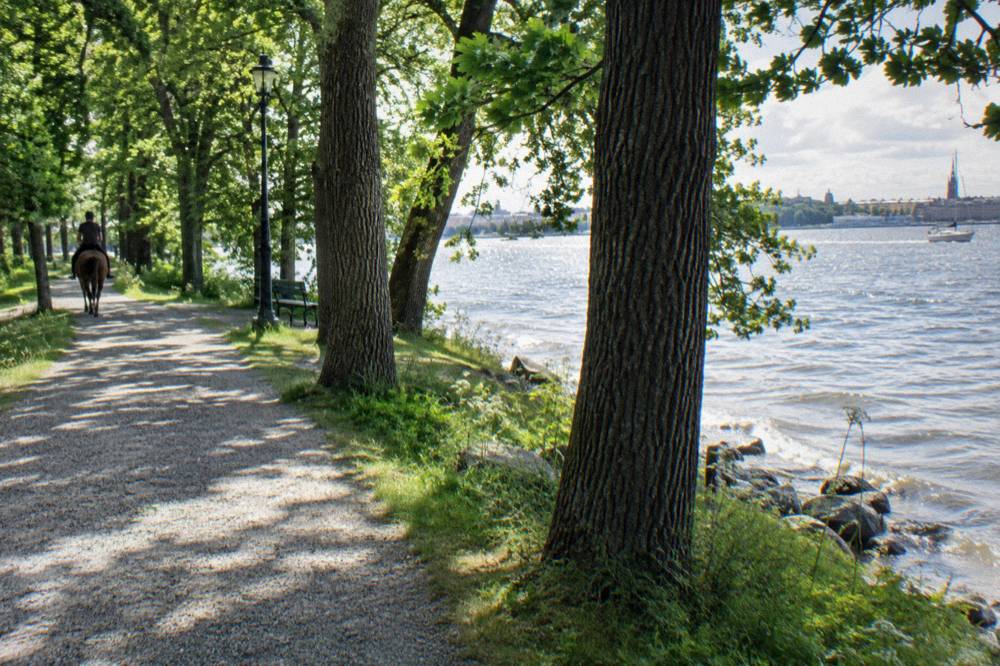
Södermalm is the second case. The district's photo viewpoints, its blocks of independent shops and its waterfront paths are connected but not adjacent, and the city has been actively improving the riding there: a green wave for cyclists was introduced on sections of Hornsgatan and Långholmsgatan, timed for riders travelling at 20 km/h, and a new cycle path and cycle street project on Ringvägen is progressing toward completion in 2027. A guided ride across the bridges gives you Södermalm's skyline stops without spending your day walking between them.
There is also a bridge-and-water story that only a bike ride tells well. Stockholm's crossings, Vasabron, Slussbron and the planned new pedestrian and cycle bridge over Söderström at Slussen, expected to open in early 2027, are how the city actually fits together. A loop that uses them is a geography lesson as much as a sightseeing run. Our one day bike and ferry plan shows how a ride and the Djurgården ferry combine.
If hills are the worry, there is an e-bike answer: the Stockholm E-Bike City Tour, a 2 hour 30 minute shared ride, is the dedicated electric option among the guided products.
Where Walking Wins: Gamla Stan's Core
Walking wins inside Gamla Stan's pedestrian core, where traffic rules require cyclists to move at walking pace and yield to pedestrians, and where e-scooters are banned except on two edge streets. The district's lanes, squares and palace quarter are built for stopping, looking and listening, which is exactly what a walking guide does.
The rule detail matters more than visitors expect. The city's traffic regulations for Gamla Stan make the inner streets pedestrian streets with a 24/7 parking ban, restrict vehicle access through the day, and require any cycle traffic to proceed at walking pace giving way to pedestrians. Reported guidance repeats the same point: cycles on the district's pedestrian streets go at walking speed. A cyclist in the heart of Gamla Stan has, legally and practically, become a pedestrian with a machine attached.
That is not a reason to skip the district on a bike tour. The edge streets, Munkbroleden and Skeppsbron, run along the water and carry cycle traffic legitimately, and most guided rides pass the island's rim rather than its core. But the lanes themselves, the alleys that make the Old Town what it is, belong to feet. A walking tour that turns into Stora Nygatan or the quarters behind the cathedral delivers something a rolling tour cannot: standing room in an old merchant street with a guide talking over it.
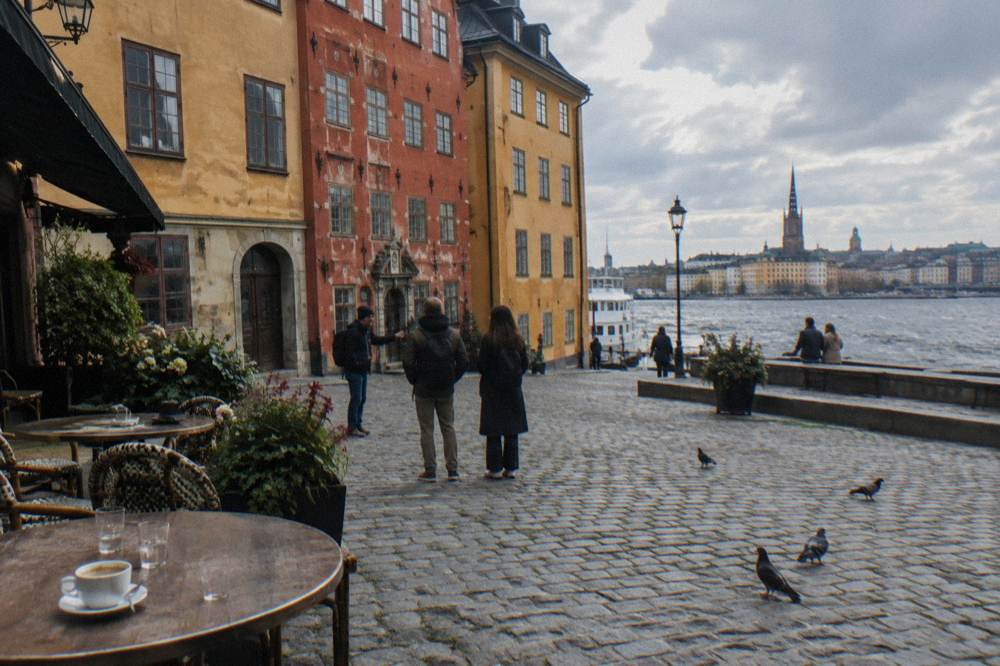
Riddarholmen deserves a mention in the walking column too. The small island just west of Gamla Stan, with its church spire and its canal-side path, sits close enough to walk into any Old Town itinerary. Cyclists should note that the widened cycle path along Riddarholmskanalen, a project that closed the lane during works and then opened early, in April 2026, two months ahead of schedule, now makes the canal edge a pleasant riding link on the district's outside. The pattern repeats: rims ride well, cores walk well.
Where Bikes Win: Djurgården And Södermalm
Bikes win on Djurgården and across Södermalm, where distances between sights are measured in kilometres of park and ridge rather than metres of lane. Djurgården's museum spread and Södermalm's viewpoints sit on a path network the city actively maintains and keeps rideable through winter.
Djurgården is the strongest single argument for the bike format. The island's attractions line up along water and parkland, and the seasonal vehicle restrictions on Djurgårdsbommen and Vasabommen, which closed those stretches to most vehicles on spring and summer days in 2026, make the environment calmer for two wheels. Skansen's Christmas market, opening 27 November 2026 and running Fri to Sun until 20 December, and the new Dancing Queen exhibition at ABBA The Museum, open year-round, give the island reasons to visit that a walking itinerary from the centre cannot comfortably reach and return from in one afternoon.
Södermalm rewards wheels for a different reason: it is a district of destinations rather than a district of lanes. The Monteliusvägen viewpoint, the SoFo blocks, the Hornstull waterfront and Fotografiska, whose current exhibitions run into 2027 with daily opening and late hours Thu to Sat, are strung along a ridge. Riding between them is minutes; walking is a hike with a reward at each end. The city's investment here, green-wave signal timing at 20 km/h on two Södermalm streets and the Ringvägen cycle path project, signals that this is meant to be ridden.
Winter does not switch the argument back to walking as firmly as visitors assume. The city sweeps and salts about 38 mil of cycle paths, working down to about minus 6 C for bare-path conditions, per the regional traffic information service. Guided riding continues in the colder months, and the climate normals for November, an average high of 5.4 C and lows near 2 C, are cold but workable with the right layers, a subject our what to wear on a Stockholm bike tour guide covers in detail.
Cost, Duration And Format Compared
On duration, the guided bike products run 2 to 3 hours and the walking format is similar or shorter for the Old Town alone. On price, the honest answer is that figures move, so compare on the booking pages; on format, the real difference is shared versus private, classic versus e-bike, and one island versus several.
The table below compares the formats on what is stable: time, riding style and what each is for. Prices are deliberately left off, because they change with season and demand; each operator's booking page carries the current figure, and our cost comparison guide breaks down what tends to drive them.
| Option | Listed duration | Format | Best for |
|---|---|---|---|
| Stockholm: Guided Bike Tour | 2 to 3 hours | Shared, classic bike, guide and bike included | A first visit wanting several islands in one loop |
| Stockholm at a Glance Bike Tour | 2 to 3 hours | Shared, classic bike | A shorter city overview |
| Bike Tour Stockholm | 3 hours | Shared, classic bike | The longest standard city loop |
| The Wooden Bicycle Tour | 2 hours | Shared, distinctive wooden bikes | A format experience as much as a tour |
| Stockholm E-Bike City Tour | 2 hours 30 minutes | Shared, e-bike | Riders who want help on the hills |
| Stockholm 3-Hour Private Guided Bike Tour | 3 hours | Private, classic bike | Families or groups wanting their own guide |
| Gamla Stan walking tour | Typically 1 to 2 hours | On foot | The Old Town's lanes, squares and palace quarter |
Two honest caveats belong beside that table. First, the different guided products come from different operators, and price gaps between them reflect listing differences, not a ranking; a higher price usually tracks duration, group intimacy or inclusions such as the bike itself. Second, review pools on some of these listings are small, so treat ratings on the booking page with the review count in view, and lean on what the listing actually states: duration, format and inclusions.
A private option deserves a sentence of its own. The Stockholm 3-Hour Private Guided Bike Tour is the guided-ride answer for families with children or groups who want the route shaped around them; children under 15 must wear a helmet by Swedish law, and tour operators typically supply them, but confirm on the booking page. Our family bike tours guide goes deeper on riding with kids.
How To Choose Based On Season
Season tilts the choice modestly toward walking in the dark months and toward riding from late April through September, when normals show highs of 10.7 C in April rising to 23.6 C in July and daylight reaches 17 to 18.5 hours per day. Winter riding in Stockholm remains possible because the city salts its main cycle paths.
The SMHI 1991 to 2020 normals give the shape of the year. May averages a high of 16.5 C with 17 hours of daylight; June peaks at 20.8 C and 18.5 hours; July is the warmest at 23.6 C. August is the wettest month at 66.2 mm on average, and by November the high is 5.4 C with 7.7 hours of daylight. The first snow with standing cover tends to fall around late November in Stockholm, per SMHI statistics.
For a walking tour, none of that is disqualifying: the Old Town in cold weather, with the Christmas market season at Stortorget and Skansen from late November, is arguably at its most atmospheric. For a bike tour, the season shapes comfort more than feasibility. Riders booking between November and March should expect cold air on the bridges, ask the operator about studded or winter tyres on the booking page, and dress in layers.
What the season question should not do is force a false either-or. The shoulder months, May, June and September, are when both formats operate comfortably and when the day is long enough to do both: a walk in the morning and a ride in the afternoon. That combination is the practical recommendation Stockholm Bike Tours makes most often, and it needs no extra ticket, just a plan.
Mixing Both In One Day
The strongest single-day plan pairs a morning walking tour of Gamla Stan with an afternoon guided bike ride across Södermalm and Djurgården, with the Djurgården ferry linking the legs. Bikes ride the ferry at no extra charge, subject to space, which makes the loop both cheap to move around and easy to pace.
A sample day looks like this. Morning: a walking tour through Gamla Stan's core, Stortorget, the palace quarter, the lanes, finished before the midday crowds build. Midday: pick up a guided ride, or join the afternoon departure of a shared tour such as the Stockholm at a Glance ride or the classic guided tour. Afternoon: the ride crosses to Södermalm's viewpoints, runs the waterfront, and finishes on Djurgården's park paths. Return: roll onto the Djurgården ferry, which carries bikes at no extra cost when there is space, and ride or stroll back to the centre from Slussen.
The sequencing is not arbitrary. Gamla Stan's walking rule means the district rewards an unhurried morning, and its edge streets connect directly to the bridge network a ride uses. Djurgården's spread means it is the right last leg, when legs are tired and the ferry offers a sit-down crossing back. Done in the other order, you end the day walking the Old Town's lanes at the busiest hour, which is the one mistake worth engineering out of the plan.
The ferry detail is worth knowing in advance: it is a regular public service, staff judge space and safety on the spot, and e-bikes travel on deck. Beyond the ferry, bikes are not allowed on the metro, buses or most trams in Stockholm, per the transport authority's rules, which is one more reason a guided loop that returns you to the centre under its own power is a tidy format.
Common Questions About Walking Or Biking In Stockholm
Is A Walking Tour Or A Bike Tour Better In Stockholm?
Walk Gamla Stan, ride everywhere else. The Old Town's pedestrian streets legally push bikes to walking pace, so a walking tour gets more from it, while a 2 to 3 hour guided bike ride links Djurgården, Södermalm and the centre in one loop. Doing half a day of each is the best use of a full day.
Stockholm Walking Tour
A stockholm walking tour usually means Gamla Stan and the adjacent centre: Stortorget, the palace, the lanes and the harbour edges. The district's car-free core is where walking is genuinely the better format, and tours typically run one to two hours. Check the booking page for the current price and departure times.
Can You Cycle Through Gamla Stan?
Yes, but slowly and only in the right places. The inner streets are pedestrian streets where cycles must move at walking pace and yield to pedestrians, and e-scooters are banned except on Munkbroleden and Skeppsbron. Guided bike tours generally use the district's edge streets and cross the island by its rim.
How Long Are Guided Bike Tours In Stockholm?
The standard guided rides run 2 to 3 hours: the classic guided tour is listed at 2 to 3 hours, the full city loop at 3 hours, the shorter overview at 2 to 3 hours, the wooden-bicycle tour at 2 hours and the e-bike city tour at 2 hours 30 minutes. A private 3-hour option also exists for groups.
Is Stockholm Too Hilly For A Regular Bike Tour?
Parts of Södermalm sit on a ridge, and some bridges carry a climb, but the standard guided tours pace for a group and stop regularly. Riders who want assistance can take the e-bike city tour, the dedicated electric option among the guided products.
Do You Need A Helmet On A Stockholm Bike Tour?
Adults have no helmet law in Sweden. Children and young people under 15 must wear one when cycling, and parents can be fined for carrying a child without a helmet. Tour operators typically provide helmets; confirm on the booking page before you go.