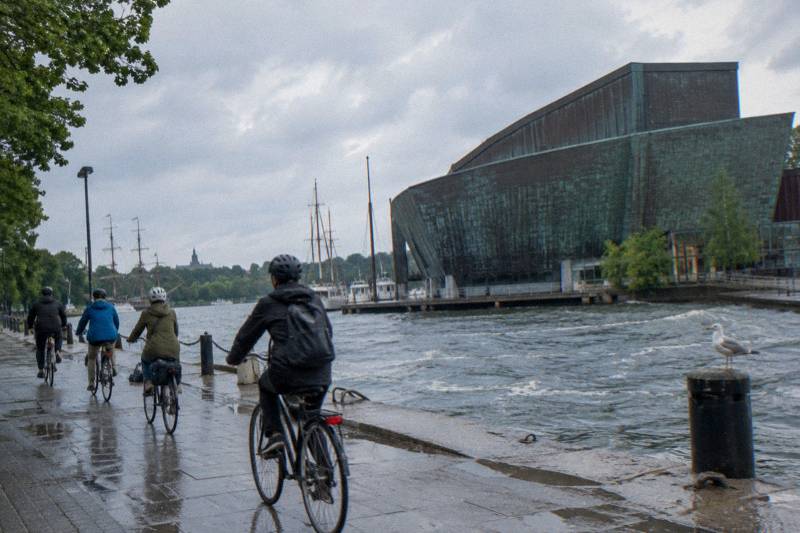
What Not To Do In Sweden As A Tourist?
The cycling and visitor mistakes that can cost you a fine in Stockholm and Sweden, from sidewalk riding to missing bike lights, plus how a guided ride keeps you on the right side of the rules.
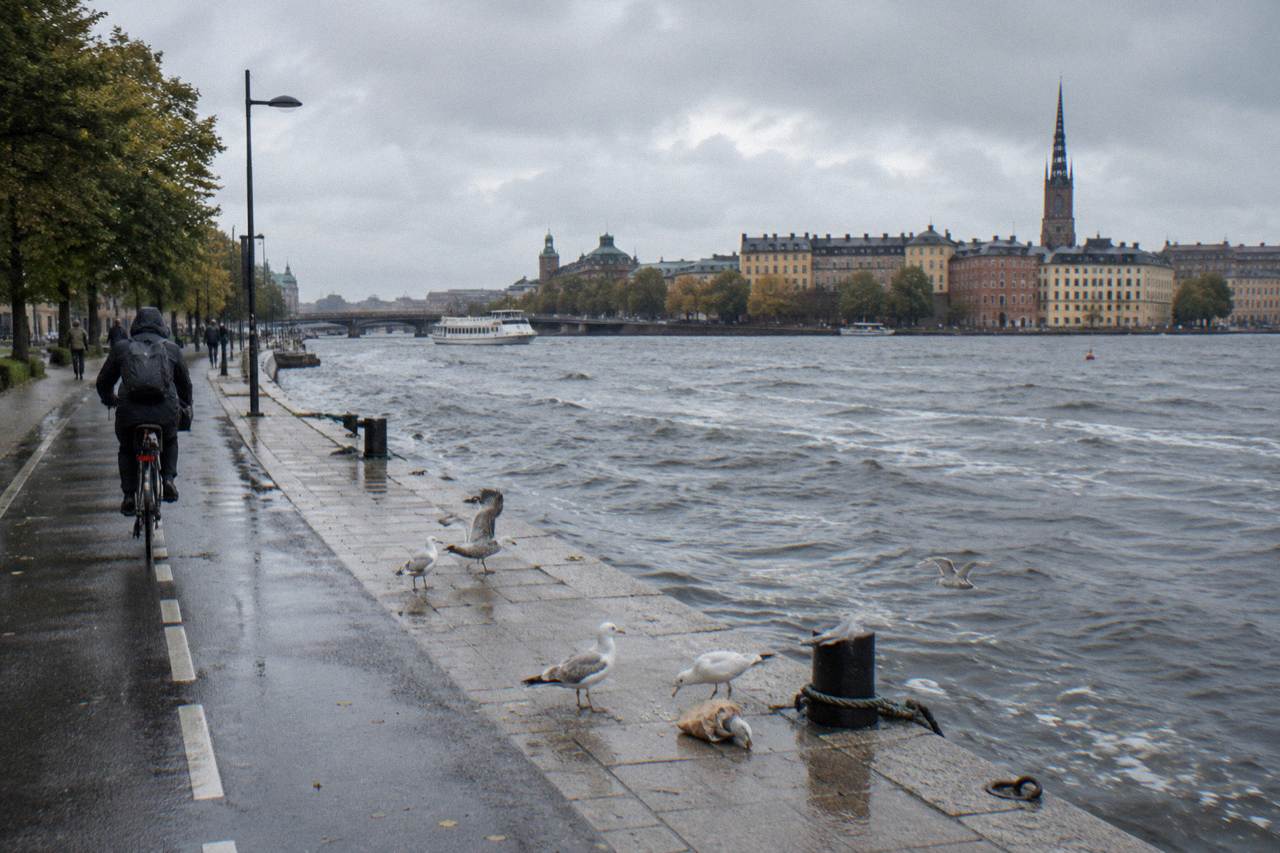
The mistakes that actually cost visitors money in Sweden are cycling ones: riding on sidewalks, speeding through pedestrian streets, missing lights after dark, or boarding a metro with a full-size bike. Stockholm's police fines for these run 500 to 1,500 kr, and even careful riders can be caught out on day one. Learn five rules before you ride and the rest of the country is remarkably forgiving.
Sweden rewards preparation more than instinct. The country runs on trust, queueing and quiet, but the visitor-facing rules that carry consequences are almost all about how you move through the city, and in Stockholm that usually means how you ride a bike. The city has roughly 1,170 km of cycle routes, an expanding network of separated lanes, and a police force that does fine cyclists for the same infractions it fines drivers for.
The good news is that the rules are few, published in plain language by the Swedish transport and police authorities, and consistent across the country. You do not need to absorb a culture lecture to stay on the right side of them. You need to know where your bike belongs, how fast it may go on shared streets, what it must carry in the dark, and where you may take it on public transport. That is the substance of this article, with the exact fine levels attached so you can weigh the stakes yourself.
For many visitors the simplest insurance is a guided ride, where a local guide handles the route, the bike and the helmet per the listing, and you simply follow. The Stockholm Bike Tours site covers the full range of options; the shortlist below is a reasonable starting point for first-time visitors who would rather learn the rules by riding with someone who already knows them.
A guided ride is not a requirement, just a shortcut. Everything below applies equally if you rent your own bike, use the shared e-bikes, or arrive on foot. The rules are the rules regardless of how you got the wheels.
Don't Ride On Sidewalks Or Skip The Cycle Path
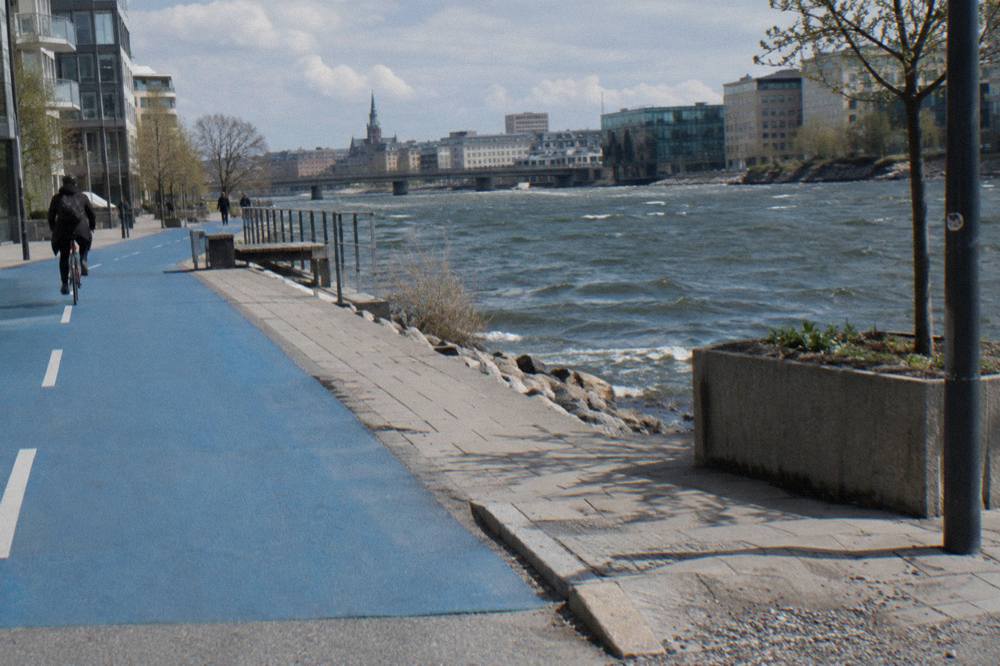
If a cycle path exists, Swedish rules say you should normally use it, and riding on the sidewalk instead is a 500 kr fine. On pedestrian streets and walking-speed zones you must yield to people on foot and ride at walking pace; going faster there costs 1,000 kr. Keep right, and treat the bell as mandatory equipment, not decoration.
The Swedish Transport Agency's rule is direct: if there is a cycle path, use it. Stockholm has been building these paths aggressively, with 2.5 m wide lanes on Sveavägen opened in May 2026 and a new northbound lane on Vasabron completed in June 2026, so in the centre the cycle path usually exists and is usually the fastest option anyway. The sidewalk is not a shortcut here, it is a finable offence, and police do enforce it.
The bell matters more than visitors expect. Every bike in Sweden must have a working bell and working brakes at all times, and riding without either is a 500 kr fine per item, as the Transport Agency's cycle rules page makes clear. Rental bikes come with both. Shared e-bikes come with both. If you are borrowing a friend's old racer, check before you set off, because the fine costs more than the bell.
The fine ladder is worth knowing in full, because it tells you where Swedish enforcement actually directs its attention:
| Mistake | Fine | The rule behind it |
|---|---|---|
| Riding on the sidewalk | 500 kr | Wrong part of the carriageway |
| Missing bell or brake | 500 kr | Mandatory equipment at all times |
| No lights or reflectors in darkness | 500 kr | Required after dark, visible at 300 m |
| Faster than walking pace on a pedestrian street | 1,000 kr | Yield to pedestrians, walking pace |
| Running a red light on a bike | 1,500 kr | Same signals as cars |
| Riding against a one-way street | 500 kr | Direction applies to bikes too |
None of this is exotic. It is ordinary continental cycling law, applied consistently and signposted in Swedish and often English. The single most common tourist error is treating the sidewalk as a safe refuge from traffic. In Sweden the refuge is the cycle path, and the law expects you in it.
If you would rather someone else track the lane markings, the small-group options in the city-guided category are built for exactly that. The Stockholm guided bike tour runs 2 to 3 hours with a guide choosing the route; check the booking page for price, meeting point and what is included.
Don't Race Through Gamla Stan's Pedestrian Streets
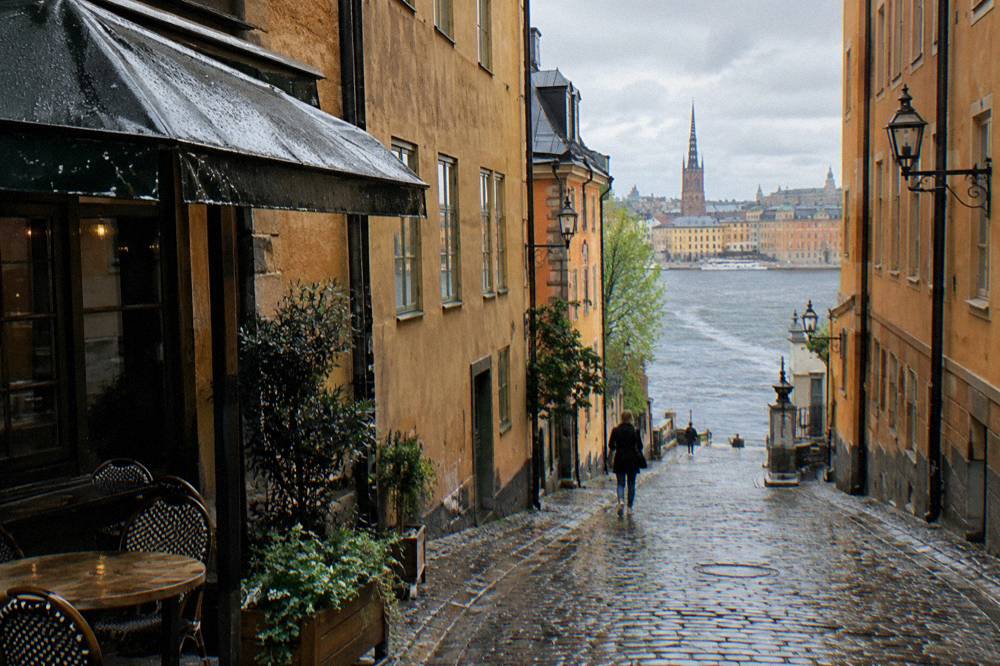
In Gamla Stan's inner streets, all roads are pedestrian streets: bikes are permitted only at walking pace, giving way to pedestrians at all times, and e-scooters are banned except along Munkbroleden and Skeppsbron. Through vehicle traffic is forbidden in the morning peak. Riding these cobbles fast is both illegal and, on market days, physically impossible.
The Old Town is the place where cycling etiquette and tourist behaviour collide most visibly. The city's rules for the district ban vehicle traffic, including cycles travelling above walking pace, and the posted expectation is that anyone on wheels behaves like a guest. Practically, that means walking your bike through Stortorget when the square is busy, and reserving any real speed for the quayside roads along Skeppsbron and Munkbroleden, where e-scooters are the only shared-mobility vehicles allowed.
The district is also under active works. Stortorget received new vehicle barriers, three low round planters with granite walls, with installation running into November 2026 ahead of the Christmas market season, and the widened Riddarholmskanalen cycle path on the Gamla Stan side opened in April 2026, two months ahead of schedule, with improved lighting and wider lanes. The message from the city is consistent: the waterfront edges of Gamla Stan are for cycling, the interior is for walking.
A guided ride handles this split naturally. Guides route the fast segments along the waterfront and dismount or slow right down through the core, which is exactly what the rules ask. The Wooden Bicycle Tour in Stockholm, a 2-hour shared ride, and the Stockholm at a Glance Bike Tour, 2 to 3 hours, both cover the Old Town as part of wider city loops; their listings state current prices and inclusions, which change often enough that checking beats guessing. If you're weighing a private ride or an e-bike upgrade, our breakdown of Stockholm bike tour costs covers what tends to push the price up and what the fee usually includes.
One habit worth breaking before you arrive: do not treat a bell as a way to clear pedestrians from your path. On a pedestrian street the pedestrian always has priority, bell or no bell. The bell exists to signal your presence on a cycle path or road, not to summon right of way.
Don't Get Caught Without Lights In The Dark Season
Lights and reflectors on a bike are required only in darkness, but from November through March Stockholm has darkness for most hours you will be outdoors, with roughly 8 hours 50 minutes of daylight at the start of November shrinking toward 6 hours in December. Riding unlit after dark is a 500 kr fine, and the requirement is specific: red rear, white or amber front, visible at 300 m.
Swedish darkness is not a mood, it is a schedule. At the beginning of November the sun rises around 07:07 and sets before 16:00 in Stockholm, so any evening ride happens in full legal darkness. The police fine for missing or unlit equipment applies per defect, and the specification is precise: a rear lamp showing red visible at 300 m, a white or yellow front light, a red rear reflector and a white front reflector, with white or orange-yellow at the side.
Visitors renting bikes should simply confirm the lights are fitted and charged at pickup; several rental shops in the centre, including Gamla Stans Cykel, stay open year-round. Anyone joining a guided ride has nothing to arrange, since the tour operator brings the equipment per the listing. The city also does its part: Stockholm sweeps and salts more than 36 mil of cycle infrastructure through the winter, expanded by 25 km for the 2025/2026 season, holding paths to bare-pavement conditions down to about -6 C, so the dark season is rideable in a way visitors rarely expect.
The other cold-season number worth knowing is the first snow. In Stockholm the first snow cover of at least 1 cm falls, on average, around 26 November. That is a normal, not a forecast, but it frames the season: November riding is usually dry-path riding, December onwards is a studded-tyre question. Ask the operator or the rental shop what tyres are fitted before you book a winter ride.
Helmet rules are simpler than most visitors fear. Only riders under 15 must wear one by law, and an adult carrying a child without a helmet can be fined 500 kr. Adults ride bare-headed legally, though tours and rentals typically offer helmets anyway, and the tour listings flag a helmet as included where it is. If you want the exact wording of the law before renting a bike, our article on helmet rules for cyclists in Sweden spells out who has to wear one and why.
Don't Expect To Take A Bike On The Metro
Full-size bikes are banned on Stockholm's buses, metro, and most trams and local rail, full stop. Bikes are allowed only on commuter trains, Tvärbanan, Saltsjöbanan, Lidingöbanan and the commuter boats, with limits, and never on the metro at all, where e-scooters are also banned over lithium fire risk. The Djurgården ferry takes bikes at no extra charge, subject to space.
This is the rule that strands tourists. Arriving at a metro gate with a bike does not result in a fine so much as a refusal, and the geometry of Stockholm's stations makes arguing pointless. SL's own bike rules page states it plainly: ordinary bikes are never permitted on buses, in the tunnelbana, or on the city's other trams and local trains, with narrow exceptions on the commuter rail and light-rail lines listed above, generally outside weekday rush hours.
The exception visitors actually use is the Djurgården ferry, the SL line 82 boat between Slussen and Djurgården. It runs year-round, takes bikes at no extra charge when there is space, and staff judge what fits. E-bikes ride on the open deck. This single loophole is the reason a bike-and-ferry day on Djurgården works so well: you never need the metro, because the boat is the metro. Our Djurgården by bike guide lays out the full loop.
| Transport | Full-size bike | The catch |
|---|---|---|
| Metro (tunnelbana) | Never | No exceptions |
| Buses | Never | No exceptions |
| Commuter trains (pendeltåg) | Yes, off-peak | Not to or from Stockholm City or Arlanda stations |
| Tvärbanan light rail | Yes, off-peak | Non-electric bikes only, secured in stands |
| Commuter boats, incl. Djurgården ferry | Yes, if space | No extra charge, staff decide |
| Waxholmsbolaget archipelago boats | Yes, if space | Cargo bikes and tandems pay 120 kr as goods |
Fines in this table are not the issue; access is. The pattern to internalise is simple: in Stockholm a bike travels on the road, on the ferry, or not at all. Plan routes that never need a train and the rule never bites.
Don't Assume There Is A Public Bike-Share
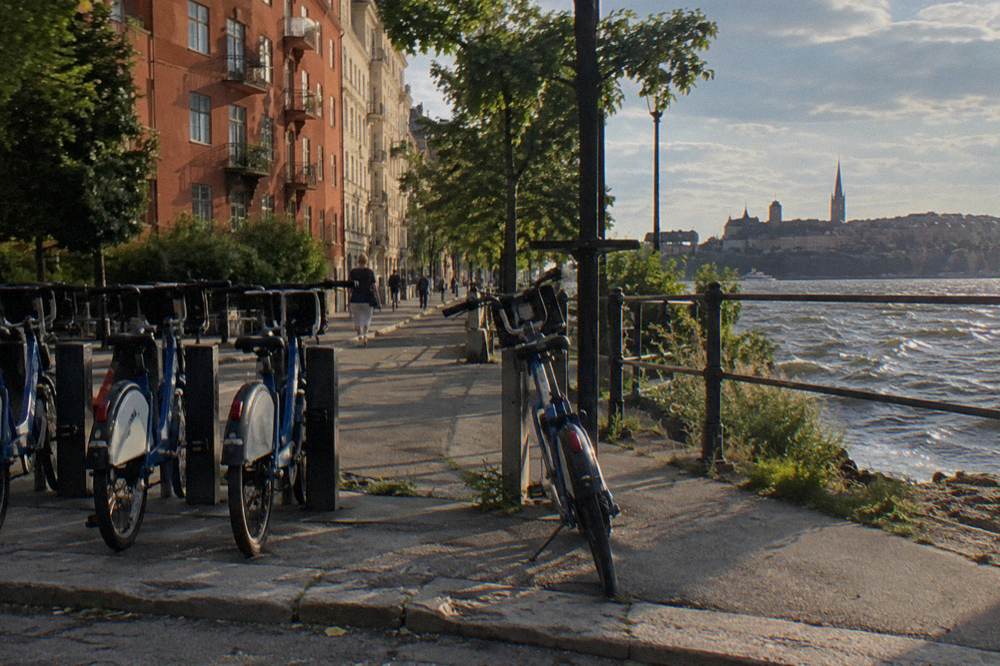
Stockholm has had no municipal docked bike-share since the old scheme ended in 2018. Shared e-bikes exist, run by Voi and Bolt, announced as the city's operators in December 2025, but they are private pay-per-ride services, not free public bikes. Visitors who budget for a "city bike" that does not exist end up walking or overpaying. To sort out whether pay-per-ride e-bikes or a guided tour fits your plans better, our guide to Stockholm city bikes versus a guided ride compares the costs and coverage.
The gap matters because many European capitals visitors know, Copenhagen among them, normalize a cheap public bike. Stockholm does not have one. What it has is a dockless shared fleet of e-bikes and e-scooters operated under city permit by Voi and Bolt, unlocked and paid per ride through an app, with pricing confirmed in the app at the moment of hire. Those are real, useful services, but they are commercial rentals, and per-minute costs add up quickly on a full day of sightseeing.
For a day of riding, the honest comparison is between shared e-bikes, a rental shop, and a guided tour that includes the bike. The bike rental or guided ride question breaks down the maths, but the short version: for two hours of structured sightseeing, a guided tour with the bike, helmet and route included usually beats app rentals on both cost and friction, and it removes every rule-learning burden in this article in one step.
The guided category is broad enough that the choice is really about pace and format. A 2 to 3 hour shared guided tour suits most first visits; a private guided tour suits families and anyone who wants the guide's full attention; an e-bike city tour suits riders who would rather not work.
Don't Wing It With Rules You Never Learned
Most tourist cycling fines in Stockholm come from ignorance, not recklessness: the sidewalk that looked safer, the dark ride home without lights, the metro gate with a bike. A 2 to 3 hour guided ride costs less than two of the 1,500 kr red-light fines and removes every one of those decision points, because the guide picks the lane, the pace and the route.
The economics are blunt. Two serious fines exceed the typical price of a half-day guided tour, and the tour includes the bike, the helmet where flagged, and several hours of local context that no rulebook provides. This is the quiet argument for guided riding in a country with firm cycling law: it is not that Sweden is hostile to cyclists, it is that Sweden expects cyclists to know things, and a guide is the fastest way to know them.
It also fixes the judgment calls. When is a street a pedestrian street? When must you dismount? Which quay is the cycle route and which is the promenade? A guide who rides these streets daily makes those calls instantly, and after 2 to 3 hours of following, most riders find they have absorbed the pattern well enough to ride solo the next day. That compounding effect is why the guided format pairs so naturally with a rules-first visit.
The featured option here is the Stockholm guided bike tour, a shared classic-bike ride of 2 to 3 hours through the central islands. Its listing carries the current price, rating, meeting point and inclusions; check the booking page rather than assuming, since departure points and season schedules shift.
Common Questions About Sweden Tourist Mistakes
What Not To Do In Sweden As A Tourist?
Do not ride on sidewalks, speed through pedestrian streets, cycle unlit in darkness, or take a full-size bike on the metro. Those are the four mistakes that carry fines or refusals in Stockholm, at 500 to 1,500 kr each. Everything else visitors worry about, card payments, tap water, punctuality, is easy by comparison.
Do I Have To Wear A Helmet When Cycling In Sweden?
Only riders under 15 are required by law to wear a helmet, and an adult carrying a child without one can be fined 500 kr. Adults may legally ride bare-headed, though tours and rental shops typically provide helmets. The helmet law in Sweden is covered in detail elsewhere on this site.
Can You Cycle Through Gamla Stan?
Yes, but only at walking pace and yielding to pedestrians on its pedestrian streets, which covers the district's inner parts. E-scooters are banned there except along Munkbroleden and Skeppsbron. The practical approach is to ride the waterfront edges and walk the cobbled core.
Are Bikes Allowed On Stockholm Public Transport?
Not on buses, the metro or most trams. Bikes are allowed on commuter trains, Tvärbanan and several other rail lines outside rush hours, and on commuter boats including the Djurgården ferry, where a regular bike costs nothing extra subject to space.
Is There A City Bike-Share In Stockholm?
No public docked scheme exists; the old one ended in 2018. Voi and Bolt operate shared e-bikes under city permit since December 2025, paid per ride through their apps. For a full day, compare against a rental shop or a guided tour that includes the bike.
A last word on tone. Sweden is not a country of hidden traps; it is a country of published rules that locals follow and expect you to. The five cycling rules in this article, path over sidewalk, walking pace on pedestrian streets, lights in darkness, no bikes on the metro, and no public bike-share, cover nearly every way a visitor actually gets caught out. Learn them once and the city opens up: 1,170 km of cycle routes, a free-to-ride ferry loophole to Djurgården, and a winter network that stays rideable long after the daylight runs out. For a first day on Swedish streets, a walking pace versus wheels comparison and the guided rides above are the calmest possible introduction.