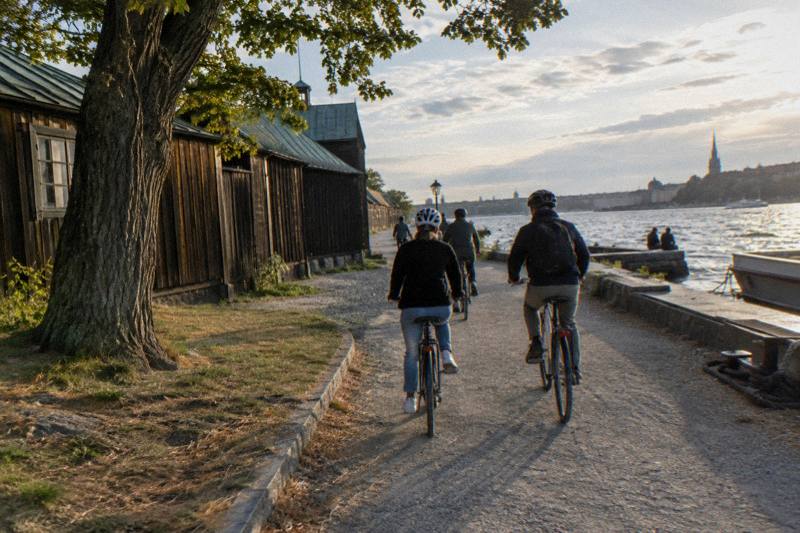
Family And Kids Bike Tours In Stockholm
Stockholm is one of Europe's easiest cities to cycle with children: flat, cycle-pathed and ringed by car-light islands. Here is what parents need to know before booking a guided ride.
Short answer
Stockholm guided bike tours run 2 to 3 hours on shared routes, and several accept children when you ask in advance, since child seats, age limits and trailer rules are set by each operator. Swedish law requires a helmet for everyone under 15, and adults carrying a child without one can be fined 500 kr.
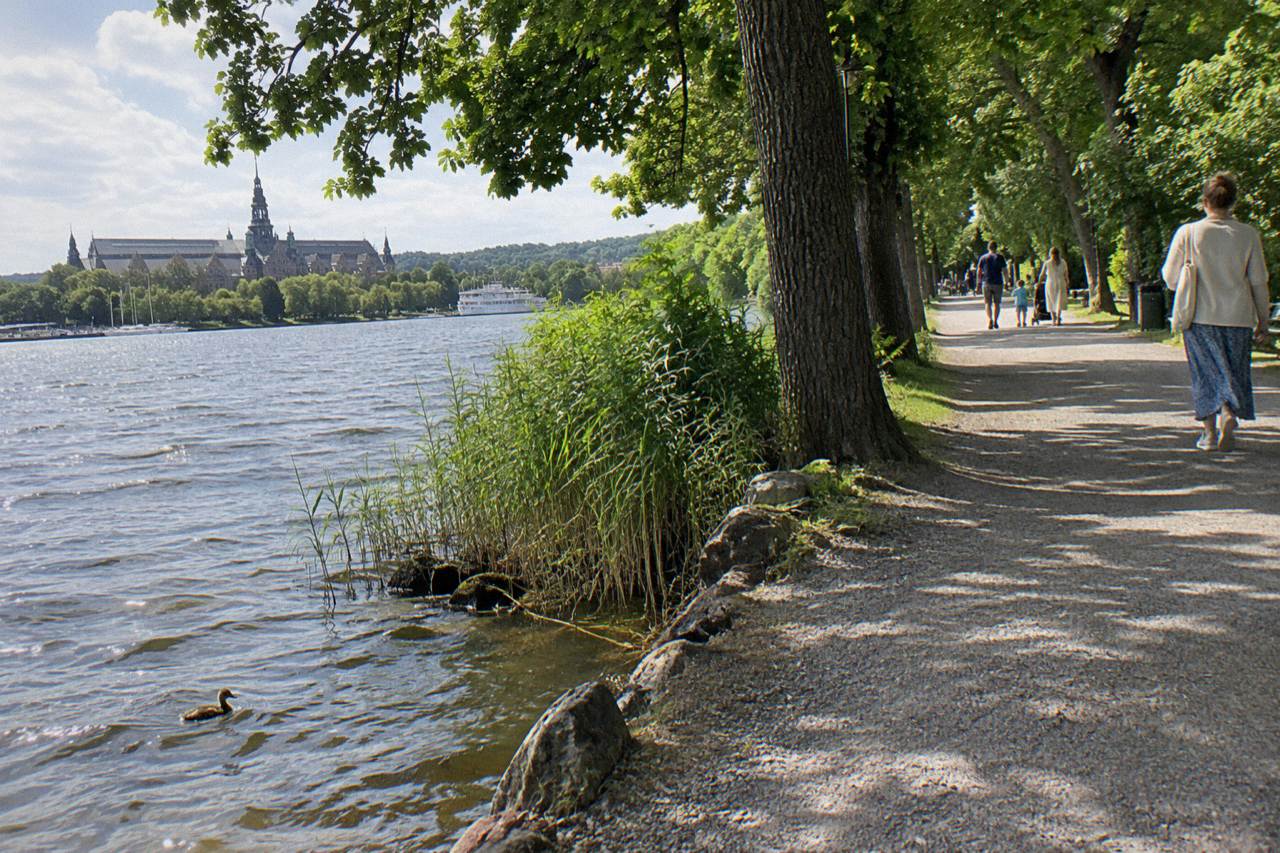
Stockholm has roughly 117 mil of cycle routes, about 1,170 km of dedicated bike paths, combined paths and bike lanes, which is the single biggest reason the city works so well for families on two wheels. The terrain between the islands is flat, the paths are separated from car traffic for most of the central network, and the two crown jewels of family cycling, Djurgården's royal park and Gamla Stan's medieval streets, sit within twenty minutes of each other by bike. The question for visiting parents is rarely whether Stockholm suits children on bikes. It is which of the guided tours actually takes them, and what Swedish law expects of you along the way.
This guide walks through the tours that welcome families, the helmet and child-seat rules that apply to every rider under 15, the ferry quirks that make island-hopping with kids surprisingly simple, and the seasonal window that gives you the longest daylight for a family ride. Prices, child-age policies and seat availability change, so where a detail is not fixed, the answer is always the same: ask on the booking page before you reserve.
Which Bike Tours In Stockholm Take Children?
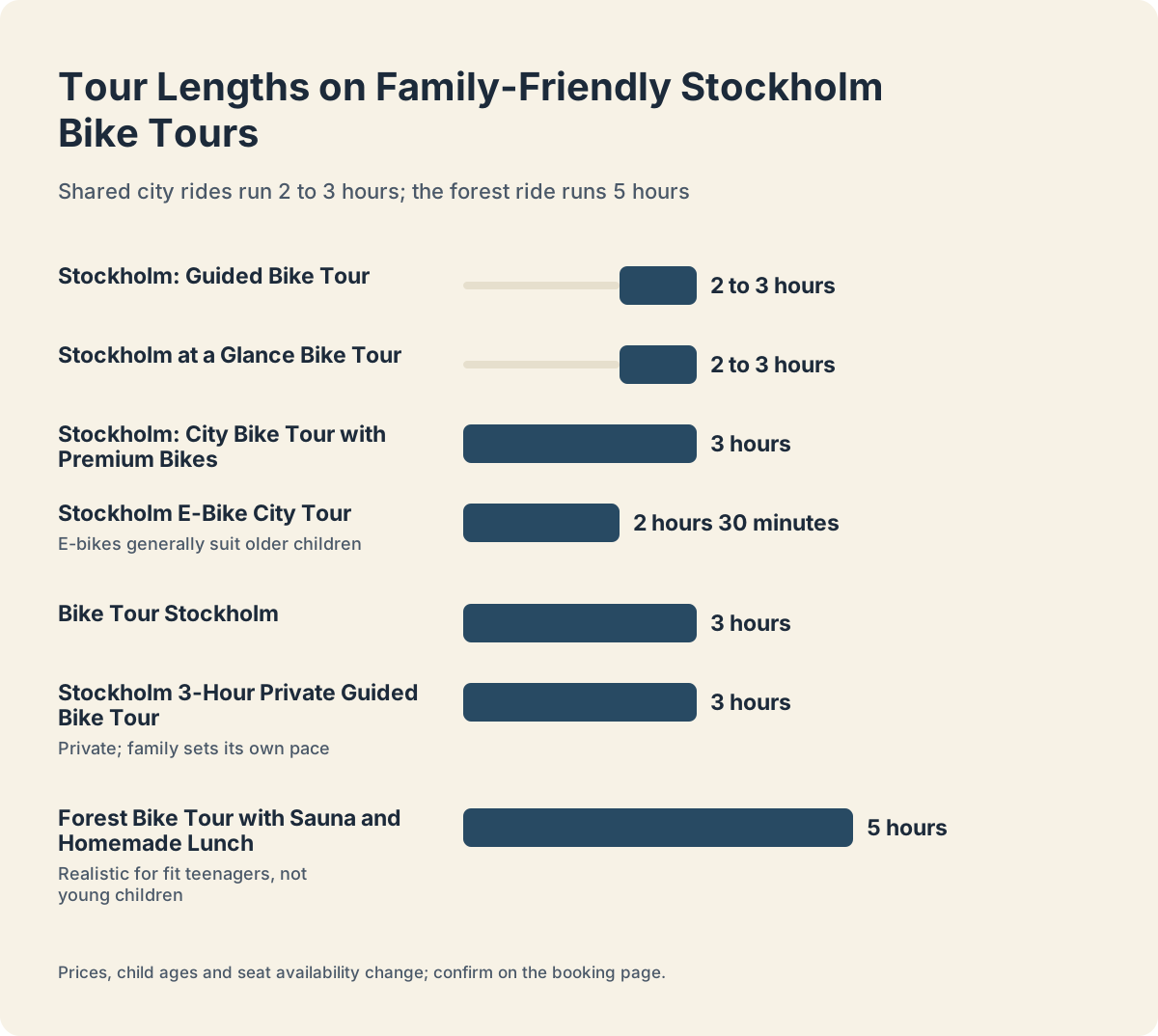
Most guided bike tours in Stockholm are shared-group city rides of 2 to 3 hours, and whether a child can join depends on the operator's own age and equipment policy rather than any city-wide rule. Stockholm: Guided Bike Tour runs 2 to 3 hours, Stockholm at a Glance runs 2 to 3 hours, and the City Bike Tour with Premium Bikes runs 3 hours, all in a shared format that families typically join.
None of these listings publishes a fixed child age minimum in the details available, so treat the booking page as the source of truth. The practical pattern across the options is consistent: shorter rides suit younger children, and the 2 to 3 hour range is the family sweet spot. Longer products exist, including a 5 hour Forest Bike Tour with Sauna and Homemade Lunch and a 3 hour private guided tour, but those are better matched to teenagers with real stamina than to a six-year-old on a tag-along.
The comparison below covers the shared rides most families weigh up, plus the two special cases. Durations and formats come from each tour's listing; anything marked "ask the operator" is genuinely set case by case.
| Tour | Length | Bike type | Format | Children |
|---|---|---|---|---|
| Stockholm: Guided Bike Tour | 2 to 3 hours | Classic | Shared | Ask the operator about ages and seats |
| Stockholm at a Glance Bike Tour | 2 to 3 hours | Classic | Shared | Ask the operator about ages and seats |
| Stockholm: City Bike Tour with Premium Bikes | 3 hours | Classic | Shared | Ask the operator about ages and seats |
| Stockholm E-Bike City Tour | 2 hours 30 minutes | E-bike | Shared | E-bikes generally suit older children, ask first |
| Bike Tour Stockholm | 3 hours | Classic | Shared | Ask the operator about ages and seats |
| Stockholm 3-Hour Private Guided Bike Tour | 3 hours | Classic | Private | Family sets its own pace, ask about seats |
| Forest Bike Tour with Sauna and Homemade Lunch | 5 hours | Classic | Shared | Realistic for fit teenagers, not young children |
One distinction worth making early: the e-bike city tour is the dedicated e-bike ride, though the featured guided tour adds an e-bike option. Swedish law treats a pedal-assist bike as an ordinary bicycle only while the motor assists pedalling, cuts out at 25 km/h and is rated at most 250 W, so an e-bike tour is legally just cycling, but the physical size of the bikes is what limits younger children, and that is an operator question. For a deeper look at that trade-off, see our guide on choosing e-bike or classic bikes.
For the e-bike question specifically, the format contrast matters more than the motor: a classic shared ride at family pace versus an e-bike ride that flattens Södermalm's slopes.
What Does A Family Bike Tour Day Actually Look Like?
A typical family ride starts at a central meeting point, crosses two or three islands at a slow group pace, stops every few hundred metres for the guide's commentary, and finishes where it began, with the bike and helmet included in the booking. The listed rides run 2 to 3 hours, which in practice means one island circuit plus a bridge or two, not a fitness event.
Shared tours move at the pace of their slowest rider, and guides on family-heavy departures report slowing further for children. What varies, and what you should confirm on the booking page, is where you meet: each listing carries its own meeting point, and a start on Djurgården or near Gamla Stan saves a tiring pre-ride crossing with kids. Inclusions also matter for families: a bike and helmet per rider is standard on guided rides, but child seats, tag-alongs and trailers are operator-specific equipment, not city standards. If you're curious whether those helmets are actually required by law, our guide to Sweden's bike helmet rules explains who must wear one and the exception that applies when carrying a child on your own bike.
The one thing a guided tour gives families that independent riding cannot is narrative. A guide who stops at the Vasa Museum's yard and tells the story of a warship that sank on its very first voyage holds a ten-year-old's attention in a way a paper map never will. For parents weighing that against going alone, our guided ride or rental comparison breaks down the costs and trade-offs, and our piece on how long a Stockholm bike tour takes covers pacing in detail.
If the shared-group format sounds right but you want the pace matched to your children, the shorter shared city ride is the one to check first, and its listing answers the age and seat questions directly.
Do Children Need Helmets And Child Seats In Stockholm?
Yes, by law. Every child and young person under 15 must wear a helmet when cycling or being carried on a bike in Sweden, and an adult carrying a helmetless child can be fined 500 kr. Adults have no helmet obligation, but every guided tour listed on this site provides helmets for all riders.
The rule is national and enforced by police, who can stop a child riding without a helmet, and fine the adult doing the carrying. The Swedish transport authority states it plainly: all children and young people under 15 shall use a helmet when they cycle or are given a ride on a bike. On a guided tour this is largely handled for you, since the operators include helmets, but it becomes your responsibility the moment you rent independently.
Child seats are a different matter: no listing on the roster states a seat age or trailer policy, so ask the operator directly on the booking page. The related fines are worth knowing because families riding independently do get caught by them, especially in Gamla Stan, where the pedestrian streets require cyclists to move at walking pace and yield to pedestrians, and going faster is a 1,000 kr fine.
| Situation | Fine | Applies to |
|---|---|---|
| Adult carrying a child under 15 without a helmet | 500 kr | The adult rider |
| Riding on a sidewalk or wrong part of the road | 500 kr | Any cyclist |
| Faster than walking pace on a pedestrian street | 1,000 kr | Any cyclist |
| Running a red light on a bike | 1,500 kr | Any cyclist |
| Missing bell or brake at any time | 500 kr | The bike's owner |
Bells and brakes are mandatory on every bike at all times, and lights and reflectors are required only in darkness. In practice from late October through March, a family riding after school hours needs working lights front and back. The rules are summarized from the police and transport authority pages: the transport authority's cycling rules and the police cycling fine list. Our full Stockholm cycling rules guide translates all of it for visitors.
Is Djurgården The Best Island For Cycling With Kids?
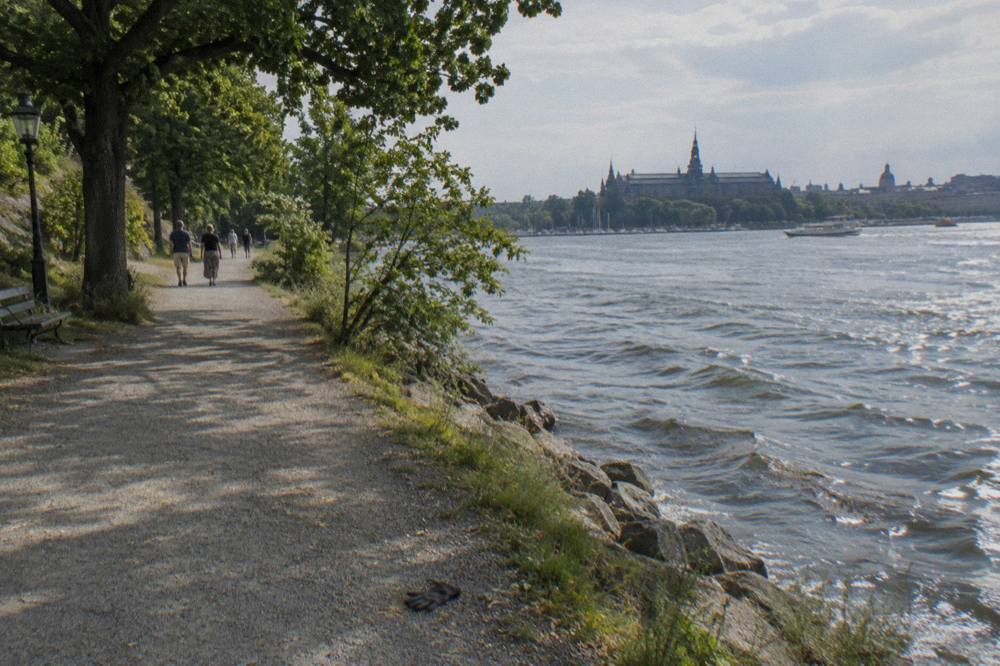
Djurgården is the closest thing Stockholm has to a purpose-built family cycling island: a royal park with car-light lanes, museums at every stop, and bike-friendly access by bridge or ferry. It is also the island where Djurgårdsbommen and Vasabommen were closed to most vehicles on summer weekends and daily through the 2026 season, making the lanes even calmer for children.
The vehicle restrictions ran from 30 April to 27 September 2026, with exceptions for buses, taxis and permit holders, and they are part of a deliberate push to keep the island's core quiet. For a parent, that means the stretch between Djurgårdsbron and the museums is about as low-stress as urban cycling gets. Bicycles are explicitly recommended for exploring the island, and no specific e-scooter bans apply there.
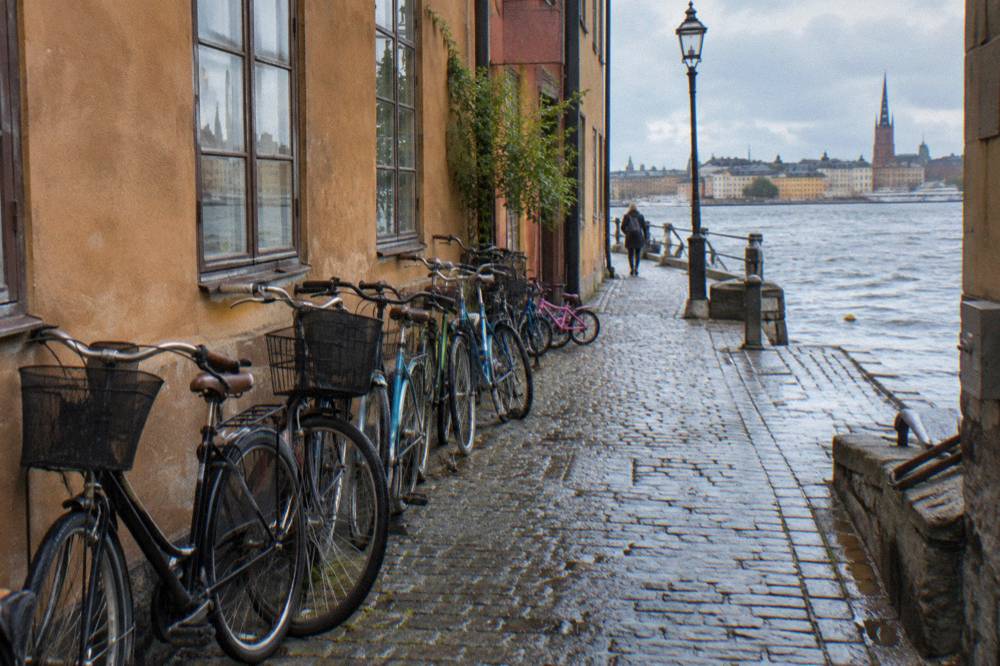
The classic family loop pairs Djurgården with Gamla Stan: park-land lanes first, then the old town's pedestrian streets at walking pace. Note for 2026 visitors that Stortorget, Gamla Stan's main square, received new vehicle barriers installed through October and November 2026, with seating and greenery added before the Christmas market, so the square reads more than ever as a place to stop and rest rather than ride through. Our Djurgården by bike and Gamla Stan by bike guides cover both islands street by street.
A shared 2 to 3 hour city ride is the natural way to see both islands with children in one outing.
Can You Take Kids' Bikes On Ferries And Trains?
The Djurgården ferry, an ordinary SL commuter boat on line 82 between Slussen and Djurgården, takes bikes at no extra charge subject to space, which makes it the single most useful family shortcut in the city. Bikes are banned entirely on SL buses, the metro and the inner-city trams, so plan the last leg of any journey as a ride or a walk.
Staff judge space and safety on the ferry and can send you to the next departure, which with children in tow is rarely a disaster since departures are frequent. E-bikes go on deck, and if deck space runs out you remove the battery and place it in the on-board container. Commuter trains, the Tvärbanan light rail, Saltsjöbanan, Lidingöbanan and Roslagsbanan all accept regular bikes outside weekday rush hours, with the newer Tvärbanan rules allowing non-electric bikes in dedicated stands.
| Service | Regular bikes | Notes for families |
|---|---|---|
| Djurgården ferry (SL line 82) | Allowed, no extra charge | Subject to space, staff decide |
| SL buses, metro, Spårväg City | Not allowed | No exceptions for full-size bikes |
| Commuter trains (pendeltåg) | Allowed off-peak | Not to or from Stockholm City station |
| Tvärbanan light rail | Allowed off-peak, in stands | E-bikes not allowed |
| Waxholmsbolaget archipelago boats | One bike per person, free if space | Cargo bikes and tandems charged 120 kr as goods |
The archipelago line in that table is the opening for a bigger adventure with older children: island-hopping by boat and bike through the archipelago. Our archipelago cycling guide covers routes and seasons, and our article on taking a bike on the Djurgården ferry answers the fine print.
For families who want the itinerary built around them, a private tour avoids the shared-group pace entirely.
When Is The Best Season For A Family Bike Tour?
Late May through early September gives Stockholm its longest days and warmest normals, with July averaging a high of 23.6 C against June's 18.5 daylight hours per day, the yearly maximum. May to June trades a couple of degrees for drier paths and thinner crowds, which many families prefer with young children.
The SMHI 1991 to 2020 normals below are averages, not forecasts, but they frame the decision well. February to April is the driest stretch of the year while June through August carries the most rain, August worst at 66.2 mm on average. The city sweeps and salts roughly 38 mil of cycle paths through winter, so cycling genuinely continues year-round, but family tours with children are a different proposition from a hardy commuter.
| Month | Avg high C | Avg low C | Precip mm | Daylight hours per day |
|---|---|---|---|---|
| April | 10.7 | 2.6 | 29.2 | 14.5 |
| May | 16.5 | 7.1 | 34.0 | 17.0 |
| June | 20.8 | 11.6 | 61.7 | 18.5 |
| July | 23.6 | 14.8 | 61.5 | 17.7 |
| August | 22.1 | 14.2 | 66.2 | 15.5 |
| September | 16.6 | 10.2 | 53.3 | 12.8 |
| October | 10.1 | 5.5 | 51.4 | 10.2 |
If your dates fall outside the window, layering rules carry the day: our what to wear guide and the piece on a Stockholm bike tour in the rain cover cold and wet departures, and the broader best time of year to cycle in Stockholm guide weighs every month.
What Should You Ask Before Booking A Family Tour?
Ask five things on the booking page before reserving: the minimum rider age, whether child seats or tag-alongs are available, the tour's total distance and stop frequency, the meeting point relative to your accommodation, and the cancellation terms. Every one of these is operator policy, not city regulation, and the listings do not fix them in print.
A private message through the booking page takes two minutes and prevents the two classic family failures: arriving to find the ride is 3 hours of steady pedalling your five-year-old cannot sustain, or discovering the operator has no child seat that day. Group pace on shared rides adapts to the riders present, but a tour with mostly adults will move faster than one booked by three families, so mentioning your children's ages when you book lets the operator place you well.
| Question to ask | Why it matters for families |
|---|---|
| What is the minimum age to ride or sit? | Age limits are set by each operator, not published centrally |
| Are child seats, trailers or tag-alongs available? | Equipment is operator stock, bookable, not guaranteed |
| How often does the tour stop? | Young children need stops every 15 to 20 minutes in practice |
| Where exactly does the tour meet? | A far meeting point adds a tiring ride before the tour |
| What are the cancellation terms? | Plans with children change, check the refund window |
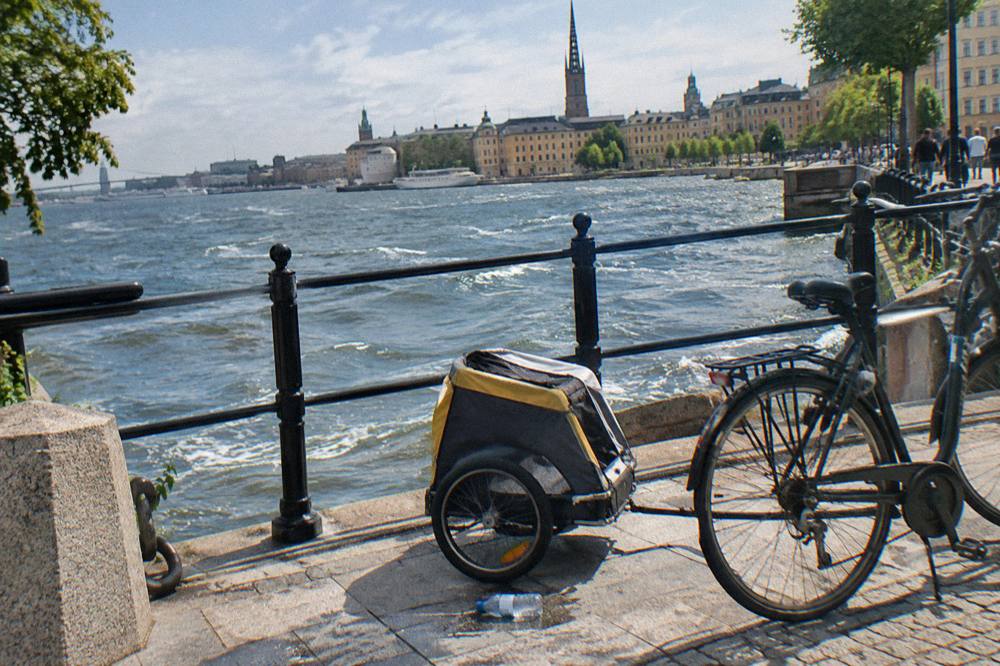
For families with teenagers rather than toddlers, the 5 hour forest ride with sauna and homemade lunch is the roster's step-up option: real trails, a wood-fired sauna and a cooked lunch, at a length that suits riders with genuine stamina.
Whatever the ages of your children, Stockholm Bike Tours exists to make this exact decision easy: the short shared city rides for younger families, the premium-bike and e-bike formats for mixed-age groups, and the private and forest options for riders who want more.
Common Questions About Family Bike Tours In Stockholm
Which Stockholm Bike Tours Take Children?
Most shared city tours of 2 to 3 hours accept children at the operator's discretion, including Stockholm: Guided Bike Tour, Stockholm at a Glance and the City Bike Tour with Premium Bikes. Age minimums and child seats are set by each operator, so ask on the booking page before reserving.
Do Children Have To Wear Helmets On Bikes In Stockholm?
Yes. Swedish law requires every child and young person under 15 to wear a helmet when cycling or being carried on a bike. An adult carrying a child without one can be fined 500 kr. Adults have no legal helmet requirement, though guided tours provide helmets for all riders.
Can You Take A Bike On The Djurgården Ferry With Kids?
Yes. The Djurgården ferry, SL line 82 between Slussen and Djurgården, carries bikes at no extra charge, subject to space, with staff making the final call. E-bikes go on deck. Bikes are not allowed on SL buses, the metro or the inner-city trams.
What Is The Best Age For A Guided Bike Tour In Stockholm?
There is no city-wide age rule, and operators set their own limits. In practice, children old enough to ride a pedal bike steadily for 2 to 3 hours with stops suit the shared city tours, while younger children need a child seat or tag-along, which you must confirm with the operator in advance.
When Is The Best Season For A Bike Tour With Kids In Stockholm?
May through September. July has the warmest normals, averaging a high of 23.6 C, while June has the most daylight at 18.5 hours per day. May and early June are drier and less crowded than high summer, which many families prefer.
Is Gamla Stan Safe To Cycle Through With Children?
Gamla Stan's inner streets are pedestrian streets where cyclists must ride at walking pace and yield to pedestrians, and riding faster is a 1,000 kr fine. With those rules followed, the old town is a walking-pace sightseeing section of a family ride rather than a road section, and no area safety verdict applies.