Cycling Rules In Stockholm: Helmets, Lanes And Etiquette
Stockholm is one of Europe's most bike-friendly capitals, but it runs on written rules: a helmet law for riders under 15, mandatory lights after dark, bell and brakes at all times, and fines in Swedish kronor for the violations that catch visitors out.
Short answer
Stockholm cyclists under 15 must wear a helmet by law; adults do not. Lights and reflectors are required only in darkness, and a bell plus working brakes at all times. Where a cycle lane exists you must normally use it, keep right, and ride at walking pace on Gamla Stan's pedestrian streets. Fines run 500 to 1,500 Swedish kronor.
Stockholm runs cycling on rules, and most of them are written down in plain language by the Swedish Transport Agency and the police. The city has roughly 117 mil of cycle routes, about 1,170 km of dedicated lanes, combined pedestrian and cycle paths, and marked cycle crossings, so the infrastructure invites you to ride. The rules invite you to ride carefully. A helmet is legally required for anyone under 15, lights come on the moment darkness does, and a set of on-the-spot fines from 500 to 1,500 Swedish kronor covers everything from a missing bell to running a red light. This page from Stockholm Bike Tours summarizes what the official pages say, in the order a visitor actually needs it, and points to the primary sources so you can check the details yourself.
What Are The Main Cycling Rules In Stockholm?
The core rules are: use the cycle lane where one exists and keep right, wear a helmet if you are under 15, carry working brakes and a bell at all times, switch lights on in darkness, and yield to pedestrians on walking streets and in pedestrian zones. Violations carry fines of 500, 1,000 or 1,500 Swedish kronor depending on the offence, and this summary is not the law itself.
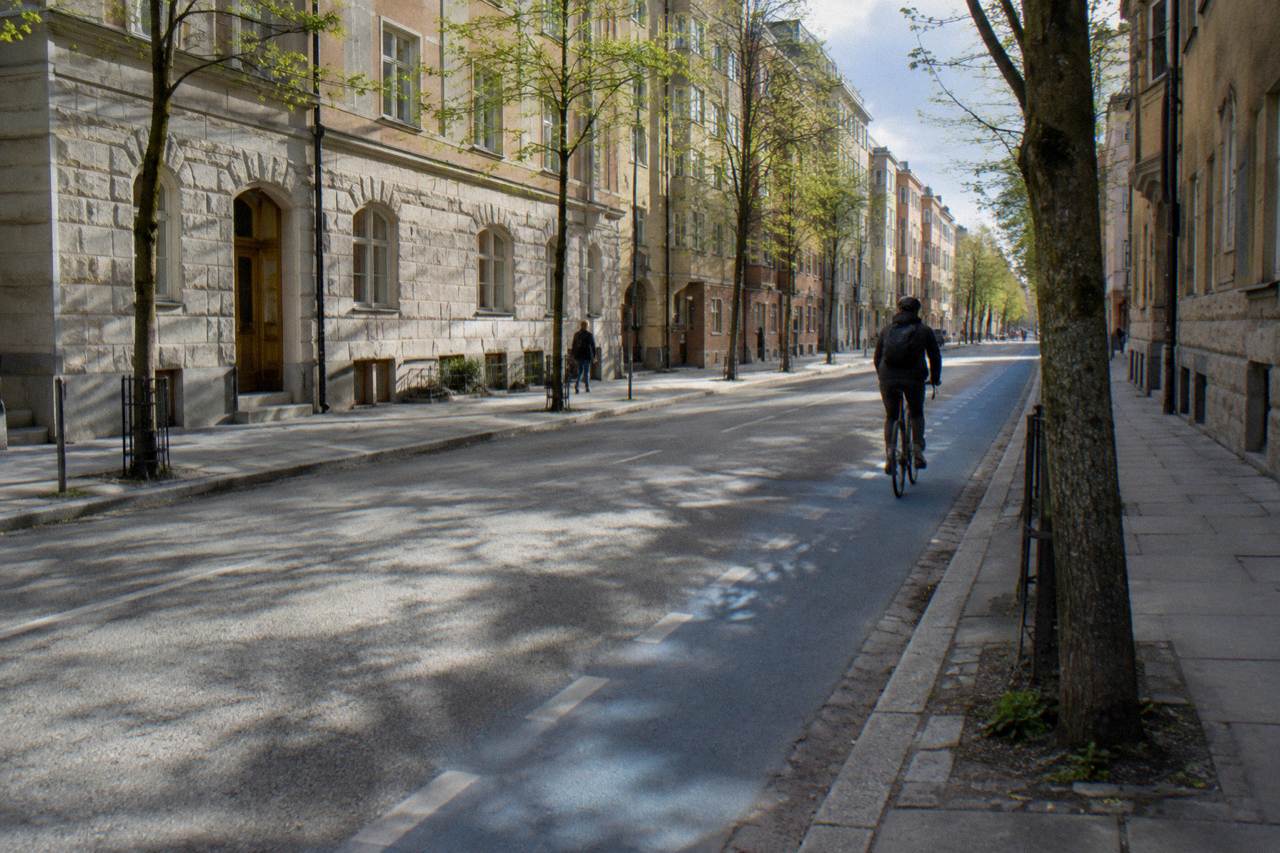
The Swedish Transport Agency puts the lane rule simply: if there is a cycle lane, you should normally use it. Where there is none, you ride on the road with the rest of traffic, keeping to the right in the direction of travel. Sidewalks are not cycle lanes; riding on a sidewalk where you belong on the road is a 500 kronor fine. On pedestrian streets and walking-speed zones the hierarchy flips completely: pedestrians have full priority and you move at their pace, not yours.
Sweden measures fines for cycling offences in Swedish kronor, the local currency. The three tiers you will see in the police guidance are 500 kr, 1,000 kr and 1,500 kr, and the amount depends on the offence rather than the officer's mood. The exact wording lives on the official pages, and this article is a summary rather than a legal text; for anything unusual, read the Transport Agency's cycling rules and the police cycling page directly.
Most visitors never meet a fine, because the rules match what the city's design already pushes you to do. The lanes are marked, the pace zones are signed, and the ferry crews tell you where to stand. Where a rule genuinely surprises people is Gamla Stan's walking-pace streets, the lights-after-dark requirement in winter, and the fact that the wrong bike will not board a metro train at all.
Do You Have To Wear A Helmet When Cycling In Stockholm?
Adults have no helmet requirement in Sweden; every child and young person under 15 must wear one while cycling or being carried on a bike. Police can stop a child riding without a helmet, though the child cannot be fined. An adult carrying a helmetless child can be, with the police page listing a 500 kronor fine.
The rule is age-based and absolute below 15, applying even inside fenced areas. The practical version for a family visit: if your children ride, they wear helmets, and if you carry a child on your bike, the child wears one so that you do not collect the fine. Tour operators that supply bikes for children's tours supply helmets to match, which is one less thing to pack.
For adults the choice is yours, and helmets are not a marker of experience either way. Rental shops across the city hand them out with the bike, and guided tours typically include one in the listing price. A family deciding between riding independently and joining a guided group can compare the practical differences in the family and kids bike tours guide, which covers what operators provide for children specifically.
If the rule set feels like a lot to hold in your head while also finding your way around an unfamiliar city, a guided ride shifts that burden onto someone who rides these lanes daily. The Stockholm: Guided Bike Tour is the classic option, a 2 to 3 hour shared ride in the city-guided category, and the trio below brackets it against a premium-bike alternative and an e-bike contrast.
Which Lanes Can You Ride On In Stockholm?
Where a cycle lane exists you must normally use it, keeping to the right. Without one, you ride on the road with traffic, never on the sidewalk. Combined pedestrian and cycle paths are shared, so yield to people on foot and pass at a considerate distance. Riding on the wrong part of the carriageway, such as a sidewalk, carries a 500 kronor fine.
The network's scale is the reason the lane rule matters so much here. Stockholm's roughly 1,170 km of routes include dedicated lanes, combined paths and painted cycle crossings, and the city's own cycling portal, Cykla Stockholm, maps the primary corridors. New arrivals often find that the fastest route between two central points is a continuous signed lane rather than a road.
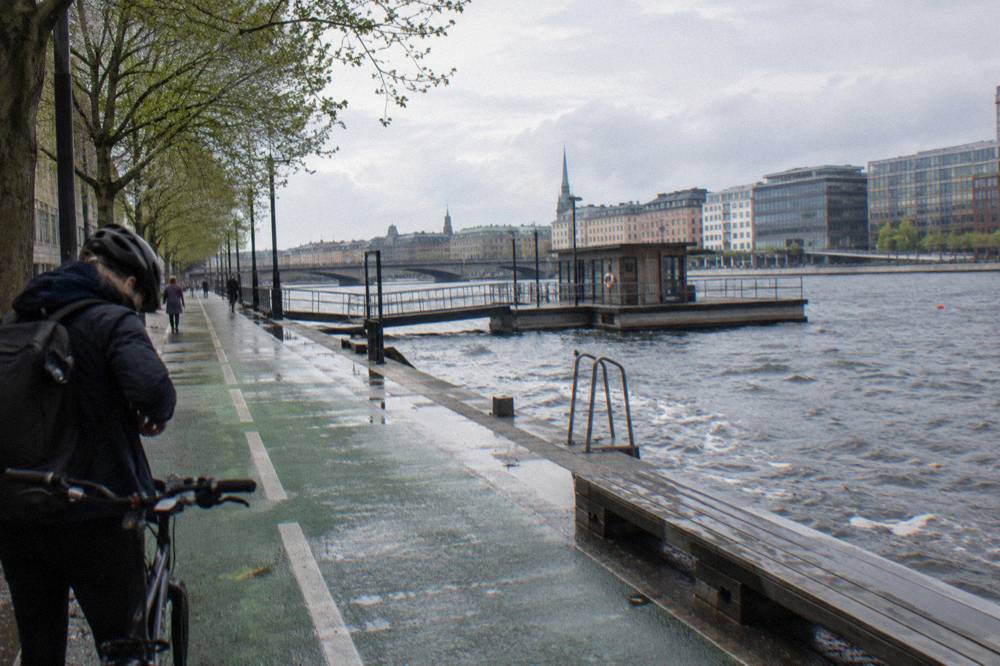
The network keeps improving, which is worth knowing when a map app is a season or two out of date. The widened Riddarholmskanalen cycle path next to Gamla Stan opened early, in April 2026, two months ahead of schedule, with better lighting and rounded curves. A new northbound lane opened on Vasabron in June 2026. On Södermalm, a green wave lets cyclists hold 20 km/h through signalled stretches of Hornsgatan and Långholmsgatan at peak times. The where are the bike lanes guide goes deeper on the layout.
For riders who would rather follow a local through all of this than decode it themselves, the classic guided ride handles lane choice, pace and ferry timing in one go, and you can confirm hours and inclusions on the live listing before you book.
Zone by zone, the pace expectations differ, and the table below summarizes the practical version.
| Zone or path type | Who has priority | Expected behaviour |
|---|---|---|
| Dedicated cycle lane | Cyclists | Use it if one exists; keep right |
| Combined pedestrian and cycle path | Shared | Yield to pedestrians; pass with distance |
| Pedestrian street, including Gamla Stan's core | Pedestrians | Walking pace; yield to everyone on foot |
| Road with no cycle lane | Motor traffic | Ride with traffic, keep right, never the sidewalk |
| Djurgården park lanes | Shared, mixed use | Leisure pace; watch for families |
One zone deserves its own section, because it is where most visitors ride and where the rules change character entirely: Gamla Stan, covered below.
What Equipment Must Your Bike Have By Law?
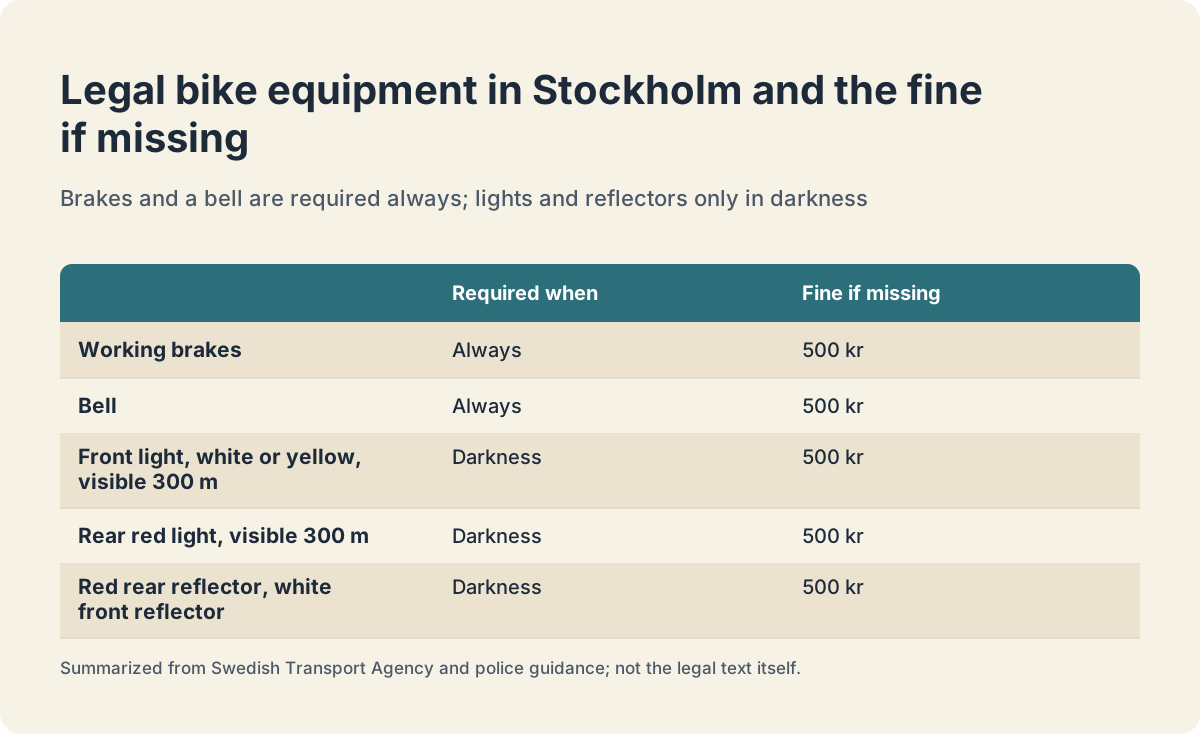
Every bike must have a working bell and working brakes at all times, and lights plus reflectors only when riding in darkness: a red rear light visible at 300 m, a white or yellow front light visible at 300 m, a red rear reflector and a white front reflector. A missing bell, brake or light in darkness each carries a 500 kronor fine. To avoid other costly slips on two wheels, from sidewalk riding to risky shortcuts, read our guide to tourist mistakes that bring fines in Sweden before you set off.
The bell surprises visitors from countries where it is optional. In Sweden it is equipment law, on every bike, always, and rental fleets come with one fitted. The light rule is seasonal in practice: in November Stockholm is dark before 16:00, so an afternoon ride that starts in daylight can end in conditions where the law requires lights. The specification is precise, down to the 300 m visibility distance and the rules for flashing rear lights.
| Equipment | Required when | Fine if missing |
|---|---|---|
| Working brakes | Always | 500 kr |
| Bell | Always | 500 kr |
| Front light, white or yellow, visible 300 m | Darkness | 500 kr |
| Rear red light, visible 300 m | Darkness | 500 kr |
| Red rear reflector, white front reflector | Darkness | 500 kr |
The reflector detail catches people renting in late autumn: a light alone does not satisfy the rule, the reflectors are part of it. If you rent, the shop's job is to hand you a compliant bike; if you arrive with your own, check the rear reflector before a winter ride. The what to wear on a Stockholm bike tour guide covers the clothing half of dark-season riding.
Riding with a tour removes the equipment question altogether, since the listing states what is supplied. On the Stockholm at a Glance Bike Tour, a 2 to 3 hour shared classic-bike ride, the booking page lists the bike and the inclusions, and the guide handles route and timing decisions that the rules affect, like when the group needs lights in the darker months.
How Fast Can You Ride In Gamla Stan?
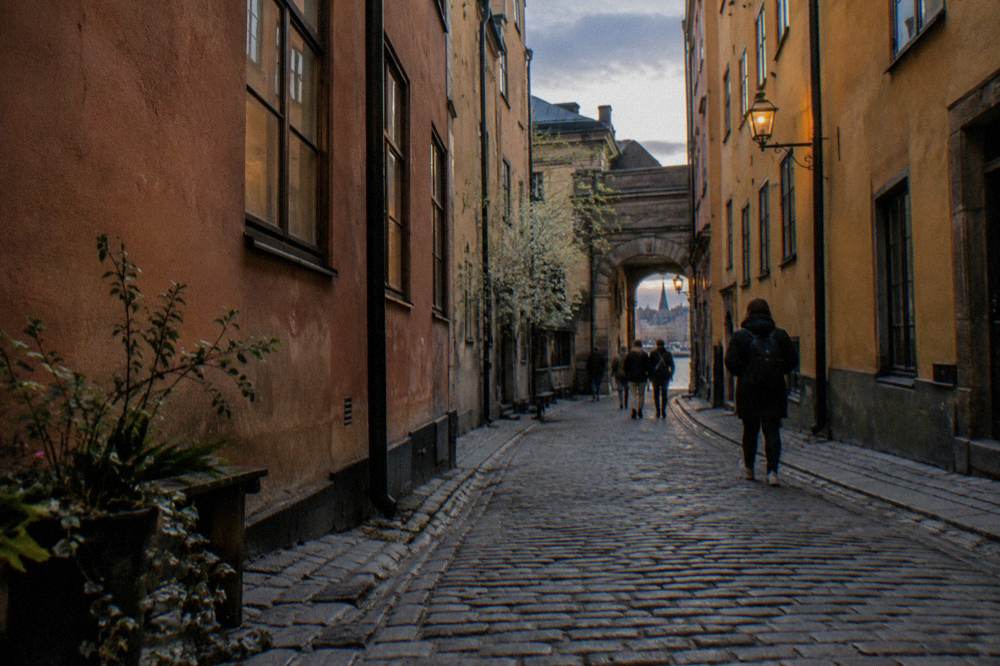
In Gamla stan's inner pedestrian streets, cyclists must ride at walking pace and give way to pedestrians at all times, and vehicle traffic is banned from 11:00 to 06:00 without a permit; from 06:00 to 11:00 only deliveries may enter. E-scooters are banned there except along Munkbroleden and Skeppsbron. Faster than walking pace in a pedestrian zone is a 1,000 kronor fine.
Gamla Stan functions as a living open-air museum with residents, shops and restaurants packed into medieval-width streets, and the rules treat it that way. Through traffic by vehicle, cycles included, is forbidden during the morning window except for deliveries, and the night ban applies without a permit. The practical read: in the core streets, you are a guest moving at foot speed, or you walk the bike.
The edges are easier. The widened Riddarholmskanalen path on the island's north side gives a proper two-way cycling corridor, and Munkbroleden and Skeppsbron remain rideable as the through routes. Stortorget received new vehicle barriers installed in October and November 2026, low granite planters that also add seating ahead of the Christmas market season, which tightens the case for treating the square as a place to pause rather than pass through. The Gamla Stan by bike guide maps the rideable streets against the walking-pace core.
What Fines Apply To Cyclists In Stockholm?
The police fine structure for cycling runs in three tiers: 500 kronor for a missing bell, brake or light, riding on the sidewalk, or riding against a one-way street; 1,000 kronor for ignoring a stop sign or exceeding walking pace in a pedestrian zone; and 1,500 kronor for running a red light. All amounts are fixed per offence.
These are administrative fines, not criminal matters, and they apply to exactly the behaviours the lane and equipment rules prohibit. The expensive ones are the ones that endanger others or yourself: the red light at 1,500 kr sits at the top because signalised cycle crossings carry real conflict risk. The cheapest tier is mostly about equipment and direction, the things a compliant rental bike and a glance at the signage solve in advance.
| Offence | Fine |
|---|---|
| Missing bell, brake, or unlit in darkness | 500 kr |
| Riding on the sidewalk | 500 kr |
| Riding against a one-way street | 500 kr |
| Ignoring a stop sign | 1,000 kr |
| Faster than walking pace in a pedestrian zone | 1,000 kr |
| Running a red light | 1,500 kr |
The police cycling page, Polisen's cycle rules, is the authoritative list, and the Transport Agency's page covers the underlying equipment and lane requirements. Read those for anything borderline; this page summarizes them.
Can You Take A Bike On Ferries And Trains?
Bikes are never allowed on SL buses, the metro, or the local tram lines Spårväg City and Nockebybanan. They are allowed on commuter trains, Tvärbanan, Saltsjöbanan, Lidingöbanan and Roslagsbanan new trains outside weekday rush hours, and on commuter boats including the Djurgården ferry, where a regular bike costs nothing extra subject to space.
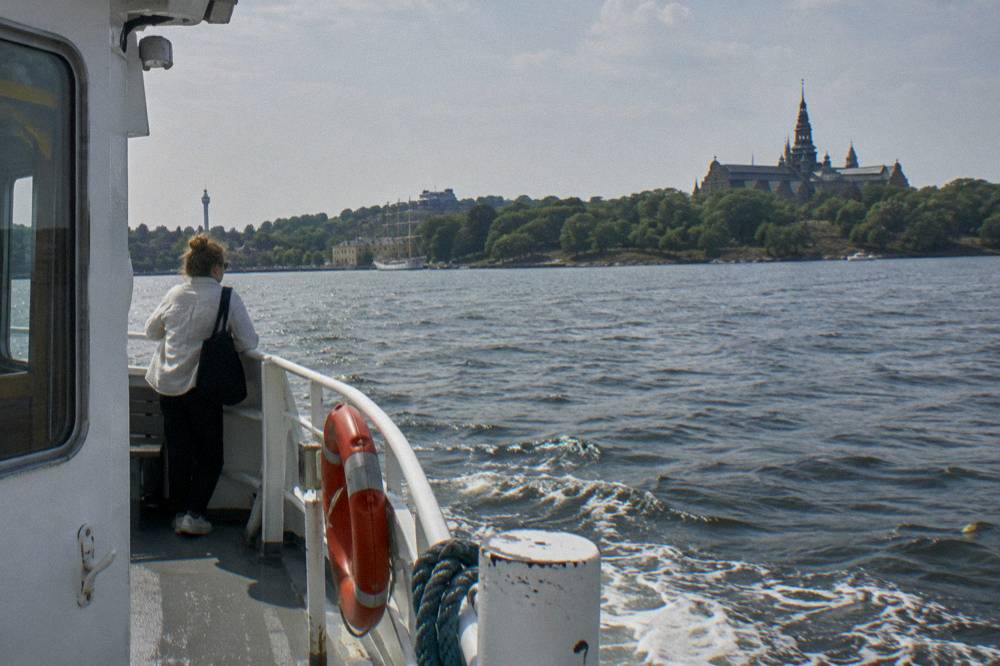
The Djurgården ferry is the one visitors use most. It is a public SL service, and SL's bicycle rules state plainly that taking a bike on the commuter boats costs nothing extra, always dependent on space, with crew judging what fits. E-bikes travel on deck, and if deck space runs out you remove the battery and place it in the on-board container. Staff can point you to a later departure rather than squeeze you on.
| Service | Regular bike allowed? | Notes |
|---|---|---|
| SL buses, metro, Spårväg City, Nockebybanan | No | Full prohibition |
| Commuter trains, pendeltåg | Yes, off-peak | Cannot board or alight at Stockholm City or Arlanda |
| Tvärbanan | Yes, off-peak, in stands | E-bikes prohibited at all times |
| Saltsjöbanan, Lidingöbanan, Roslagsbanan (new trains) | Yes, off-peak | Space permitting |
| Djurgården ferry and commuter boats | Yes, if space | No extra charge; crew decision final |
The rush-hour restrictions and the metro ban shape how you plan a route that crosses the city with a bike. A ride out to Djurgården with a ferry hop back is the classic pattern, and the one day bike and ferry plan lays it out hour by hour. The can you take a bike on the Djurgården ferry post covers the ferry side alone.
How Do E-Bikes Fit The Swedish Rules?
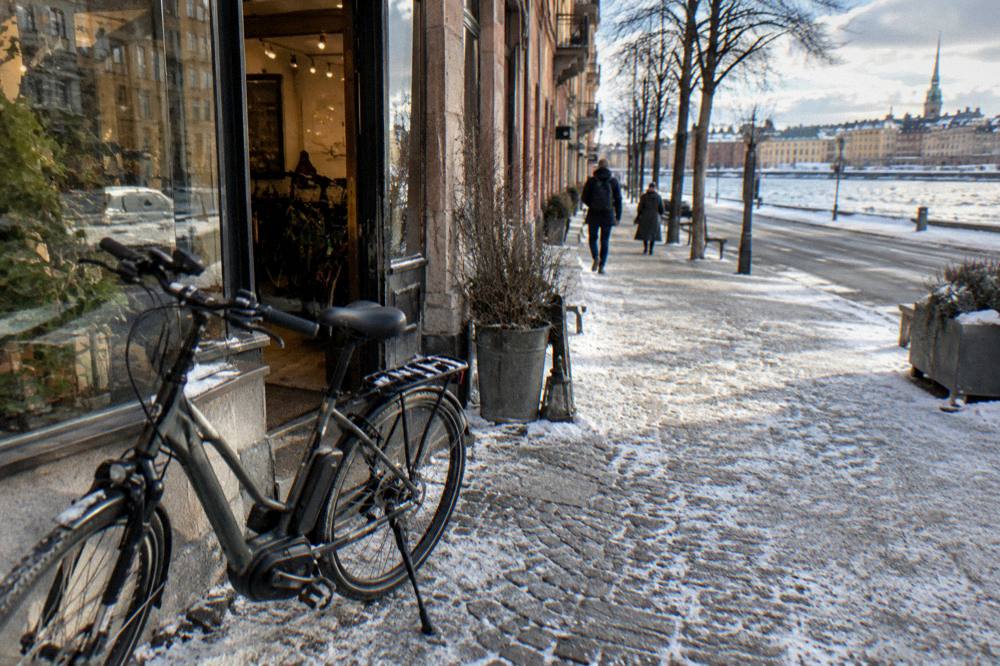
An e-bike counts as an ordinary bicycle only if the motor assists pedalling, gives no assistance above 25 km/h, and has a maximum 250 W continuous rated power. Anything stronger is classed as a moped, with licensing, helmet and insurance requirements. On SL services, e-bikes are banned on Tvärbanan and must ride on deck on boats.
The 25 km/h and 250 W thresholds are the whole test, and every commercial e-bike in the city's shared fleet and rental shops sits inside them. The practical consequence of the classification is that a compliant e-bike follows bicycle rules: cycle lanes where they exist, the same fines, the same lights in darkness. The differences appear on public transport, where the battery makes crews treat it differently from a regular bike.
For riders weighing an assisted bike against a classic one, the e-bike or classic bike guide compares the two across Stockholm's terrain honestly. The one e-bike tour on this site is the Stockholm E-Bike City Tour, a 2 hour 30 minute shared ride, and its listing states the bike and inclusions directly.
When Does A Guided Ride Help With The Rules?
A guided ride helps most when the rules are new to you: the guide chooses the compliant lane, sets the pace through pedestrian zones, times the ferry, and supplies a legal bike with bell, brakes and lights where needed. The listing states hours, meeting point and inclusions, so nothing about the rule set is left to guesswork on the day.
The Wooden Bicycle Tour in Stockholm, run by Tours of Stockholm, is a 2-hour ride. The Wooden Bicycle Tour in Stockholm, a 2 hour shared classic ride, leans on distinctive bikes supplied by the operator, which makes the equipment side of the law the operator's concern rather than yours. Private options like the Stockholm 3-Hour Private Guided Bike Tour let a family set its own pace through the walking-speed zones.
For a day that trades the city grid for forest tracks entirely, the Forest Bike Tour with Sauna and Homemade Lunch is a 5 hour guided ride that ends with heat and food; check its booking page for the seasonal schedule and what the price covers.
Is Cycling In Stockholm Safe For Visitors?
Cycling in Stockholm is generally comfortable for visitors because the rules are consistent, the lane network is extensive at roughly 1,170 km, and winter maintenance sweeps and salts about 38 mil of lanes. No safety statistics can be quoted here, and no one can promise an outcome, but the rule set is designed to make behaviour predictable.
Predictability is the real safety feature. Keep right, use the lane, walk-pace where signed, lights in darkness: when everyone follows the same script, the conflicts shrink. Winter adds the conditions half of the equation, and the city's own traffic information service states that cycle paths are swept and salted down to about minus 6 C to keep them in bare-ground condition, which is why locals keep riding through the dark months with studded or winter tires.
Visitors with doubts usually choose a guided first ride and explore solo afterwards. Whichever way you lean, the trio below is the shortlist that covers a classic guided option, a premium-bike city ride and an e-bike contrast, each with its hours and inclusions on the booking page.
Common Questions About Cycling Rules In Stockholm
Do You Have To Wear A Helmet When Cycling In Stockholm?
Only riders under 15 must wear one by law, and that also applies to children carried on a bike. Adults have no legal requirement, though rental shops and tour operators supply helmets and most riders use them.
What Is The Fine For Cycling Without Lights In Stockholm?
500 Swedish kronor. Lights and reflectors are required only in darkness, and the light must be visible at 300 m, with a red rear light, a white or yellow front light, and the matching reflectors.
Can You Cycle In Gamla Stan?
Yes, but at walking pace on the inner pedestrian streets, always yielding to pedestrians, with vehicle traffic including cycles banned between 11:00 and 06:00 without a permit. Munkbroleden, Skeppsbron and the widened Riddarholmskanalen path are the rideable through routes.
Can You Take A Bike On The Stockholm Metro?
No. Bikes are prohibited on SL buses, the metro, Spårväg City and Nockebybanan. They are allowed off-peak on commuter trains, Tvärbanan, Saltsjöbanan, Lidingöbanan and new Roslagsbanan trains, and on commuter boats including the Djurgården ferry at no extra charge, space permitting.
Are E-Bikes Legal In Stockholm?
A pedelec e-bike with assistance cutting out at 25 km/h and a motor of at most 250 W continuous rated power counts as an ordinary bicycle. More powerful machines are classed as mopeds, with separate licensing and helmet requirements.
Do You Have To Use The Cycle Lane In Stockholm?
Yes, normally. Where a cycle lane exists you should use it and keep right. Without one you ride on the road with traffic; riding on the sidewalk instead is a 500 kronor fine.