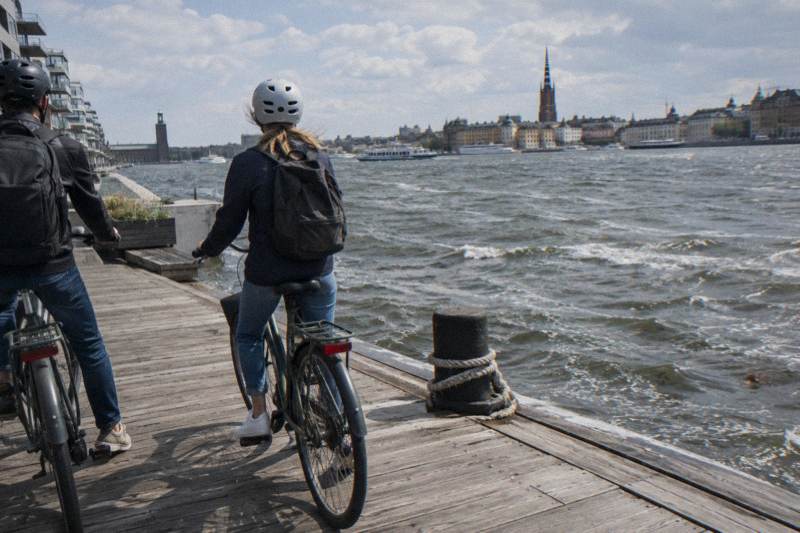
E-Bike Or Classic Bike For A Stockholm Tour?
Stockholm rewards both bike types differently: the e-bike flattens the South Island climbs and the bridges between them, while a classic three-speed keeps you inside the city's calm, law-abiding cycling rhythm. Here is how the two compare on hills, islands, rules and tours.
Short answer
Most visitors are happy on a classic bike: Stockholm's centre is compact, its dedicated lanes total about 1,170 km, and the one true e-bike tour product runs 2 hours 30 minutes. Choose the e-bike if you want South Island climbs, several islands in one outing, or a sweat-free ride in summer.
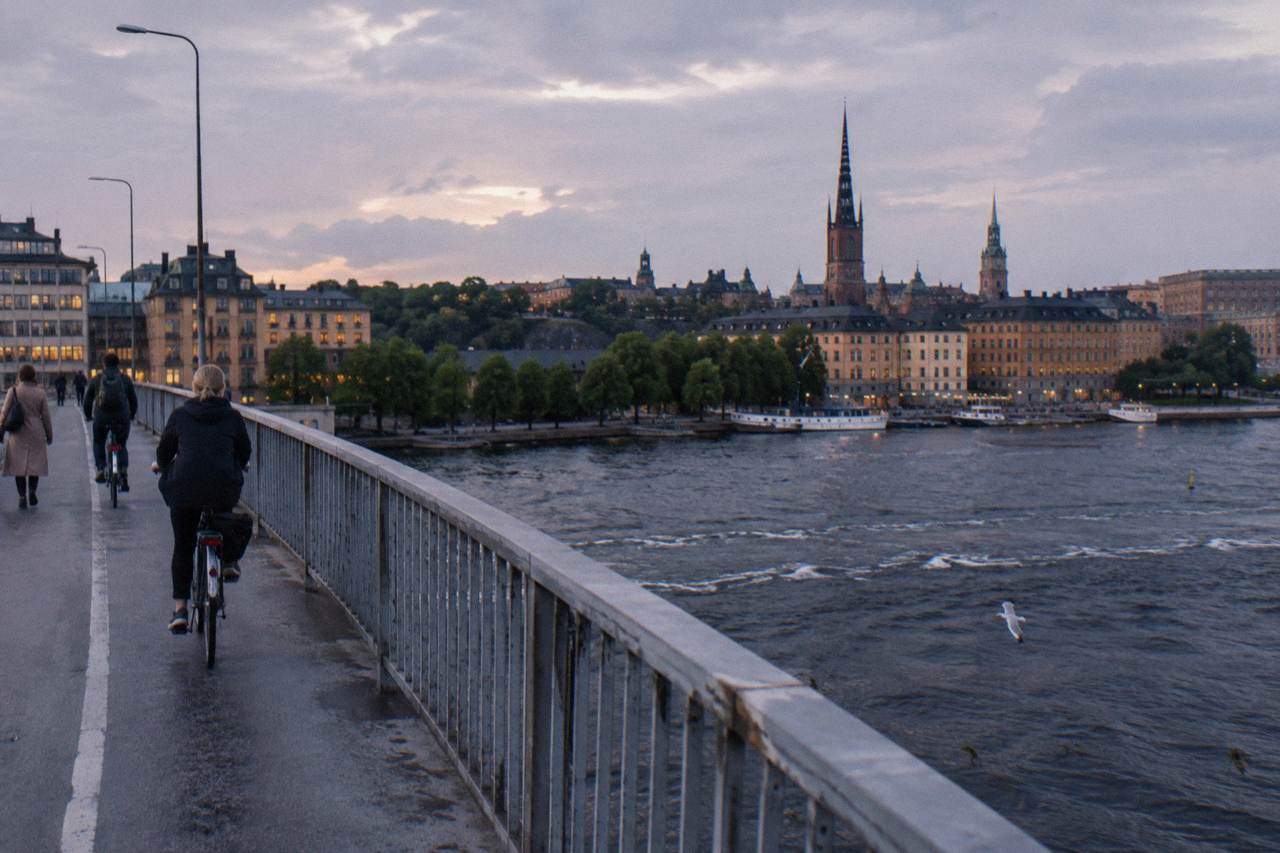
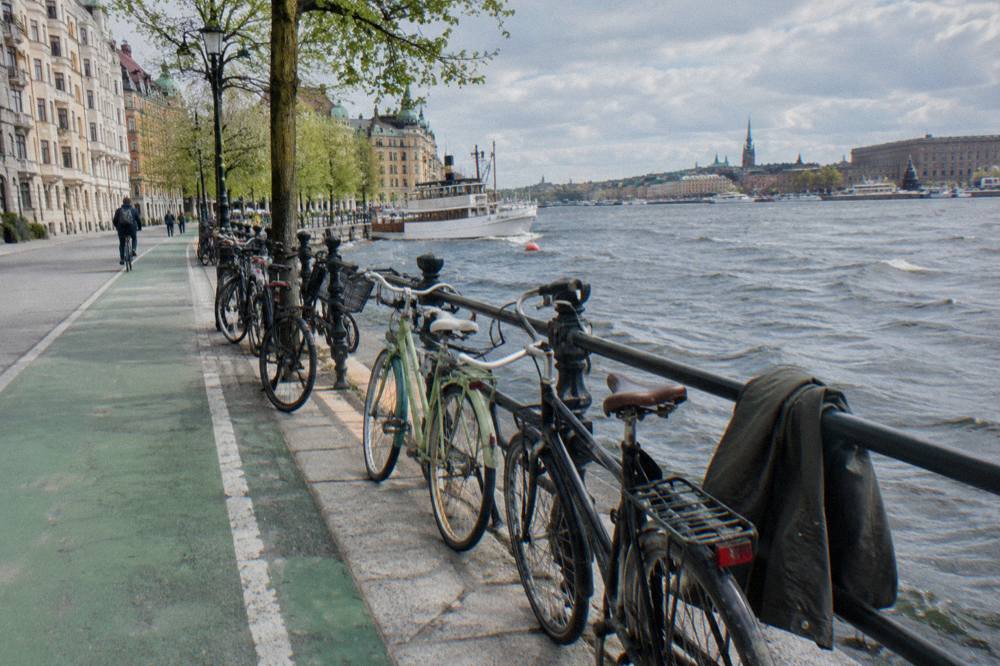
Stockholm spreads across fourteen islands, and every one of them is reached by a bridge. That single geographic fact drives the e-bike versus classic-bike question more than any marketing copy does, because bridges mean short climbs, repeated, and the islands mean you cover ground in hops rather than one long line. The city has roughly 117 mil of cycle routes, about 1,170 km of dedicated lanes, combined paths and bike fields according to the city's own cycling portal, so whichever bike you choose, the infrastructure is there to receive it.
This comparison stays close to what the tours themselves state, what Swedish law says about electric assistance, and what the city has built. Battery range for tour fleets is not published; ask the operator how they handle a flat battery mid-tour. Read what each booking page says about the bike, the helmet and the meeting point.
E-Bike Or Classic Bike For Seeing Stockholm?
For most first-time visitors a classic bike is the better fit: the historic core is compact, the pace of a guided group is set for sightseeing rather than speed, and classic-bike tours outnumber e-bike tours seven to one here. The e-bike earns its place when your day includes South Island climbs, several islands, or a summer ride where arriving sweaty matters.
Stockholm is not a hard-riding city, and that matters for the e-bike question. It is flatter than its reputation suggests in the centre, and the tours sold here run two to three hours, distances a reasonably fit adult covers comfortably on a normal bike. What tips people toward electric assistance is not distance but repetition: the bridges between Gamla Stan, Södermalm, Kungsholmen and Djurgården each ask for a short effort, and a day that strings four or five of them together adds up.
The choice also maps onto tour format. The city's only dedicated e-bike product is the Stockholm E-Bike City Tour, a shared 2 hour 30 minute ride with 93 reviews on its listing. Classic bikes appear across nearly everything else, from a 2 hour at-a-glance loop to a 3 hour full city tour. If your heart is set on electric, the dedicated listing is the clean way to get it; if you are flexible, classic opens far more departure times.
One more framing point: a guided tour removes most of the reasons people fear cycling a new city, namely route-finding and traffic rules. A local guide picks lanes that exist and crossings that behave. The bike type question then becomes purely physical, which is the question this guide answers.
How Hilly Is Stockholm For A Cyclist?
Stockholm's centre is gently rolling rather than hilly: the bridges between islands involve short rises, and the serious climbs live on Södermalm, the South Island, where streets like Hornsgatan rise from the water toward the ridge. A classic bike handles the centre easily; the South Island ridge is where an e-bike genuinely changes the day.
Södermalm is the part of Stockholm that decides the bike question for many riders. The island sits on a rock plateau, and getting from the Slussen waterfront up to the viewpoints means sustained climbing on old streets. Once you are on top, the riding is flat and pleasant, but the return, or a second ascent after a ferry trip, is where legs start to complain. Photographers who want Monteliusvägen's view across to Gamla Stan, then a second viewpoint, then a descent to a café, feel it.
The rest of the picture is friendlier. Gamla Stan is small enough that its slopes barely register, though its pedestrian streets require walking pace by city rule, so bikes there move slowly regardless of motor. Norrmalm and Östermalm are mostly level, and Djurgården's park roads run gentle and green along the water. Riders coming from genuinely flat cities sometimes notice the bridges; riders from hilly cities barely do.
Stockholm is not a hard-riding city: most guided routes keep to flat ground near the water. What the city does publish is investment: new and widened bike lanes on Sveavägen finished in May 2026, and a new northbound lane on Vasabron completed in June 2026, both part of a continuous central corridor. Better lanes do not remove climbs, but they make the climb itself calmer.
Which Bike Suits Djurgården And The Bridges?
Djurgården suits both bike types well, with one practical difference: the classic bike keeps you inside the park's slow, scenic rhythm, while an e-bike lets you fold Djurgården, Södermalm and the Old Town into a single outing without fatigue. The ferry to the island takes bikes at no extra cost, subject to space, whichever bike you ride.
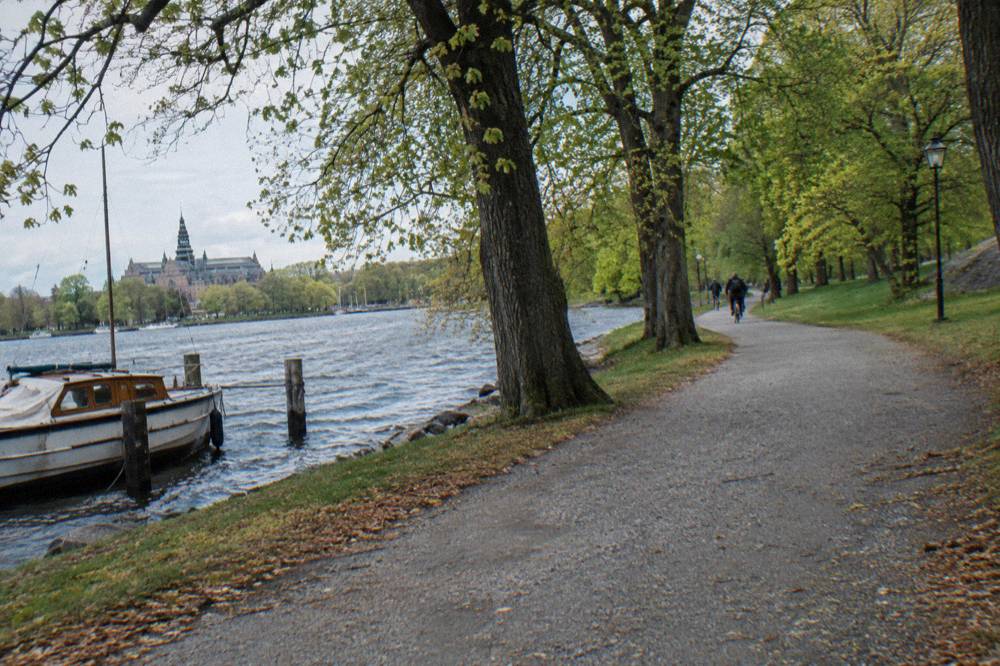
Djurgården is Stockholm's royal park island and, for cyclists, its easiest terrain: tree-lined roads, waterfront stretches and museums scattered at pedalling distance. The city's summer restrictions help here too, as Djurgårdsbommen and Vasabommen were closed to most vehicles on spring and summer days in 2026, with exceptions for buses and taxis, which left the island's roads unusually calm for cyclists during visiting hours.
The ferry point matters for planning. The Djurgården ferry is an ordinary SL commuter boat, and per SL's rules you can bring a regular bike at no extra charge, always subject to space, with staff judging what fits. E-bikes have their own rule: they go outdoors on deck, and if there is no deck space you remove the battery and place it in the deck container. That is a small friction, not a barrier, but it is the one place the two bike types are treated differently by the same boat.
For the bridge-hopping style of visit, the arithmetic favours the motor. A classic-bike tour of Djurgården plus the Old Town is a full, satisfying outing. Adding Södermalm's ridge to the same ride is where a 2 to 3 hour classic tour starts to feel like exercise, and it is exactly the combination the e-bike city tour format exists to serve. Readers weighing the full island-hopping day may find our one-day plan useful: see the one-day bike and ferry plan.
| Factor | Classic bike | E-bike |
|---|---|---|
| Djurgården park roads | Flat, relaxed, ideal | Flat, relaxed, battery barely used |
| Bridges from the centre | Short repeated efforts | Smooth, minimal effort |
| Södermalm ridge climbs | Sustained effort both ways | Noticeably easier |
| Ferry to Djurgården | On board at no extra cost, space permitting | On deck, battery rules per SL |
| Guided tour options in the city | Most listings, several durations | One dedicated 2 h 30 min listing |
Can An E-Bike Do Everything A Classic Bike Does?
Legally and practically, yes within the city: a pedelec that only assists pedalling, stops helping above 25 km/h and has at most 250 W of continuous rated power counts as an ordinary bicycle in Sweden, usable on bike lanes, in tour groups and on the permitted ferries. Beyond those limits the machine is probably a moped, with different rules entirely.
The Swedish transport agency draws the line precisely, and it is worth knowing because it explains why tour e-bikes behave like normal bikes. The motor may only amplify your pedalling, must cut out above 25 km/h, and continuous rated power is capped at 250 W. Meet those three tests and the law treats the machine as a cykel: same lanes, same helmet rules, same obligations. A throttle-driven machine that pushes without pedalling falls outside that definition.
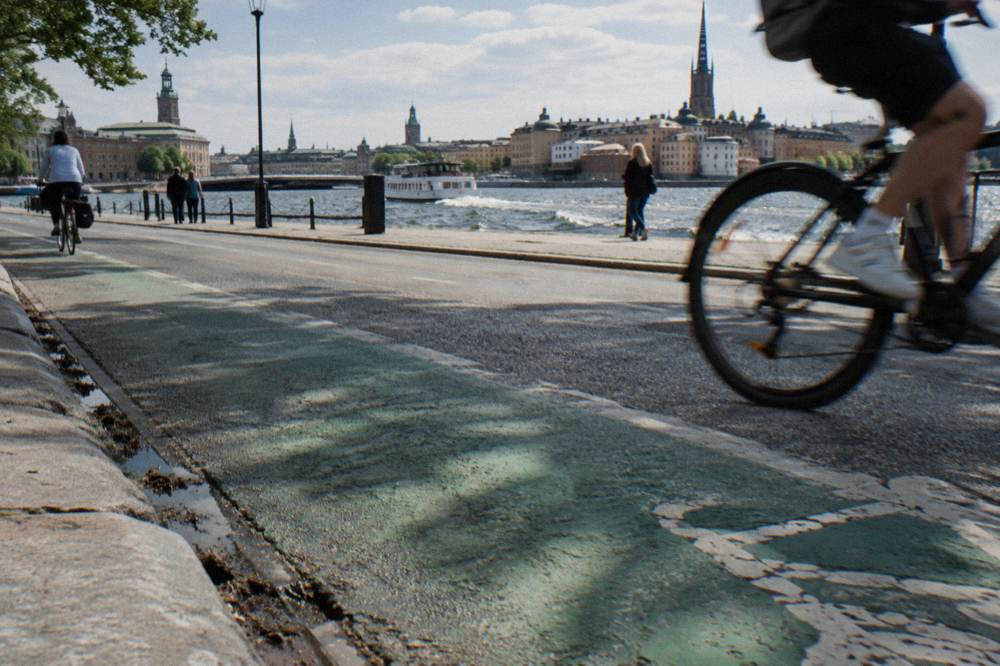
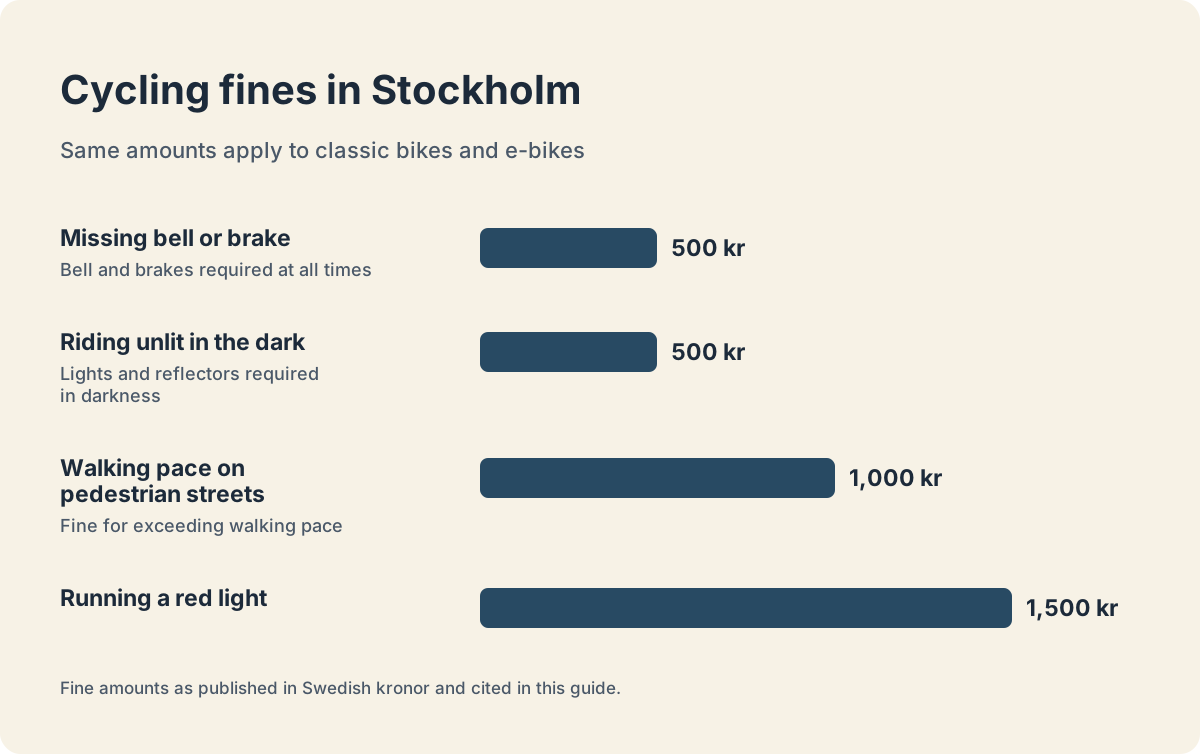
The shared rules are the same for both: use the bike lane where one exists, keep right, and equip the bike with a bell and working brakes at all times. Lights and reflectors are required only when riding in darkness. Fines are real and published in Swedish kronor: 500 kr for a missing bell or brake, 500 kr for riding unlit in the dark, 1,000 kr for exceeding walking pace on a pedestrian street, 1,500 kr for running a red light. Helmets are mandatory only for riders under 15. Our fuller rundown of these obligations lives in the guide to cycling rules in Stockholm.
| Rule | Applies to classic bikes | Applies to e-bikes | Fine if broken |
|---|---|---|---|
| Helmet for riders under 15 | Yes | Yes | Parents can be fined when carrying a child |
| Bell and brakes at all times | Yes | Yes | 500 kr |
| Lights and reflectors in darkness | Yes | Yes | 500 kr |
| Use the bike lane where one exists | Yes | Yes, same lanes | Not a fixed cycling fine |
| Walking pace on pedestrian streets | Yes | Yes | 1,000 kr |
| Running a red light | Yes | Yes | 1,500 kr |
One honest limitation of the e-bike: battery and range figures for tour fleets are not published anywhere this site can verify, so no range claim appears here. Tour operators charge fleets overnight and carry the risk themselves; if range anxiety would spoil your day, ask the operator before booking how they handle a flat battery mid-tour.
Which Tour Should You Book For Each Bike Type?
Book the dedicated e-bike listing, a 2 hour 30 minute shared city tour with 93 reviews, if you want the motor; book a classic guided tour for the widest choice of durations and departures; and book the premium-bike city tour if you want a better classic machine rather than a motor. All three list prices, inclusions and meeting points on their booking pages.
The dedicated option first. The Stockholm E-Bike City Tour is the one product in this comparison whose machine is electric by definition, and its review pool of 93 is large enough to take seriously. Its listing carries the current rating and price, both of which shift with season, It is rated 4.9 across 93 reviews and priced from $51.04 per person.. For readers who want the motor with a guide's commentary, it is the direct answer.
The classic side offers more shapes. The Stockholm Guided Bike Tour runs 2 to 3 hours as a shared classic ride and, usefully for this comparison, its listing includes an e-bike option for riders who want the same route with assistance: a genuine middle path, since you buy one tour and choose the machine. Check availability if that flexibility appeals, alongside the tour's own page at the guided city bike tour.
The third path is quality without electricity. The City Bike Tour with Premium Bikes is a 3 hour classic tour built around better machines; its listing has no reviews yet, so this site makes no rating claim about it, but the concept answers a real question: some riders do not want a motor, they want a nicer frame and gears. Check availability to see what the premium fleet includes.
| Tour | Duration | Bike type | Format | Best for |
|---|---|---|---|---|
| Stockholm E-Bike City Tour | 2 h 30 min | E-bike | Shared | Motor-assisted city overview |
| Stockholm Guided Bike Tour | 2 to 3 h | Classic, e-bike option | Shared | Flexibility on machine choice |
| City Bike Tour with Premium Bikes | 3 h | Premium classic | Shared | A finer classic machine, no motor |
| Stockholm at a Glance Bike Tour | 2 to 3 h | Classic | Shared | A shorter classic first taste |
Inclusions differ listing by listing. Read what each booking page says about the bike, the helmet and the meeting point before you book. Where a listing names its meeting point, that is where the ride starts; where it names none, ask the operator.
Does The Season Change The Bike Choice?
Yes, at the edges of the year: from late May to early September both bike types work comfortably, while from November through March the e-bike's advantage grows, because cold, darker days and winter gear make every bridge climb heavier, and the city clears and salts its priority cycle routes for exactly this riding.
The climate normals tell the story. July averages a high of 23.6 C and 17.7 hours of daylight; January averages a high of 1.0 C, a low of minus 2.9 C and just 7 hours of daylight. June is the light extreme at 18.5 hours per day. Rain is modest but real, peaking in August at 66 mm on average, with February through April the driest stretch at 27 to 29 mm. None of this forbids a classic bike; all of it argues that winter riding rewards assistance and proper clothing.
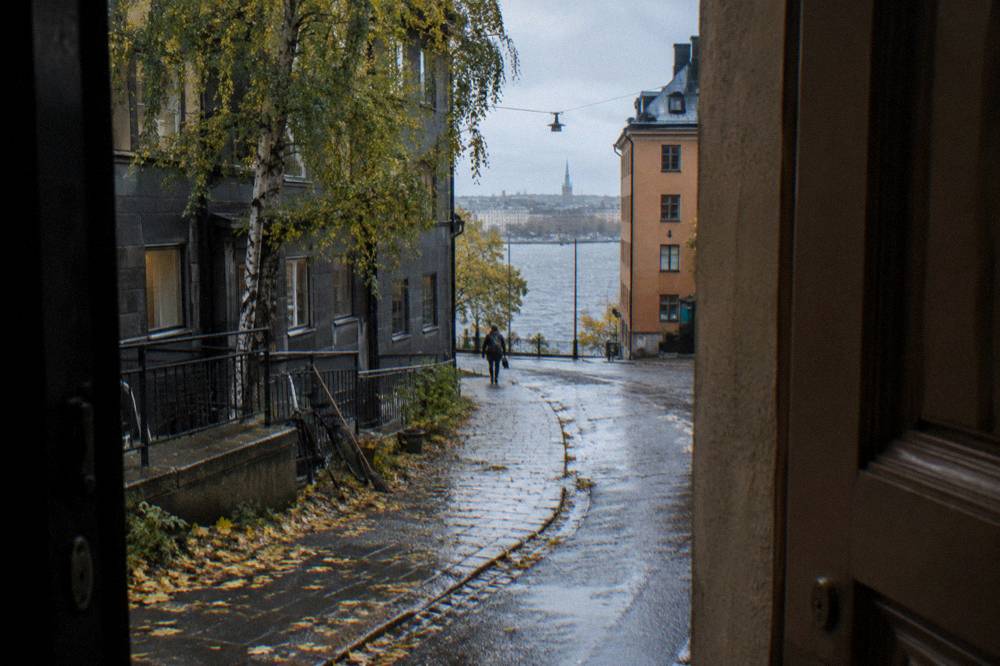
Winter maintenance is better than most visitors expect. The city sweeps and salts around 38 mil of bike lanes, of which roughly 20 mil are combined pedestrian and cycle paths, keeping surfaces rideable in bare-road conditions down to about minus 6 C, according to the regional traffic information service. On top of that, the regional network now counts over 215 km built to high standard out of a planned 800 km. For a fuller month-by-month picture, see our best time of year to cycle guide.
Dark-season riding also touches the equipment law: lights and reflectors become mandatory in darkness, and tours that run late autumn departures handle this on their fleets. If you book a November or December tour of either bike type, the operator's listing is the place to confirm what lighting is provided.
Who Genuinely Needs The Motor, And Who Does Not?
Riders who should lean e-bike: anyone covering Södermalm's ridge plus Djurgården in one day, anyone riding with a modest fitness base, and anyone visiting between November and March. Riders who do not need it: confident cyclists on a 2 to 3 hour centre-and-park route in the main season, for whom a classic bike is quieter, simpler and available on many more departures.
Age and group shape matter too. Families riding with teenagers, all of whom must wear helmets by law under 15, often find that a mixed group stays together more easily when the adults have assistance; our family and kids bike tours guide covers the age-and-equipment angle in detail. Conversely, a solo confident rider on a short at-a-glance loop gets nothing from a motor except something to charge.
There is also a temperament argument for the classic bike that no spec sheet captures. A motor flattens the city; pedals let you feel its shape. Some visitors finish a classic ride with a physical map of Stockholm in their legs, bridges and all, and regard that as the point. Others finish the same ride tired at hour three and wish they had booked the motor. Both reactions are legitimate, which is why Stockholm Bike Tours lays the options side by side rather than pushing one.
Budget is the last honest factor. Here the e-bike city tour is the cheapest option, from $51.04, but the exact figures live on each booking page and move with season, so compare the two listings directly at the moment you book rather than trusting any cached number, including one printed here.
How Do You Decide Before You Book?
Decide on three questions in order: does your route include Södermalm's ridge, is your trip in the cold half of the year, and does your group include anyone who would slow the rest on climbs? Two or three yes answers point to the e-bike listing; zero or one point to a classic tour, where departures are plentiful and machines simpler.
Then verify before paying. The booking page for each tour states the current price with its basis, per person or per group, the meeting point, the bike type and the inclusions. Cancellation terms also live there, and they matter more than a small price difference: plans change when weather turns, and a booking you can cancel without penalty beats a marginally cheaper one you cannot. The e-bike city tour's listing shows its own cancellation terms, and its 93-review history gives you a real pool of past guests to read.
For the deeper dives, the e-bike rental questions piece covers going it alone with an electric machine, and the guided or rental decision guide covers whether you want a guide at all. Swedish law keeps the final word simple: whichever machine you choose, it needs a bell and brakes always, lights in darkness, and a helmet for every rider under 15.
External references worth reading directly are the city's cycling network page at Cykla Stockholm, the transport agency's vehicle rules at Transportstyrelsen, and the ferry bike rules at SL.
Common Questions About E-Bikes And Classic Bikes
E-Bike Or Classic Bike For A Stockholm Tour?
Choose classic if your route stays in the compact centre and Djurgården in the main season; choose the e-bike if your day includes Södermalm's climbs, several islands, or a visit between November and March. One dedicated e-bike city tour runs 2 hours 30 minutes, while classic options span 2 to 3 hours across several listings.
Is Stockholm Too Hilly For A Classic Bike?
No. The centre is gently rolling and the only sustained climbs are on Södermalm's ridge. Bridges between islands ask for short, repeated efforts that most riders handle easily on a classic bike at tour pace.
Does An E-Bike Count As A Bicycle Under Swedish Law?
Yes, if the motor only assists pedalling, gives no help above 25 km/h and has at most 250 W continuous rated power. Outside those limits the machine is probably classed as a moped, with different requirements.
Can I Take Either Bike On The Djurgården Ferry?
Yes, subject to space. A regular bike travels at no extra cost on the commuter ferry, while an e-bike is placed outdoors on deck, with battery removal into the deck container if deck space runs short.
Do Adults Have To Wear A Helmet On A Stockholm Bike Tour?
No. Helmet use is mandatory only for children and young people under 15. Adults ride at their own discretion, though tour operators typically provide helmets for anyone who wants one.
Are E-Bike Tours Available In Winter?
Guided winter e-bike rides with winter tyres and gear provided run in Stockholm; check the live booking page for dates., and the city salts priority cycle routes to keep winter riding practical. Check the booking page for the season you plan to visit.