Can You Rent A Road Bike In Stockholm?
A plain answer on road bike rental in Stockholm, what the city's shops and shared fleets actually offer, and the guided rides that include a bike.
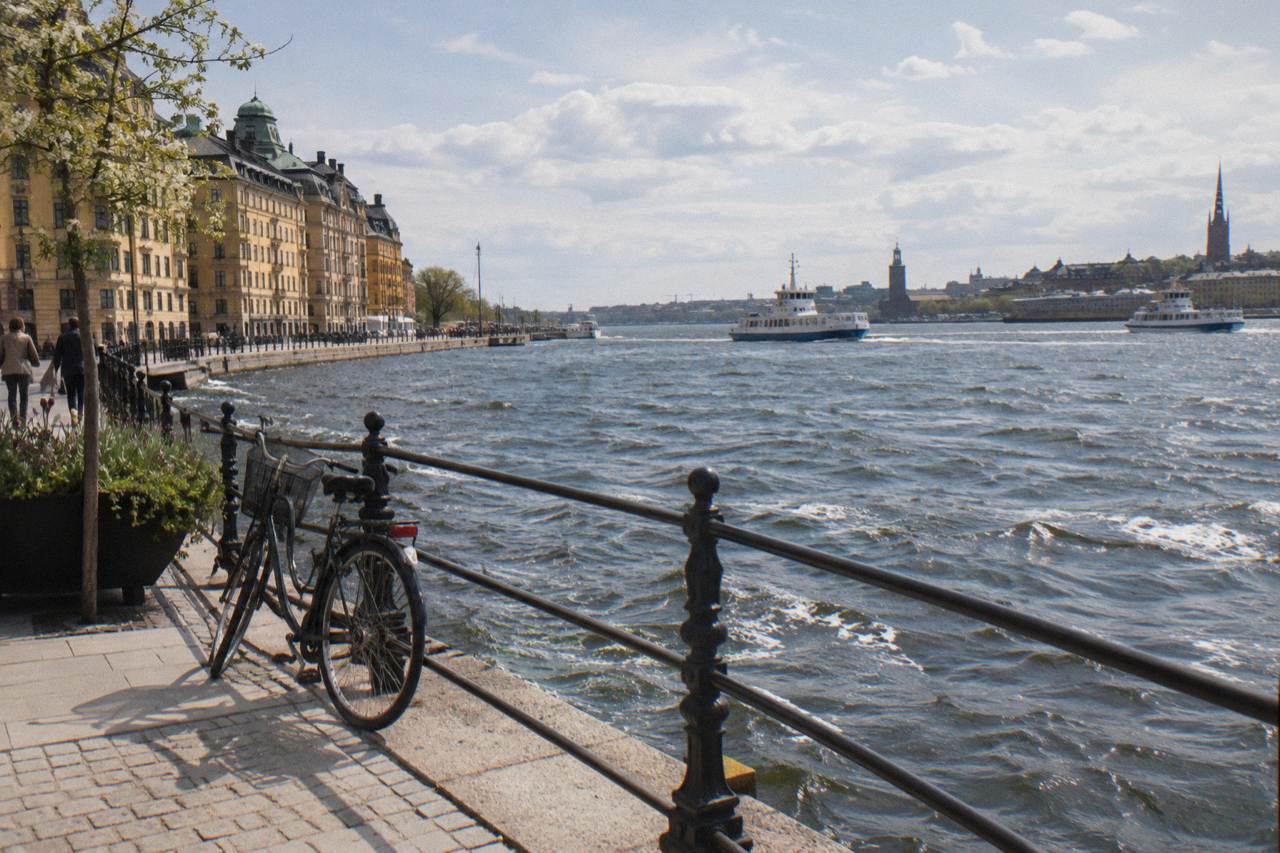
Yes in principle, but no Stockholm rental shop currently advertises a verified road bike fleet at a published rate. The city's rental market is built around city bikes, e-bikes and touring hybrids, and its shared fleet is e-bikes only. If you want to ride fast on tarmac, the practical options are asking a rental shop directly, or booking a guided tour where a well-specced bike is included in the price. Since e-bikes are what Stockholm shops actually stock, our guide to renting an electric bike in Stockholm walks through the guided rides, shared fleets and rental shops, plus what local rules require.
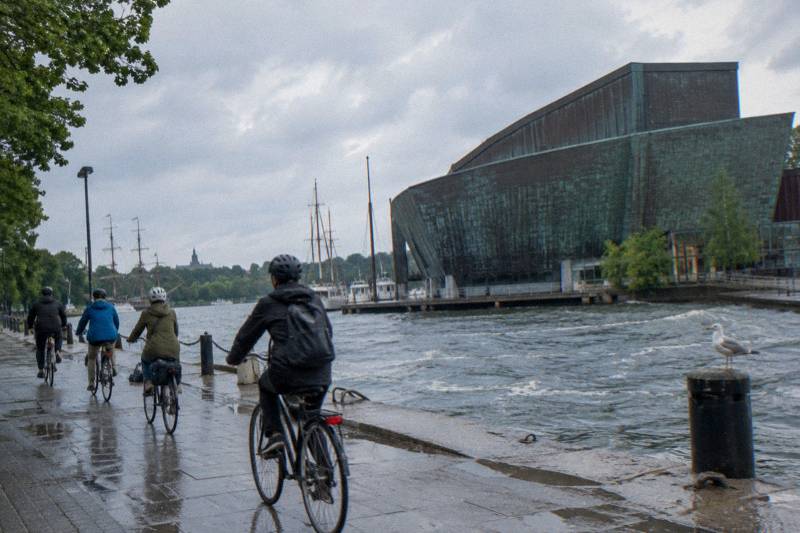
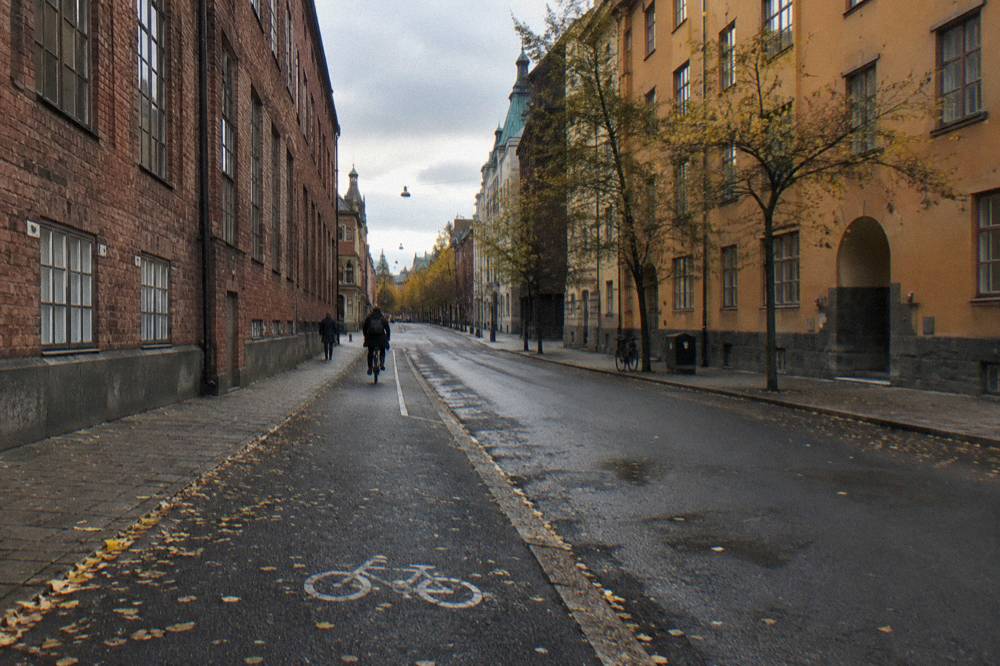
Stockholm is a city that takes cycling seriously in its own particular way. The network runs to about 117 mil, roughly 1,170 km, of cycleways counting dedicated lanes, combined foot and bike paths and bike lanes in the road, according to the city's own cycling pages at cykla.stockholm. But that network is designed for transport cycling: commuting, school runs, shopping. The bike you see on it, nine times out of ten, is an upright city bike with a chain guard, not a carbon road bike with drop bars.
That shape has a history. Stockholm spent decades building separated infrastructure so that ordinary people in ordinary clothes would ride, and it worked: the lanes are full of residents going about their day, not athletes in lycra. A visitor who arrives expecting a Copenhagen-style or Amsterdam-style scene of casual utility cycling will find exactly that, and a visitor expecting a road-cycling city like Girona or Innsbruck will not.
That shapes the rental market too. A shop renting to commuters and tourists stocks what those riders want, and a racing road bike is a niche request. The result is that you can find plenty of places to rent a bike in Stockholm, and the honest answer on renting a road bike specifically is that nothing verified exists at a published daily rate. Anything you find will come from asking a shop directly, and prices will be quoted case by case. To set expectations before you call around, our guide to typical bike rental prices in Stockholm explains what standard daily rates look like, what deposits shops usually ask for, and what the law requires your bike to carry.
What the city does offer, and offers well, is guided riding on quality bikes. Several bookable tours include the bicycle as part of the package, which removes the rental question entirely. The trio below covers the main angles: a classic guided city ride, a premium-bike version for riders who care about the machine, and an e-bike option for covering distance with less effort.
If you arrive hoping for a sporty ride, it helps to reset expectations early. Stockholm rewards steady, curious riding over speed. The best routes thread through Gamla Stan at walking pace, cross to the royal park on Djurgården, and loop the heights of Södermalm, and none of that is improved by riding it fast. A rider on a comfortable city bike at a relaxed pace sees more of this city than a rider head-down on a road bike ever will.
Why Stockholm Rental Shops Stock City Bikes, Not Road Bikes
Stockholm's rental demand comes from commuters, families and tourists, and all three groups want upright, practical bikes. Shops therefore stock city bikes, hybrids and e-bikes, with fat bikes and seasonal options at the edges. Road bikes sit outside that demand, so no shop publishes a verified road bike rate, and the shared fleet run by Voi and Bolt is e-bikes only.
The shape of the fleet follows the shape of the rules and the roads. Stockholm's dedicated cycle network, described in detail in our guide to where the bike lanes run, is designed for transport riding: separate lanes, often physically protected, running beside carriageways. Riding fast in a dense stream of commuters, e-scooters and parents with cargo bikes is neither expected nor especially welcome. The Swedish transport agency puts it plainly: where a cycle path exists, you should normally use it, per Transportstyrelsen's cycling rules.
The rental layer reflects this. Year-round shops in the centre rent practical machines for hourly or daily use, and the seasonal operator on Djurgården opens from late April into September with classic three-speed city bikes, per its own listing. None of these is a road bike, and none advertises one. The shared system went the same way: the city announced Voi and Bolt as the operators of its shared bicycle service in December 2025, and that service is an e-bike fleet, not a docked road bike scheme. Shared bikes are a paid service, priced per ride in the app. If those per-ride fees add up faster than expected, the guide to the cheapest bike rental options in Stockholm compares app bikes, rental counters and tours side by side.
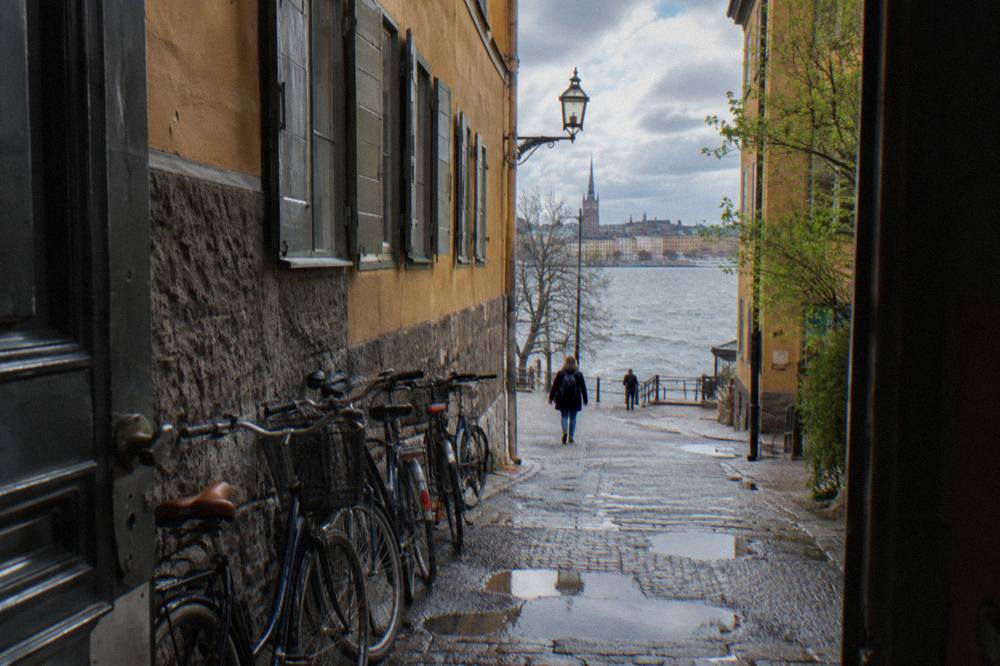
There is a second, quieter reason. Road cycling in the Stockholm region tends to happen outside the core: the archipelago islands, the lakes north of the city, the long straight lanes of the surrounding countryside. Visitors who want that experience mostly arrive on organised cycling holidays, several of which run on set season dates from mid-May to mid-September. Those packages bring their own bikes. The shop counter in the city centre rarely sees the demand, so it rarely stocks the product.
A third reason is maintenance and risk. A road bike is a precision object with thin tyres and delicate gears, and it demands fitting, sizing and a deposit conversation that a city bike does not. Rental shops running high-turnover tourist fleets prefer machines that survive cobblestones, kerbs and rain without a workshop visit. That commercial logic repeats itself in cycling cities across Europe, and Stockholm is no exception.
The honest summary for a visitor: a road bike rental in Stockholm exists only if you find a shop willing to arrange one, and no price for it can be stated here because none is published. Email or call ahead, and expect a per-day quote rather than a menu price. Ask also about fitness hybrids and fast trekking bikes, which some shops hold as a middle ground and which handle Stockholm's tarmac well. For everything else you might want to do on two wheels here, the options are bookable and clear.
What You Can Book Instead: Guided Rides With Bikes Included
If a road bike rental cannot be verified, the working alternative is a guided tour where the bike comes with the ticket. Stockholm's bookable guided rides run 2 to 5 hours on city bikes, premium bikes or e-bikes, with helmet and guide included per the listing flags. You trade free speed for a route, a machine and someone who knows the city.
The most direct option for most visitors is the Stockholm Guided Bike Tour. It runs 2 to 3 hours as a shared classic-bike ride through the centre, and the listing flags include both bike and helmet, which answers the practical question a rental would have answered. The e-bike option appears on its listing where flagged, for riders who want assistance on the climbs. Check the booking page for the current price, meeting point and season, since those details sit on the operator's page rather than in any general city listing.
For a rider whose interest in a road bike was really an interest in a better bike, there is the City Bike Tour with Premium Bikes. Same broad idea, a 3-hour shared city ride, but built around higher-spec machines. That listing has no reviews yet, so no rating claim can be made for it; what can be said is that it is the closest bookable product to "rent a nicer bike and have someone route it for you". The premium bikes are city-style rather than drop-bar, so if a road bike specifically is the dream, ask the operator through the booking page whether an upgrade exists.
The third angle is assistance. The Stockholm E-Bike City Tour runs 2 hours 30 minutes on electric bikes, which flattens Södermalm's hills and extends range across the bridges. Under Swedish rules an e-bike counts as an ordinary bicycle when the motor only assists pedalling up to 25 km/h with at most 250 W continuous rated power, so these ride anywhere a regular bike rides, per the rules on Transportstyrelsen's vehicle pages. For a visitor who wants to cover ground at road-bike-ish pace without the training, this is the honest substitute.
And if what you wanted from a road bike was distance and terrain rather than drop bars, look at the Forest Bike Tour with Sauna and Homemade Lunch, a 5-hour shared ride listing fat bikes on seasonal trails. It is the opposite of tarmac speed, but it is the tour where the machine is genuinely built for the ground it covers, and the sauna and lunch at the end reframe what a long day on a bike in Sweden is supposed to feel like.
Road-Style Riding Rules You Should Know Before You Go Fast
Sweden fines cyclists in kronor, and the numbers are real: 1,500 kr for running a red light, 1,000 kr for speeding past walking pace on a pedestrian street, 500 kr for missing lights in darkness or riding against a one-way street. Helmets are mandatory only under 15, lights only in darkness, and a bell and working brakes at all times.
Speed is the thing a road-bike rider has to unlearn first. In Gamla Stan, the inner streets are pedestrian streets: a bike may be ridden through at walking pace, giving way to pedestrians, and anything faster risks the 1,000 kr fine. The same walking-pace duty applies on any gågata or gångfartsområde. A road bike in Gamla Stan is, functionally, a bike you walk beside. Our cycling rules guide covers the full set, including the fines listed by the police.
| Rule | Requirement | Fine if broken |
|---|---|---|
| Helmet | Mandatory under 15 only | 500 kr for an adult carrying a child without one |
| Lights and reflectors | Required in darkness, visible at 300 m | 500 kr |
| Bell and brakes | Mandatory at all times | 500 kr |
| Red light | Stop | 1,500 kr |
| Pedestrian street speed | Walking pace, yield to pedestrians | 1,000 kr |
The other speed constraint is infrastructural. Fast riding in the core means mixing with commuters who know the lane markings and expect predictable behaviour. Where a cycle path exists you should normally use it, and keep right. On Södermalm the city has even introduced green waves for cyclists on parts of Hornsgatan and Långholmsgatan, tuned to around 20 km/h in peak hours, which tells you the speed the system itself considers correct. The full index of guides sits on Stockholm Bike Tours.
None of this bans fast riding; it just relocates it. The cycle network extends far beyond the centre, the city sweeps and salts over 36 mil of cycle infrastructure through winter, and the archipelago ferries take a standard bike at no extra charge subject to space, per the SL rules at sl.se. A rider with a full day and any functioning bike can get out of the core onto quiet lanes. Our piece on cycling the archipelago maps that logic.
The infrastructure keeps improving, too. A new northbound cycle lane on Vasabron was completed in June 2026, replacing a narrow double-direction lane, and widened 2.5 m lanes opened on Sveavägen in May 2026. A pedestrian and cycle bridge over Söderström at Slussen is planned to open in early 2027, adding another car-free crossing between Södermalm and the old town. None of this is built for racing, but all of it makes a fast, confident loop of the centre easier every year.
Seasons, Weather And When Faster Riding Makes Sense
Stockholm's riding season runs roughly April to October, with July averaging a high of 23.6 C and June giving 18.5 hours of daylight. November through March brings average highs from 5.4 C down to 1.0 C and dark afternoons, when lights are legally required and guided options narrow to winter-equipped tours.
The seasonal numbers come from the SMHI 1991 to 2020 normals, and they frame the road-bike question neatly. May through September is the window where a light bike and thin tyres make sense: average highs from 16.5 C to 22.1 C, daylight from 17 down to 12.8 hours, and the driest stretch of the year on balance. August is the wettest month at 66 mm on average, but that is a normal, not a forecast; check the forecast, and see our month-by-month weather guide for the full table.
Winter is not a write-off, but it is not road-bike territory either. By November the average high drops to 5.4 C with 7.7 hours of daylight; by January it is 1.0 C with 7 hours, meaning lights are legally required for any evening movement. The city maintains its priority commuter routes by sweeping and salting, and operators report winter e-bike tours on studded tires as a bookable product, per the season cluster. Fat-bike forest tours with sauna and lunch run year-round near the city. A drop-bar road bike on studded tyres is, in short, a specialist's winter in Stockholm; a guided winter tour is the visitor's version.
Shoulder seasons deserve a mention, because they suit a faster rider better than high summer. May and September sit at 16.5 C and 16.6 C average highs respectively, with 53.3 mm of rain in September against June's 61.7 mm, and the lanes are quieter once the school holidays end. If the goal is distance rather than sightseeing, late May or early September is when a fast loop of the city and its islands feels best.
Planning A Road-Style Day Without A Road Bike
Treat the day as three blocks: a fast loop on the cycle network in the morning, a ferry crossing to Djurgården with the bike at no extra cost, and the car-free island paths at a gentler pace in the afternoon. Any bookable guided tour covers blocks like these in 2 to 3 hours, or you can ride them yourself on any rented bike.

Say the road bike does not materialise and a city bike or e-bike does. The morning block is where you spend your speed: Södermalm's ridge and waterfront, the new riverside cycle path by Riddarholmen, the widened lanes on Sveavägen. The middle block is the Djurgården ferry, a public SL service where a regular bike costs nothing extra, subject to space, with the crew's judgement final. The island block is deliberately slow: the royal park's paths, closed to most vehicle traffic on summer weekend days, are the reason bikes are the recommended way to see Djurgården at all.
| Day block | What it looks like | Bike that suits it |
|---|---|---|
| Morning city loop | Waterfront lanes, bridges, Södermalm ridge | Any bike; e-bike flattens the climbs |
| Ferry crossing | Public SL ferry, bike at no extra cost subject to space | Whatever you are riding |
| Djurgården afternoon | Car-light park paths, museums, cafés | City bike at relaxed pace |
If you would rather someone else assemble the day, the guided options slot in cleanly. The Guided Bike Tour (2 to 3 hours) and the Premium Bikes version (3 hours) both cover the centre and the island logic; the e-bike tour compresses it into 2 hours 30 minutes. Prices, meeting points and availability for all three sit on the booking pages, and every one of them hands you a bike and a helmet with the ticket, which is the part of road bike rental you were actually shopping for.
One more planning note worth having early: the metro and buses take no full-size bikes at all, per the SL rules. If your route involves public transport, it is the commuter trains, a few tram lines and the boats, with limits. That pushes almost every visitor toward riding door to door, which is another quiet argument for the guided tours, where the route is chosen so you never need a train.
The last word on the rental itself: ask, specifically and early. The year-round shops in the centre are named in the city's visitor listings, and a direct question about a road bike or a fast hybrid, with dates, gets a direct answer. Anything quoted is a case-by-case price, so compare it against a guided tour's per-person rate before deciding which half-day you actually want. Meanwhile the riding here is genuinely good, on whatever machine carries it, and a city that gives cycling 1,170 km of its own space has earned the benefit of the doubt.
Common Questions About Renting A Road Bike In Stockholm
Can You Rent A Road Bike In Stockholm?
No Stockholm shop publishes a verified road bike rental rate. The rental market is built on city bikes, hybrids and e-bikes. Ask a year-round shop directly for a case-by-case quote, or book a guided tour where a bike is included.
Road Bike Rental Stockholm
Searching this term mostly returns city bike and e-bike rental, plus guided tours. For a genuine drop-bar road bike, contact the central rental shops with your dates; no verified price or fleet exists to publish here.
Is There A Public Bike Share With Road Bikes?
No. The city's shared bicycle service is run by Voi and Bolt and is an e-bike fleet. The old docked city scheme ended years ago, and shared bikes are a paid per-ride service.
Can I Take A Rented Bike On The Ferry To Djurgården?
Yes. The Djurgården ferry is a public SL service, and a regular bike costs nothing extra, subject to space, with the crew's judgement final. E-bikes go on deck.
Do I Need A Helmet On A Rental Bike In Stockholm?
Only riders under 15 must wear one by law. Tour listings typically include a helmet anyway, and wearing one is sensible.