What Is The Best Way To See The Stockholm Archipelago?
Ferry hops, self-guided cycling holidays and guided rides compared, with the seasons, boat rules and planning facts that decide how to see the Stockholm archipelago.
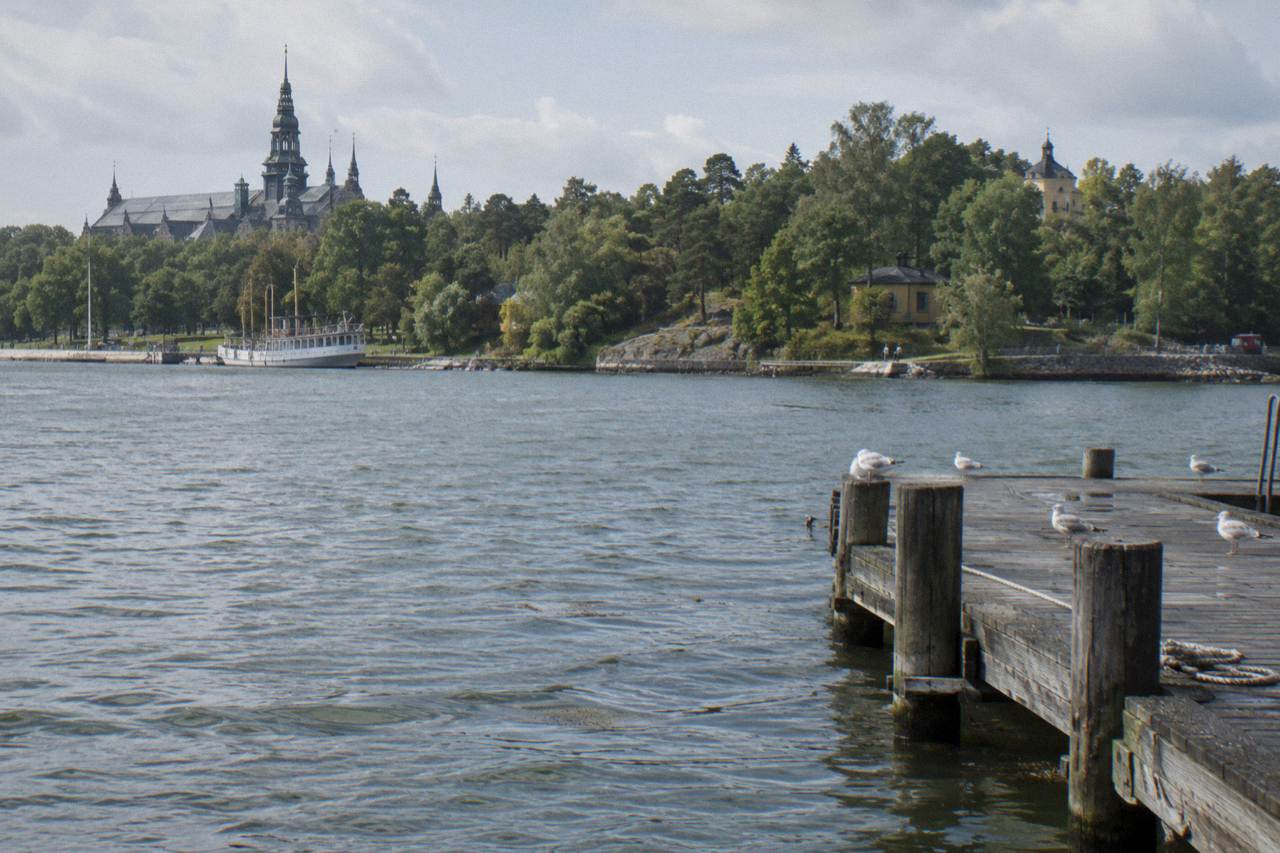
The best way to see the Stockholm archipelago is a ferry plus a bicycle: the boats reach the islands cheaply and often, and a bike turns each landing into real exploring rather than a harbour stroll. Travelers with a week should consider a self-guided cycling holiday, which strings several islands together over roughly 220 km of riding, while short-stay visitors get the closest archipelago feeling from a guided nature ride out of the city. Before you load a bike onto a boat, the practical guide to cycling the Stockholm Archipelago Trail explains the ferry rules and how a day of island riding actually works.
There is no single right answer, and anyone who tells you otherwise is selling something. The archipelago is enormous, with islands ranging from busy Vaxholm to near-empty skerries, and the experience changes completely depending on how much time you have. A day trip samples one or two islands. A five-night cycling holiday actually connects them. And a guided ride through forests and shoreline close to Stockholm gives you the landscape without ever boarding a boat.
This site is about seeing Stockholm by bike, so this article leans toward two wheels, but the ferries are not an afterthought here: they are the transport backbone of the whole archipelago, and the combination of boat and bike is genuinely the classic local way to do it. Before we get into routes, the cycling the Stockholm archipelago guide covers island-by-island detail, while this piece answers the broader question of which approach fits which traveler.
A quick framing of the three realistic options helps. First, the independent day trip: you take a public ferry with a bike aboard and explore one island under your own steam. Second, the packaged cycling holiday: an operator books your hotels, ferries and luggage transfers, and you ride a set route over several days. Third, the guided ride from the city: no boats at all, but a guided tour through archipelago-type forest and shoreline landscape within reach of Stockholm. Each one suits a different budget and calendar.
If you already know you want a guided experience rather than self-planned logistics, the choice below narrows it to the three rides this site features: the private city tour that includes a guide and bike, the forest tour with sauna and lunch, and the classic shared guided ride.
Ferry Plus Bike: The Classic Island Day
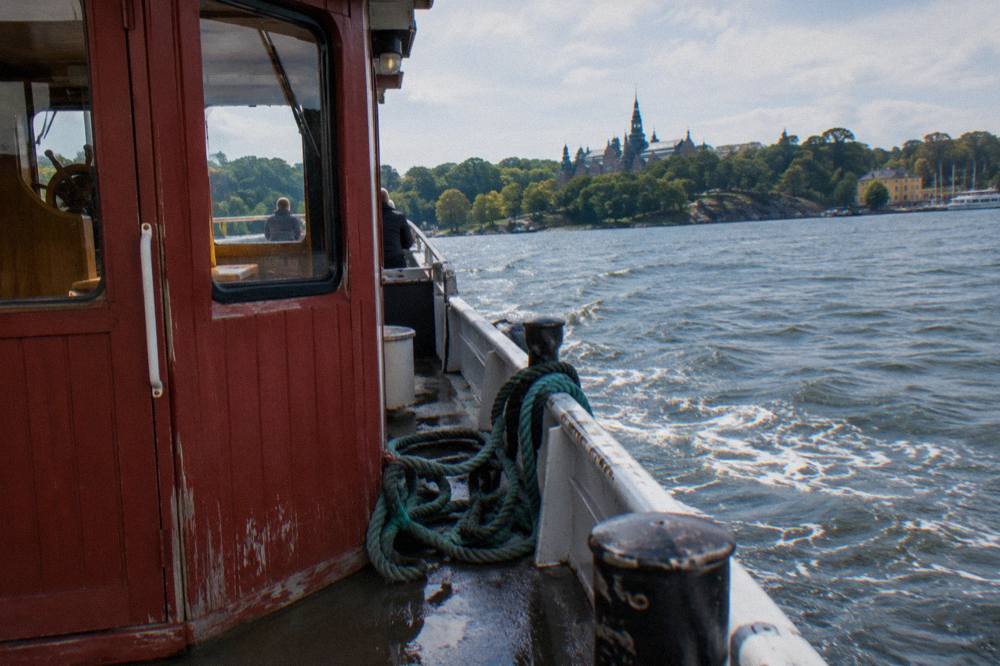
For a single day, the winning formula is a public ferry out with your bike, two or three hours of riding on the island, and a later ferry back. Waxholmsbolaget boats allow one regular bike per person at no extra charge when there is space, and the schedule, not the cycling, is what sets your day. Decide your island the night before, check the timetable, and treat the ride as the flexible part of the plan.
The boat rules matter more than you might expect. On the Waxholmsbolaget ferries, a standard bike travels free if there is room, though cargo bikes, tandems and other bulky bikes are charged 120 SEK as goods, and e-bikes must stand on deck rather than inside the cabin. Staff have the final say on space, and on busy summer crossings that say counts. The details are on the operator's own what you may bring page, which is worth a read before you commit to a bike-heavy day.
Which island, then? The useful split is between the car-free, walkable-in-an-hour islands and the larger ones with real road networks. Small islands like Grinda or Finnhammarna (check the booking pages and the operator's destination guides for what fits your distance appetite) reward a slow loop and a swim. Larger islands such as Varmdo-connected routes let you ride longer between viewpoints. Where a specific island's riding distance is not published, treat the island's own visitor page as the source of truth rather than estimates.
The bike itself is the other decision. There is no municipal bike-share in Stockholm any more: the old docked scheme ended in 2018, and in December 2025 the city announced Voi and Bolt as the operators of its shared bicycle service. Shared e-bikes are convenient but not free, and on a ferry day a rental or tour bike with proper gears usually earns its keep. Our breakdown of renting for a single day versus other options goes through the practical side, and the ferry and bike rules for Djurgården explain how bikes work on the city's own SL-run ferry, a different boat from the archipelago fleet.
Here is how the three main approaches stack up, using only what the operators publish:
| Approach | Time needed | What is included | Best for | Watch out for |
|---|---|---|---|---|
| Ferry plus own/rental bike | One long day | Ferry crossing, bike transport free on Waxholmsbolaget when space allows | Independent travelers, tight schedules | Timetable dictates everything; no guide |
| Self-guided cycling holiday | About 5 riding days, roughly 220 km | Hotels, luggage transfers, route notes, ferries (per operator) | A full week, first-time archipelago visitors | Higher total cost; seasonal departures |
| Guided ride from Stockholm | 3 to 5 hours depending on tour | Guide, bike and helmet per the listing flags | Short stays, anyone who wants zero logistics | Not the outer islands; city-adjacent landscape |
One honest caveat on that table: per-minute prices for shared bikes, exact ferry fares and crossing times are not figures we print, because they change and depend on zones and season. The booking pages and the operators' own sites are the right place to confirm them the week you travel.
Before you plan any of it, a guided introduction to the city itself pays off. The Stockholm 3-Hour Private Guided Bike Tour, priced per group rather than per person, gives you a private guide for about three hours, and it is a sensible first morning in the city before you commit a full day to the boats.
Guided Rides From The City: The Archipelago Feeling Without The Boats
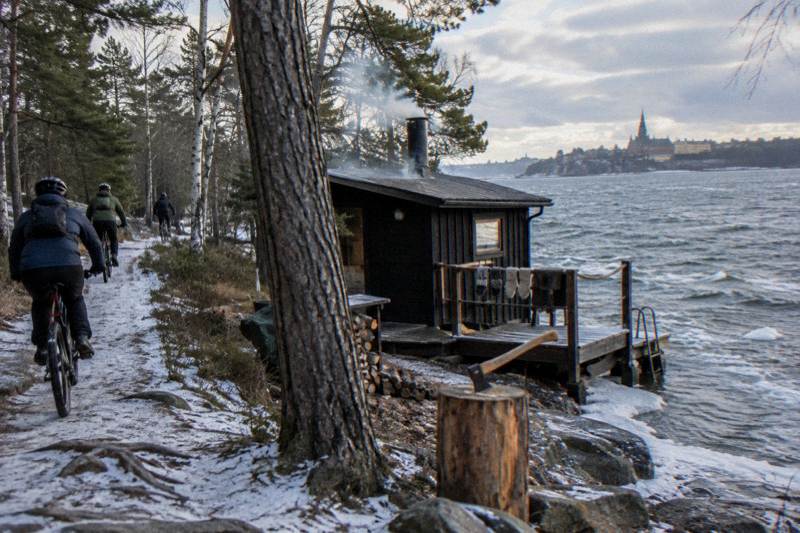
Yes, you can capture the archipelago feeling without ever boarding a boat: a guided ride from Stockholm threads forest and shoreline scenery into roughly half a day. The Forest Bike Tour with Sauna and Homemade Lunch lasts about 5 hours and pairs riding with a sauna and a cooked lunch, while shorter city tours of 2 to 3 hours cover the water-side geography; none reaches the outer islands, yet each removes the planning from your day.
The forest tour is the closest match in spirit. Sweden's archipelago identity is as much about pine, granite and water as it is about boats, and a 5-hour guided ride through forest with a sauna stop and a homemade lunch at the end captures that combination without a ferry timetable in sight. The listing describes the riding, the sauna and the lunch; specifics like the exact trail and meeting arrangements come from the booking page, and those details can shift with the season, so check them when you book rather than planning around assumptions.
For travelers whose archipelago interest is really about seeing Stockholm's own island geography, the Stockholm at a Glance Bike Tour covers the city's fourteen islands in 2 to 3 hours with a shared-group format. It is a city tour, not a nature tour, but Stockholm's built environment is genuinely an island landscape, and many visitors find it scratches the same itch before or instead of a boat day.
A note on honesty: with the smaller review pools on some of these listings, we do not make rating claims here. Where a tour carries a substantial review history the booking page shows it; where it does not, the absence of a crowd of reviews is itself information, and a new listing with a solid operator behind it can still be a good book.
The guided option also solves the gear question. Bike and helmet come with the tour per the listing flags, which matters if you are traveling light or arriving by air the day before. Winter versions exist too: guided e-bike tours on winter tires run through the cold months, so the guided route is the only one of the three approaches that works year-round without special planning.
If the forest-plus-sauna format appeals, it sits alongside the private tour and the shared city ride in the selection below.
Self-Guided Cycling Holidays: The Full Archipelago Trip
With five or more days available, a self-guided cycling holiday is the most complete way to experience the archipelago. Operators such as Skedaddle, Pedalo and Sweden by Bike publish set routes of roughly 220 km over about five riding days, island-hopping by ferry with hotels and luggage transfers arranged, and one adventure package is listed from 9,375 Swedish kronor per person for five nights.
The self-guided format deserves explanation, because it is not a tour in the guided sense. You ride on your own between booked overnight stops, and the operator handles the parts that are hard to arrange remotely: accommodation, luggage moving between hotels, ferry bookings on some packages, and route notes. You carry a daypack, not panniers. For the archipelago specifically this format is close to ideal, because the riding days are short, the ferries do the long links, and getting lost is difficult when the route is an island.
The season constraint is real. These packages run in a window from mid-May to mid-September, with peak pricing mid-June to mid-August, and the 2027 dates mirror 2026 closely, for example mid-May to mid-September with daily departures on some products. Outside that window the island hotels thin out, the boats run reduced schedules, and the packaged routes simply stop. Our best time of year to cycle in Stockholm guide covers the climate logic in depth.
Distance expectations should be set by the operator's own route sheet, but as a planning frame, one published archipelago itinerary covers about 220 km across five riding days, mixing island roads and short ferry hops. That averages out to a moderate day rather than a sportive, which is the point: these holidays are built around swimming stops and long dinners as much as kilometres.
What you give up is flexibility. Booked hotels mean a fixed sequence of islands, and a rainy day cannot be swapped for a rest day without effort. If your travel style is improvisational, the ferry-plus-bike day trip or a guided ride will fit you better than a packaged week.
When To Go: Weather, Daylight And The Season
The archipelago season runs May to September, and the numbers back that up. July averages a high of 23.6 C against 61.5 mm of rain, June delivers about 18.5 hours of daylight per day, and by November the high falls to 5.4 C with under 8 hours of light. August is statistically the wettest month at 66.2 mm, a detail many visitors miss when they book late summer.
These figures are SMHI 1991 to 2020 climate normals for Stockholm, which is the honest way to describe a typical year rather than any forecast. The archipelago sits east of the city and runs slightly milder and windier on the water, but the Stockholm table is the closest reliable baseline.
| Month | Avg high C | Avg low C | Precip mm | Daylight hours per day |
|---|---|---|---|---|
| May | 16.5 | 7.1 | 34.0 | 17.0 |
| June | 20.8 | 11.6 | 61.7 | 18.5 |
| July | 23.6 | 14.8 | 61.5 | 17.7 |
| August | 22.1 | 14.2 | 66.2 | 15.5 |
| September | 16.6 | 10.2 | 53.3 | 12.8 |
The pattern inside those numbers matters for planning. May is the driest of the peak months and gets 17 hours of daylight, but the water is cold for swimming. Midsummer through July gives the warmest days and the longest evenings, at the price of the biggest crowds on the popular islands. August stays warm but is the wettest normal month, so a rain layer is not optional. September is the connoisseur's month: still 16.6 C on average, quiet ferries, and 12.8 hours of daylight, though the packaged cycling holidays wind down by mid-month.
Winter archipelago travel exists but is a different trip entirely: reduced boat schedules, short days and cold water. If a winter visit is fixed, a guided city ride on a winter-tire e-bike, which operators report running through the season, is the more realistic cycling experience, and the city keeps its cycle network usable, sweeping and salting a large share of its commuter cycle paths through the dark months.
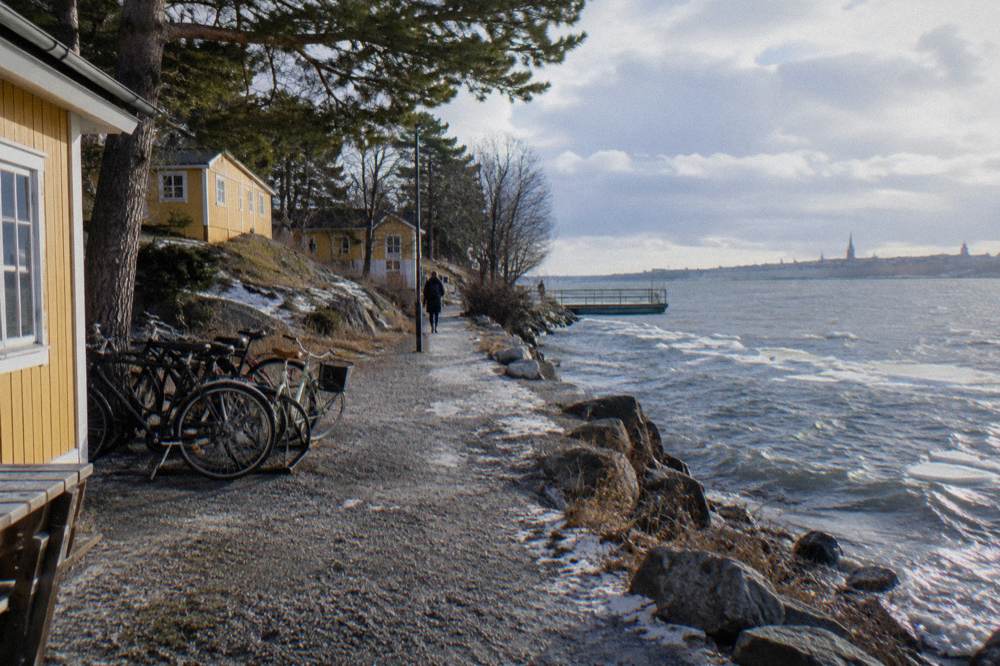
Bringing A Bike On The Boats: The Rules That Shape The Day
Bikes are welcome on the archipelago boats but always subject to space, and staff discretion is final. Waxholmsbolaget carries one regular bike per person free if it fits, charges 120 kr for cargo bikes and tandems as goods, and requires e-bikes on deck. Within the city, the SL Djurgården ferry also takes bikes at no extra cost subject to space, but bikes are barred from SL buses, the metro and the city trams.
These rules decide your itinerary more than any route guide does. A bike that cannot board is a day rewritten at the jetty, so the sequence to plan is: confirm the boat type on your crossing, arrive early enough to be near the front of the boarding queue on summer sailings, and have a rough idea of the later boats in case staff wave you off a full departure. The Waxholmsbolaget rules are published on the operator's own conditions page.
Inside the city, the picture is stricter than visitors expect. Ordinary bikes cannot travel on SL buses, the metro, or the Spårväg City and Nockebybanan tram lines at all; they are possible on commuter trains and certain light-rail lines outside rush hours, with e-bikes barred from Tvärbanan entirely. The full set of conditions sits on the SL page on travelling with a bike. The practical takeaway: plan a bike day that starts and ends without needing a train in the middle.
For riding itself, Swedish law is straightforward for adults. Helmets are mandatory only under 15, lights are required only in darkness, and every bike must have a bell and working brakes at all times. Fines run from 500 kr for a missing bell up to 1,500 kr for running a red light, per the police's published scale. On the islands, village streets and harbor areas are often pedestrian zones where riding at walking pace and yielding to pedestrians is required, the same rule that governs Gamla Stan in the city, as covered in our cycling rules in Stockholm guide.
E-bike riders have one extra rule that matters on ferries: the battery question. Boats generally want e-bikes on deck rather than in enclosed cabins, and if deck space runs out the SL procedure of removing the battery and placing it in the deck container gives a template for how operators handle lithium batteries near passengers. Ask at the jetty rather than assuming.
Planning Your Archipelago Trip: A Practical Order Of Decisions
Start with how many days you have, then match the season, then pick a format: one day means ferry plus bike, two to three days with a base on one island lets you add a second and third island, five or more days suits a self-guided cycling holiday, and a 3 to 5 hour guided ride from the city fits any stay as warm-up or substitute. Book boats and your first night first; everything else flexes.
The single most common mistake is planning the cycling before the timetable. Ferries, not legs, set the shape of an archipelago day: crossings are the fixed points, and an island loop that misses the last boat back becomes an unplanned overnight. Build each day outward from two confirmed sailings, the out and the safe return, and leave the middle loose.
The second mistake is overestimating island riding. Many archipelago islands can be circuited quickly, and a day planned around three big rides often becomes one good ride, a long lunch and a swim. That is a better day, but only if you expected it. Where an island's route distances are not published, plan by hours on the bike rather than kilometres and let the terrain decide the pace.
Third, layer the guided options sensibly. A private guided tour on your first morning, priced per group and running about three hours, teaches you the city's island geography and the local riding conventions in one stroke, and the shared 2 to 3 hour guided tours do similar work at lower cost. The forest tour with sauna and lunch then works either as a rest-day activity before a big ferry day or as the archipelago substitute when the weather turns.
Fourth, respect the season when booking anything fixed. The packaged cycling holidays run mid-May to mid-September, boats thin outside that window, and several island businesses keep summer hours only. A late-September trip can be beautiful, but it is a plan-it-yourself trip, not a package trip. Check dates on the booking page for whichever tour or package you choose, since schedules shift between seasons and the booking page is the source of truth.
Whatever format you settle on, this Stockholm Bike Tours article set is built around exactly these decisions, from the cost of a tour to what to wear, and the related reading below covers the natural next questions.
If the guided route is your answer, the premium-bike city tour below is a fourth format worth a look: same shared guided model, with the operator's higher-spec bikes as the differentiator.
To close the loop, here again are the three rides that pair most naturally with an archipelago plan: the private tour as your first-day orientation, the forest tour with sauna and lunch as the landscape experience, and the shared guided tour as the straightforward city ride.
Common Questions About Seeing The Stockholm Archipelago
What Is The Best Way To See The Stockholm Archipelago?
For most visitors, a public ferry combined with a bicycle: the boats reach the islands and a bike turns each landing into real exploring. With five or more days, a self-guided cycling holiday of roughly 220 km over five riding days is the most complete option, while a 3 to 5 hour guided ride from Stockholm suits short stays.
Can I Take My Bike On The Archipelago Ferries?
Yes, within limits. Waxholmsbolaget carries one regular bike per person at no extra charge when space allows, charges 120 kr for cargo bikes and tandems as goods, and requires e-bikes on deck. Staff judge space and safety and can refuse a bike on a full crossing.
When Is The Archipelago Cycling Season?
Mid-May to mid-September for the packaged cycling holidays, with peak pricing mid-June to mid-August. July averages a high of 23.6 C and June about 18.5 hours of daylight per day; August is the wettest normal month at 66.2 mm.
Is A Guided Bike Tour A Good Substitute For The Islands?
Partly. The Forest Bike Tour with Sauna and Homemade Lunch, about 5 hours, delivers pine, granite and water landscape without a ferry, and city guided tours of 2 to 3 hours cover Stockholm's own island geography. None of them reaches the outer archipelago, so treat them as a complement or a weather fallback rather than a replacement.
How Far Do You Ride On A Self-Guided Archipelago Holiday?
One published itinerary covers about 220 km over five riding days, mixed with ferry hops between islands, with hotels and luggage transfers arranged by the operator. Days are moderate rather than long, built around swimming and meal stops.
Are There Helmet And Light Rules For Cycling In The Archipelago?
Helmets are mandatory in Sweden only for riders under 15. Lights are required in darkness, and every bike must have a bell and working brakes at all times. Fines run from 500 kr upward per the published police scale.