Stockholm Weather By Month
Stockholm sits at 59 degrees north, which means the weather swings from frozen, six-hour days in December to nearly nineteen hours of light in June. Here is what each month actually delivers, using the SMHI 1991 to 2020 normals, and what it means for a day on a bike.
Short answer
Stockholm's warmest normals are July at 23.6 C average highs and its coldest are January at 1.0 C highs and -2.9 C lows. Rain peaks in August at 66.2 mm and bottoms out in March at 27.3 mm. Daylight runs from 6.2 hours per day in December to 18.5 hours in June.
Stockholm weather is a story about light more than temperature. The city's SMHI 1991 to 2020 normals show July averaging 23.6 C highs, which sounds mild enough, and January averaging 1.0 C highs and -2.9 C lows, which sounds survivable. The number that reshapes a visit is daylight: 18.5 hours per day in June against 6.2 hours in December. Between those poles sits a city that clears and salts around 38 mil of cycle path each winter, precisely because people keep riding it. To figure out which month best balances daylight, crowds and riding conditions for your trip, our month-by-month guide to timing a Stockholm visit lays out the trade-offs.
This page works through the year month by month, using only the SMHI normals table below, and translates each season into what it means for a day outdoors, whether that is a guided ride, a loop of Djurgården, or just deciding which jacket to pack. Where a detail about a specific tour is not fixed, the honest answer is to check the booking page.
What Is Stockholm Weather Really Like Month By Month?
The normals show a tight, moderate range: average highs climb from 1.0 C in January to 23.6 C in July, lows sit between -3.2 C and 14.8 C, and rain stays between 29.4 mm and 66.2 mm every single month of the year. Stockholm never has a dry season or a monsoon, it has long days and short ones.
That last point matters for planning. August is the wettest normal at 66.2 mm and February the driest at 29.4 mm, a spread of barely 37 mm across the whole year. Compare that with Mediterranean cities where summer and winter precipitation differ by a factor of ten. In practical terms, rain in Stockholm is a possibility on any given day in any month, so a rain layer belongs in the pannier year-round, and our page on a rainy-day guided ride covers what changes when it arrives.
The table below is the core reference for this whole page. Every temperature, rainfall and daylight figure elsewhere in the article comes from it.
| Month | Avg high C | Avg low C | Precip mm | Daylight hours per day |
|---|---|---|---|---|
| January | 1.0 | -2.9 | 37.0 | 7.0 |
| February | 1.2 | -3.2 | 29.4 | 9.3 |
| March | 4.7 | -1.1 | 27.3 | 11.9 |
| April | 10.7 | 2.6 | 29.2 | 14.5 |
| May | 16.5 | 7.1 | 34.0 | 17.0 |
| June | 20.8 | 11.6 | 61.7 | 18.5 |
| July | 23.6 | 14.8 | 61.5 | 17.7 |
| August | 22.1 | 14.2 | 66.2 | 15.5 |
| September | 16.6 | 10.2 | 53.3 | 12.8 |
| October | 10.1 | 5.5 | 51.4 | 10.2 |
| November | 5.4 | 1.9 | 47.6 | 7.7 |
| December | 2.5 | -1.2 | 47.8 | 6.2 |
Two readings of the table are worth pulling out. First, April is the month where the gap between expectation and reality is widest for visitors: 10.7 C average highs sound spring-like, but 2.6 C nights mean mornings still feel raw on a bike. Second, September is quietly one of the best-kept planning secrets in the table: 16.6 C highs, 12.8 hours of daylight and falling crowds, at the cost of the year's fourth-wettest normal.
Which Months Are Best For Cycling In Stockholm?
Late May through early September is the strongest window, with average highs from 16.5 C to 23.6 C and daylight between 12.8 and 18.5 hours per day. June offers the most light, 18.5 hours a day, while July is the warmest at 23.6 C highs and 61.5 mm of rain.
Cycling operators and tourism sources consistently name May to September as the core season, and the normals explain why: every month in that span averages double-digit highs, and even the shoulder ends carry 12 to 13 hours of usable daylight. The trade-off inside the window is June and July rain, both above 61 mm in the normals, against the drier but cooler May at 34.0 mm.
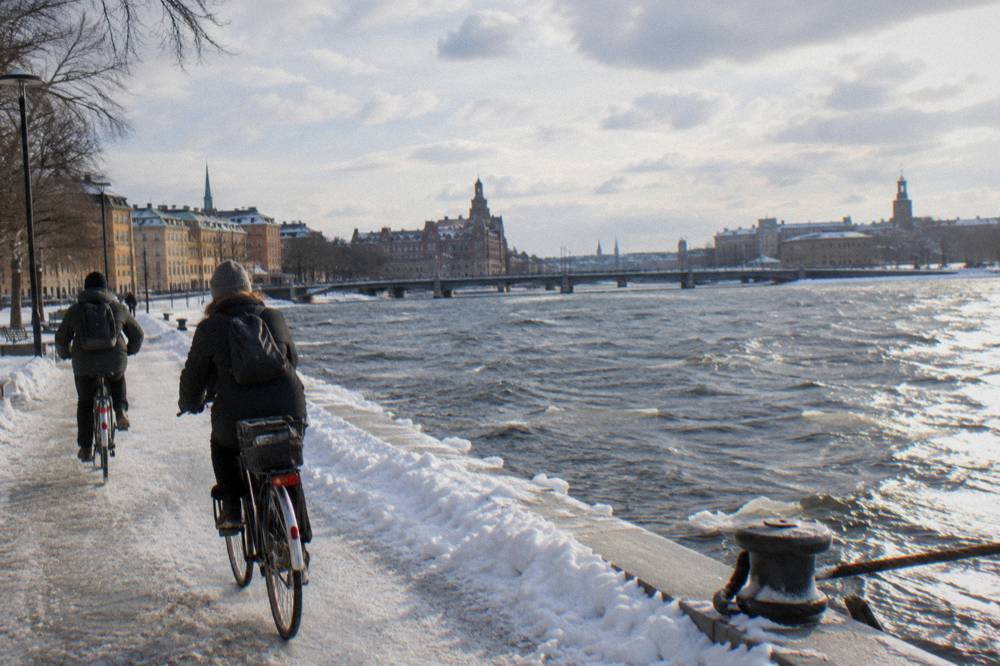
Outside the core window, riding does not stop. The city's traffic operator notes that cycle paths are swept and salted through the darker months to keep roughly 38 mil of cycleway in bare-wheel condition, and winter riding with the right tires is actively encouraged on maintained routes. Winter e-bike tours with studded tires run from 1 July availability onward, and fat-bike forest tours with a sauna and lunch operate year-round.
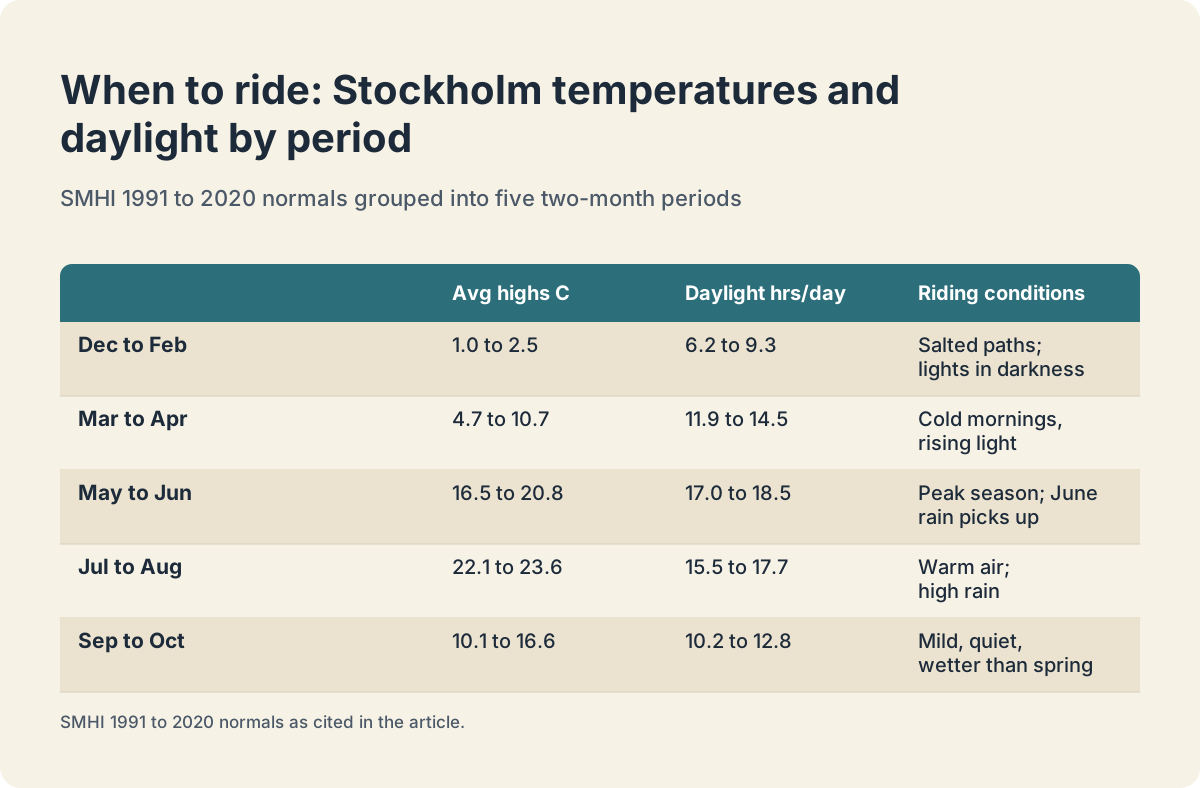
| Period | Avg highs C | Daylight (hrs/day) | What it means for a ride |
|---|---|---|---|
| Dec to Feb | 1.0 to 2.5 | 6.2 to 9.3 | Short days, cold, salted paths; studded tires, lights required in darkness |
| Mar to Apr | 4.7 to 10.7 | 11.9 to 14.5 | Cold mornings, fast-rising light; layers, gloves |
| May to Jun | 16.5 to 20.8 | 17.0 to 18.5 | Peak season; long evenings, June rain picks up |
| Jul to Aug | 22.1 to 23.6 | 15.5 to 17.7 | Warmest water and air; wettest normals of the year |
| Sep to Oct | 10.1 to 16.6 | 10.2 to 12.8 | Mild, quieter paths, wetter than spring |
This is where a guided ride earns its keep, because a local guide adjusts the route to the season rather than to a fixed script. The Stockholm: Guided Bike Tour runs 2 to 3 hours and covers the city's core, and its booking page lists current departure times and what is included for the season you land in. For a shorter taste of the same idea, the Stockholm at a Glance Bike Tour covers the highlights in 2 to 3 hours.
Between the classic options, format differences matter more than price differences in high season. The Stockholm E-Bike City Tour is the dedicated e-bike tour, 2 hours 30 minutes of pedal-assist riding., which flattens both Södermalm's climbs and any fatigue from a long flight.
How Cold Is A Stockholm Winter, Really?
December through February averages highs of 1.0 to 2.5 C and lows of -3.2 to -1.2 C, with daylight between 6.2 and 9.3 hours per day. That is a cold winter by European standards but a mild one by Swedish ones, and the sea usually keeps central Stockholm a few degrees warmer than the inland.
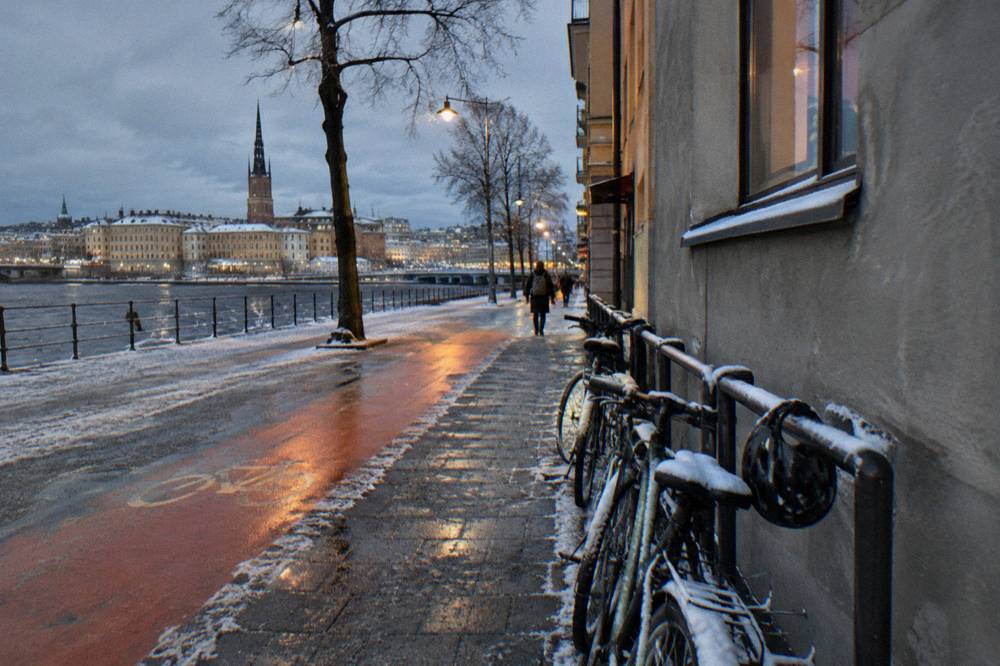
The first snow with at least 1 cm of cover falls around 26 November on average in Stockholm, and by December the city is down to 6.2 hours of daylight per day. Riding remains possible: the city prioritizes clearing and salting select commuter cycle routes, keeping them in bare-ground condition down to about -6 C, and salted paths hold up through most normal winter days.
What changes legally is lights. Swedish rules require working front and rear lights, plus reflectors, whenever you ride in darkness, which in December means essentially every ride. Fines for riding unlit in darkness run to 500 kr, Swedish kronor, and a bell and working brakes are mandatory at all times. Our page on cycling rules in Stockholm sets out the full list.
Winter tours exist for exactly this window, and they are built around it: studded tires, warm gear and shorter daylight itineraries. If a winter visit is on the calendar, ask the operator directly about departure times, because midwinter slots compress into a few usable hours around noon.
How Much Rain Does Stockholm Get?
Normals range from 27.3 mm in March to 66.2 mm in August, a narrow annual band of about 39 mm. There is no dry season: June, July and August are the three wettest months, while February, March and April are the three driest. Expect rain as a possibility, not a season.
Because the spread is so tight, rain should shape your packing, not your dates. A packable rain shell serves in July just as it does in November, and guided tours run in rain rather than cancel for it, subject to the operator's own terms on the booking page. Whatever the summer forecast says, every tour listed here comes with free cancellation, so a rainy morning need not write off your ride., so treat each day as it comes.
The seasonal totals put the monthly table in context. The 1991 to 2020 normals through the city's environment statistics show summer averaging 189 mm of precipitation across June to August, autumn 152 mm, winter 113 mm and spring just 90 mm. Spring is the structurally driest season, and March, at 27.3 mm and 11.9 hours of daylight, is the single driest month in the table.
For a cyclist, the practical rain question is surfaces and braking, not comfort. Wet cobblestones in Gamla Stan, where cycles share pedestrian streets at walking pace, are slick, and painted lane markings lose grip. Slow down there regardless of the month.
What About Daylight Hours Through The Year?
Daylight swings from 6.2 hours per day in December to 18.5 hours in June, a range of more than 12 hours across the year. By late April the city already has 14.5 hours of light, and it holds above 10 hours from early March to mid-October.
That swing is the single biggest trip-planning variable in the normals table. A June visitor can ride until well past what feels like a normal dinner time in full light; a December visitor has a window roughly between breakfast and an early lunch. Mid-November daylight sits near the November average of 7.7 hours, shrinking toward the December minimum.
The swing also moves the legal lighting threshold. Lights and reflectors are required whenever you ride in darkness, per the Transportstyrelsen rules, which in November through February covers most mornings and all evenings. If you rent rather than join a tour, confirm the bike has a working front and rear light before you roll off; on a guided ride this is the operator's job.
| Month | Daylight hours per day | Riding implication |
|---|---|---|
| June | 18.5 | Longest days; evening rides fully in daylight |
| July | 17.7 | Near-peak light with the warmest air |
| December | 6.2 | Plan rides midday; lights required both ends |
| March | 11.9 | Light returns fast, roughly +2.6 hrs vs February |
| September | 12.8 | Full-day riding still comfortable |
Daylight is also why shoulder-season itineraries compress. A 3-hour tour in October, with 10.2 hours of daylight, still fits easily, but two long rides in one day stop being realistic by November. Our one-day bike and ferry plan assumes the long-day half of the year.
How Does The Weather Shape A Bike Tour Day?
Weather changes the route more than the ride: summer tours lean on open waterfront and islands, winter versions compress into the midday window, and rain reroutes toward covered stops. Format matters too, since e-bike assist softens both headwinds and Södermalm's climbs on a raw spring day.
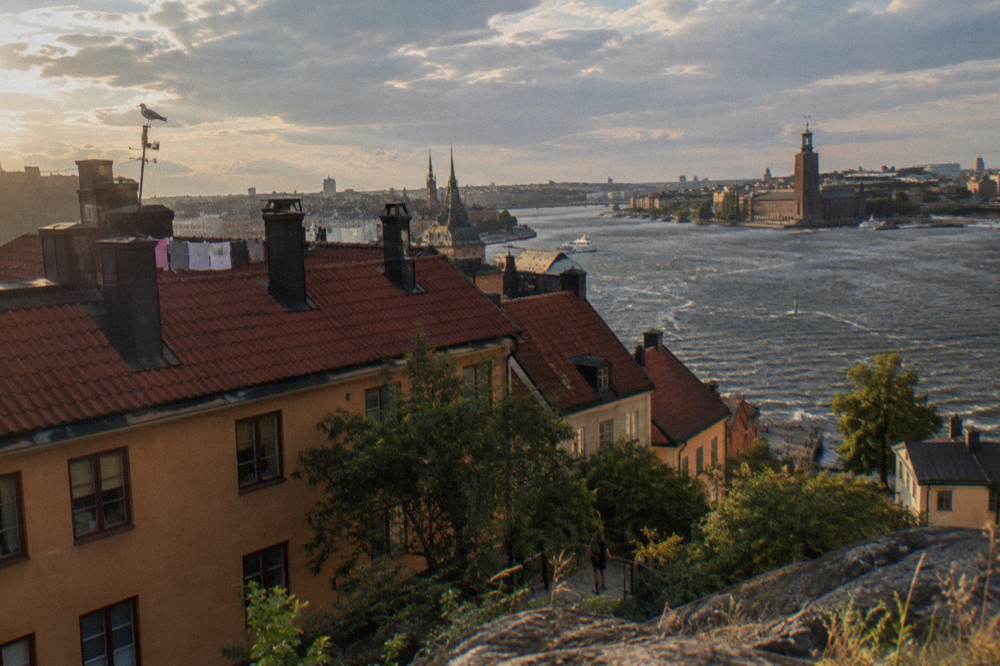
A guided day follows the sky. On a warm July afternoon, a route that touches Djurgården's park and the waterfront makes full use of the 17.7-hour daylight normal; the same tour in November, with 7.7 hours, will tighten up and lean on stops. The Wooden Bicycle Tour in Stockholm, a 2-hour shared ride, is a good fit for exactly those shorter or cooler days when you still want a guide's commentary without committing half the afternoon.
Wind deserves a mention even though it is not in the normals table: no wind statistics are verified here, so treat wind as a daily check rather than a planning figure. What is verified is the ferry, which is weather-relevant for any Djurgården or archipelago day. The Djurgården ferry is a public SL service, and a regular bike travels at no extra charge, subject to space on board.
For travellers weighing a winter visit against a summer one, the honest framing is this: summer gives you the light and the islands, winter gives you the city to yourself. Both are ridable, they just ask for different kit, and our what to wear on a Stockholm bike tour guide covers the kit side in detail.
What Should You Wear For Each Season?
Layer for the normals, not the extremes: a windproof shell over a midlayer covers the 4.7 to 10.7 C shoulder months, summer rides need little more than a light jacket for 22 C evenings, and winter demands insulated gloves, a warm hat under the helmet and studded-tire confidence. Rain layers belong in the bag all year.
Spring, March to May, is the deceptive season. March averages 4.7 C highs and -1.1 C lows, which means a ride that starts in gloves often ends in shirt sleeves by early afternoon, so layers you can shed and stow beat one heavy coat. April nights at 2.6 C reinforce the pattern: cold starts, mild middles.
Summer, June to August, is simple by comparison. Highs of 20.8 to 23.6 C and lows that never fall below 11.6 C make for comfortable riding in ordinary summer clothes, with the caveat that all three months carry over 61 mm of rain in the normals, so the packable shell stays in the pannier. Late-day light means sunglasses earn their place too.
Autumn and winter are where footwear and hands decide the ride. October at 10.1 C highs is still pleasant; January at 1.0 C highs and -2.9 C lows with any wind at all asks for real gloves, and lights are legally required in darkness. The city's own advice to keep cycling through the darker months, on salted paths maintained down to about -6 C, confirms winter riding is a supported activity, not a stunt.
Which Tour Format Suits Which Weather?
Match format to season: e-bike assist for cold or windy days when legs need a break, the 2-hour options for short winter daylight, the 3-hour classic rides and the 5-hour forest tour with sauna for the long days of May through September. Price and meeting point details sit on each booking page. If you're still choosing between the two Nordic capitals, our Copenhagen versus Stockholm comparison explains why travellers who arrive with a bike usually end up favouring this one.
The roster's formats map cleanly onto the normals table. The 2-hour and 2-hour-30-minute tours, the Wooden Bicycle Tour and the e-bike city tour, fit comfortably inside a December daylight window or a restless child's attention span. The 2 to 3 hour rides, including the Stockholm at a Glance Bike Tour and the guided city tour, are the all-season default. The 5-hour forest ride with sauna and homemade lunch runs year-round, on snow in winter and green single track in summer, when a cold dip and a hot room feel like a reward rather than a survival strategy.
| Tour | Length | Best weather fit |
|---|---|---|
| Stockholm at a Glance Bike Tour | 2 to 3 hours | All seasons; short enough for winter daylight |
| The Wooden Bicycle Tour in Stockholm | 2 hours | Dry days; shortest guided ride |
| Stockholm E-Bike City Tour | 2 hours 30 minutes | Windy, hilly or tired-leg days |
| Stockholm: Guided Bike Tour | 2 to 3 hours | The year-round default city ride |
| Forest Bike Tour with Sauna and Homemade Lunch | 5 hours | May to September; a full long-day outing |
Because the weather you meet on the day can differ from any normal, cancellation terms matter. Check the booking page for each tour's policy before you lock in a date, and keep the mid-article point in mind: guided rides flex around conditions, self-planned ones do not.
For riders who want to plan the whole seasonal picture in one place, Stockholm Bike Tours keeps the month-by-month guides together, including our deeper pages on the best time of year to cycle and the best time to visit Stockholm.
Common Questions About Stockholm Weather
What Is The Warmest Month In Stockholm?
July, with an average high of 23.6 C and an average low of 14.8 C in the SMHI 1991 to 2020 normals. August is a close second at 22.1 C highs but is the wettest month at 66.2 mm.
What Is The Coldest Month In Stockholm?
February has the lowest average low at -3.2 C, while January has the lowest average high at 1.0 C. December has the least daylight at 6.2 hours per day.
Which Months Have The Most Rain In Stockholm?
August, June and July, at 66.2 mm, 61.7 mm and 61.5 mm respectively in the normals. No month is truly dry; the driest is March at 27.3 mm.
How Many Hours Of Daylight Does Stockholm Get?
Between 6.2 hours per day in December and 18.5 hours in June. Daylight exceeds 10 hours per day from early March through mid-October.
Can You Cycle In Stockholm In Winter?
Yes. The city salts and clears around 38 mil of cycle path for winter riding, maintained in bare-wheel condition down to about -6 C. Lights are legally required in darkness, and winter tours with studded tires operate through the season.
When Is The Best Time To Cycle In Stockholm?
Late May through early September, when average highs run 16.5 C to 23.6 C and daylight stays between 12.8 and 18.5 hours per day. May is drier than midsummer at 34.0 mm of rain in the normals.