One Day In Stockholm: A Bike And Ferry Plan
Stockholm spreads across islands, and the fastest honest way to see several of them in one day is to combine a guided ride with the public ferry that carries bikes at no extra charge, subject to space.
Short answer
Anchor the day with a 2 to 3 hour guided bike ride, cross to Djurgården on the Djurgården ferry, which carries a regular bike at no extra cost when there is deck space, and finish on foot through Gamla Stan. Prices and inclusions are on the booking page for each tour; durations here come from the tour listings themselves.
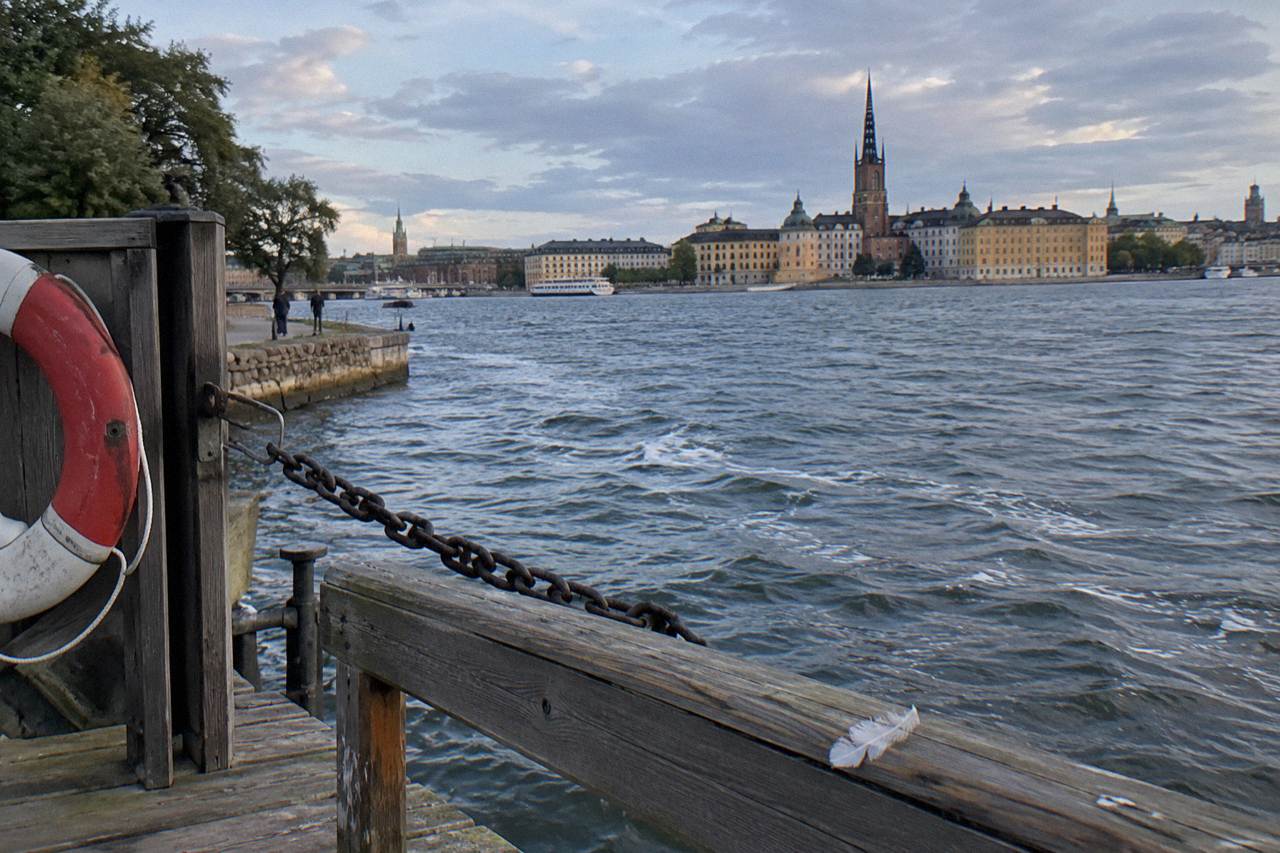
Stockholm is built on fourteen islands, and a single day there is really a routing problem. The city centre, the royal park island of Djurgården and the old town sit close together on the map but are separated by water, and the links between them are exactly what makes a bike-and-ferry day work. The public Djurgården ferry carries a regular bike at no extra charge when there is space, and the city's roughly 1,170 km of cycleways, the figure the city's own cycling pages give, stitch the islands together. This plan uses one guided ride as the anchor of the day, then hands you the rest of it: a ferry crossing, free parkland, and an old town best taken on foot. If the Vasa Museum and Skansen are also on your list, the plan for fitting a guided ride around both Djurgården headliners shows how to sequence the two sights without giving up the cycling.
What Does One Day In Stockholm On A Bike Actually Look Like?
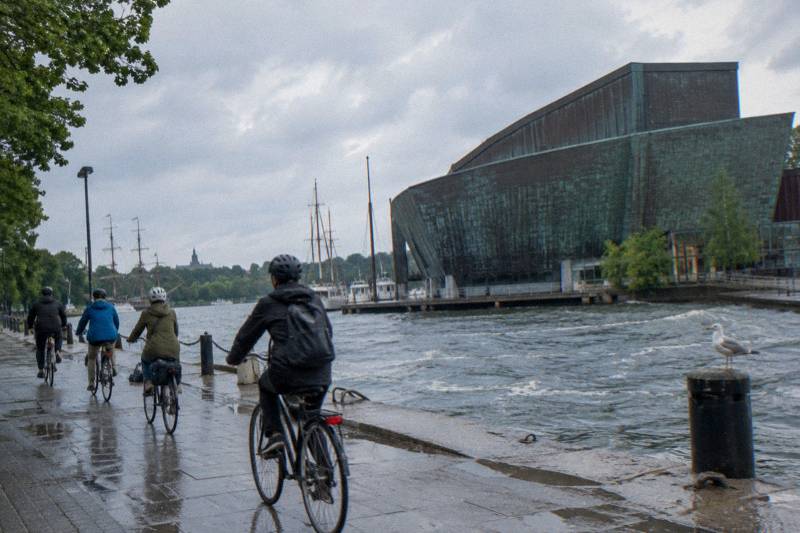
A workable shape is one guided ride of 2 to 3 hours in the morning, a ferry hop to Djurgården after it, slow loop of the royal park by bike or on foot, then a final hour walking Gamla Stan's pedestrian streets before dark. Every duration in that sentence comes from the tour listings themselves, which run from 2 hours to 5 hours across the city's guided rides. Nothing here needs a car, and nothing needs a timetable you cannot check on the spot. For more ideas beyond this loop, the full Stockholm guide covers the islands from a wider angle.
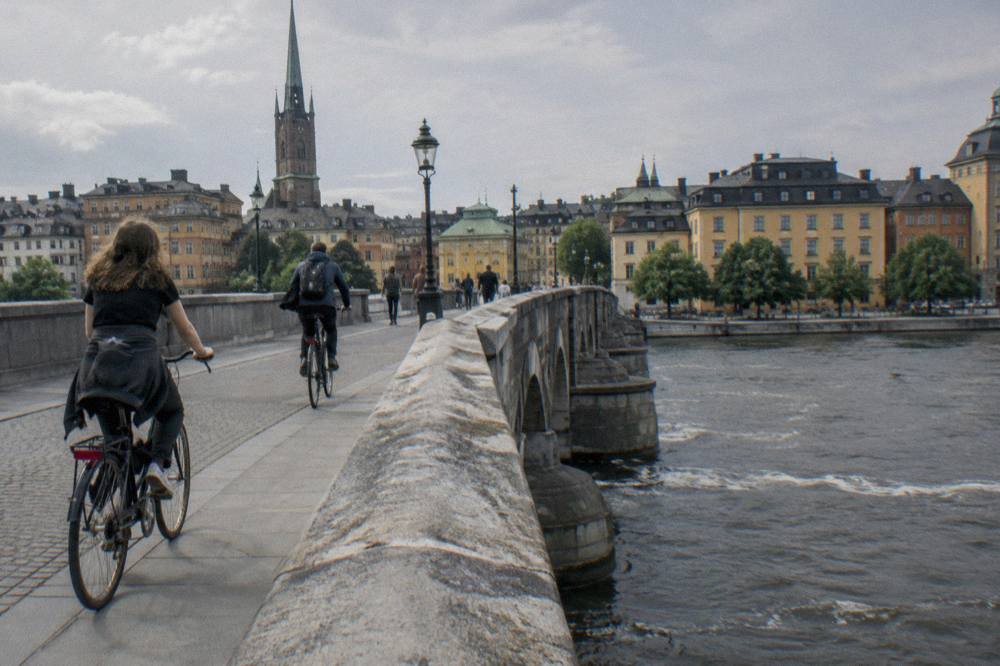
The logic behind the ordering is simple. A guided ride early in the day does three jobs at once: it hands you a bike and helmet per the listing, it moves you between districts without you reading a map or choosing turns, and it gives you the orientation that makes the afternoon's solo wandering feel effortless. Riders who book a morning slot typically finish with the whole afternoon left, which matters in a city where November daylight runs under nine hours even at midday, per the SMHI normals.
Afternoon is for the water. The Djurgården ferry is an ordinary public service, part of the SL network, running between Slussen and Djurgården year-round, and the SL rules are explicit that taking a bike on the commuter ferries costs nothing extra, always subject to space and staff judgement. That single rule is what turns a bike day into a bike-and-ferry day, because it removes the question of where to leave the bike when you want the island experience.
The evening returns to walking pace, and not only by preference. In Gamla Stan's inner parts the streets are pedestrian streets where cycles must proceed at walking pace and give way to pedestrians, per the city's traffic rules for the district. Walking the bike for the last hour is not a compromise; the law already holds you to walking pace on these streets. Our guide to walking pace rules in Gamla Stan covers the detail.
A rough shape for the day, from a morning ride to a late ferry back:
| Block | Activity | Time basis |
|---|---|---|
| Morning | Guided bike ride | Listing durations of 2 to 3 hours for city rides |
| Midday | Ferry to Djurgården | Runs year-round; crossing time not published, allow a wait for space |
| Afternoon | Djurgården loop by bike or foot | Own pace; park is free to enter |
| Evening | Gamla Stan on foot | Pedestrian streets, cycles at walking pace |
Should You Start In Gamla Stan Or On A Guided Ride?
Start on the guided ride and save Gamla Stan for the end. The ride covers ground you would otherwise spend hours finding, districts on both sides of the water, while Gamla Stan rewards slow walking rather than wheels, and its pedestrian-street rules mean a bike there is a burden after the first ten minutes anyway. The two do not compete, they sequence. A 3-hour city ride can span districts that a walker would reach only one of in the same time.
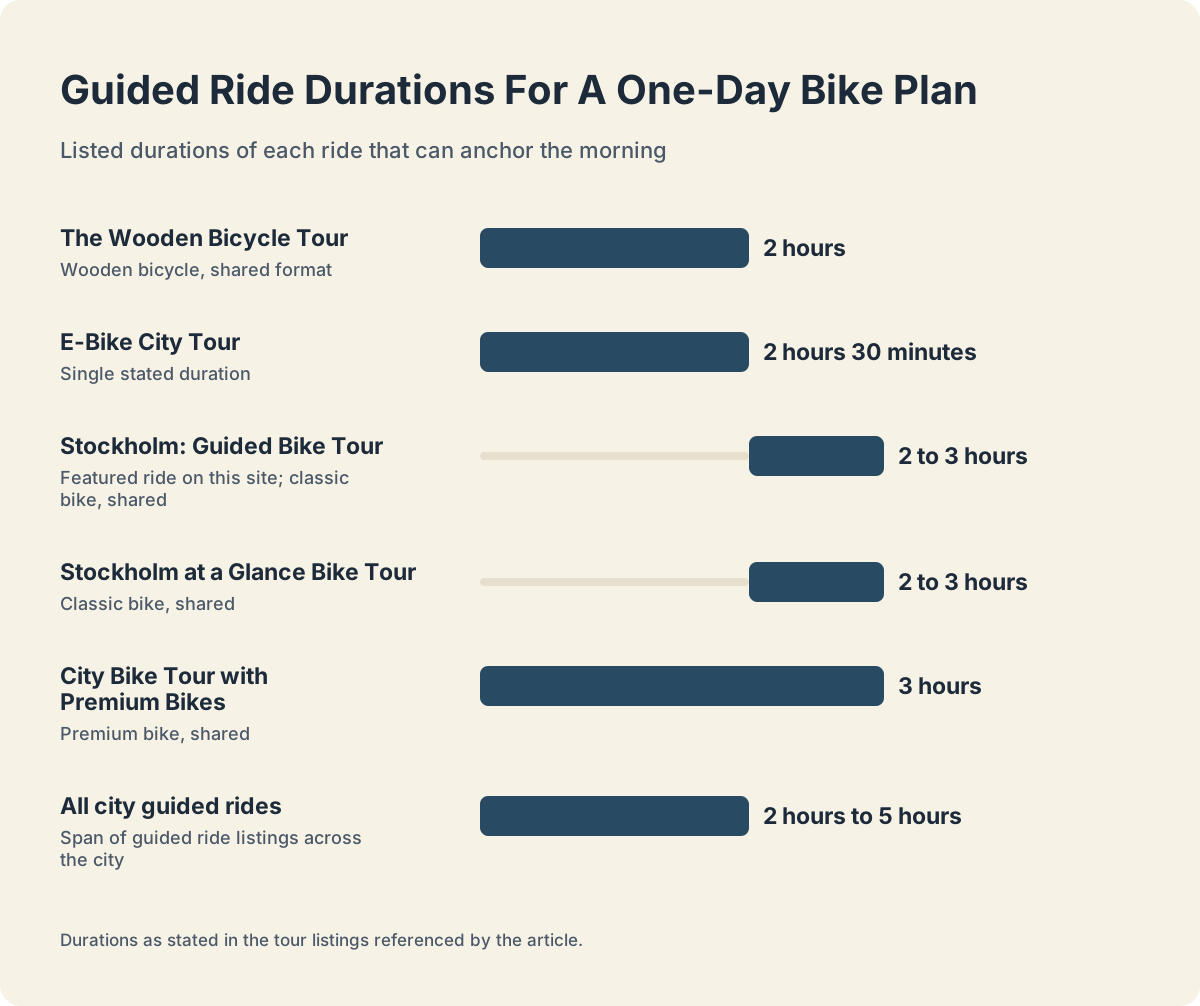
The featured guided ride on this site, the Stockholm: Guided Bike Tour, runs 2 to 3 hours and is a shared classic-bike city tour, with the price, meeting point and inclusions stated on the booking page. It is a natural anchor because its duration leaves the majority of a daylight day free. If the classic bike is not the point, the same family of options includes an e-bike city tour of 2 hours 30 minutes for riders who want the motor's help on Södermalm's slopes, and a 2-hour Wooden Bicycle Tour that makes the bike itself part of the story.
The three rides above bracket the real decision: the standard guided tour, a shorter ride built around a distinctive wooden bicycle, or a 3-hour premium-bike version. Which one anchors your day depends less on price, which shifts and belongs on the booking page, and more on how much afternoon you want left over. A 2-hour ride leaves more island time; a 3-hour ride tells you more about the city.
One caution belongs here because it shapes the whole morning: Gamla Stan is currently a construction-sensitive district. Stortorget received new vehicle barriers with work completing in mid-November 2026 ahead of the Christmas market, and the widened cycle path along Riddarholmskanalen, which opened on 17 April 2026, two months ahead of schedule, changed the approach from the north. None of this blocks a bike, but it means a local guide's route knowledge is worth more than usual this season. The route detail in our Gamla Stan cycling guide has the specifics.
Which Guided Ride Works Best As The Day's Anchor?
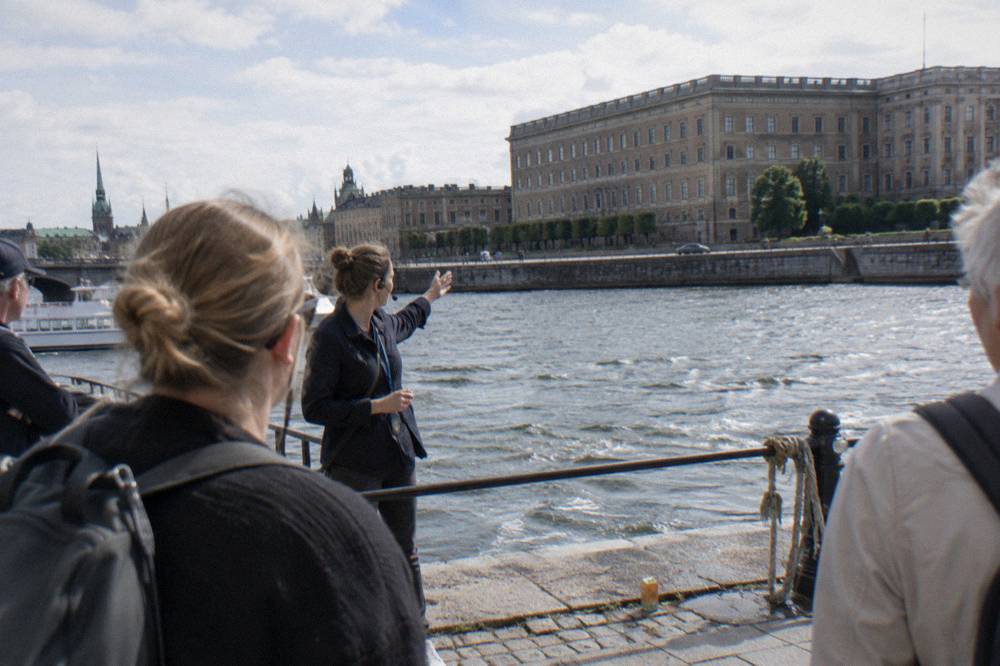
The Stockholm: Guided Bike Tour is the strongest single anchor because its 2 to 3 hour listing sits in the middle of every option: long enough to span the centre, short enough to leave a full afternoon, and shared, so the price is per person rather than per group. Around it, the extremes are real: the premium-bike city tour runs a flat 3 hours, and the at-a-glance ride squeezes the city into 2 to 3 hours with an e-bike option where the listing flags one.
Book the morning slot. The reasons are practical rather than scenic. Daylight in Stockholm runs from about 18.5 hours per day in June down to 6.2 hours in December per the SMHI 1991 to 2020 normals, so in the shoulder months a morning ride is not one option among several, it is the only way to have light for both the ride and the island afterward. In high summer it matters less, but morning still beats afternoon for the ferry queues that build toward Djurgården later in the day.
What each bike tour option trades away:
| Ride | Duration | Bike | Format |
|---|---|---|---|
| Stockholm: Guided Bike Tour | 2 to 3 hours | Classic | Shared |
| The Wooden Bicycle Tour | 2 hours | Wooden bicycle | Shared |
| City Bike Tour with Premium Bikes | 3 hours | Premium bike | Shared |
| Stockholm at a Glance Bike Tour | 2 to 3 hours | Classic | Shared |
| E-Bike City Tour | 2 hours 30 minutes | E-bike | Shared |
The premium-bike tour is a new listing with no reviews yet, so there is no rating to weigh; the others show their ratings on the cards above. Note that these are different operators' products, not tiers of one product, so price differences are listing differences rather than a ranking. Riders weighing motor versus pedal power can take the longer question to our e-bike versus classic comparison.
How Do You Get To Djurgården With A Bike?
Take the Djurgården ferry from Slussen: it is a year-round public service, and the SL rules state plainly that a bike costs nothing extra on the commuter ferries, always subject to space and the crew's judgement on the day. No fare figure is printed here; the crossing time is not published either, so allow a wait rather than a schedule. E-bikes ride on deck, and if deck space runs out the rules say to remove the battery and use the deck container.
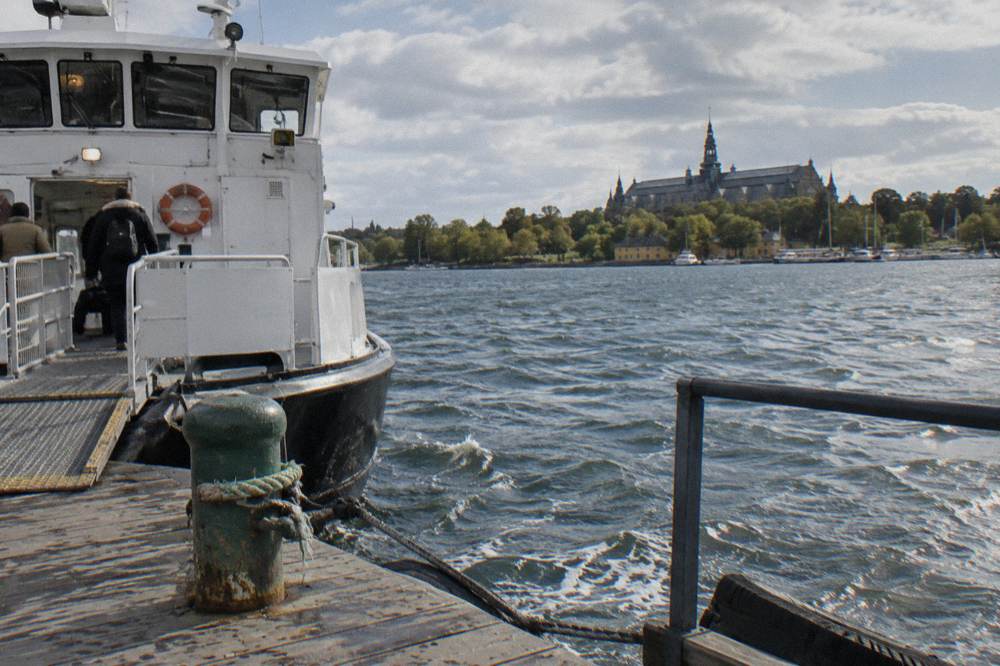
The alternative is the bridge. Djurgården connects to the centre by road bridges with cycle paths, and the new northbound cycle lane on Vasabron, completed in June 2026, improved the central crossing chain. The ferry still wins for a one-day plan because it puts you on the water, which is half of what Stockholm is, and because arriving by boat lands you at the heart of the island's museum strip rather than at its edge.
One seasonal fact changes the bridge calculus: the Djurgårdsbommen and Vasabommen barriers closed the island's car access points to most vehicles from 30 April to 27 September 2026, on weekends for Djurgårdsbron and daily for Vasabommen, per the Royal Djurgården authority. Bikes were never the target of those closures; the island's own guidance recommends bicycles for exploring it. But the closures mean the island is calmer, and busier with pedestrians, in exactly the window most visitors come.
| Way onto Djurgården | Bike carried | Notes |
|---|---|---|
| Djurgården ferry from Slussen | Yes, no extra charge | Subject to space; e-bikes on deck |
| Djurgården bridge cycle paths | You ride it | Vasabron gained a new northbound lane in June 2026 |
| SL buses and metro | No | Full-size bikes are prohibited on SL buses and the metro |
That last row is the trap worth knowing in advance: the SL rules prohibit ordinary bikes on buses, the metro and the city's trams, with limited exceptions on some rail lines outside rush hours. So the plan never depends on carrying a bike underground. If the day goes wrong and the ferry queue is long, walk the bike over the bridge instead. The ferry question answered in full covers the rules in detail.
What Is Actually Free Once You Are On The Islands?
The cycle network itself, Djurgården's royal parkland and Gamla Stan's streets cost nothing: riding the roughly 1,170 km of routes is free, the park is free to enter, and the old town's squares and alleys are free to wander. The museums are not, and no entry price is printed here. Shared bikes are not free either; they are rental services.
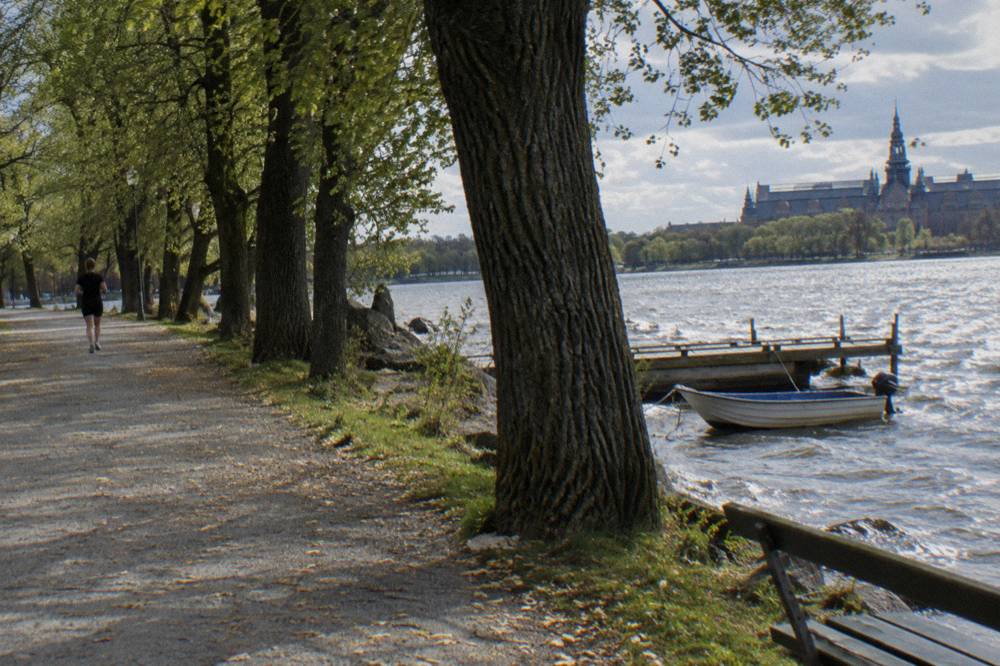
Djurgården earns its loop. The island is the royal national city park's heart, and a slow circuit of its paths passes water on most sides. Two dated reasons to check the events listing before you go: a Stockholm bike event took place on Södra Djurgården in September 2026, and cycling races ran on Norra Djurgården through spring 2026, so occasional closures or crowds are real, not hypothetical. Skansen's Christmas market opens on 27 November 2026 and runs Fridays to Sundays until 20 December, which will crowd the island on those weekends.
On Södermalm, if the ride's route touches it, the city introduced a green wave for cyclists on sections of Hornsgatan and Långholmsgatan, tuned to 20 km/h, in August 2026. Ride at that speed and the lights stay with you. It is a small thing that makes the district feel designed for bikes, because it was.
Free versus paid, plainly:
| Free | Paid |
|---|---|
| The cycle network, about 1,170 km of routes | Guided rides, prices on booking pages |
| Djurgården parkland and paths | Museums and Skansen entry |
| Gamla Stan streets and squares | Shared e-bikes and rentals |
| The ferry ride for the bike itself | Your own ferry ticket as a passenger |
The pattern worth naming: in Stockholm the free things are the spaces and the paid things are the interpretations. A guided ride is the one paid item that also pays you back in routing, which is why this plan books exactly one and lets the islands carry the rest of the day. More free ideas live in our free-things-by-bike guide.
Which Month Should You Do This One-Day Plan?
May through September is the honest window: those months carry average highs from 16.5 to 23.6 C and 12.8 to 18.5 hours of daylight, enough for a ride, a ferry and an evening walk in one day. June peaks at 20.8 C average highs and 18.5 hours of light; November drops to 5.4 C and 7.7 hours, which compresses the same plan into a tighter arc.
The full picture from the SMHI 1991 to 2020 normals for Stockholm:
| Month | Avg high C | Avg low C | Precip mm | Daylight hours |
|---|---|---|---|---|
| April | 10.7 | 2.6 | 29.2 | 14.5 |
| May | 16.5 | 7.1 | 34.0 | 17.0 |
| June | 20.8 | 11.6 | 61.7 | 18.5 |
| July | 23.6 | 14.8 | 61.5 | 17.7 |
| August | 22.1 | 14.2 | 66.2 | 15.5 |
| September | 16.6 | 10.2 | 53.3 | 12.8 |
| October | 10.1 | 5.5 | 51.4 | 10.2 |
| November | 5.4 | 1.9 | 47.6 | 7.7 |
August is the wettest month on the normals at 66 mm, and February through April are the driest at 27 to 30 mm, which surprises riders who assume the Nordic summer is dry. A rain plan is not pessimism here, it is arithmetic; our riding in Stockholm rain guide exists for exactly this.
Winter does not kill the plan, it changes it. The city sweeps and salts about 38 mil of cycle paths, per its own autumn 2026 announcement, to keep bare-wheel conditions down to about minus 6 C, and winter e-bike tours with studded tires operate in the city. The first snow in Stockholm falls, on average, around 26 November per SMHI statistics. A November or December version of this day simply reverses the order: ferry and park at noon, ride in the early afternoon light, old town as dark falls and the Christmas lights matter more than the views. The month-by-month detail is in our best-time-to-cycle guide.
What Rules Actually Matter For This Day?
Four rules cover almost everything: yield to pedestrians at walking pace on Gamla Stan's pedestrian streets, never take a full-size bike on an SL bus or the metro, wear a helmet if you are under 15, and run lights and reflectors if you ride in darkness. Fines are set in Swedish kronor: 500 kr for a missing bell, brake or lights in darkness, 1,000 kr for above walking pace in a pedestrian zone, 1,500 kr for running a red light.
The bell rule catches visitors out because it is a rule about the bike, not the rider: every bicycle in Sweden must have a working bell and brakes at all times, and rental and tour bikes carry them. Lights and reflectors are a darkness-only requirement, front white or yellow visible at 300 m, rear red. On a November day that ends at four in the afternoon, this stops being theoretical.
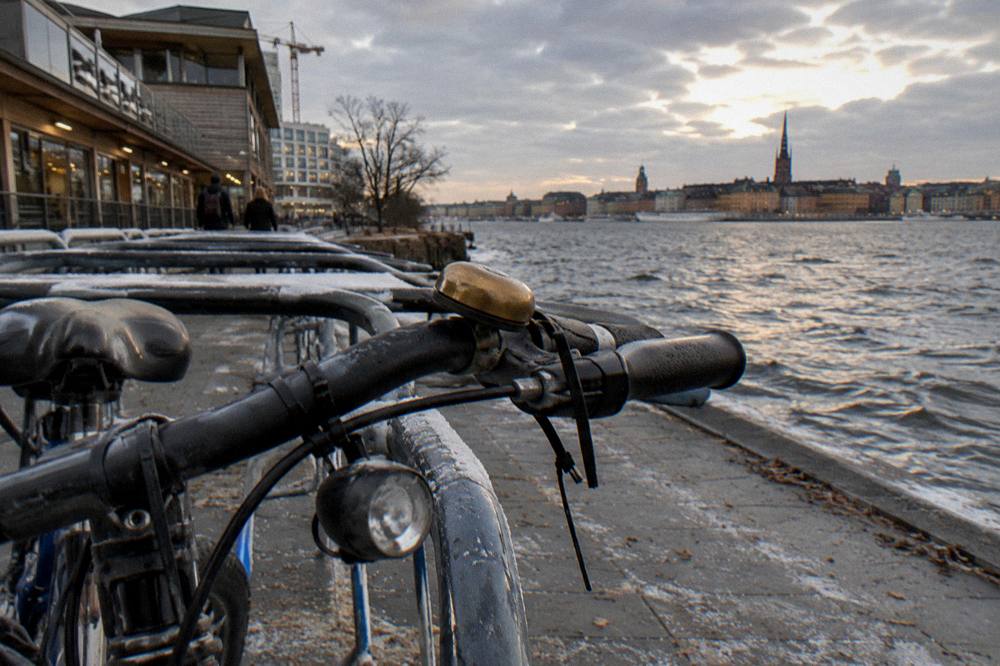
E-bikes are legally bicycles in Sweden when the motor assists only pedalling, cuts out at 25 km/h and is rated at 250 W, which is why the e-bike tours ride the cycle lanes rather than the road. And the city's rule of thumb for paths is plain: where a cycle path exists, use it, and keep right. The full rule set, with every fine level, is in our cycling rules guide. Beyond the bike lane, plenty of other slip-ups can cost visitors money here, and our rundown of the tourist mistakes that lead to fines in Sweden shows which ones to sidestep before you head out.
| Rule | Requirement | Fine if broken |
|---|---|---|
| Helmet | Mandatory under 15 | Adult carrying a child without one can be fined |
| Bell and brakes | At all times | 500 kr |
| Lights in darkness | White front, red rear, visible 300 m | 500 kr |
| Pedestrian streets | Walking pace, yield to pedestrians | 1,000 kr if faster |
| Red light | Stop | 1,500 kr |
The official sources for these are the Swedish Transport Agency's cycle rules and the City of Stockholm's Gamla Stan traffic rules, and the SL page on travelling with a bike covers every ferry and rail exception. Printed rules and live practice differ mainly in one place: ferry deck space on a busy summer afternoon. The rules say the crew decides, and they do.
What If You Have A Second Day?
If a second day opens up, give it to the forest bike tour: it runs 5 hours and pairs cycling with a sauna and a homemade lunch, taking you completely out of the city. That full escape is exactly what the one-day plan cannot offer, since that plan never takes you beyond the city itself. It is the natural contrast anchor, trading islands and museums for trails, heat and a cooked meal, and its price, meeting point and inclusions are on its booking page, so nothing needs guessing before you commit.
For a second day that stays urban, the at-a-glance ride works as a morning refresher if day one went to a different operator, or as a first-taste ride for a travelling companion who sat day one out. It runs 2 to 3 hours on a shared classic bike.
Beyond that, the archipelago beckons. Self-guided archipelago cycling holidays ran daily departures from mid-May to mid-September 2026, with the same season repeating in 2027, and island-hopping routes by ferry and bike cover roughly 220 km over five riding days on one published itinerary. That is a holiday, not a day trip, but a taste of it, one Waxholmsbolaget boat with your bike aboard, one regular bike per person carried at no extra charge subject to space, is a legitimate second-day plan. The rules for cargo bikes and tandems differ, charged as goods at 120 kr, and crews have the final say. Our archipelago cycling guide builds that day out properly.
Common Questions About One Day In Stockholm By Bike And Ferry
Can You See Stockholm In One Day By Bike?
Yes, the core of it. A 2 to 3 hour guided ride covers the central islands, the Djurgården ferry adds the royal park, and Gamla Stan finishes the day on foot. Museums would need a second day.
Does The Djurgården Ferry Cost Extra For A Bike?
No. The SL rules state that taking a bike on the commuter ferries, including the Djurgården ferry, costs nothing extra, subject to space and the crew's judgement. E-bikes ride on deck.
Can You Take A Bike On The Stockholm Metro?
No. Full-size bikes are prohibited on SL buses, the metro and the city's trams. Bikes are allowed on commuter trains, Tvärbanan and Saltsjöbanan outside weekday rush hours, with limitations.
What Is The Best Month For A Bike And Ferry Day In Stockholm?
May through September, when average highs run from 16.5 to 23.6 C and daylight runs 12.8 to 18.5 hours per day per the SMHI 1991 to 2020 normals. August is the wettest month at 66 mm.
Do You Need A Helmet On A Stockholm Bike Tour?
Adults have no helmet law in Sweden. Children and young people under 15 must wear one, and tour listings typically include a helmet, but check the booking page for your specific ride.
Which Guided Bike Tour Is Best For A One-Day Visit?
The Stockholm: Guided Bike Tour, at 2 to 3 hours shared, leaves the most afternoon free. The current price, meeting point and inclusions are on the booking page.