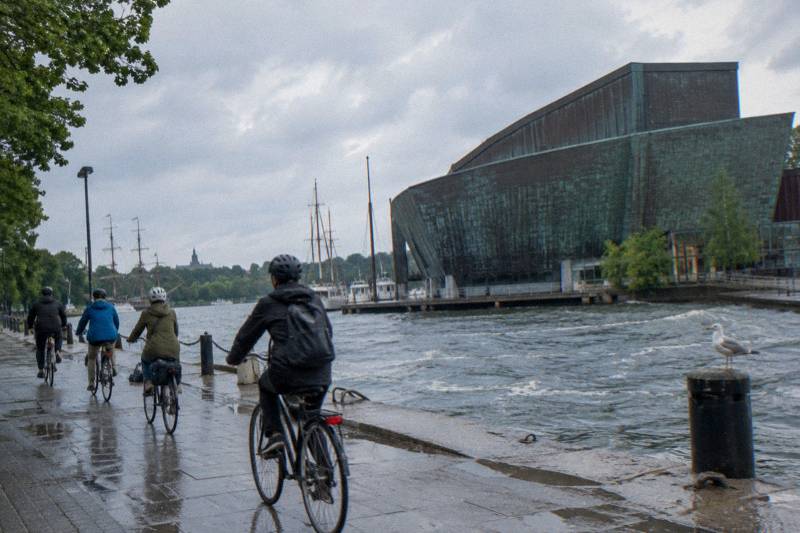
What Are The Best Things To Do In Stockholm?
The best things to do in Stockholm, from Gamla Stan's lanes to Djurgården's parks, and how a bike ride ties the islands together in one day.
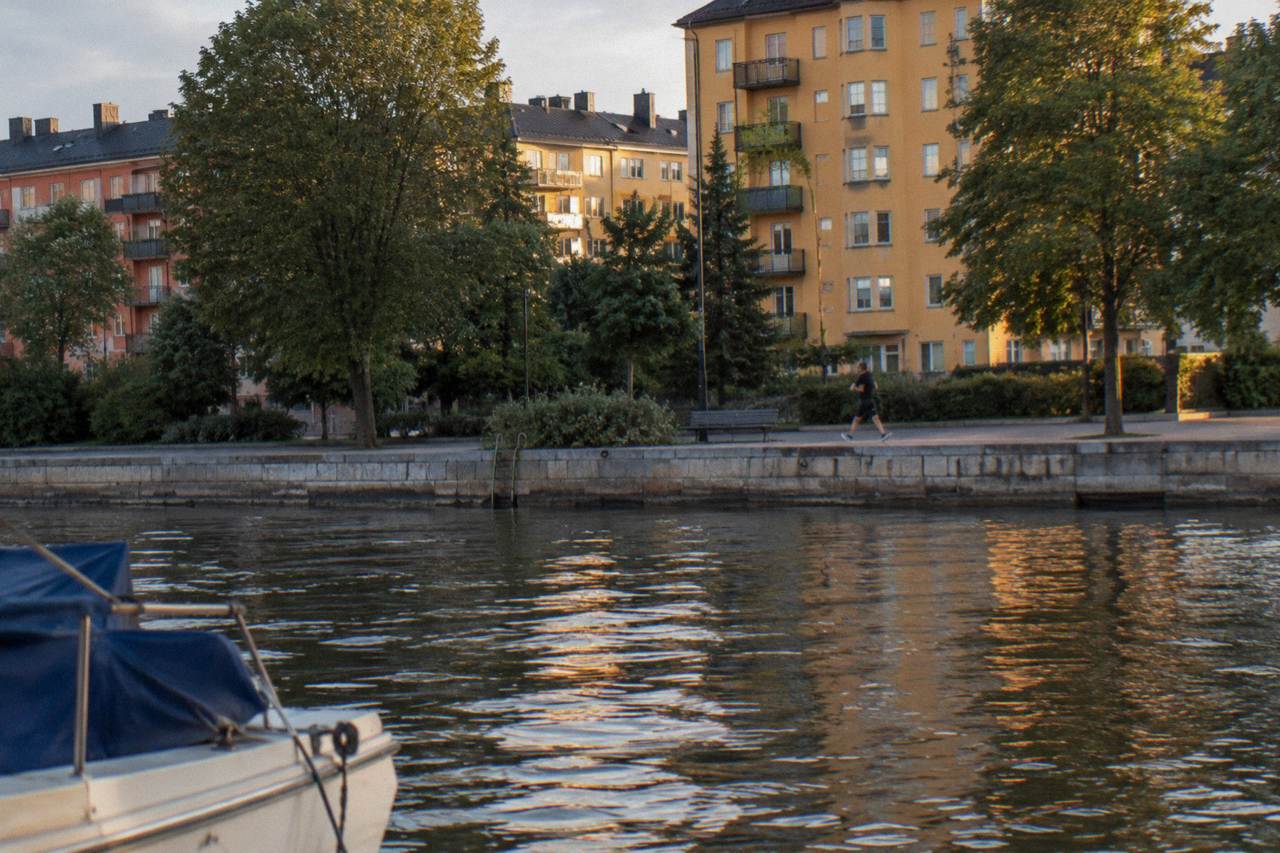
The best things to do in Stockholm are walking Gamla Stan's car-free lanes, riding through Djurgården's royal park, taking in the viewpoints of Södermalm, and visiting the museums clustered on the inner islands, and because they sit within a few kilometres of each other, a bike ride is the one activity that links them all into a single day rather than a week of metro trips. If you want to keep that day out cheap as well as active, our guide to Stockholm's free sights by bike and on foot shows which of these stops cost nothing and how to link them all on two wheels.
Stockholm is not one centre but a chain of islands, and the city's character changes block by block as you cross the water. Gamla Stan is medieval stone and narrow lanes. Djurgården is parkland and museums. Södermalm is hills, viewpoints and design shops. Norrmalm is the modern commercial core. A visitor who treats these as separate destinations by metro sees four small towns; a visitor who rides between them sees one connected city, and the riding itself becomes part of the day rather than dead time between sights.
The city supports this. Stockholm has about 117 mil of cycle routes, roughly 1,170 km of dedicated bike paths, combined pedestrian and cycle paths and bike lanes, according to the city's own cycling pages. That network is what makes the island-hopping plan realistic: you are rarely pushed into traffic, and the crossings between islands are bridged with marked lanes, including a new northbound lane on Vasabron completed in June 2026 as part of a continuous central route.
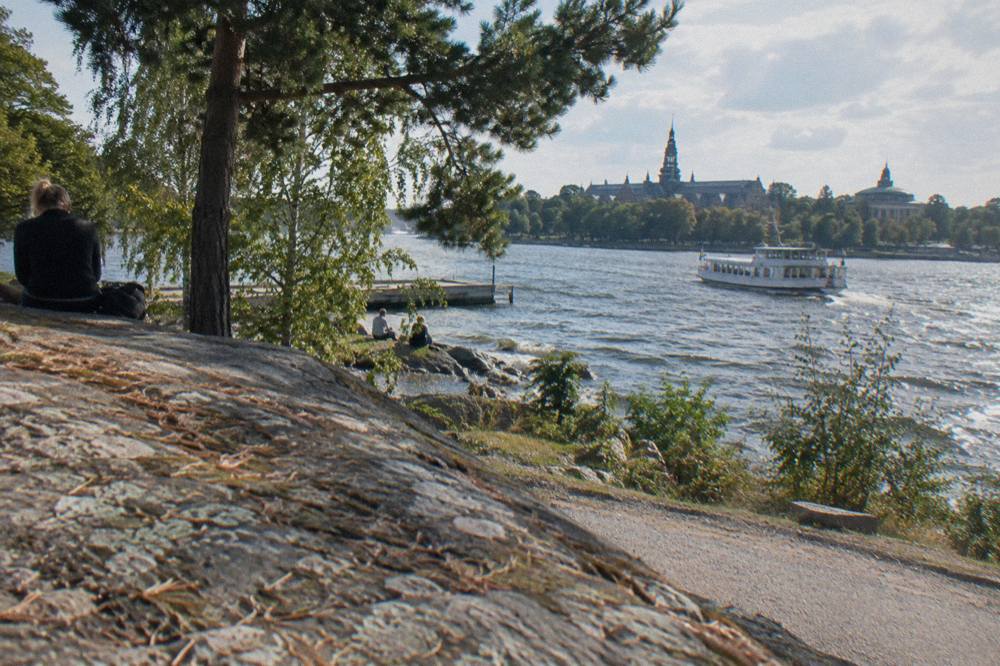
For visitors who want the connect-the-islands day without planning it themselves, a guided ride is the natural fit. The Stockholm: Guided Bike Tour runs 2 to 3 hours with a guide leading the way, which covers the central islands at a pace that still leaves the afternoon free for a museum. The Wooden Bicycle Tour in Stockholm takes a different angle on the same city, a 2 hour shared ride on wooden bicycles with Tours of Stockholm. And the Stockholm at a Glance Bike Tour, 2 to 3 hours, is the quick orientation option for a first day in town. For details on what each includes, check the booking page.
How Does A Bike Ride Cover Stockholm's Main Islands?
A 2 to 3 hour ride across Stockholm typically links Gamla Stan, Södermalm's waterfront, the bridges of the inner city and at least the edge of Djurgården, which is roughly the set of sights a first-time visitor lists as the city's essentials, and it does so without a single transfer, ticket gate or wait for a ferry unless you choose one.
The geography does the work. Gamla Stan sits between the modern centre and Södermalm; Djurgården stretches east of them all as a green wedge. Riding from one to the next means crossing bridges that are themselves sights: Vasabron toward the old town, Slussbron between Södermalm and Gamla Stan, and Djurgårdsbron onto the island itself. Slussbron currently carries a single 3 m eastbound cycle path and a double 6 m westbound one, and a new pedestrian and cycle bridge over Söderström beside it is planned to open in early 2027, which tells you how seriously the city takes two-wheeled traffic at this junction.
Two practical notes shape a riding day. Bikes are not allowed on SL buses, the metro or the city's trams at all, so a bike journey between islands is made on wheels or on the water, not underground. And the Djurgården ferry, an SL commuter boat running between Slussen and Djurgården year-round, takes bikes at no extra cost subject to space, with staff judging what fits; SL's own rules confirm there is no extra charge for a regular bike on these boats.. That ferry is the trick that lets a rider skip the long way around the water and still have the bike on the island.
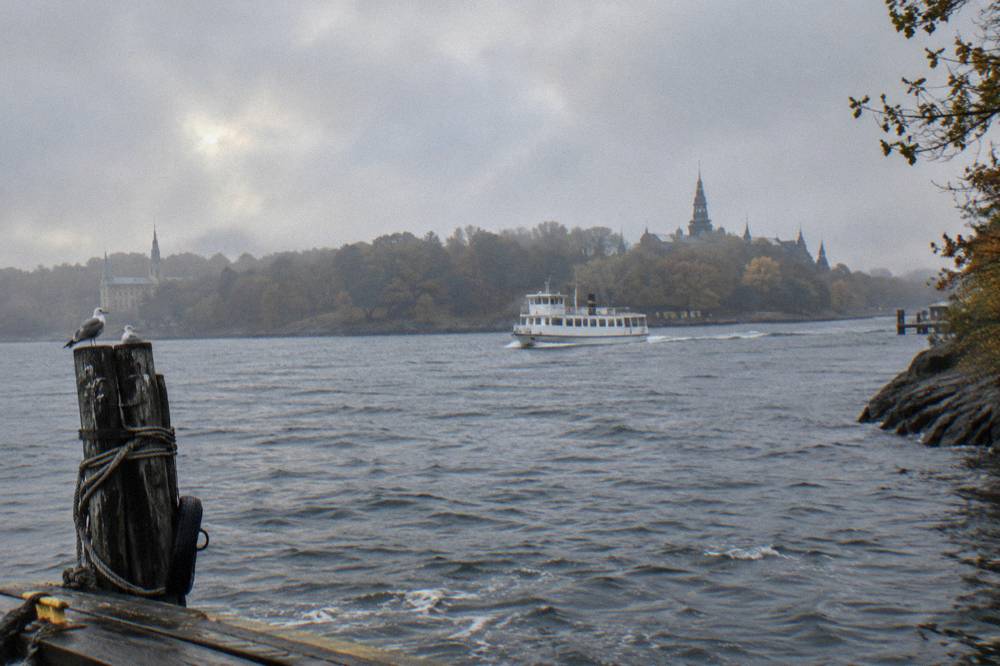
If you want a guide to handle this routing, the Stockholm: Guided Bike Tour is the ride built around exactly this island chain; the listing states 2 to 3 hours, and the operator's booking page carries the meeting point and inclusions. Winter dates exist too: guided e-bike rides with winter tires run through the cold months in Stockholm, so the island loop is not strictly a summer-only idea.
What Can You See On Djurgården?
Djurgården holds the Vasa Museum, Skansen, ABBA The Museum and long stretches of royal parkland criss-crossed by cycle paths, and it is the one Stockholm island where the ride between attractions is itself an attraction, which is why bicycles are repeatedly recommended as the way to explore it.
The island's museum cluster is the densest in the city. The Vasa Museum added a new dimension in late October 2026: a "Vasa Walk" audio guide that starts outside the museum, crosses Djurgården and ends on Beckholmen, effectively a routed wander through the island's history told through headphones. ABBA The Museum opened a new "Dancing Queen" exhibition for the band's 50th anniversary, open year-round. Skansen, the open-air museum on the island's ridge, opens its Christmas market on 27 November 2026, running Fridays to Sundays until 20 December, with 12 market days in total. None of these are free and this article will not guess at entry prices; check each museum's own page.
What makes Djurgården distinct for a cyclist is the approach. Two of the island's entrances, Djurgårdsbommen and Vasabommen, were closed to most vehicles on summer-season schedules through late September 2026, with exceptions for buses, taxis and permit holders, part of the Royal Djurgården administration's effort to keep the core of the island calm. Cyclists were not on the exclusion list, and the island's paths are the recommended way around. Rides here are gentle, flat along the waterfront, and the paths thread between oak trees rather than between cars.
A guided ride that includes Djurgården saves you the routing decisions. The city guided rides described earlier all pass through or along the island; if you prefer electric assistance for the hills on the Södermalm side of the same loop, the Stockholm E-Bike City Tour, 2 hours 30 minutes on e-bikes, is the one e-bike tour among Stockholm's guided rides here. Check the booking page for its route and meeting point.
What Makes Gamla Stan Different On Two Wheels?
Gamla Stan is the old town's island of pedestrian streets, and on a bike you enter it at walking pace: the city's rules require cyclists on its pedestrian streets to yield to people on foot and ride no faster than a walk, so the island rewards a slow approach that most visitors rushing through on foot never take.
The rules are specific. In Gamla Stan's inner parts, all streets are pedestrian streets with a 24/7 parking ban; vehicle traffic, including cycles at walking pace, is banned between 11:00 and 06:00 without a permit, and through traffic is forbidden between 06:00 and 11:00 except deliveries, per the city's traffic regulations for the district. E-scooters are banned in Gamla Stan except along Munkbroleden and Skeppsbron. The practical reading for a visitor: ride in on the outer approach lanes, then slow to walking pace or walk the bike through the core around Stortorget, the main square.
Stortorget itself is changing. New vehicle barriers, three low round planters with granite walls, are being installed through November 2026, alongside new seating and greenery, with completion due before the Christmas market season. The square is the island's heart, framed by the stock exchange building and rows of gabled merchant houses, and the barrier work is part of the city's ongoing effort to keep the old town oriented toward people rather than vehicles.
One piece of cycling infrastructure worth knowing sits on Gamla Stan's western edge. The cycle path along Riddarholmskanalen was widened in a project that began in February 2025, closing the lane between the Gamla Stan metro station and Vasabron with detours via Munkbron; the widened path opened early, on 17 April 2026, two months ahead of schedule, with wider lanes, improved lighting and rounded curves. If your route into the old town comes from the north, you benefit from that work directly. For a deeper route plan through the district's lanes, the guide to Gamla Stan by bike breaks the island down street by street.
Why Is Södermalm Worth The Climb?
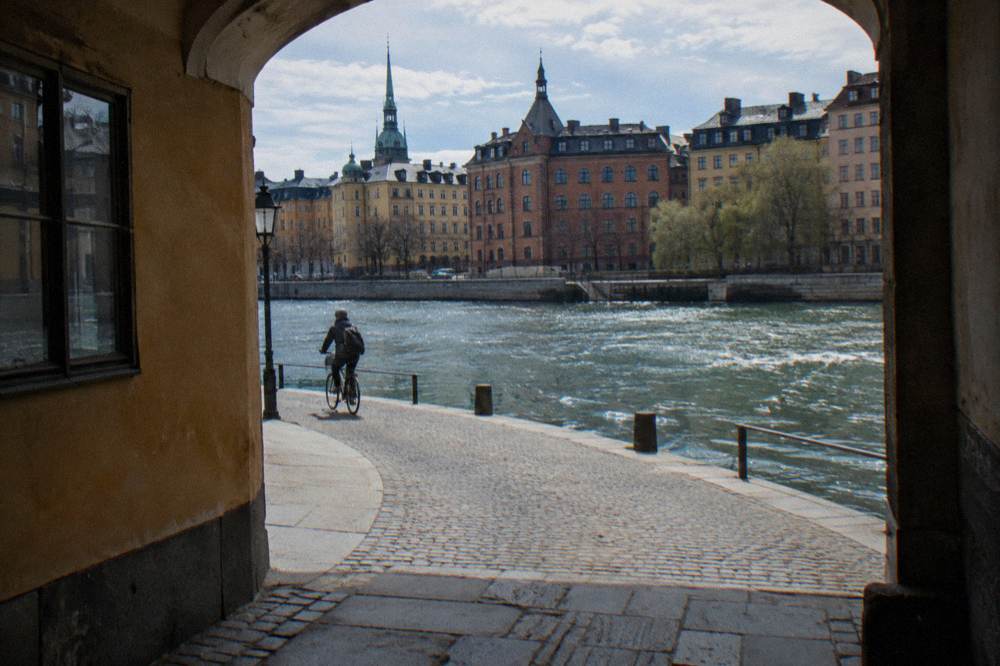
Södermalm is Stockholm's hill island of viewpoints, galleries and neighbourhood life, and in August 2026 the city gave cyclists a reason to enjoy the climbs: "green wave" signal timing on two of its main streets lets a rider holding 20 km/h pass consecutive lights without stopping.
The green wave sections are Hornsgatan between Timmermansgatan and Ringvägen, southbound on weekday mornings and afternoons, and Långholmsgatan between Hornsgatan and Högalidsgatan, northbound on weekdays and extended weekend hours. The timing is set for 20 km/h, a modest commuter pace, which tells you the city expects ordinary cyclists on these streets, not racers. It is a small thing that changes the feel of the island: a steady roll along a main street with the lights opening ahead of you.
The island's draw for visitors is the mixture. Fotografiska, the photography museum on the waterfront, runs exhibitions including "Harder Better Faster Stronger, Are Men OK?", open until 7 February 2027, with late hours Thursday to Saturday. Above the museum streets, the ridge walk between the viewpoints looks north across the water to the old town, one of the classic postcard angles of the city. South of the ridge, the neighbourhoods flatten into parks and local shopping streets that most visitors never reach, which is exactly the kind of area a bike opens up in the time a metro trip would consume.
Södermalm also sits inside a bigger infrastructure story. A new cycle path and "cycle street" project on Ringvägen between Hornsgatan and Tantogatan was approved for implementation in 2026, with completion provisionally set for 2027, giving the island a primary north-south riding spine. Combined with the green wave timing, the island is becoming steadily friendlier to the rider who wants to see it at speed rather than climb its stairs. The Djurgården by bike guide covers the other half of this island pair if you are splitting a day between them.
When Should You Plan Your Stockholm Visit?
The most comfortable months to ride and explore Stockholm are May through September, when normal daily highs run from 16.5 C in May to 23.6 C in July and daylight reaches 17 to 18.5 hours per day, though the city salts and ploughs its cycle network through winter and riding continues year-round with the right gear.
The table below is drawn from the SMHI 1991 to 2020 climate normals for Stockholm. These are averages over three decades, not a forecast for any given week, but they shape the planning reality: long light days from late spring, a warm but showery midsummer, and a rapid fall-off in daylight by November.
| Month | Avg high C | Avg low C | Precip mm | Daylight hours |
|---|---|---|---|---|
| April | 10.7 | 2.6 | 29.2 | 14.5 |
| May | 16.5 | 7.1 | 34.0 | 17.0 |
| June | 20.8 | 11.6 | 61.7 | 18.5 |
| July | 23.6 | 14.8 | 61.5 | 17.7 |
| August | 22.1 | 14.2 | 66.2 | 15.5 |
| September | 16.6 | 10.2 | 53.3 | 12.8 |
| November | 5.4 | 1.9 | 47.6 | 7.7 |
August is the wettest normal month at 66.2 mm, and June follows at 61.7 mm; the driest stretch is February through April. None of that argues against a summer visit, it argues for a rain layer, and the site's guide on riding a Stockholm tour in the rain covers what actually changes on a wet day.
Winter is not off the table. The city's traffic operator reports that cycle paths are brushed and salted down to about -6 C to keep them rideable, and that more than 36 mil of cycling infrastructure receives winter maintenance in the current season. Guided winter e-bike tours with studded tires and provided gear operate in Stockholm. Daylight is the real constraint: by early November the Stockholm day is down to roughly 8 hours 50 minutes, and the first snow with at least 1 cm of cover historically falls around 26 November on average. Winter visitors get the Christmas market at Skansen and a city built for indoor culture; they should plan rides for midday.
What Lies Beyond The Centre?
Beyond the inner islands, the things worth doing shift from museums to landscape: forest riding, sauna and lunch combinations, and long-distance archipelago routes, and one listing in the roster covers that side of Stockholm directly, a 5 hour forest bike tour with a sauna and a homemade lunch built into the day.
The Forest Bike Tour with Sauna and Homemade Lunch is the clearest contrast with the city rides: 5 hours, shared group, and a format that trades sights for woods, heat and food. For a visitor whose picture of Stockholm stops at the old town, it reframes the region as a capital with serious forest within riding distance. Fat-bike versions of the same idea, forest riding with sauna and lunch, use seasonal trails near Stockholm; check the live booking page for the season's departure dates.
The other scale step is the archipelago. Self-guided archipelago cycling holidays run from mid-May to mid-September with daily departures, and one established itinerary covers roughly 220 km over 5 riding days, island-hopping by ferry between rides. Those are holidays rather than days out, but they share the same logic as the city loop: the boat links the rides, and the bike makes each island usable. Ferries in the wider archipelago take one regular bike per person at no extra charge where space allows, though cargo bikes and tandems are charged as goods, so the island-hopping plan holds together on the water too.
Closer to town, the event calendar gives returning visitors something new. The Stadiongirot cycling event on Norra Djurgården offered 19 km and 38 km distances through the national city park in May 2026, with riders up to 18 participating free of registration charge. Cycling races such as Fiskartorpets GP and Vuelta Laduviken ran on Norra Djurgården through spring 2026 as well. None of these require you to race; they signal how deeply riding is woven into how the city uses its own parkland.
Whichever flavour fits, the honest summary is that Stockholm's best things share one property: they are spread across islands and parks that reward covering ground efficiently. A site like Stockholm Bike Tours exists for exactly that reason. If a guided day is the fit, the Stockholm: Guided Bike Tour is the 2 to 3 hour option that links the central islands with a guide who handles the routing, and the wooden-bicycle and at-a-glance rides below cover the same ground in shorter or more story-driven form.
Common Questions About Things To Do In Stockholm
What Are The Best Things To Do In Stockholm?
Walk and slowly ride Gamla Stan's pedestrian streets, explore Djurgården's museums and parkland, take in Södermalm's viewpoints and galleries, and link it all with a 2 to 3 hour bike ride or a guided tour across the central islands.
Things To Do In Stockholm
The essentials are Gamla Stan, Djurgården with the Vasa Museum, Skansen and ABBA The Museum, Södermalm's ridge viewpoints, and Fotografiska; the city's cycle network and the Djurgården ferry, which carries bikes at no extra cost subject to space, tie them into one day.
Can You Cycle Through Gamla Stan?
Yes, but at walking pace and yielding to pedestrians: the city's rules for the district's pedestrian streets require it, e-scooters are banned except on Munkbroleden and Skeppsbron, and cycling faster than a walk in such zones carries a 1,000 kr fine.
Is Djurgården Good For Cycling?
Yes. Bicycles are the recommended way to explore the island, its park paths are flat along the waterfront, and two of its vehicle entrances were closed to most traffic on summer-season schedules through late September 2026.
When Is The Best Time To Visit Stockholm For A Bike Tour?
May through September, when normal highs run from 16.5 C to 23.6 C and daylight reaches 17 to 18.5 hours; guided winter e-bike tours with studded tires also operate, and the city keeps more than 36 mil of cycle infrastructure salted and ploughed in winter.
Can You Take A Bike To Djurgården By Boat?
Yes. The Djurgården ferry is an SL commuter boat running year-round between Slussen and Djurgården, bikes are carried at no extra cost subject to space, and staff judge what fits on each departure.