Where Is The Best Cycling In Stockholm?
A district-by-district answer to where the best cycling in Stockholm is: Djurgården, Södermalm, Gamla Stan and the archipelago edges, with what each offers and how a guided ride fits.
The best cycling in Stockholm splits into four distinct experiences: Djurgården for car-light park lanes, Södermalm for energetic city riding with new infrastructure, Gamla Stan for slow pedestrian-street sightseeing, and the archipelago and forest edges for full-day rides. Stockholm carries roughly 1,170 km of cycle routes, so the real question is which of those four moods fits your day. Once you've picked the mood that fits your day, a look at the top sights and activities across Stockholm shows how a bike ride can link the old town, the island parks, and the waterfront into one satisfying route.
That four-way split is not a ranking, because nobody has measured one stretch against another in a way that survives scrutiny. What does exist is hard, published fact about the network and about what each district gives a rider. The city's own cycling portal counts about 117 mil of cycleways, meaning dedicated bike lanes, combined pedestrian and bike paths, and bike fields, with roughly 36 mil of that signed as primary routes. On top of that, the regional network earmarked for cycling totals 800 km, of which over 215 km has been built to a high standard so far.
Where you actually ride matters as much as how far. A visitor with three hours wants density: several islands, water on both sides, and no navigation stress. A visitor with a full day wants the opposite: gravel through Nationalstadsparken or a ferry out toward the archipelago. Each ride below gets a short rundown of route, pace and price, so you can weigh the options and pick the one that suits your day., in which case the honest move is to check the booking page.
If your instinct is to let someone else handle the route-finding, the city's guided rides cover the central stretch well. The Two to Three Hour Bike Tour link beside the Stockholm Guided Bike Tour overview shows the current dates. For a first visit, three formats stand out:
Which District Suits Your Riding Style?
Djurgården suits relaxed riders and families, Södermalm suits confident city cyclists who want new green-wave lanes, Gamla Stan forces walking pace on its pedestrian streets, and Norra Djurgården's Nationalstadpark suits anyone wanting gravel and forest inside the city limits. Choosing between them is really choosing a pace, not a difficulty level.
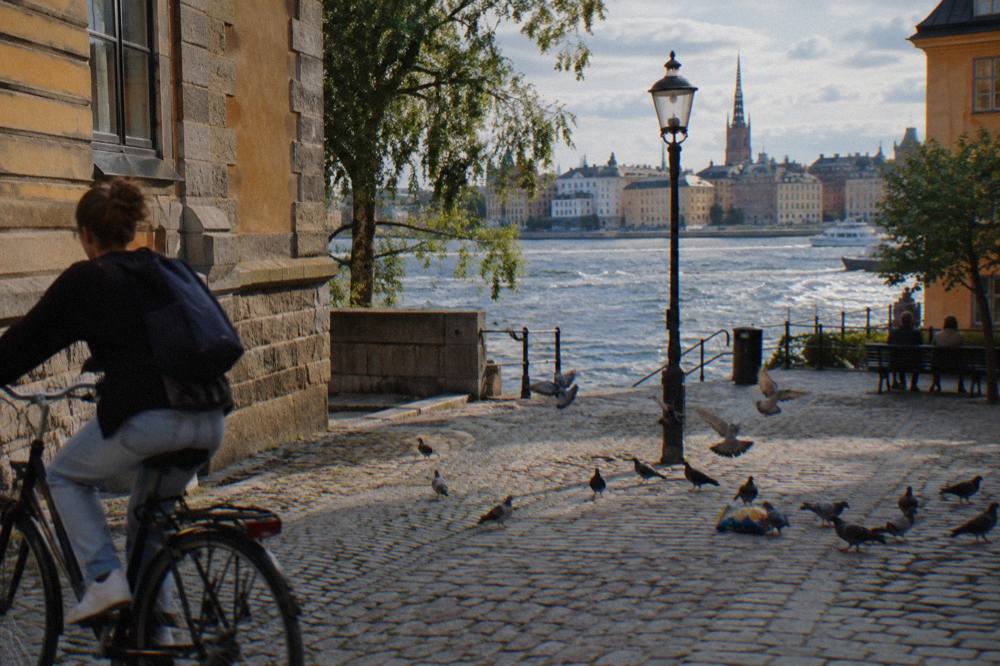
Gamla Stan deserves its caveat spelled out. The city's traffic rules for the old town make all its inner streets pedestrian streets with a round-the-clock parking ban, and cycles there must proceed at walking pace and give way to pedestrians at all times. E-scooters are banned there entirely except along Munkbroleden and Skeppsbron. So the old town is a place you ride through slowly, or walk, not a place to cover ground. Our Gamla Stan bike route notes go deeper on that.
Djurgården is the mirror image. The island is a royal park with museums at its edges, and the city's own visitor guidance recommends bicycles for exploring it. Seasonal vehicle restrictions help: Djurgårdsbommen and Vasabommen were closed to most vehicles from 30 April to 27 September 2026, daily between 10:00 and 17:00 for Vasabommen, with exceptions for buses, taxis and permit holders. That carve-out leaves the island's lanes unusually calm through the warm half of the year.
Södermalm has momentum behind it. The city introduced a "green wave" for cyclists on Hornsgatan and Långholmsgatan, timed at 20 km/h so a rider holding that speed clears the lights, and a new bike lane and cycle street on Ringvägen passed its implementation decision in 2026 with completion pencilled in for 2027. For a rider who enjoys urban texture, the south island is where the infrastructure investment is landing right now.
For visitors who want all of the central islands in one outing, a guided ride handles the transitions. The Stockholm Guided Bike Tour is a 2 to 3 hour shared classic-bike ride that threads the central districts in a single outing, and the tour's booking page carries the price, the meeting point and the inclusion list, which is where those details live rather than in guesswork here. Riders who prefer a shorter sampler can check the at a glance format's live listing for its current dates and stops.
Why Does Djurgården Reward A Slow Loop?
Djurgården rewards a slow loop because it concentrates park lanes, waterfront and major museums on one small island with seasonal car restrictions, and because the Djurgården ferry takes bikes at no extra charge subject to space. Nothing about the island asks you to hurry, and several things actively punish it.
The ferry point matters more than most visitors realise. The Djurgården ferry is a public SL commuter boat, not a tourist service, and SL's own rules say you can bring a bike on the commuter boats including the Djurgården ferry, that it always depends on space, and that it costs nothing extra. Staff judge space and safety and can point you to a later departure. E-bikes travel out on deck, and if deck space runs out you remove the battery and place it in the on-deck container.
Once on the island, the riding is gentle. The Vasa Museum launched its "Vasa Walk" audio guide at the end of October 2026, a route that starts outside the museum, crosses Djurgården and ends on Beckholmen, which is a ready-made slow loop for anyone who wants a self-paced thread through the park. ABBA The Museum's new "Dancing Queen" exhibition, marking the band's 50th anniversary, is open year-round and gives the northern edge of the island another anchor. Entry is charged at the museums; nothing on the park lanes is.
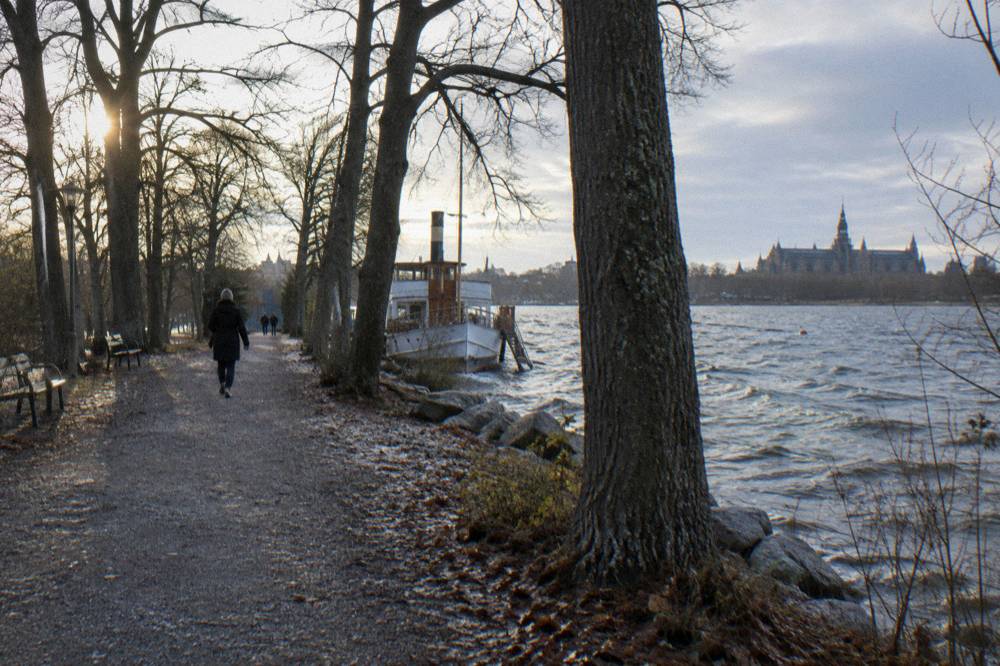
One honest note on seasons: Skansen's Christmas market opens 27 November 2026 and runs Fridays to Sundays until 20 December, 12 market days in total. A winter loop of Djurgården pairs naturally with that market, and the city sweeps and salts around 38 mil of bike lanes through the dark months, so winter riding on maintained paths is a real option, not a stunt.
Guided options that lean on this island include the Stockholm at a Glance Bike Tour, a 2 to 3 hour shared classic-bike ride whose listing names its stops and meeting point. Availability and current pricing sit on that tour's live listing, which is worth a look before committing a morning to the island.
Why Does Södermalm Suit Confident Riders?
Södermalm suits confident riders because its hills, dense traffic and newly built lanes make it a working city bike network rather than a park promenade, with the green wave on Hornsgatan and Långholmsgatan rewarding a steady 20 km/h and the Ringvägen lane adding a primary route. It is the district where riding feels like transport.
The green wave is the detail worth travelling for. Introduced on Södermalm sections, it holds on Hornsgatan between Timmermansgatan and Ringvägen on weekday southbound peaks, and on Långholmsgatan northbound across extended hours, at 20 km/h. A rider who finds that rhythm gets a run of greens through the south island. Nobody promises you will, conditions vary, but the timing is built for exactly that speed.
Works elsewhere in the centre add friction too. The Sankt Eriksbron renovation, in Kungsholmen/Vasastan,, starting autumn 2026 with completion in winter 2028, will bring wider bike lanes on that Kungsholmen bridge, and Sankt Eriksgatan south of the bridge got new, wider lanes with construction running from August 2026 to autumn 2027. None of that closes Södermalm, but a rider planning a precise route should expect works and detours at the edges. The city's traffic-information pages list current closures week by week.
For sightseeing rather than commuting, Södermalm's rewards are viewpoints, Fotografiska's exhibition programme running well into 2027, and the gritty-pleasant stretch of laneways between Slussen and the Hornstull waterfront. The new pedestrian and cycle bridge over Söderström at Slussen, planned to open early 2027, will eventually tighten the link between Södermalm and Gamla Stan; until then the existing Slussbron paths carry the traffic, a single 3 m eastbound lane and a double 6 m westbound one.
An e-assist bike flattens the south island's climbs, and one listing in the city does exactly that: the Stockholm E-Bike City Tour, 2 hours 30 minutes, shared, the dedicated e-bike tour in the selection. Its price and rating sit on the listing rather than being printed here. More on that trade-off in our e-bike or classic bike comparison.
When Does The Archipelago Beat The City?
The archipelago beats the city when you have a full day or more, since organised island-hopping cycling holidays run roughly mid-May to mid-September with daily departures, one operator covering about 220 km over five riding days. For anything shorter than a day, the city's islands give you the water without the commitment.
The archipelago product is real but it is a different animal from a city ride. One operator runs self-guided archipelago holidays from 16 May to 12 September 2026 with identical dates in 2027, another from 15 May to 13 September 2026, and a packaged adventure version runs specific summer departures from 21 June to 9 August 2026, priced from 9,375 Swedish kronor per person for five nights. Those kronor figures are package prices, not bike-tour prices, and they are quoted in their own currency; do not mix them with the USD figures on the city tours' booking pages.
| District or route | Best for | Character | Watch for |
|---|---|---|---|
| Djurgården | Families, museum days, first-time visitors | Car-light royal park, waterfront lanes | Museum entry is charged; ferry space varies |
| Södermalm | Confident riders, city energy | Green-wave lanes, hills, viewpoints | Bridge and lane works through 2028 |
| Gamla Stan | Slow sightseeing | Pedestrian streets, walking pace only | Riding faster than walking pace draws a fine |
| Norra Djurgården | Gravel and forest inside the city | Nationalstadsparken trails | Seasonal path closures around Lidingövägen |
| The archipelago | Full-day and multi-day riders | Island hopping, ferries, about 220 km packages | Season runs roughly mid-May to mid-September |
Even inside the city, the archipelago feel leaks in at the edges. Norra Djurgården's Nationalstadsparken hosts the Stadiongirot cycling event, whose 11th edition in May 2026 offered 19 km and 38 km laps on gravel, trails and some asphalt starting from Stockholms Stadion, with riders up to 18 free with registration. You do not need an event to ride those trails, but the event proves the terrain. Note the current works there: path construction on Bobergsgatan through autumn 2026 and temporary closures of paths along Lidingövägen from 14 September to 14 December 2026.
For the multi-day question, our archipelago cycling guide carries the full picture, including the legality and practicalities of the long-distance trail between the islands.
What Does A Forest Ride Add?
A forest ride adds terrain and stillness the city cannot: the Forest Bike Tour with Sauna and Homemade Lunch runs five hours on fat bikes, pairing forest trails with a sauna and a cooked lunch, and fat-bike forest versions run year-round on seasonal trails. It is the clearest contrast to a two-hour city loop.
Five hours is the number that defines this product. Where the city tours run 2 to 3 hours, the forest tour takes most of a day, and the sauna-and-lunch framing makes it a full experience rather than a ride. The listing's flags cover the bike and helmet; the exact trail area, price and meeting point sit on the booking page, and none of those details should be guessed at. Operators of similar fat-bike forest tours describe 2 to 3 hours of riding on trails that change with the season, which tells you the format flexes across the year.
The seasonal angle is real. Winter e-bike city tours with winter tires and gear provided run from 1 July 2026 onward, and the forest fat-bike tour operates year-round., and the city's winter-maintenance stance supports it: cycle paths are swept and salted down to about minus 6 C to keep them in bare-ground condition through the dark months. A forest loop in January is a different ride from one in July, and both exist.
If the pairing of ride, sauna and lunch appeals, the forest tour is the clearest slow day out here. The forest tour page has the live details.
Which Season Gives The Best Conditions?
May through September gives the best cycling conditions in Stockholm: July normals sit at a high of 23.6 C with 61.5 mm of rain, June delivers 18.5 hours of daylight, and February through April are the driest months at 27 to 29 mm. Winter riding is possible on salted paths but daylight shrinks to about 7 hours in January.
The normals below are the 1991 to 2020 table for Stockholm, a long-run average rather than any forecast for your dates. Read them as planning ranges: what a month usually feels like, not what it will do.
| Month | Avg high C | Avg low C | Precip mm | Daylight hours |
|---|---|---|---|---|
| January | 1.0 | -2.9 | 37.0 | 7.0 |
| March | 4.7 | -1.1 | 27.3 | 11.9 |
| May | 16.5 | 7.1 | 34.0 | 17.0 |
| July | 23.6 | 14.8 | 61.5 | 17.7 |
| September | 16.6 | 10.2 | 53.3 | 12.8 |
| November | 5.4 | 1.9 | 47.6 | 7.7 |
Two wrinkles sit inside those numbers. August is the wettest single month at 66.2 mm on average, so the peak-summer choice is really June or July if rain matters to you, with June's 18.5 daylight hours against July's higher temperatures. And the first snow with at least 1 cm of depth typically falls around 26 November in Stockholm, which is the practical start of the winter-riding question. Operators that run winter formats supply tires and gear, and the guided city tours mostly keep running.
How Do You Fit Riding Into One Day?
One well-shaped day pairs a morning guided city ride of 2 to 3 hours with an afternoon Djurgården loop by ferry, using the commuter boat that takes bikes free subject to space, because the guided ride handles navigation and the island loop lets you linger. It is the shape most first-time visitors land on, and it needs no car and no plan beyond two bookings or one booking and a ferry.
The logic is simple. A guided morning, whether the Stockholm Guided Bike Tour at 2 to 3 hours or the City Bike Tour with Premium Bikes at 3 hours, gives you the city's geography in one pass with someone else reading the map. Premium bikes are the difference on that second listing: same shared classic format, upgraded machines, price and inclusions on the booking page. By early afternoon you know where everything is, and a solo Djurgården loop via the ferry spends the rest of the daylight exactly where lingering pays.
The one rule to respect in the middle of it: bikes are never allowed on SL buses, the metro or the city's other trams and local trains, so ferry or bridge, never tunnelbana, when moving a bike between islands. Bikes do ride on commuter trains and some light-rail lines outside rush hours, with limits, and e-scooters are banned outright in the metro over lithium fire risk.
What Should You Check Before You Ride?
Before you ride, check the three legal basics that carry fines: a bell and working brakes are mandatory at all times, lights and reflectors are required only in darkness, and anyone under 15 must wear a helmet. On pedestrian streets you ride at walking pace, and the police-listed fines run from 500 to 1,500 Swedish kronor.
The fines are published by the police, in Swedish kronor, and they are not decorative. Riding on a sidewalk, missing a bell or brake, or riding against a one-way street draws 500 kr. Going faster than walking pace on a pedestrian street or ignoring a stop sign draws 1,000 kr, and running a red light on a bike draws 1,500 kr. Helmets are a legal requirement only for riders under 15, though an adult carrying a helmet-less child can be fined 500 kr. None of this says helmets are a bad idea for adults; it says the law draws its line at 15. The Swedish Transport Administration's own pages at transportstyrelsen.se carry the full rulebook.
A few practical checks beyond the law. If a tour detail matters to your decision, the meeting point, the exact route, what is included, and whether an e-bike option exists, the booking page is the only current source, and asking the operator beats assuming. The city's own cycling network pages at cykla.stockholm carry route maps and the current works picture, and the Djurgården vehicle-restriction details sit with the island's management at royaldjurgarden.se.
Whichever stretch you settle on, Djurgården's calm, Södermalm's energy, the archipelago's reach or the forest's quiet, a guided first ride is the cheapest way to learn the city's rhythm before you strike out alone, and Stockholm Bike Tours exists to make that pairing straightforward. Here are the three formats again, side by side:
Common Questions About Cycling In Stockholm
Where Is The Best Cycling In Stockholm?
The best cycling in Stockholm depends on pace: Djurgården for calm park lanes and museums, Södermalm for confident city riding on new green-wave infrastructure, Gamla Stan for slow pedestrian-street sightseeing, and the archipelago or forest edges for full-day rides of five hours or more.
Can You Cycle Around Djurgården?
Yes, and the island is one of the most pleasant places in the city to do it. Vehicles were restricted on parts of the island daily from late April to late September 2026, the ferry takes bikes at no extra charge subject to space, and the city recommends bicycles for exploring the island.
Is Stockholm Good For Cycling?
Stockholm carries roughly 1,170 km of cycle routes, about 36 mil of them signed as primary routes, and the network is actively expanding. The main constraints are seasonal daylight, winter maintenance and the walking-pace rule on Gamla Stan's pedestrian streets.
When Is The Cycling Season In Stockholm?
Roughly April to October for comfortable conditions, with July the warmest month at a 23.6 C average high and June the brightest at 18.5 hours of daylight. Archipelago cycling packages run about mid-May to mid-September. Winter riding is possible on salted paths with the right gear, and guided winter formats exist.
Do You Have To Wear A Helmet On A Bike In Stockholm?
Only riders under 15 are legally required to wear a helmet, and an adult carrying a helmet-less child can be fined 500 kr. Adults ride without one legally, though many guided tours provide helmets; check the booking page for what is included.