Best Time To Visit Stockholm
Stockholm rewards good timing more than most capitals: the same city that offers 18 and a half hours of daylight in June offers fewer than seven in December. Here is how the months actually compare.
Short answer
The best time to visit Stockholm for cycling and outdoor sightseeing is late May through early September, when average highs run 16.5 to 23.6 C, daylight lasts 12.8 to 18.5 hours, and both the city rides and the archipelago season are in full swing. June offers the most daylight, September the thinnest crowds, and July and August the warmest temperatures alongside the most visitors.
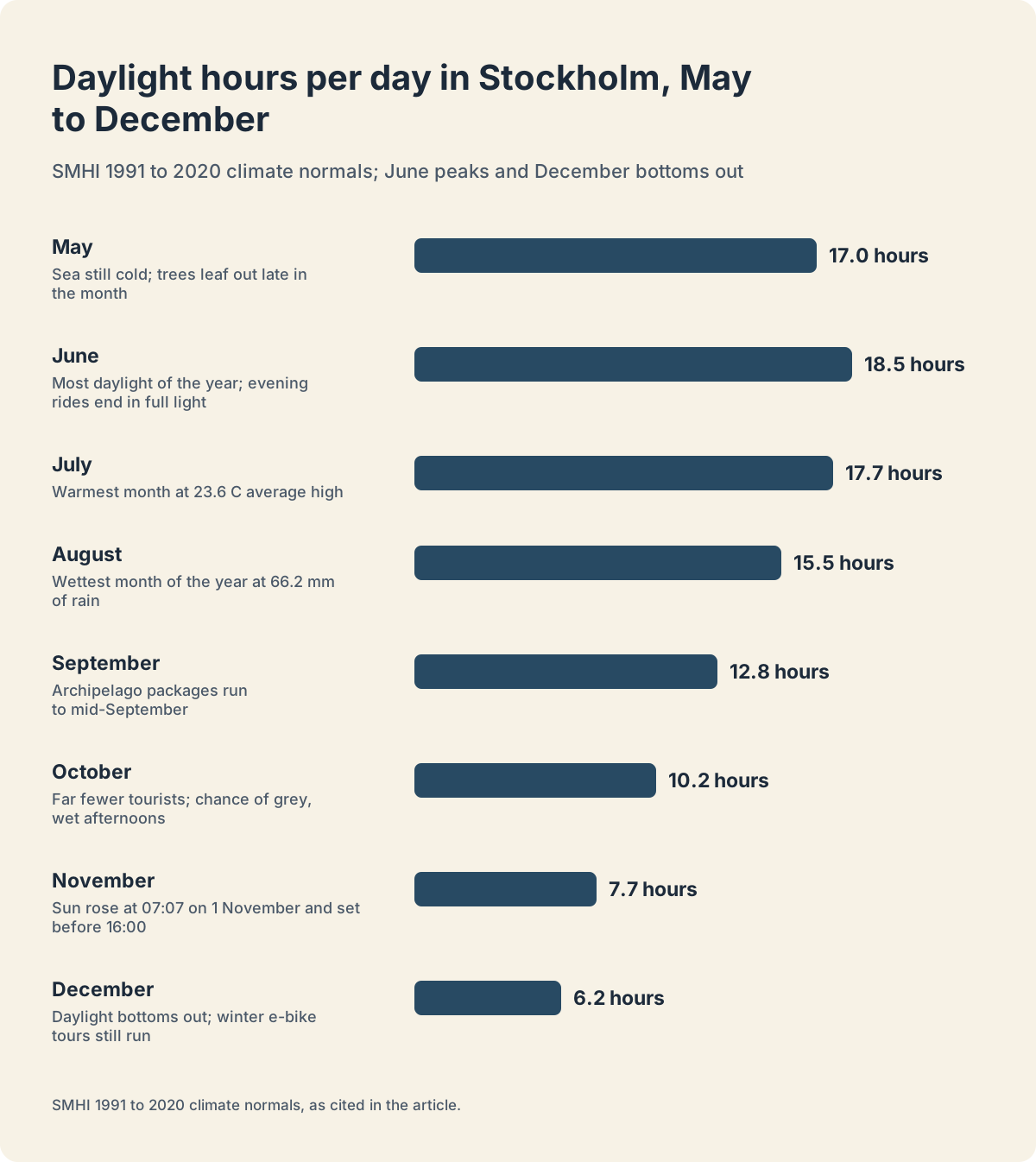
Stockholm sits far enough north that geography shapes every month of a visit. Daylight swings from roughly 18.5 hours per day in June down to 6.2 hours in December, a threefold difference that no southern European city experiences. The practical question for a visitor is not whether Stockholm is worth seeing, it is, but which version of the city you want: the bright, crowded, outdoor version, or the darker, quieter, candle-lit one. Cyclists feel the swing hardest of all, because a bike tour is a daylight activity in a city where winter means riding home in the dark at four in the afternoon.
The good news is that almost every month works for something. The city maintains its cycle network through winter, the archipelago ferry season runs from mid-May to mid-September, and the guided tours that suit first-time visitors operate across a wide window. This guide walks through the months, the trade-offs, and how to match the calendar to a bike tour, using climate normals from SMHI's 1991 to 2020 reference period and dated event information from the current season. If your travel dates aren't tied to Stockholm alone, our season-by-season guide to the best time to visit Sweden applies the same climate data to the whole country.
When Is The Best Time To Visit Stockholm?
The strongest overall window is late May through early September. In that span, average highs climb from 16.5 C in May to 23.6 C in July, daylight runs between 15.5 and 18.5 hours a day, and every seasonal activity in the region is open, from the Djurgården rental season to the archipelago cycling packages. If you must pick one month, June gives the most daylight, while September splits the difference between warmth and quiet streets.
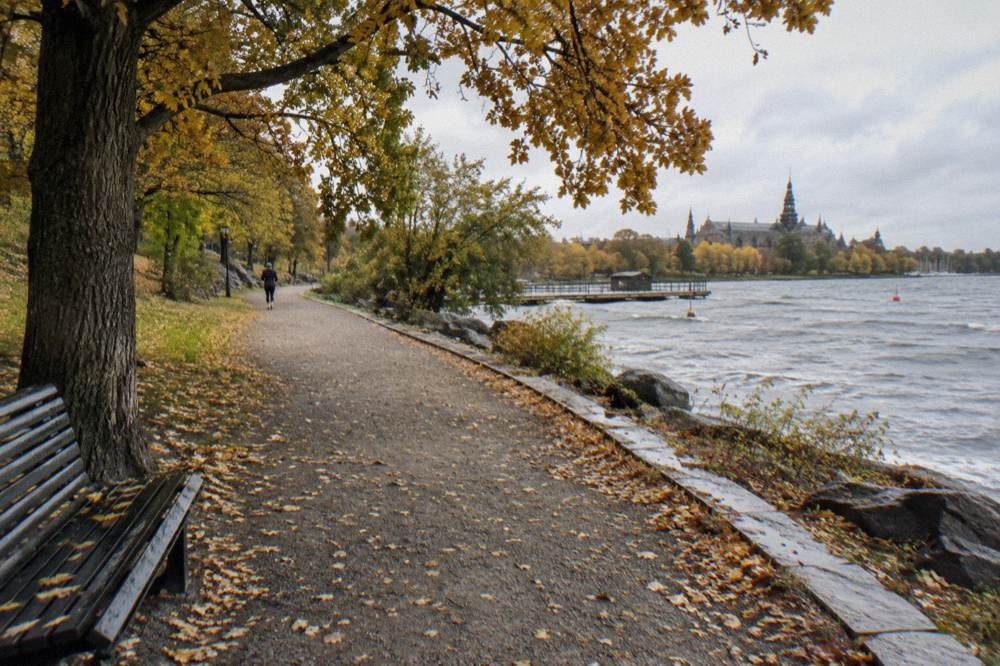
Everything outside that window is a trade, not a failure. May averages a 16.5 C high against 34 mm of rain, but the sea is still cold and the trees only fully leaf out late in the month. October flips the equation: 10.1 C highs and 10.2 hours of daylight, with autumn colour across Djurgården and far fewer tourists, but shorter riding days and a real chance of grey, wet afternoons. Winter, December through February, is its own genre of trip, dark by mid-afternoon but lit by Christmas markets and street lamps, with highs hovering between 1.0 and 2.5 C.
The two numbers that matter most for planning are daylight and precipitation, and they do not move together. August is actually the wettest month of the year on the 1991 to 2020 normals, at 66.2 mm, despite being the second warmest at 22.1 C. February through April are the driest months, 27.3 to 29.4 mm each, yet April's 10.7 C average high still beats October's. A shoulder-season visitor is trading daylight for dryness and calm, and often coming out ahead.
| Month | Avg high C | Avg low C | Precip mm | Daylight hrs/day |
|---|---|---|---|---|
| January | 1.0 | -2.9 | 37.0 | 7.0 |
| February | 1.2 | -3.2 | 29.4 | 9.3 |
| March | 4.7 | -1.1 | 27.3 | 11.9 |
| April | 10.7 | 2.6 | 29.2 | 14.5 |
| May | 16.5 | 7.1 | 34.0 | 17.0 |
| June | 20.8 | 11.6 | 61.7 | 18.5 |
| Month | Avg high C | Avg low C | Precip mm | Daylight hrs/day |
|---|---|---|---|---|
| July | 23.6 | 14.8 | 61.5 | 17.7 |
| August | 22.1 | 14.2 | 66.2 | 15.5 |
| September | 16.6 | 10.2 | 53.3 | 12.8 |
| October | 10.1 | 5.5 | 51.4 | 10.2 |
| November | 5.4 | 1.9 | 47.6 | 7.7 |
| December | 2.5 | -1.2 | 47.8 | 6.2 |
These are normals from SMHI's 1991 to 2020 reference period, the standard climate baseline Swedish meteorologists use. They describe the long-run average, not a forecast for your week. A July cold snap at 15 C or a bone-dry October both fit comfortably inside these numbers.
What Does Each Season Offer A Visitor?
Summer, June through August, delivers the warmest weather, the longest days and every seasonal service at full tilt, at the cost of peak crowds and peak accommodation prices. Spring, April and May, brings dry air, blossoming parks and climbing daylight before the tourist surge. Autumn, September and October, offers mild early weeks with thin crowds, then colour and shortening days. Winter is quiet, dark and atmospheric, a market-and-museum trip more than a riding one.
Spring is the insider's season. April's 29.2 mm of rain makes it one of the three driest months, and 14.5 hours of daylight is already generous by the standards of most of Europe. The Djurgården bike rental at Djurgårdsboden opened for the 2026 season on 30 April with classic three-speed city bikes, May hours Thursday to Sunday 10:00 to 17:00, expanding to daily service in peak summer. That pattern, seasonal businesses opening across late April and May, repeats across the city, so a late-April visitor gets the green city but not yet the full machinery of summer tourism.
Summer is when Stockholm behaves like the postcard. July's 23.6 C average high is the warmest of the year, and 17.7 hours of daylight means a bike tour that ends at 21:00 still finishes in sunshine. The trade is density: Gamla Stan's pedestrian streets and Djurgården's bridges carry their heaviest foot traffic, and the city's vehicle restrictions tighten in response. Djurgårdsbommen and Vasabommen were closed to most vehicles from 30 April to 27 September 2026, weekends 10:00 to 17:00 for Djurgårdsbron and daily 10:00 to 17:00 for Vasabommen, with exceptions for buses, taxis and permit holders, which pushes even more arrivals onto bikes, boats and feet.
Autumn splits into two distinct halves. Early September still averages 16.6 C with 12.8 hours of daylight, warm enough for any ride, while the archipelago packages run to mid-September. By late October the high has fallen to 10.1 C and daylight to 10.2 hours, but the compensation is real: the parks turn gold, the museums launch new exhibitions, and the Christmas build-up begins at the end of November. Stortorget in Gamla Stan received new seating, greenery and vehicle barriers installed through October and November 2026, finished before the square's famous Christmas market, a small sign of how the city reorients toward its winter season.
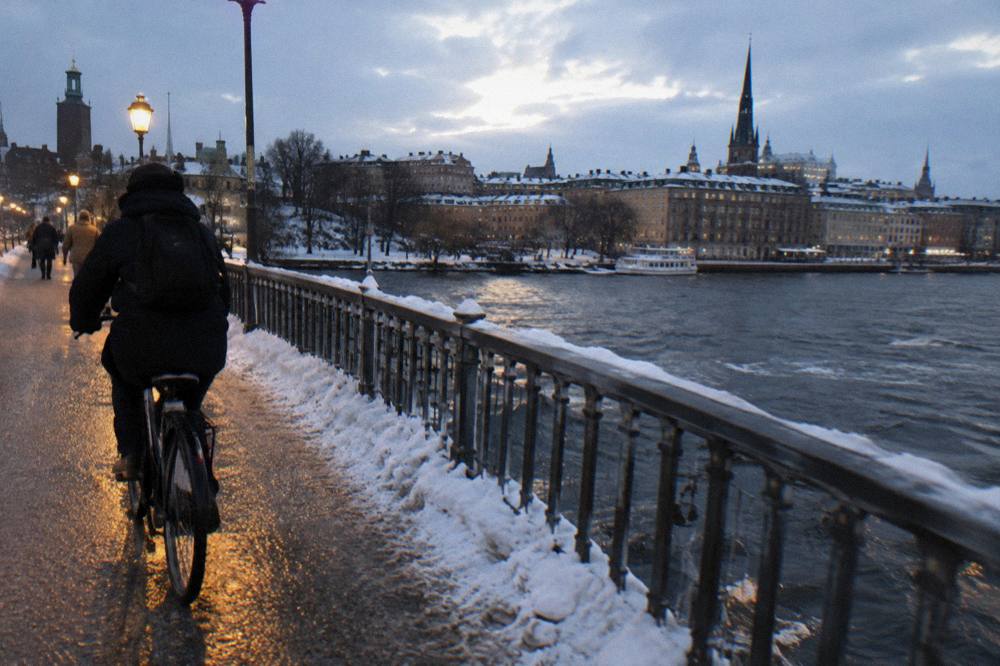
Winter, December through February, is a different trip entirely. Daylight bottoms out at 6.2 hours a day in December, and on 1 November the sun already rose at 07:07 and set before 16:00. Cycling does not stop, the city's winter maintenance keeps the main commuter routes swept and salted, and operators offer winter e-bike tours with winter tires and gear provided, but a visitor's winter days are better built around markets, museums and long lunches than around kilometres ridden.
Which Months Give You The Most Daylight?
June is the daylight month, with 18.5 hours per day on the SMHI normals, and the effect lasts from late May into mid-July. May and July both sit at 17.0 and 17.7 hours respectively, so the entire June-to-July stretch supports evening rides that finish in full light. The collapse comes fast after that: 15.5 hours in August, 12.8 in September, 10.2 in October, and 7.7 by November.
The northern latitude makes this swing feel more extreme than the numbers alone suggest. On the summer side, a guided ride that starts at 18:00 in June operates in bright evening light, and the "green wave" traffic signals on Södermalm, timed for cyclists at 20 km/h on Hornsgatan and Långholmsgatan since August 2026, are working in your favour during weekday rush windows. On the winter side, a December visitor has a usable window roughly from 09:00 to 15:00, and anything outdoors needs to be planned inside it.
For bike touring specifically, the daylight math pushes toward May through early September. Outside that window a ride is not impossible, it is simply compressed: a November tour with a 14:30 start finishes in darkness, and Swedish rules require working lights and reflectors on any bike ridden in the dark, front light visible at 300 m, red rear light the same. Tours that supply bikes handle this, but the riding itself loses the scenery that makes Stockholm special.
The shoulder months are where preference takes over. A photographer or runner may love the long golden hours of a September evening; a family with small children may find the June daylight genuinely disruptive to sleep, since blackout curtains in Swedish hotels exist for a reason. Neither preference is wrong, and both are better decisions than arriving in November expecting midsummer light.
When Are Crowds And Prices At Their Lowest?
The quietest visitor months are November through March, excluding the Christmas and New Year weeks around late December, when the city is at its emptiest and its darkest. Among rideable months, late April to mid-May and September through mid-October offer the best crowd-to-weather ratio: full daylight or near it, mild temperatures, and a fraction of the July foot traffic in Gamla Stan and on Djurgården.
The rhythm of the season is legible in the services around the city. Djurgårdsboden's rental season tapers to weekend-only hours in September and closes for winter, while the archipelago cycling-holiday operators run their seasons from mid-May to mid-September, with peak pricing concentrated from mid-June to mid-August. Whenever the packaged seasons end, the independent traveller inherits quieter paths and easier ferry space. One multi-day archipelago package in 2026, with specific departures from late June through early August, was priced from 9,375 Swedish kronor per person for five nights.
Crowd-avoidance is not only about month, it is also about hour. Djurgården's vehicle closures in summer concentrate everyone onto the same bridges and waterfront paths between roughly 11:00 and 16:00. A morning departure on a guided ride, or a self-directed loop after 17:00 in June light, sees a fraction of the midday density even in peak July. The guided city tour, 2 to 3 hours with the option of an e-bike, runs multiple departures across the day; check the booking page for the calendar, since morning slots in high summer are the ones that go first.
One crowd factor worth planning around is the event calendar. Stadiongirot, a cycling event on Norra Djurgården now in its eleventh edition, offered 19 km and 38 km distances from Stockholms Stadion in May 2026, and a series of club races ran on Norra Djurgården through spring. None of these close the city, but they do fill the Nationalstadsparken's gravel trails on their specific dates, so a quiet-ride itinerary does well to check the Royal Djurgården events page before locking a date.
How Does The Weather Shape A Bike Tour?
Rain, not cold, is the planning variable. June, July and August each average about 61 to 66 mm of precipitation, with August the wettest month of the year at 66.2 mm, while February, March and April are the driest at 27 to 30 mm each. Summer tours rarely lose whole days to rain, but a light shell is wise; the listing for any tour states its rain policy, and several run in light rain with supplied gear.
The wind and temperature combination matters more on the water than in the streets. The archipelago legs of any trip, ferries and exposed shoreline paths, feel a 15 C day differently than a sheltered city lane does. May's 7.1 C average low means a morning departure can start near single digits even when the afternoon reaches 17 C, so layers beat a single warm jacket. Our advice on dressing for a ride is covered in detail in what to wear on a Stockholm bike tour, including the wind-on-the-water problem.
Winter weather is a different equation. The city salts and sweeps about 38 mil of cycle path in the dark season, keeping main routes in bare-pavement condition down to roughly -6 C, and the traffic authority actively encourages winter cycling. Snow that does settle tends to come late: the first 1 cm snow cover averages around 26 November. A hardy visitor can ride in December, and operators offer winter e-bike tours with winter tires and gear provided, though the daylight constraint from the section above still governs when.
Between the extremes, the seasons differ in feel rather than feasibility. Spring rides get dry air and low water on the paths; summer rides get warmth, long light and the fullest ferry schedules; autumn rides get colour and calm. For a deeper comparison of riding across the year, see the best time of year to cycle in Stockholm, and for the practical question of ride length at different times of day, how long a Stockholm bike tour runs.
| Season | Avg high C | Rain pattern | Crowd level | Best for |
|---|---|---|---|---|
| Spring, April to May | 10.7 to 16.5 | Driest of the year, 29 to 34 mm monthly | Low, building in May | Dry paths, blossom, pre-season quiet |
| Summer, June to August | 20.8 to 23.6 | Wettest quarter, about 62 to 66 mm monthly | Peak | Daylight, ferries, archipelago, swimming |
| Autumn, September to October | 10.1 to 16.6 | Moderate, roughly 51 to 53 mm monthly | Moderate to low | Colour, calm, comfortable riding |
| Winter, November to March | 1.0 to 5.4 | Mixed rain and snow, 29 to 48 mm monthly | Lowest, except Christmas weeks | Markets, museums, atmosphere |
When Can You Cycle The Stockholm Archipelago?
The organised archipelago cycling season runs from mid-May to mid-September. In 2026 the packaged island-hopping trips ran from mid-May to 13 September, with near-identical 2027 dates already published, and multi-day itineraries cover roughly 220 km over five riding days. Peak pricing and the fullest departures concentrate from mid-June to mid-August, so the shoulder edges of the season offer the same routes with more space.
The archipelago is the part of the region where seasonality is close to absolute. Ferries, island accommodations and the supported packages all scale up for the summer and down after it, and an independent cyclist outside the window will find thinner connections. Within the season, the experience varies by month: June brings the longest light for evening arrivals on an island, July and August the warmest swimming from rocky shores, and early September a quiet, golden version of the same route with the summer crowds gone. The full picture of riding the islands is in cycling the Stockholm archipelago.
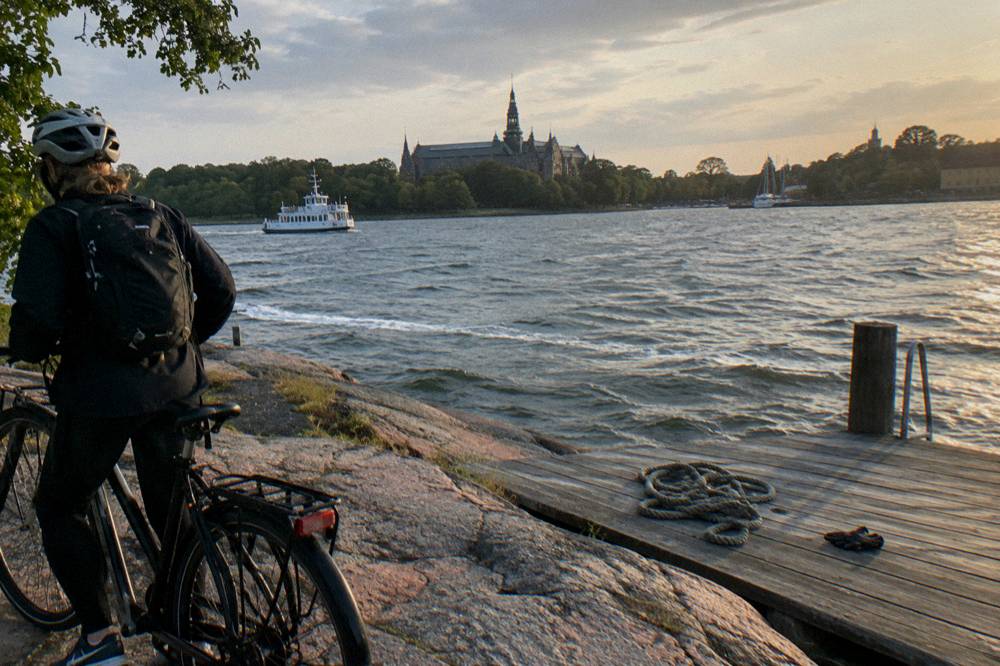
Getting a bike to the archipelago or across the city water involves rules worth knowing. The Djurgården ferry, an SL commuter boat on line 82 between Slussen and Djurgården, takes bikes at no extra charge subject to space, with staff judging what fits. Out in the archipelago, the Waxholmsbolaget boats allow one regular bike per person at no extra charge when there is space, with cargo bikes and tandems carried as goods for a fee. Bikes are not allowed on SL buses, the metro or the city trams at any time, a constraint that shapes any multi-island plan. The details are in taking a bike on the Djurgården ferry.
How Do You Match A Bike Tour To The Season?
Pick by format and month together. In the May-to-September core season, any of the city's shared guided rides works, 2 to 3 hours on classic bikes or an e-bike option, and the longer forest tour with sauna and lunch suits a summer half-day. In the October-to-April shoulder and winter, the practical choices narrow to shorter city rides, e-bike formats, and winter-equipped departures, since daylight and temperature compress what fits in a day.
The guided city tour that anchors most first visits runs 2 to 3 hours on shared classic bikes, with an e-bike option where the booking page offers it. That duration is long enough to span Gamla Stan, the islands and Djurgården viewpoints at a relaxed pace, and short enough to sit inside a November daylight window if it starts by midday. For a fuller half-day, the 3-hour classic rides and the 5-hour forest tour with sauna and homemade lunch push toward the warmer months, when finishing outdoors in the late afternoon is a pleasure rather than an endurance test.
The e-bike question is partly seasonal. An e-bike's pedal assist cuts the effort on hills and headwinds, which matters more in March's chill than in July's warmth, and the 2.5-hour e-bike city tour is the roster's dedicated electric option. The trade-offs between formats are laid out in e-bike or classic bike for a Stockholm tour, and the cost comparison across the options is in what a Stockholm bike tour costs.
Timing within the day matters as much as timing within the year. A morning start in summer beats both the midday path congestion on Djurgården and the strongest afternoon heat; a midday start in October uses the warmest hours of a short day. Whatever the month, the operator's booking page shows the live departure calendar and what is included, bike, helmet and any gear, so the practical details of a specific date are one click away rather than a guess.
What Should You Know Before Picking Your Dates?
Three dated factors can move a 2026 or 2027 plan: the Djurgården vehicle restrictions ran 30 April to 27 September 2026, the new pedestrian and cycle bridge over Söderström at Slussen is planned to open in early 2027, and the city's winter cycling maintenance keeps about 38 mil of path swept and salted through the dark months. Each changes how a given month feels on the ground, in traffic, on the bridges and on the paths.
The Djurgården closures are the one most likely to touch a summer visit, since they shift the island toward bikes, boats and feet during exactly the hours most visitors are there. The Slussen bridge, when it opens, adds a second dedicated walking and cycling link between Södermalm and Gamla Stan, complementing the existing Slussbron paths and making the Södermalm-to-old-town ride more pleasant year-round. And the winter maintenance commitment means a cold-season visit is far more rideable than most visitors assume, as the city's traffic information service explains.
Scale is the other reassurance. Stockholm has roughly 117 mil of cycle routes, about 1,170 km of dedicated lanes, combined paths and bike fields, per the city's cycling portal, with around 36 mil of primary routes. A visitor rides a tiny fraction of that, but the density is why navigation feels easy in every season. The safety rules that govern it all, lights in darkness, bells and brakes at all times, walking pace on Gamla Stan's pedestrian streets, are collected in cycling rules in Stockholm, and the Djurgården restriction details come from the Royal Djurgården operators' own notice.
Put simply: choose June for light, September for balance, February for quiet, and late July only if you accept the crowds that come with the warmth. Any month, there is a version of this city on two wheels, and the calendar decides only which one you get.
Common Questions About The Best Time To Visit Stockholm
What Is The Best Month To Visit Stockholm?
For most visitors, June through August: average highs of 20.8 to 23.6 C, 15.5 to 18.5 hours of daylight, and every seasonal service open. If thinner crowds matter more than warmth, September averages 16.6 C with 12.8 hours of daylight and a fraction of the summer foot traffic.
What Is The Rainiest Month In Stockholm?
August, at 66.2 mm on the SMHI 1991 to 2020 normals, closely followed by July at 61.5 mm and June at 61.7 mm. The driest months are February through April, at 27.3 to 29.4 mm each.
How Many Hours Of Daylight Does Stockholm Get?
Between 6.2 hours per day in December and 18.5 hours in June. In early November the sun rose at 07:07 and set before 16:00, roughly 8 hours 50 minutes of daylight.
Is Stockholm Worth Visiting In Winter?
Yes, as a different kind of trip. Daylight is short and highs sit between 1.0 and 2.5 C in December through February, but Skansen's Christmas market runs from 27 November to 20 December 2026, museums launch new exhibitions, and the city keeps its main cycle paths swept and salted through the season.
When Can You Cycle The Stockholm Archipelago?
The organised cycling season runs mid-May to mid-September. In 2026 the packaged island-hopping trips finished on 13 September, and multi-day itineraries cover roughly 220 km over five riding days, with peak departures and pricing from mid-June to mid-August.
When Is The Low Season For Crowds In Stockholm?
November through March, excluding the Christmas and New Year weeks. Among the rideable months, late April to mid-May and mid-September to October give the best balance of weather, daylight and quiet.