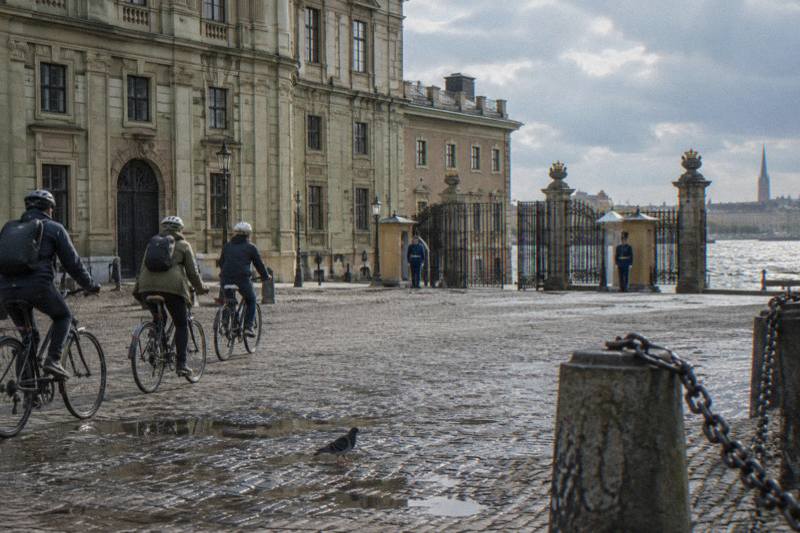
Vasa Museum And Skansen: Planning Around A Bike Day
The Vasa Museum and Skansen sit ten minutes apart on the same island, and the bike infrastructure that connects them is the easiest part of the day to plan.
Short answer
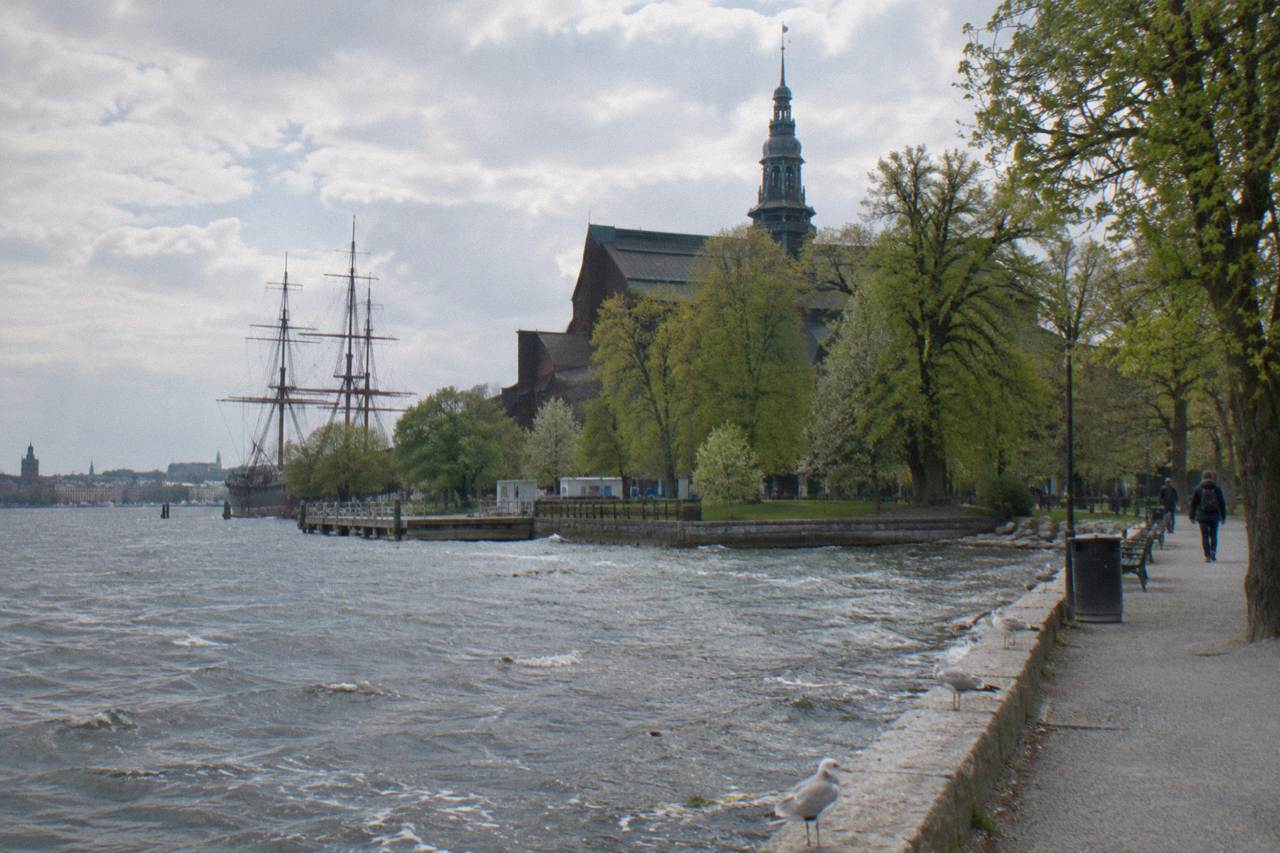
The Vasa Museum and Skansen both stand on Djurgården, reachable by the Slussen ferry with a bike at no extra charge, subject to deck space. The Vasa Museum added a free-standing audio walk across the island in late October 2026, and Skansen's Christmas market runs Fridays to Sundays from 27 November to 20 December 2026.
Djurgården is the island where Stockholm puts its biggest attractions, and it is also one of the most pleasant islands in the city to ride a bicycle around. The Vasa Museum and Skansen sit close together on its western half, surrounded by a royal park that costs nothing to cycle through. The practical question for most visitors is not whether to see both, it is how to order the day so the museums, the walking, and the riding do not crowd each other out. To weigh Djurgården against Södermalm and Gamla Stan before committing your day, read our guide to Stockholm's best cycling spots.
This page lays out that ordering, using only what the museums, the city and the transport authorities have published. The two museums are separate indoor attractions with their own tickets, and any bike tour is a separate booking. What links them is geography and a ferry.
How Do You Fit The Vasa Museum And Skansen Into One Day?
Doing both in one day works because they share an island: the Vasa Museum and Skansen stand on Djurgården about ten minutes apart on foot, the ferry from Slussen lands a short ride from both, and most visitors who start at the Vasa Museum in the morning reach Skansen comfortably after lunch, leaving the late afternoon for the park paths between them.
The order matters more than the timing. The Vasa Museum is a single ship in a single hall, and most people spend somewhere between one and two hours inside depending on how much of the story they want. Skansen is the opposite: an open-air museum spread across a hillside, part park, part zoo, part historic town, and it rewards the longer half of the day when your legs are still fresh. Starting at the Vasa Museum and walking up the hill to Skansen afterwards is the pattern most itineraries follow, and the geography supports it, since the Vasa Museum stands near the water and Skansen rises above it.
Since late October 2026 there is a new reason to give the Vasa Museum the first slot. The museum launched its "Vasa Walk" audio guide on 29 October 2026, a walking route that starts outside the museum, crosses Djurgården and ends on Beckholmen, the small peninsula just east of the main museum cluster. That walk effectively turns the museum visit into a circuit of the island's eastern edge, which pairs naturally with a bike loop either before or after. It is a walk rather than a ride, so plan it for the stretch of the day when the bikes are parked.
One honest caveat: this is a full day, not a light one. Museums plus an open-air site plus a ride is a lot of standing and moving. Families with small children, and anyone visiting in the short daylight of November through January, usually do better splitting the museums across two days and riding on the calmer of the two.
| Part of the day | Vasa Museum plan | Skansen plan |
|---|---|---|
| Morning | Arrive early, ship hall and exhibitions | Not yet, save legs for later |
| Midday | Vasa Walk audio route toward Beckholmen | Lunch on Djurgården |
| Afternoon | Done, bikes retrieved | Hillside, historic town, Nordic animals |
| Late afternoon | Island paths and ferry back | Market square, then descent to ferry |
If you would rather let a guide handle the island's layout before the museums open or after they close, a shared ride is the simplest way to cover ground.
When Is The Best Time Of Year For The Museum And Ride Combination?
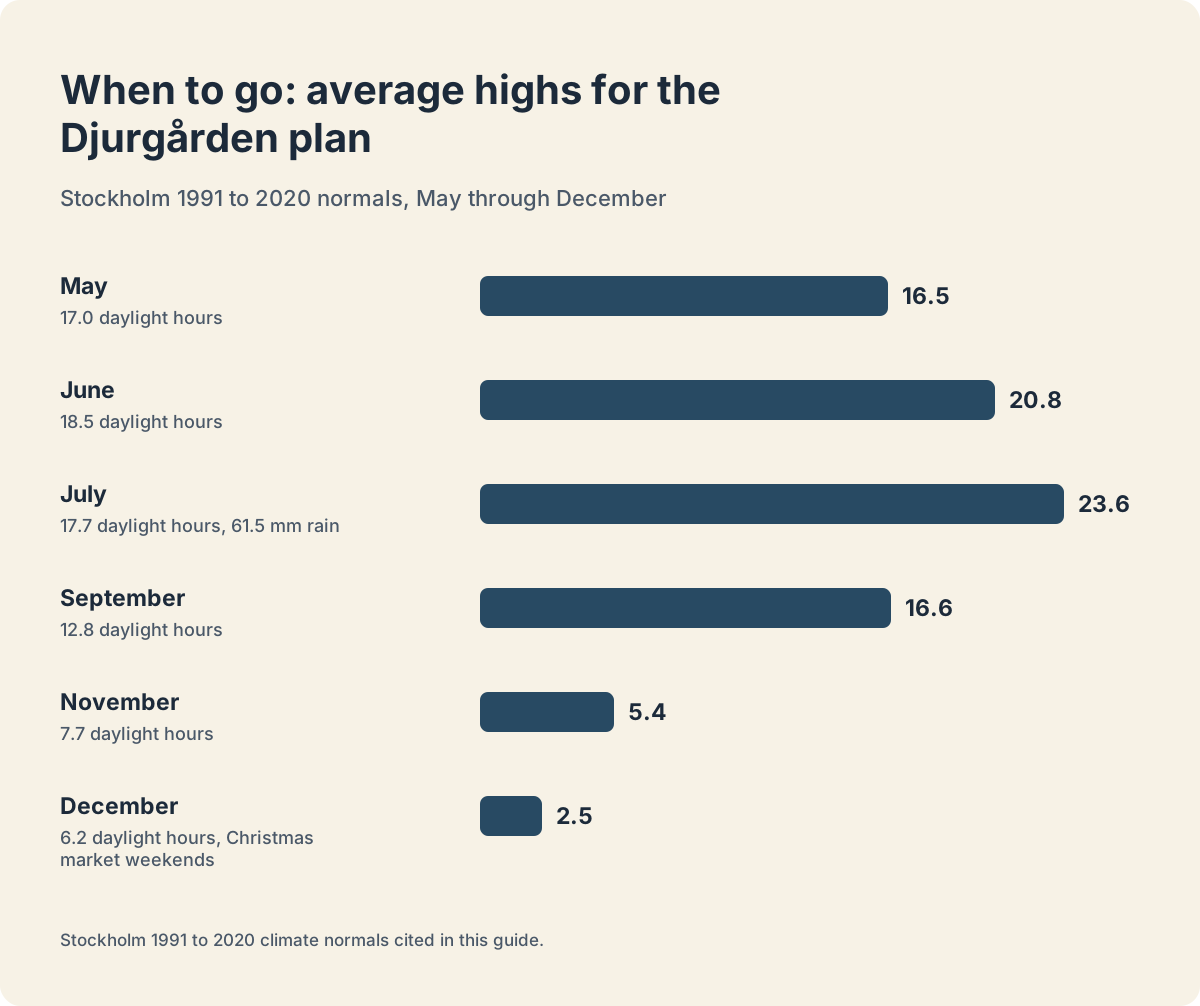
Late May through early September is the window when the museum day and the bike day reinforce each other: Stockholm's 1991 to 2020 normals give June 18.5 hours of daylight and July an average high of 23.6 C, while November drops to 5.4 C average highs and 7.7 hours of light, which pushes the plan indoors and shortens any ride.
The seasonal logic is straightforward. Skansen is largely outdoors, so its best months are the warm ones. The Vasa Museum is indoors and open year-round, which makes it the reliable half of the pair in every season. A bike ride in April or October is still very workable, April averages a 10.7 C high with under 30 mm of rain, but the riding season that local tourism sources describe runs April to October, with the core comfort months from late May to early September.
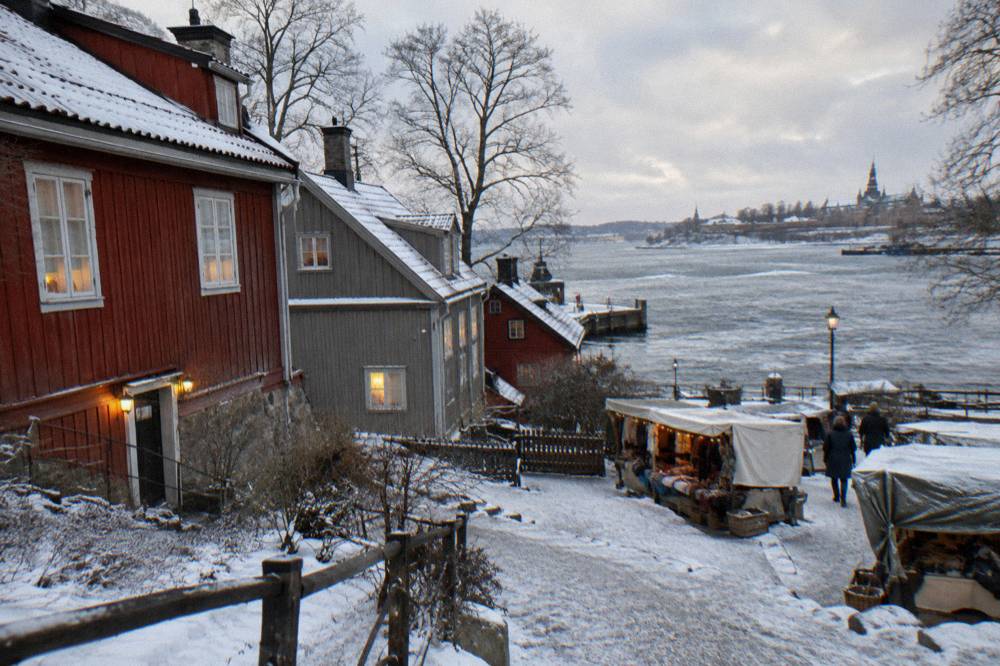
Winter deserves a special note because it is not a dead option. Skansen's Christmas market opens on 27 November 2026 and runs Fridays to Sundays until 20 December 2026, twelve market days in all, with Friday and Saturday hours of 10:00 to 17:00 and Sunday 10:00 to 16:00. That market is one of Stockholm's most popular winter events, and the city's traffic operator reports that cycle paths are swept and salted down to about minus 6 C to keep bare-wheel conditions, so a winter visit with the right clothing is a real plan rather than a theoretical one. The trade is daylight: about 8 hours 50 minutes at the start of November, shrinking toward the winter solstice.
| Month | Avg high C | Daylight hours per day | What it means for the plan |
|---|---|---|---|
| May | 16.5 | 17.0 | Museums and riding in full swing |
| June | 20.8 | 18.5 | Longest days, peak season crowds |
| July | 23.6 | 17.7 | Warmest, 61.5 mm rain, plan a museum buffer |
| September | 16.6 | 12.8 | Quieter island, still comfortable riding |
| November | 5.4 | 7.7 | Christmas market build-up, short rides |
| December | 2.5 | 6.2 | Market weekends, indoor-weighted plan |
Rain strategy matters more than cold. July and August are the wettest months on the 1991 to 2020 normals, 61.5 mm and 66.2 mm respectively, and February through April are the driest at under 30 mm each. A wet morning is a Vasa Museum morning; a dry forecast is the morning you give to the bike. If you want a deeper breakdown before committing, the month by month Stockholm weather guide carries the full table.
How Do You Get To Djurgården With A Bike?
The Djurgården ferry, SL line 82 from Slussen, runs year-round to the island and takes bikes at no extra charge subject to space, and staff judge the deck and can point you to a later departure, which makes the ferry the standard way to bring a bike to the museums; bikes are not allowed on SL buses, the metro or the city trams.
The ferry detail is worth internalising because it shapes the whole day. SL's own rules state that you can bring a bike on the commuter ferries, including the Djurgården ferry, that it costs nothing extra, and that it always depends on there being space. E-bikes go outdoors on deck. In practice this means the ferry crossing is short, scenic, and the least stressful way to move between Södermalm and the museum island with two wheels. The alternative for a cyclist coming from the north or east is simply to ride: Djurgården connects to the mainland road and path network, and the island is one of the recommended places in the city to explore by bicycle.
There is a summer wrinkle worth knowing. The Djurgårdsbommen and Vasabommen barriers on Djurgården were closed to most vehicles from 30 April to 27 September 2026, with weekend closures on Djurgårdsbron and daily ones at Vasabommen between 10:00 and 17:00, with exceptions for buses, taxis and permit holders. Royal Djurgården, the island's management body, publishes the current season's arrangement, and its barrier page is the source to check before a summer visit. For cyclists this is mostly good news: fewer cars on the island in the middle of the day.
The wider rule set is short and worth a minute. Bikes are never allowed on SL buses, the metro, or the Spårväg City and Nockebybanan trams, and e-scooters are banned in the metro entirely because of lithium battery fire risk, a rule SL tightened in November 2024. The full picture, including which rail lines do take non-folded bikes outside rush hours, is in SL's own pages, and the SL bike rules page states it directly. For this day plan the ferry is the only transit leg you need.
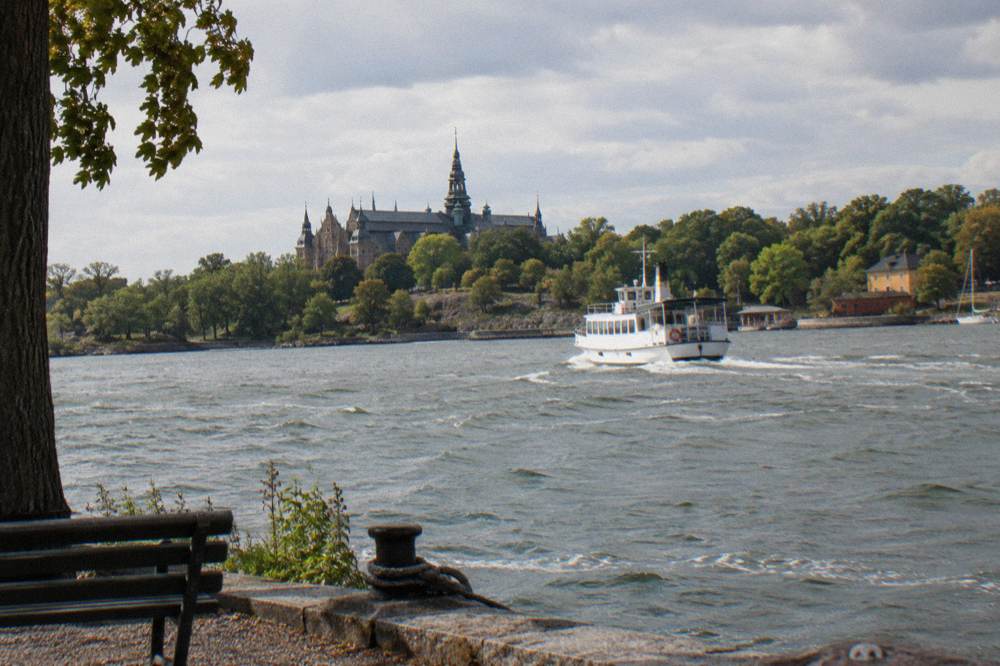
One related question visitors often ask is whether you can take a bike on the Djurgården ferry as a matter of cost, and the answer above holds: no extra charge, space permitting. If you have no bike at all, the island has rental options. Djurgårdsboden, on Djurgården itself, opened its 2026 rental season on 30 April 2026 with classic three-speed city bikes, running Thursday to Sunday in May, daily in peak summer, and weekends only in September.
What Can You See Around Djurgården Beyond The Museums?
Djurgården is part of the Royal National City Park, and its paths, shorelines and free-to-enter parkland are the parts of the island that cost nothing: cycling the island's network is free, the park is open ground, and the paid attractions, the Vasa Museum, Skansen, ABBA The Museum and others, sit inside it as separate ticketed visits.
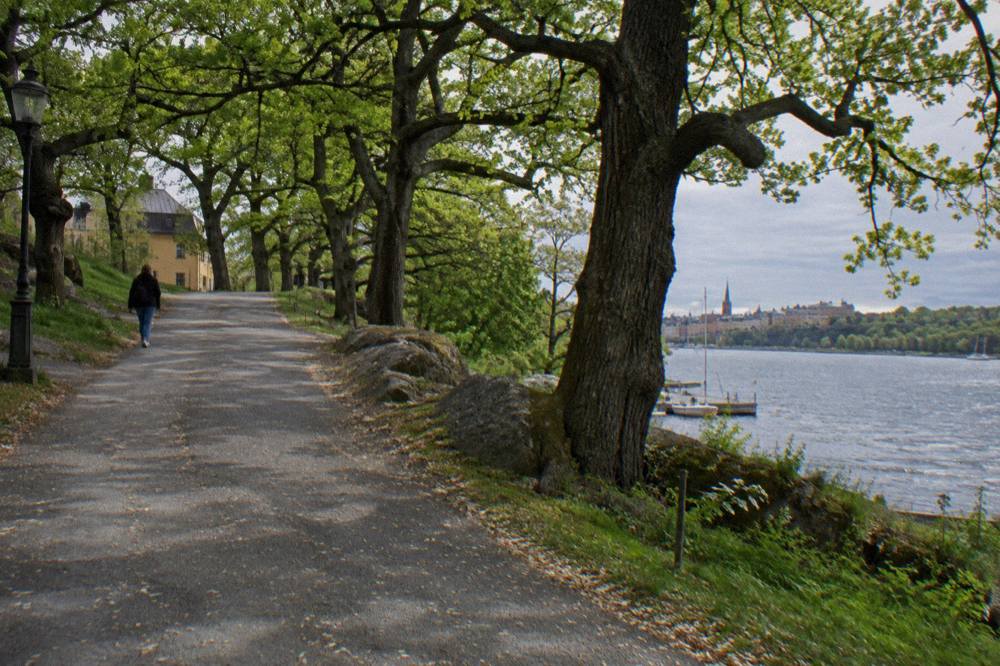
The free layer of the island is genuinely large. The paths around and across Djurgården carry no charge, the royal parkland is public, and a loop of the island's western half by bike takes in oak woodland, the Beckholmen inlet and water views on three sides. The Vasa Walk audio route added in October 2026 covers similar ground on foot from the museum's own doorstep. On the paid side, ABBA The Museum on Djurgården opened a new "Dancing Queen" exhibition celebrating the band's 50th anniversary, open year-round, which is a third indoor option for a rainy afternoon if the two headliners are already done.
Getting between all of this is where the bike earns its place. Djurgården's vehicle restrictions in the summer season make the middle of the day quiet, and the island connects to a city network that Stockholm's own cycling portal counts at roughly 117 mil, about 1,170 km, of cycle routes and lanes. The practical radius from Djurgården is generous: Gamla Stan's outer streets are a short ride over the bridge, and Södermalm's viewpoints sit just beyond it, though note that Gamla Stan's inner streets are pedestrian streets where bikes move at walking pace and yield to pedestrians.
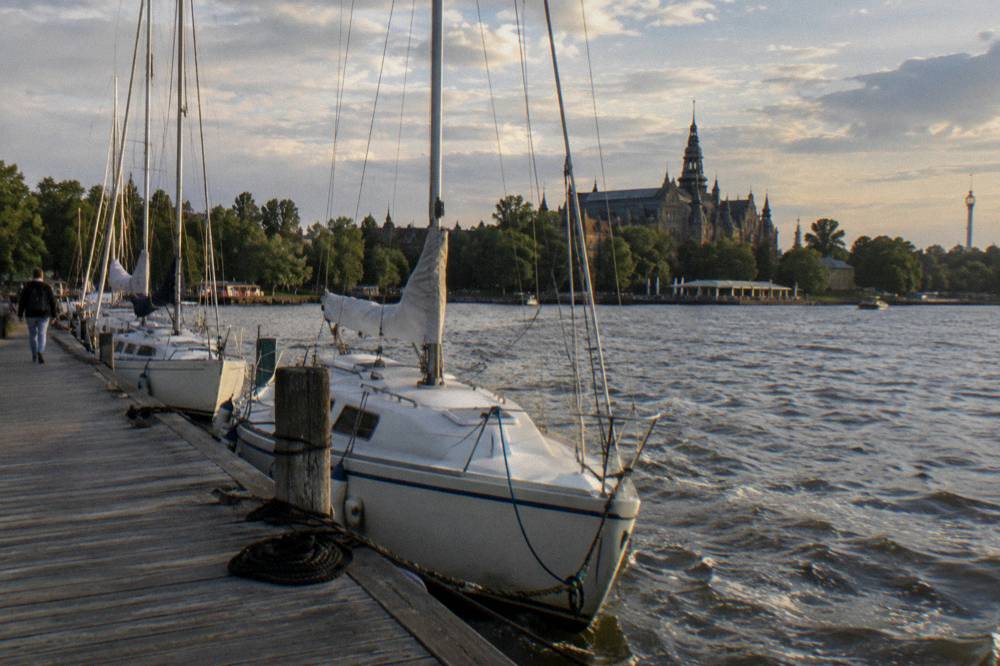
For a fuller treatment of the island itself, the Djurgården by bike guide covers routes and the ferry in depth, and the one day bike and ferry plan builds a similar day for the whole city. If the riding itself is the priority and the museums become the side trip, an e-bike version of the city loop exists for riders who want to save their legs for Skansen's hillside.
How Does A Guided Bike Ride Fit Into A Museum Day?
A guided ride fits best as the bookend: the featured city ride runs 2 to 3 hours and covers the islands in one loop, so pairing it with the museums means riding in the morning before the museum crowds peak, or in the late afternoon after the Vasa Museum and Skansen, and treating the ride and the museums as separate bookings with separate meeting points.
The featured option here is the Stockholm Guided Bike Tour, a shared classic-bike city ride listed at 2 to 3 hours. Its price, meeting point and inclusions are stated on the booking page rather than assumed here, and those details are exactly what to confirm before locking the day's order, because the meeting point determines whether the ride starts within reach of Djurgården or on the other side of the centre. The tour is a separate product from the museums; nothing about a museum ticket includes a ride, and nothing about the ride includes museum entry. Honesty on this point saves a common disappointment.
What the ride adds to the museum day is context and coverage. A guided loop explains the city you are about to walk through, and it covers more ground than the Vasa Walk or any museum day on foot can, reaching Södermalm and the wider island chain in the same time a walking tour spends on one neighbourhood. The listing's flags cover the bike and helmet, so a visitor without a rental has nothing to arrange beyond showing up. For families weighing this up, the family and kids bike tours guide addresses the under-15 helmet rule that applies on any ride.
The morning-ride order is the stronger of the two in summer. June through August daylight starts early enough that a morning ride ends before the museums hit their midday peak, and the island's warm afternoons are better spent in Skansen's open air than in a saddle. In the November to March window the order flips: the short afternoon argues for museums first and a ride only if the schedule allows.
What Should You Know Before You Commit To The Plan?
Five things decide whether this day works: the ferry's space-dependent bike policy, the summer vehicle barriers on the island, the two separate museum tickets, the season's daylight budget, and the booking page of whichever ride you pair with them, since ride prices, meeting points and inclusions are stated there rather than on any third-party summary.
Take the season seriously when you pick the date. The normals table below shows why September is the quiet sweet spot and December is a different trip entirely. Use it as a planning range, not a forecast; a given week can sit well above or below the 1991 to 2020 averages.
| Planning item | What is settled | Where to confirm the rest |
|---|---|---|
| Ferry with bike | Line 82 from Slussen, no extra charge, space permitting | Staff on the pier |
| Summer island barriers | 2026 season ran 30 April to 27 September | Royal Djurgården's barrier page |
| Christmas market | 27 Nov to 20 Dec 2026, Fri to Sun | Skansen's own site |
| Museum entry | Separate tickets, indoor attractions | Each museum's site |
| Guided ride | 2 to 3 hours, shared, classic bike | The tour's booking page |
A few riding rules affect the day directly even though they are short. Helmets are mandatory for riders under 15, and an adult carrying a helmetless child can be fined 500 kr. Lights are required in darkness only, but a bell and working brakes are required at all times, and Swedish police list a 500 kr fine for a missing bell or brake. On pedestrian streets, including Gamla Stan's inner streets if your route crosses them, riding faster than walking pace carries a 1,000 kr fine and pedestrians always have priority. The cycling rules guide covers the full set.
If the weather turns, the plan bends rather than breaks. The Vasa Museum is the fixed indoor anchor, Skansen's indoor houses absorb a shower, and the rain-specific advice in the Stockholm bike tour in the rain guide handles the riding half. Some visitors facing a wet week prefer to swap the shared ride for a private one with flexible timing, which is the trade-off the private bike tours guide lays out.
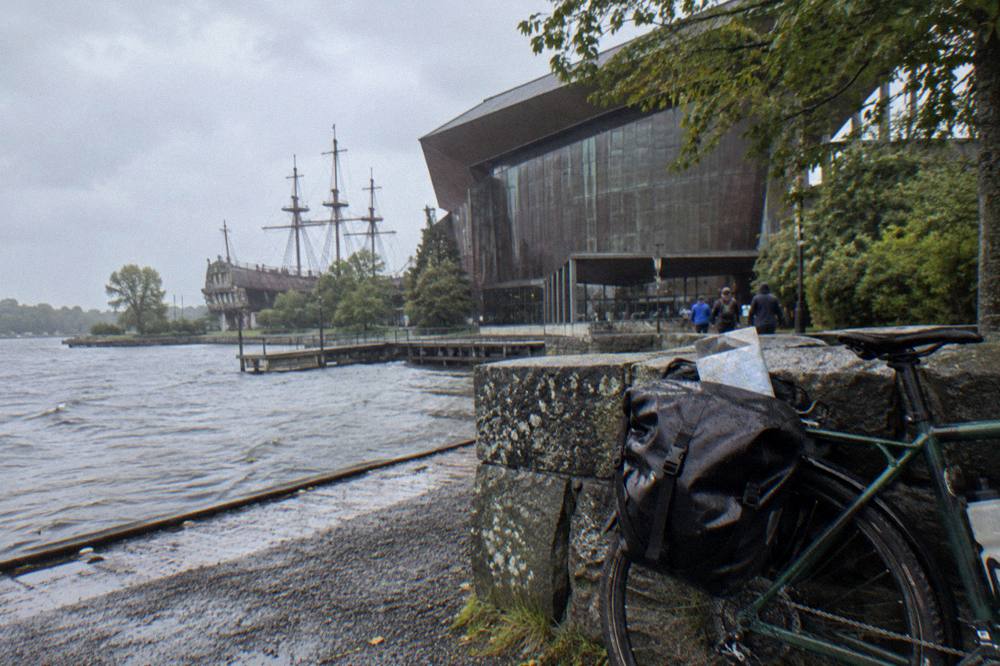
For a final framing: the plan on this page assumes you want both museums and some riding in one visit. If the riding is the main event and the museums are optional, Stockholm Bike Tours covers the city's guided options in depth, and the featured loop below is the natural starting point.
The forest tour above is the contrast case: a 5-hour nature ride with sauna and a homemade lunch, the opposite of a museum day and the choice for visitors who have already seen the Vasa ship. For everyone still building the classic day, the trio below are the rides that pair most cleanly with Djurgården's two headliners.
Common Questions About The Vasa Museum And Skansen Plan
How Do You Fit The Vasa Museum And Skansen Into One Day?
Start at the Vasa Museum in the morning, spend one to two hours with the ship, then walk or ride up to Skansen for the afternoon. The two sit about ten minutes apart on Djurgården, and the ferry from Slussen lands near both.
Can You Take A Bike On The Ferry To Djurgården?
Yes. The Djurgården ferry, SL line 82 from Slussen, takes bikes at no extra charge subject to space, and staff on the pier make the final call on capacity. E-bikes are placed on the open deck.
When Is The Best Time Of Year For The Museum And Ride Combination?
Late May to early September, when the 1991 to 2020 normals give highs above 16 C and daylight above 12 hours. Winter works for the museums and the Christmas market, with roughly 6 to 8 hours of daylight and salted cycle paths.
Is The Bike Tour Included With The Museum Tickets?
No. The museums and any guided ride are separate bookings with separate prices and meeting points. The ride's price, inclusions and meeting point are stated on its booking page.
What Is The Vasa Walk?
An audio guide route the Vasa Museum launched on 29 October 2026. It starts outside the museum, crosses Djurgården and ends on Beckholmen, and it is done on foot.
Do Children Need Helmets On The Ride?
Yes. Swedish law requires helmets for all cyclists under 15, and an adult carrying a child without one can be fined 500 kr.