Is Stockholm Bike Friendly? Lanes, Hills And Traffic
Stockholm has roughly 1,170 km of cycle routes, a strict but simple rulebook and a season that shapes every ride. Here is how the city actually feels from a saddle, and when a guided tour earns its price.
Short answer
Yes, in the practical sense: Stockholm has about 1,170 km of cycle routes, mostly separated lanes, a helmet law only for riders under 15, and cycling that locals do year round. The trade-offs are an April-to-October comfort season, walking-pace rules in Gamla Stan, and bridges between the islands.
Stockholm is one of those cities where the bicycle is not a novelty but a working tool. The city states it has roughly 117 mil of cycle routes, about 1,170 km of dedicated bike lanes, combined pedestrian and cycle paths, and bike lanes marked on ordinary streets, and it salts about 38 mil of them through the dark months so people keep commuting on two wheels. That combination of scale and winter maintenance is the honest baseline for answering whether the city is bike friendly: it is built for it, in a matter-of-fact Scandinavian way rather than a showy one.
Whether it is friendly for you, a first-time visitor, depends on a handful of specific things. The network is real but the islands are separated by bridges and some chokepoints. The rules are strict on paper and mostly common sense. The season runs comfortably from April to October, with June daylight stretching to about 18.5 hours per day. And the old town, Gamla Stan, is explicitly not a place to ride at speed: its inner streets are pedestrian streets where bikes move at walking pace and give way to everyone on foot.
This guide walks through those pieces one by one, using the city's own infrastructure numbers, the national traffic rules, and the season data, and finishes with the practical choice between exploring alone and booking a seat on a guided ride such as the Stockholm at a Glance bike tour, a 2 to 3 hour shared city ride that suits exactly this "should I cycle here at all" question. And if the city feels like just the beginning, the guide to cycling the Stockholm Archipelago Trail covers the ferry rules and route limits for taking a bike out among the islands.
How Much Cycling Infrastructure Does Stockholm Actually Have?
Stockholm has roughly 1,170 km of cycle routes, a figure that counts dedicated lanes, combined pedestrian and cycle paths, and marked bike lanes together, according to the city's own cycling pages. The regional network earmarked for expansion to 800 km already had more than 215 km built to a high standard, plus another 9 km added in the most recent year counted, so visitors usually ride on purpose-built paths.
The headline figure comes from cykla.stockholm, the city's cycling portal, which counts dedicated cycle lanes, combined pedestrian-and-cycle paths, and bike lanes marked on regular roads together. Not all of it matters to a tourist: much of the 1,170 km serves commuters in outer districts. What matters in the centre is that the primary routes stitch the islands together, and the city keeps upgrading the links that visitors actually use. A new northbound cycle lane on Vasabron, the bridge connecting Gamla Stan to the city centre, opened in June 2026 after the old narrow double-direction lane was rebuilt. New 2.5 m wide lanes on Sveavägen were finished in May 2026.
| Project | Area | Status | What It Means For A Cyclist |
|---|---|---|---|
| Vasabron cycle lane | Gamla Stan to Norrmalm | Opened June 2026 | Wider northbound lane on a central bridge |
| Sveavägen lanes | Norrmalm | Opened May 2026 | 2.5 m lanes on a major north-south street |
| Riddarholmskanalen path | Gamla Stan edge | Opened April 2026, two months early | Widened waterside path with better lighting |
| Ringvägen cycle lane and cycle street | Södermalm | Decision taken 2026, due 2027 | A primary route upgrade still under construction |
| Sankt Eriksbron renovation | Kungsholmen to Vasastan | Started autumn 2026, due winter 2028 | Wider bridge lanes, temporary disruption until then |
Two of these deserve a visitor's attention. The Riddarholmskanalen path along Gamla Stan's western edge had been closed during a widening project that began in February 2025, with detours via Munkbron, and the finished path opened on 17 April 2026, early. Anyone riding an older map or a cached route app might still be sent the long way round. And a new pedestrian-and-cycle bridge over Söderström at Slussen, linking Södermalm and Gamla Stan, is planned to open in early 2027; until then the existing Slussbron paths carry the traffic.
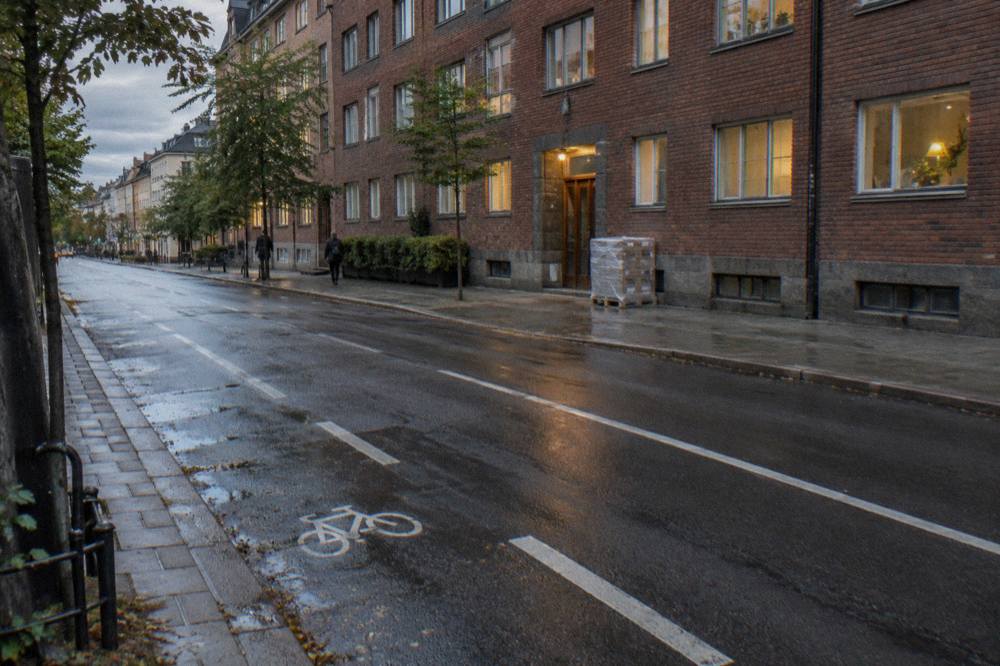
The one number to keep in your head is the maintenance one: the city sweeps and salts roughly 38 mil of cycle lanes through winter, expanded by 25 km for the 2025/2026 season, and the traffic authority says it salts down to about minus 6 C to keep the surface rideable. Cycling here does not stop in November, even if your comfort might.
What Cycling Rules Do Visitors Actually Need To Know?
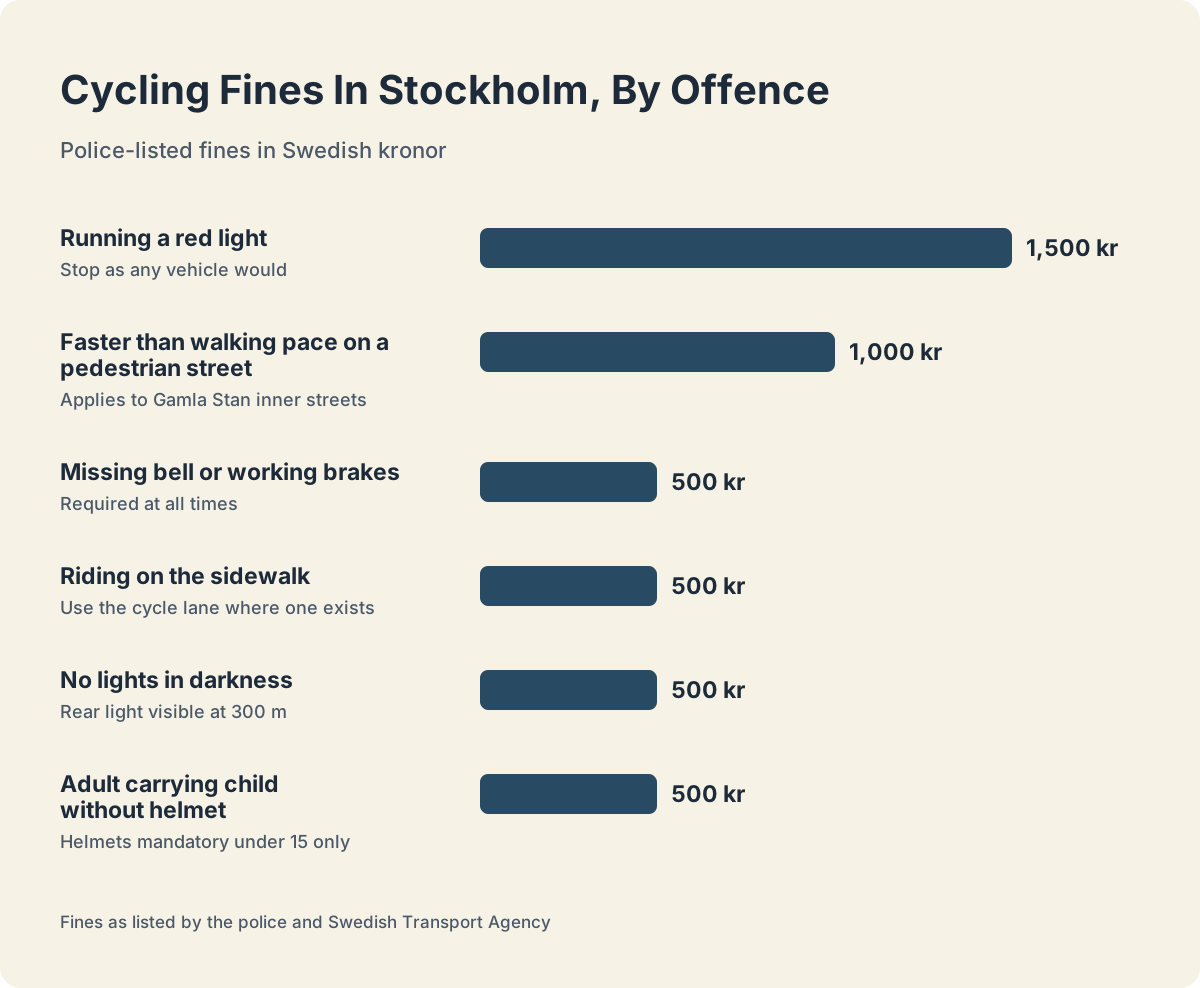
The rulebook is short and strictly enforced: helmets are mandatory only for riders under 15, lights and reflectors are required only in darkness, and a bell and working brakes are required at all times. Fines are set in Swedish kronor, from 500 kr for a missing bell up to 1,500 kr for running a red light. Riding on a sidewalk is a 500 kr offence.
Most of this comes from the Swedish Transport Agency and the police, and the kronor figures below are the police's listed fines. Adults can legally ride without a helmet; children and teenagers under 15 must wear one, and an adult carrying a helmetless child can themselves be fined 500 kr. In darkness, your bike needs a red rear light visible at 300 m plus a white or yellow front light, and missing lights draw a 500 kr fine. A bell and brakes are mandatory around the clock.
| Rule | Requirement | Fine If Broken |
|---|---|---|
| Helmet | Mandatory under 15 only | 500 kr for an adult carrying a child without one |
| Lights in darkness | Red rear and white or yellow front, visible at 300 m | 500 kr |
| Bell and brakes | Required at all times | 500 kr |
| Sidewalk riding | Prohibited, use the cycle lane where one exists | 500 kr |
| Pedestrian street speed | Walking pace, yielding to pedestrians | 1,000 kr if faster |
| Red light on a bike | Stop as any vehicle would | 1,500 kr |
The pedestrian-street rule is the one that catches visitors in Gamla Stan. The city's traffic rules for Gamla Stan make all inner streets pedestrian streets with a round-the-clock parking ban. Cycles are permitted, unlike e-scooters, but must proceed at walking pace and give way to pedestrians; vehicle traffic, cycles included, is banned from 11:00 to 06:00 without a permit. From 06:00 to 11:00, through traffic is forbidden except deliveries. E-scooters are banned in Gamla Stan except along Munkbroleden and Skeppsbron. The practical translation: walk your bike through the narrow lanes, ride the quayside stretches, and do not expect to sightsee at speed there. Our Gamla Stan by bike guide covers that neighbourhood street by street.
Beyond the old town, the standard Swedish default applies: where a cycle lane exists you should normally use it, and you keep to the right. Electric-assist bikes count as ordinary bicycles as long as the motor only helps while you pedal, cuts out at 25 km/h and is rated at no more than 250 W, which is why the city's shared e-bike fleet and the e-bike tours operate under bicycle rules rather than moped rules. Full rules are on the Transport Agency's cycling page.
For a first ride in an unfamiliar city, plenty of visitors skip the rulebook homework entirely by joining a guided group where the guide sets the pace and the route. Three formats fit that brief well:
Each is a shared, guided ride in the 2 to 3 hour range: a 3-hour city tour on premium bikes, a 2 to 3 hour classic guided tour, and a 2 hour 30 minute e-bike version for anyone who wants the motor to absorb the bridges. Prices and current availability sit on each booking page.
Does Stockholm Have Hills That Should Worry A Casual Rider?
The honest answer is that Stockholm is an island city of bridges and gentle ridges rather than sustained climbs, and no public source gives official hill-grade figures for tourist cycling routes, so this guide will not invent any. What the geography does guarantee is repeated short rises and falls as you cross between islands, which is precisely the terrain where an e-bike or a slower pace pays off.
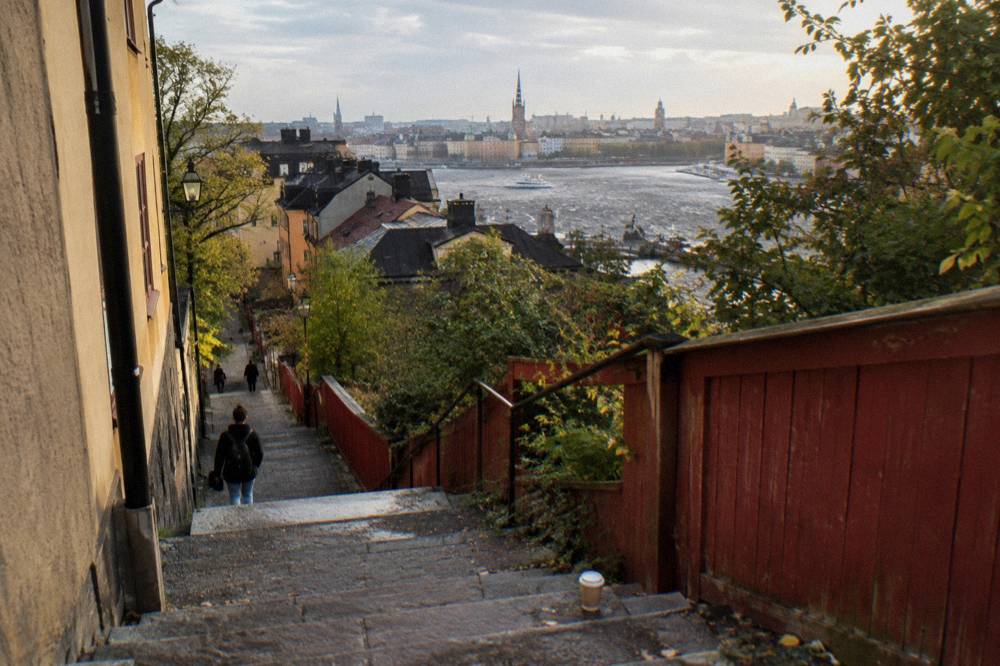
Södermalm is the notable exception among the central islands: it sits on a rock plateau, and getting up from the waterfront involves real effort, while the top is largely flat riding. Once the city's new "green wave" signal timing is factored in, southbound and northbound commuters on designated Södermalm streets can hold a steady 20 km/h through lights during peak windows, which tells you the arterial riding up there is gentle enough to be timed for a modest cruising speed. The green wave was introduced in August 2026 on sections of Hornsgatan and Långholmsgatan.
For visitors weighing pedal-assist against a classic bike, the choice mostly comes down to bridges and Södermalm. Our e-bike or classic bike comparison works through the trade-offs in detail, but the short version is that the only dedicated e-bike product on the current tour list is the 2 hour 30 minute e-bike city tour, and everything else runs on regular bikes, some of them premium city models.
One tour leans into the terrain question differently: The Wooden Bicycle Tour, a 2-hour shared ride on wooden-framed bikes, is as much about the craft of the machine as the route. It suits a rider who wants a memorable bike as much as a memorable city.
If hills are your specific worry, the honest summary is: none of the central island riding involves alpine grades, the crossings are short and rollable, and the one plateau worth respecting is Södermalm's, which you can also reach by lifting your bike onto permitted public transport, covered further down.
What Is Riding Like In Gamla Stan And On Djurgården?
Gamla Stan is a walking-pace zone on its inner streets and a normal quayside ride on its edges, while Djurgården is the closest thing Stockholm has to purpose-built leisure cycling, a royal park where the island's own tourism body recommends bicycles for getting around. The two sit ten minutes apart by bike and behave completely differently.
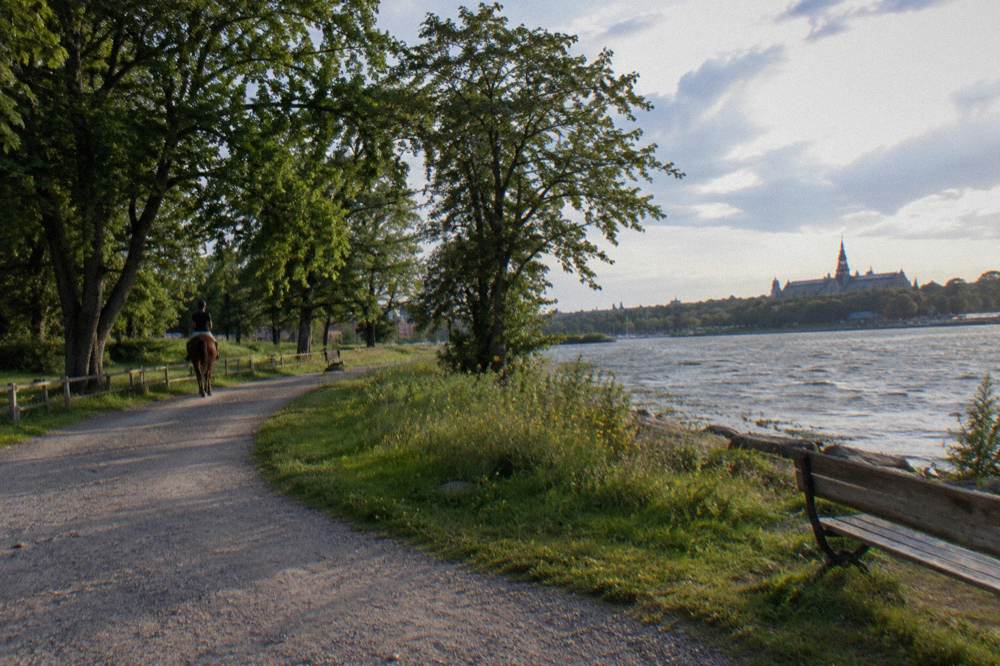
Djurgården earns its cycling reputation honestly. The island hosts the museums, the amusement park and the open-air museum Skansen, and the distances between them are long enough that bikes are genuinely the efficient option; the Royal Djurgården administration itself recommends bicycles for exploring. Between late April and late September 2026, the Djurgårdsbommen and Vasabommen barriers closed parts of the island to most private vehicles on peak days, with exceptions for buses, taxis and permit holders, which shifts the balance further toward two wheels. Our Djurgården by bike guide maps the island in full.
Gamla Stan is the opposite discipline. Its inner streets are pedestrian streets, the quays of Skeppsbron and Munkbroleden carry the through riding, and the autumn of 2026 brought physical changes to Stortorget, the main square: new low planters with granite walls are being installed as vehicle barriers between October and mid-November 2026, ahead of the Christmas market season. Cyclists should expect the square to be part-walkable, part-worksite through that window, and the Skansen Christmas market opening on 27 November 2026 will pull crowds through the old town on market weekends.
A guided ride solves the routing question across both islands in one move, because the guide already knows which quays are rideable and which lanes are walk-only. The Stockholm at a Glance bike tour, this site's featured city ride, runs 2 to 3 hours on a shared basis and is built exactly for that first-visit orientation, covering the island links at a pace a casual rider holds comfortably.
Bike and helmet come with the tour, per its listing inclusions, and the meeting point is stated on the booking page. Between the free-cancellation window and the small-group format, it is the lowest-commitment way to test whether Stockholm cycling suits you before renting for a full day, a decision our rental versus guided ride guide breaks down from the other side.
Can You Combine Cycling With Stockholm's Ferries And Trains?
Yes, with sharp limits: bikes are banned outright on SL buses, the metro and the city trams, but they ride free on the Djurgården ferry and the commuter boats whenever there is space, and on commuter trains and several light-rail lines outside weekday rush hours. The ferry rule is the one visitors use most, and it costs nothing extra for a regular bike.
The Djurgården ferry, SL line 82 between Slussen and Djurgården, is a commuter boat, and the regional transport authority's rules are explicit: you can bring a bike on the commuter boats subject to space, staff judge space and safety and can refuse a bike or send you to the next departure, and there is no extra charge for a regular bike. E-bikes travel on deck, and if deck space runs out you remove the battery and place it in the deck container. Our ferry-to-Djurgården explainer covers the practical detail.
| Service | Bike Allowed? | Conditions |
|---|---|---|
| SL buses, metro, Spårväg City, Nockebybanan | No | Full-size bikes prohibited |
| SL commuter trains (pendeltåg) | Yes, outside weekday rush hours | Cannot board or alight at Stockholm City or Arlanda |
| Tvärbanan light rail | Yes for non-electric bikes, outside rush hours | Must be secured in on-board stands; e-bikes never |
| Commuter boats including the Djurgården ferry | Yes, subject to space | No extra charge for a regular bike; e-bikes on deck |
| Waxholmsbolaget archipelago boats | Yes, one regular bike per person, if space | Cargo bikes, tandems and bulky bikes charged 120 SEK as goods |
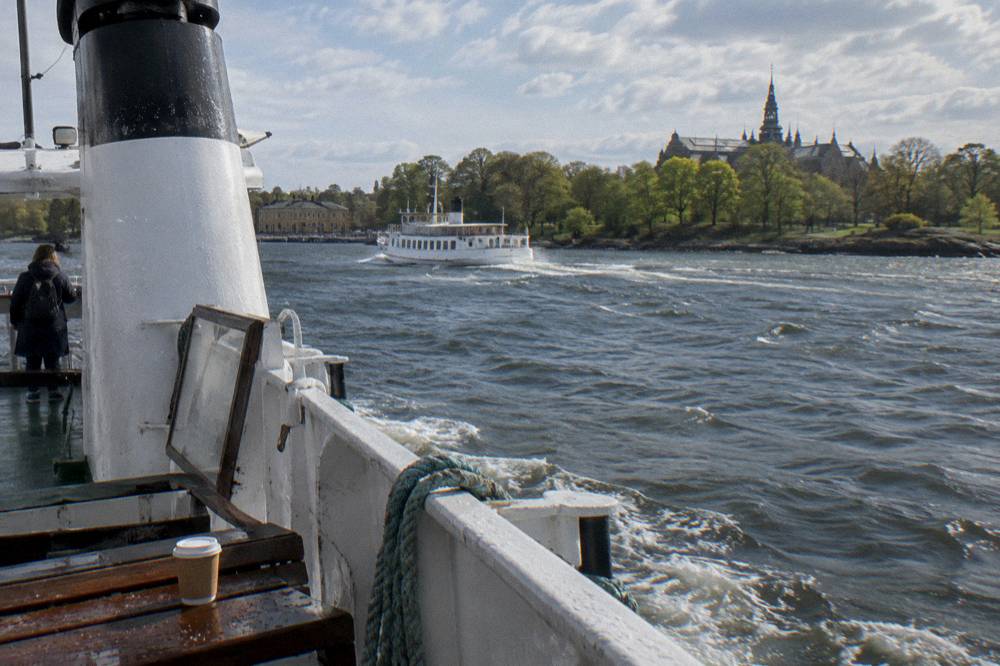
That last row is the archipelago door. The Waxholmsbolaget boats run out to the outer islands all year, and with one regular bike per person carried free when there is room, a bike-plus-boat day becomes one of the best-value structures a visitor can build. Commercial self-guided packages use exactly this spine: operators run archipelago cycling holidays with daily departures from mid-May to mid-September, one spanning roughly 220 km across five riding days, and their seasons are already published for 2027 with near-identical dates. Our archipelago cycling guide goes deeper.
For a half-day taste of green riding without the boats, there is a forest option that keeps you on dry land the whole way: a 5-hour shared ride combining forest trails with a sauna and a homemade lunch, the longest and most restorative format on the list.
How Do Stockholm's Seasons Change The Cycling?
The comfortable riding window runs from about April to October, using the SMHI 1991 to 2020 normals: July averages a high of 23.6 C and June delivers about 18.5 hours of daylight per day, while January averages between minus 2.9 and 1.0 C with 7 hours of daylight. August is the wettest month at 66.2 mm on average, and the driest stretch is February to April.
Those are climate normals, not forecasts, but they frame the decision well. By November the average daytime high has fallen to 5.4 C, daylight is down to about 7.7 hours per day, and the first snow cover in Stockholm has historically arrived around 26 November on average. None of that stops cycling: the traffic authority actively encourages winter riding, citing its salting programme, and winter e-bike tours with studded tires and warm gear operate from July-season bookings onward into the cold months. Fat-bike forest tours with sauna and lunch run year-round.
| Month | Avg High C | Avg Low C | Precip mm | Daylight Hours Per Day |
|---|---|---|---|---|
| April | 10.7 | 2.6 | 29.2 | 14.5 |
| May | 16.5 | 7.1 | 34.0 | 17.0 |
| June | 20.8 | 11.6 | 61.7 | 18.5 |
| July | 23.6 | 14.8 | 61.5 | 17.7 |
| August | 22.1 | 14.2 | 66.2 | 15.5 |
| September | 16.6 | 10.2 | 53.3 | 12.8 |
| October | 10.1 | 5.5 | 51.4 | 10.2 |
Note the summer precipitation numbers: June, July and August all average more than 60 mm, so a rain layer belongs in your bag even in high season, a point our bike tour in the rain guide handles in detail. What to wear across the seasons is its own question, covered in the what to wear on a Stockholm bike tour guide.
There is no public docked bike-share in Stockholm any more; the old city scheme ended in 2018, and shared e-bikes are not free, they are a paid service run commercially, with Voi and Bolt announced in December 2025 as the city's shared-bicycle operators. For planning purposes, treat shared bikes as a paid convenience and the cycle network itself, the lanes, bridges and ferry rights, as the genuinely free part of a Stockholm cycling day. If you were hoping a guided option might cost nothing as well, our article on free e-bike tours in Stockholm explains why they do not exist and how to ride the network on your own for free.
Should You Ride Alone Or Book A Guided Tour?
Riding alone in Stockholm is realistic for any confident cyclist: the lanes are physical and signed, the rules are learnable in ten minutes, and the ferry network extends the range for nothing but the ordinary ticket. A guided tour earns its price when you want the route chosen, the rules absorbed by someone else, and the island story told rather than puzzled out, which is why first-time visitors so often start guided and ride solo on day two. If a bus and boat pass is also on your list, our Stockholm hop-on hop-off versus guided bike tour comparison covers how the two differ on format, cost and season.
The solo case needs one honest caveat: Stockholm's ongoing construction means a paper map ages fast. The Slussen area will change again with the new cycle bridge planned for early 2027, Sankt Eriksbron on the Kungsholmen side starts a renovation in autumn 2026 that runs to winter 2028, and path closures along Lidingövägen near Norra Djurgårdsstaden run from mid-September to mid-December 2026. A current routing app plus a glance at the city's traffic pages covers it.
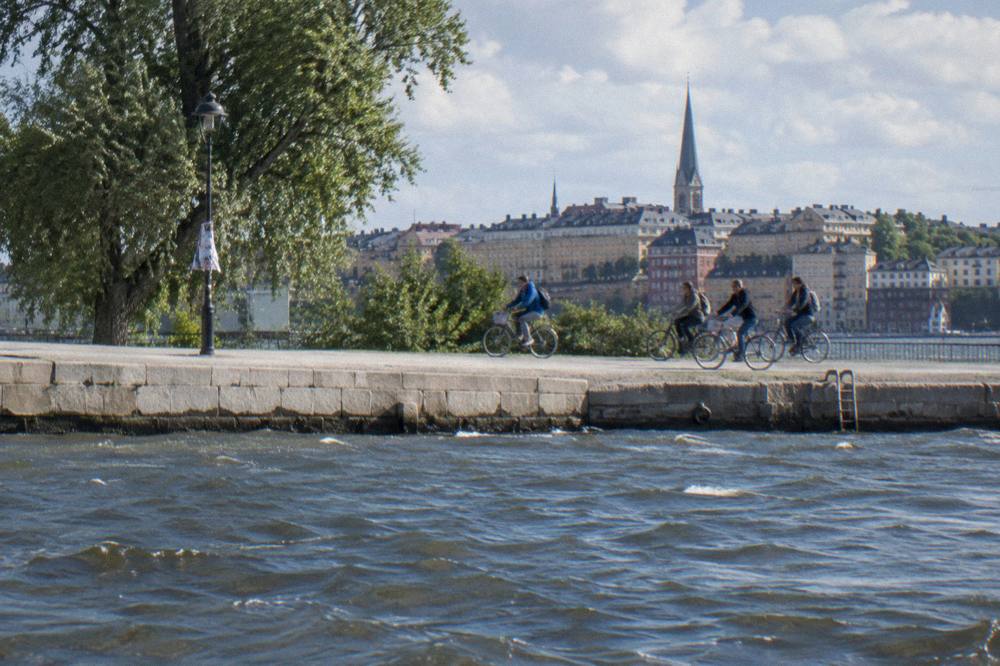
The guided case comes in more flavours than most visitors expect. Shared city rides in the 2 to 3 hour range cover the orientation job. The premium-bike city tour runs 3 hours on higher-spec machines. The e-bike city tour covers the same genre with pedal assist. And at the private end, a 3-hour private guided bike tour buys you a guide and a route shaped around your interests rather than a fixed itinerary, which families and riders with specific interests tend to prefer; our private bike tours guide compares the formats.
Whichever way you lean, the underlying verdict on the city itself stands on the numbers rather than on enthusiasm: about 1,170 km of routes, winter-swept lanes, bikes carried free on the ferries, and a rules regime that rewards a bell, lights after dark, and walking pace in the old town. Bring those three habits and Stockholm answers the bike-friendly question with a plain yes. If you would rather test that verdict with a guide holding the map, the three formats below are the natural starting points:
Common Questions About Whether Stockholm Is Bike Friendly
Is Stockholm Bike Friendly?
In practical terms, yes. The city has about 1,170 km of cycle routes, maintains a large share of them through winter, allows bikes free on its commuter ferries, and enforces a short, learnable rulebook. The caveats are walking-pace rules in Gamla Stan, a comfortable April-to-October season, and ongoing bridge construction at Slussen and Sankt Eriksbron.
Do I Need A Helmet To Cycle In Stockholm?
Only riders under 15 must wear one by law. Adults ride legally without a helmet, though guided tours supply helmets with the bike, and wearing one is sensible in bridge traffic.
Can I Ride My Bike Through Gamla Stan?
Yes, but at walking pace on the inner pedestrian streets, giving way to everyone on foot. E-scooters are banned there except on Munkbroleden and Skeppsbron, and the quays are the rideable edges.
Is There Public Bike Share In Stockholm?
No docked public scheme exists; the old city scheme ended in 2018. Voi and Bolt were announced in December 2025 as operators of a paid shared e-bike service, but shared bikes are not free.
What Is The Best Month For Cycling In Stockholm?
By the SMHI 1991 to 2020 normals, June through August offer the warmest highs, 20.8 to 23.6 C, and the longest days, up to 18.5 hours of daylight. May and September are comfortable, drier-shoulder alternatives.
Can I Take A Bike On The Djurgården Ferry?
Yes, subject to space and staff judgement, at no extra charge for a regular bike. E-bikes ride on deck, and if deck space is short you remove the battery and use the deck container.