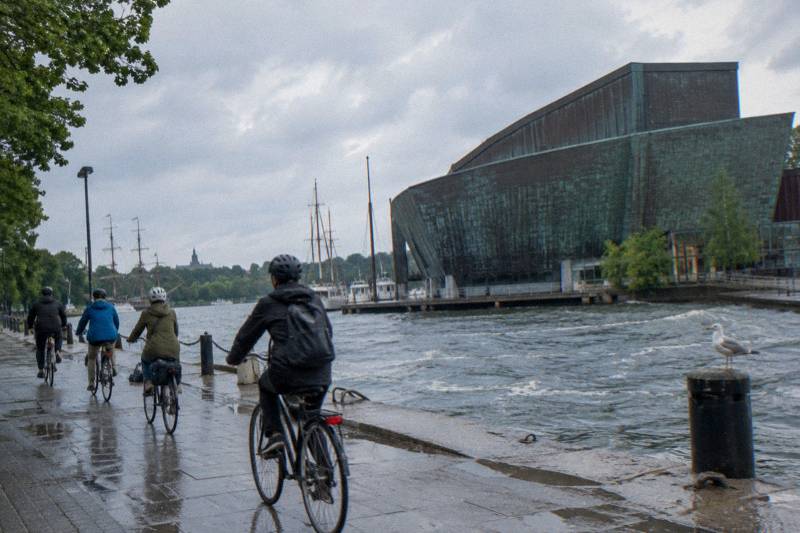
Stockholm Hop-On Hop-Off Or A Bike Tour?
Stockholm's hop-on hop-off loops and its guided bike rides solve the same first-day problem in opposite ways: one keeps you above the water on fixed routes, the other puts you on the cycle paths between the islands.
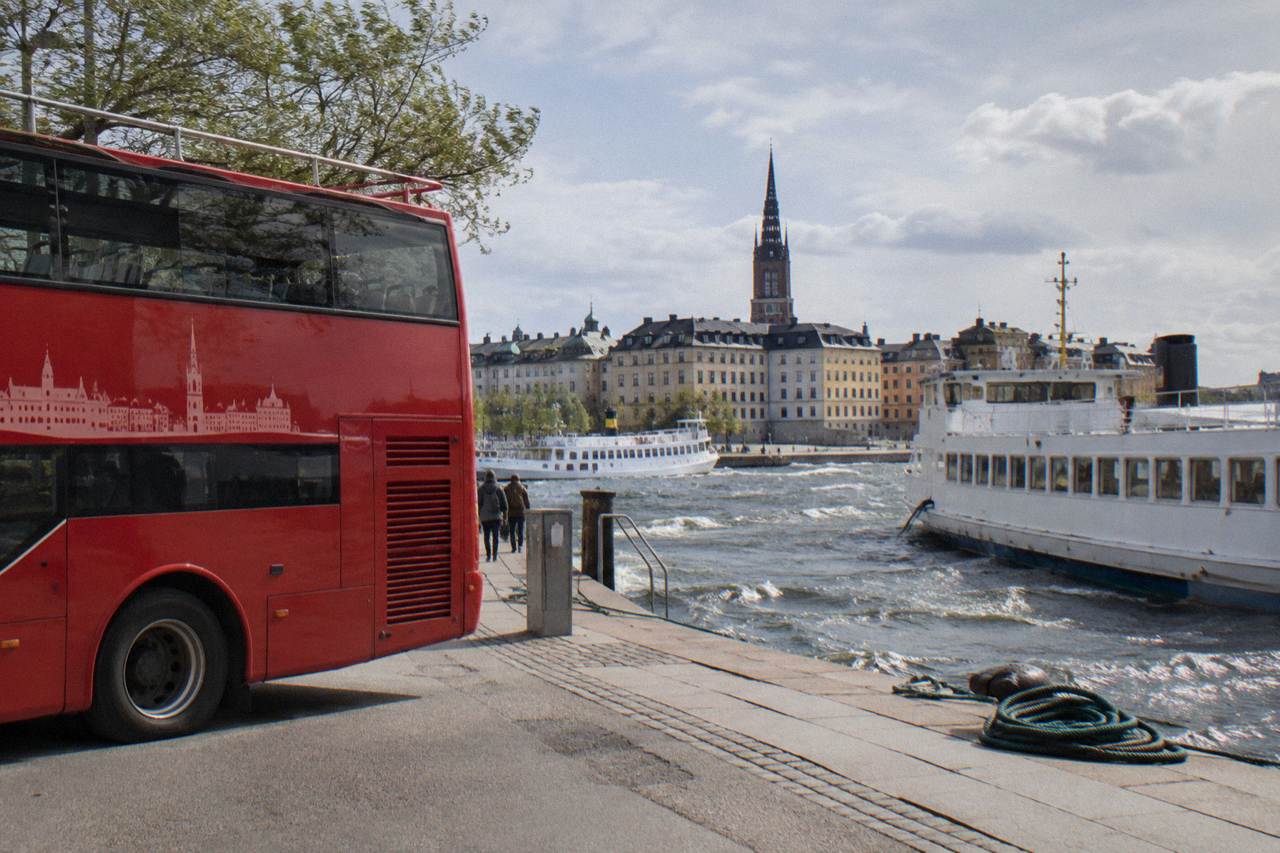
Short answer
A hop-on hop-off ticket gives fixed bus and boat loops with commentary and reboarding freedom; a guided bike ride gives a set route too, but on two wheels, roughly 2 to 3 hours long, with a guide and a bike included. Neither is verified cheaper: bus loop pricing sits with the operator, while bike tour prices are on each booking page.
Stockholm splits its sightseeing into islands, which is exactly why two very different products compete for a first-time visitor's day. The hop-on hop-off format, a bus loop with optional boat loop, sells convenience: sit down, listen, get off when something interests you, get back on later. The guided bike tour sells coverage: a guide, a bike and a set route that stitches Gamla Stan, Södermalm and Djurgården into a single ride of roughly two to three hours. If the two-wheeled option is calling you, our guide to where Stockholm's bike lanes actually run shows which districts make cycling easiest before you commit to a set route.
Neither format is objectively better, and honest comparison means admitting where each one wins. This guide lays out what each product actually delivers in Stockholm, how their costs and inclusions differ, and which questions to ask before booking either. Where a hop-on hop-off detail is not verified, this page says so plainly rather than guessing, and every bike tour fact comes from the operators' own listing details.
What Does A Hop-On Hop-Off Ticket Actually Give You In Stockholm?
A Stockholm hop-on hop-off ticket gives you a seat on a fixed loop with recorded or live commentary, plus the right to get off at any named stop and board a later departure, and many passes add a boat loop too. It is transport with commentary rather than a guided tour, since nobody walks you off the vehicle, so check the operator for prices, routes and season.
The format's strength is low effort. You board near a central stop, the loop passes the major sights, and you control the pace by choosing when to hop off. For travellers who arrive on a cruise ship, or who want a first-day orientation before deciding what deserves a full visit, that skim-and-return logic works well. The weakness is the mirror image: the loop only goes where the loop goes, stops sit on road corridors rather than inside the old town's car-free lanes, and time at each stop is entirely your own problem, with the next departure's spacing set by the operator's timetable.
Hop-on hop-off prices, routes and timetables are set by each operator, Check them on the live listing before you buy. It is compared against the bike tours on listed facts only: durations, inclusions and price basis. Before buying, ask the operator three questions: does the ticket bundle bus and boat, when does the season start and end, and how frequent are departures at the stop nearest your hotel.
The bike tour format flips the effort equation. A guided ride such as the Stockholm: Guided Bike Tour, listed at 2 to 3 hours, puts a guide in front of the group, a bike and helmet underneath each rider, and a route that deliberately uses the city's cycle paths rather than the bus corridors. Stockholm has roughly 1,170 km of cycleways, per the city's own cycling pages, and a guided ride spends its whole time on that network instead of watching it pass through a window. If you're still picking dates, the guide to the best time of year to visit Sweden matches each season's weather to the kind of ride you'll get.

| Feature | Hop-On Hop-Off Bus/Boat | Guided Bike Tour |
|---|---|---|
| What moves you | Bus loop, sometimes a boat loop on the same ticket | Bicycle on cycle paths, guide leading |
| Route | Fixed loop, road-based stops | Fixed route chosen by the operator |
| Commentary | Recorded or live, delivered on board | Live guide riding with the group |
| Time off the vehicle | Unlimited hops, at your own pacing | Short photo stops per the itinerary |
| Typical duration | Ticket validity period, often a day or more | 2 to 3 hours for most Stockholm rides |
| Price | Not verified: check the operator | On the booking page for each tour |
Which Format Shows A First-Time Visitor More Of Stockholm?
The bike tour shows a first-time visitor more of Stockholm: a 3 hour guided ride crosses districts a bus loop only drives past, reaching Gamla Stan's lanes, Djurgården's park roads, and Södermalm's viewpoints, and a live guide answers questions in a way no audio track does. The bus loop wins on comfort and orientation, but neither format includes museum entry, since both only show attractions from the outside. If the ride appeals but you would rather pedal without a guide, our rundown of Stockholm's bike lanes, hills and traffic explains what going solo involves.
Consider what each format physically touches. Buses work on roads, and the historic cores of Swedish cities were not built for them. In Gamla stan, the inner streets are pedestrian streets where cycles must travel at walking pace and yield to pedestrians, per the city's traffic rules for the district, so a bus loop skirts the old town on the quayside rather than threading it. A bike tour rides in, at the pace the rules require, then rides out. The trade is real: a bus passenger never worries about tram tracks or a hill, while a cyclist earns the viewpoints.
Djurgården is the clearest case study. The island's museum cluster, green spaces and waterfront paths make it Stockholm's big sightseeing day out, and bikes are a natural fit there: no e-scooter restrictions are listed for the island, and bicycles are the recommended way to explore it. A bike tour that routes through Djurgården gives you the park itself, not just its gates. The depth comparison matters too. The walking tour or bike tour question many visitors also weigh runs parallel here: commentary quality on a live, small-format ride tends to beat recorded audio, because you can ask follow-up questions for the full two to three hours.
There is also a genuine middle path worth naming: take the loop on day one for orientation, then a guided ride on day two once you know which islands you want to understand. Travellers with only a single day should read the one-day bike and ferry plan instead, because a tight schedule rewards one format chosen decisively over two bought cautiously.
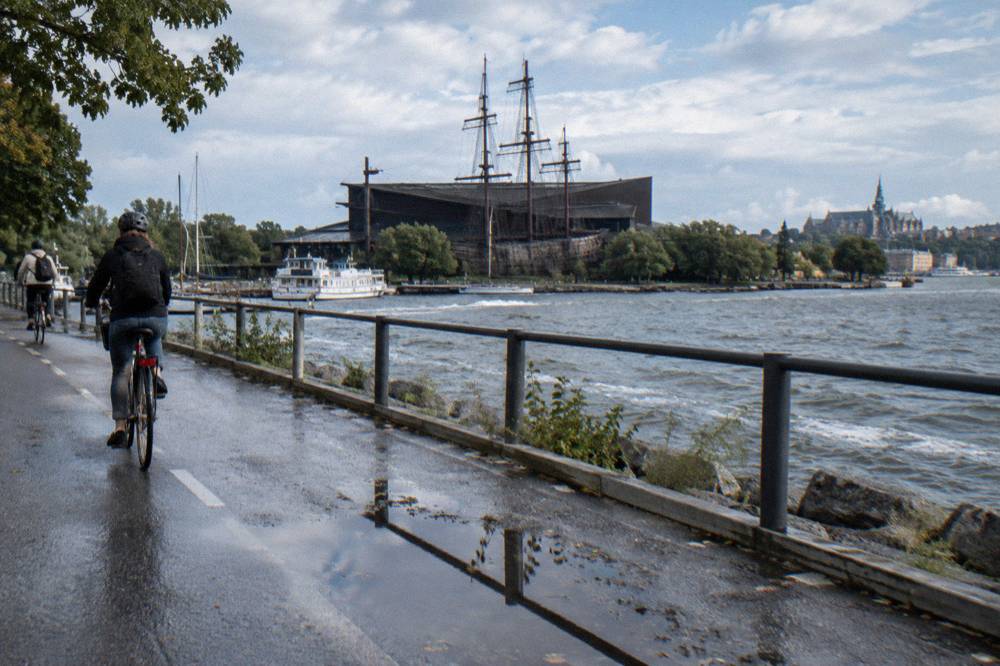
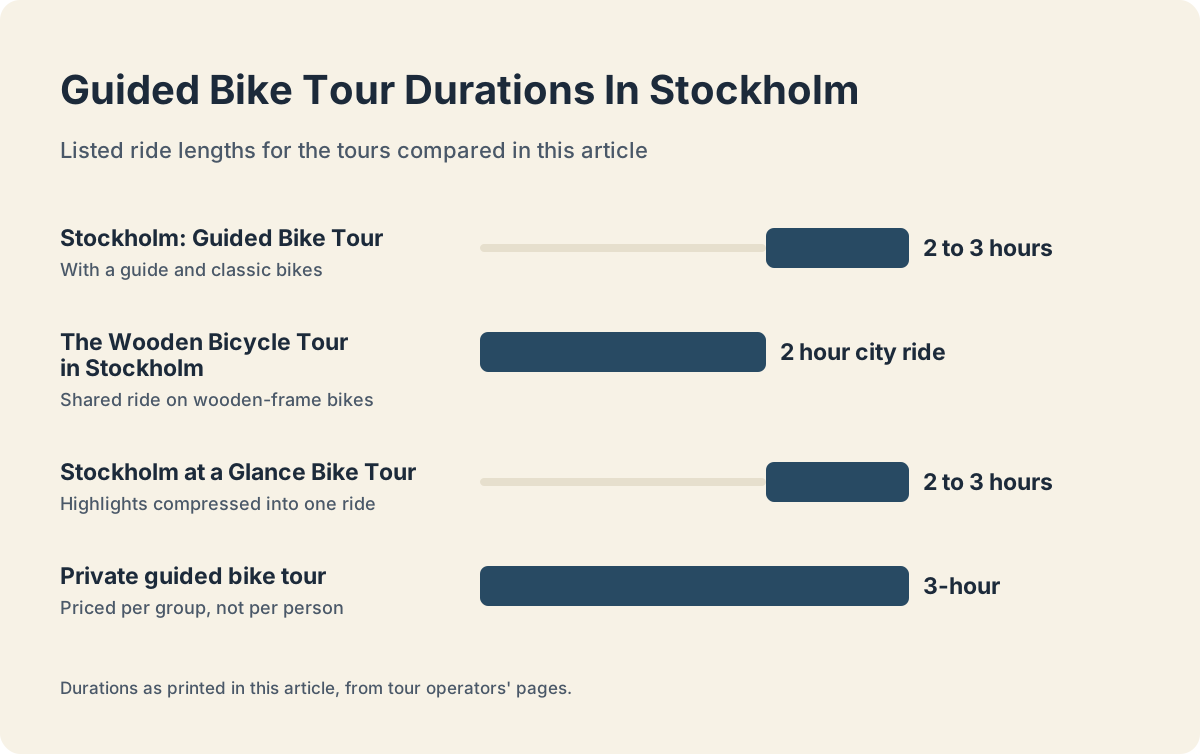
For sightseeing depth, three guided rides bracket the choice. The Stockholm: Guided Bike Tour runs 2 to 3 hours with a guide and classic bikes; The Wooden Bicycle Tour in Stockholm does a 2 hour city ride on wooden-frame bikes, a quirk that becomes a conversation starter at every stop; and the Stockholm at a Glance Bike Tour compresses the highlights into 2 to 3 hours. Each links the islands by cycle path, which is the single thing a bus loop cannot copy.
How Do The Costs And Inclusions Compare?
Hop-on hop-off pricing for Stockholm is not verified, since the price, boat bundling, and validity period sit with the operator, so ask before you buy. Guided bike tours list prices on the booking page, so compare inclusions and durations: guided rides include a bike and helmet, while a bus ticket covers transport and commentary only, and some options price per person while private options price per group.
Start with what you hold in your hand when each ticket starts. On a guided bike tour, that is a bicycle, and on the listings that state it, a helmet too, plus a guide for the full listed duration. On a bus loop, that is a seat and a timetable. If you would otherwise rent a bike separately to explore, the tour's included bike is doing double duty as transport and equipment, and the same logic applies in reverse: if you would otherwise ride public ferries and buses all day, the loop's transport value rises.
The private-versus-shared distinction matters more than most visitors expect. A shared ride such as the Stockholm at a Glance Bike Tour prices per person, while private products, like the 3-hour private guided bike tour in the roster, price per group, which changes the arithmetic completely for families of four or five. Neither basis is cheaper in the abstract; the right question is which basis matches your party size. The how-much-does-a-tour-cost breakdown on this site covers the full price landscape for the guided side, and the hop-on hop-off side needs one email or one look at the operator's own page.
Inclusions worth checking before any booking, on either format:
| Question to ask | Bike tour answer on the listings | Hop-on hop-off answer |
|---|---|---|
| Is equipment included? | Bike included; helmet per the listing flags | Not applicable |
| Is entry to attractions included? | No, museums are separate | No, museums are separate |
| Is food or drink included? | Only on products that name it, such as the forest tour with lunch | Not typically |
| Is a boat leg included? | Not on the city rides | Commonly the boat loop or a ferry option |
| Cancellation terms | Stated on the booking page | Stated by the operator |
How Does Each Format Handle Djurgården?
Djurgården is where the two formats diverge hardest: the bus loop stops at the island's gates and museum forecourts, while a guided bike tour rides its park roads and waterfront paths, and the Slussen ferry carries bikes free subject to space, so riders can hop between Södermalm and Djurgården by water. Neither format includes the museums, so budget Skansen and the Vasa Museum separately and verify entry prices before quoting them.
The island's traffic rules tilt the comparison further. Between late April and late September, the Djurgårdsbommen and Vasabommen barriers close parts of Djurgården to most vehicles on a seasonal schedule, with exceptions for buses, taxis and permit holders, per the Royal Djurgården information page. A guided bike ride is unaffected by a vehicle barrier, which is the whole point of one. A bus loop, meanwhile, either runs as a permitted service or reroutes, and that detail sits with the operator, not with anything a visitor controls.
The water side is a quiet advantage for riders. The Djurgården ferry is a regular SL commuter boat, and bikes are carried on the commuter boats with no extra charge for a standard bike, always subject to space, with staff judging what fits. That means a bike-based day can arrive on Djurgården by ferry and leave by bridge, or vice versa, folding a genuine boat leg into a cycling day without buying a sightseeing-cruise ticket. Whether a specific guided tour routes this way is on its itinerary, so check the booking page for the route description; the island has its own Djurgården by bike guide if you would rather ride it independently.
Museums on the island are not free and not included in either format, and this page deliberately prints no entry price for them. What is free on Djurgården is the island itself: the royal park, the waterfront paths and the walk between museums cost nothing, and a bike is the fastest free way to move between them. New on the island this autumn, the Vasa Museum launched its "Vasa Walk" audio experience on 29 October 2026, starting outside the museum, crossing Djurgården and ending on Beckholmen, and ABBA The Museum opened a "Dancing Queen" exhibition for the band's 50th anniversary, open year-round.
What About Södermalm And The Archipelago?
Södermalm suits both formats: the bike tour reaches its viewpoints and back streets, while a bus loop covers its main corridors. The Stockholm archipelago suits neither, because bus loops stay in the city and the guided rides here are city or forest products, so islands mean a different product class, self-guided cycling holidays running on fixed May-to-September seasons.
Södermalm's recent infrastructure makes the district better to ride every year. A "green wave" for cyclists now runs on Hornsgatan and Långholmsgatan sections, timed so a cyclist holding about 20 km/h during the listed hours meets green lights, and a new cycle superhighway concept opened its first signed line from Hässelby toward the city centre in May 2026. A guide who rides these corridors weekly knows where the comfortable lanes are; a bus passenger experiences none of it, and a hop-off visitor has to rediscover it alone.
The archipelago needs a different calendar. Self-guided archipelago cycling packages run in fixed seasons, mid-May to mid-September, with daily departures, and one listed package covers roughly 220 km over five riding days using ferries between islands. Those numbers come from the tour operators' own pages, and none of the city bike tours on this site's pages attempt anything similar, which is the useful thing to know: a 2 to 3 hour guided ride is a city product, priced and scheduled like one. The archipelago cycling guide handles the island question properly.
For visitors who want water inside a city day instead, the commuter ferries do the job. Beyond the Djurgården ferry, Waxholmsbolaget boats allow one regular bike per person at no extra charge subject to space, with cargo bikes, tandems and bulky bikes charged 120 kr as goods, and staff making the final call. That is a planning range, not a promise: check the specific departure. And on all SL boats and rail, the standing rules apply, so read the cycling rules page before mixing bikes and transit.
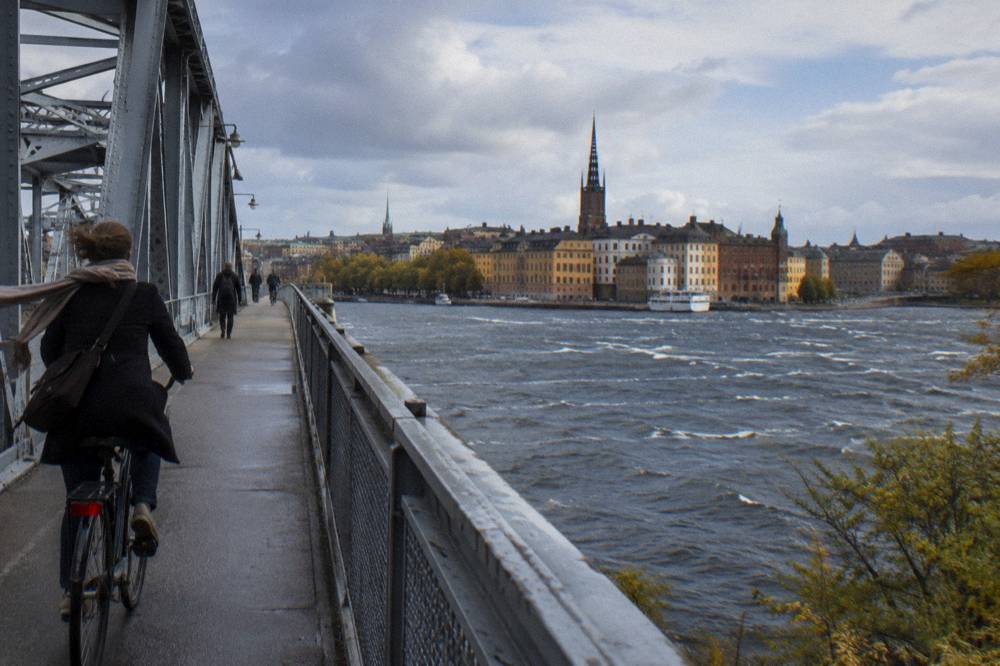
If your priority is the city's character rather than its distance, The Wooden Bicycle Tour in Stockholm is the format's most distinctive expression: 2 hours, shared, on wooden-frame bicycles, through the central islands. It will not carry you to the archipelago, and it does not try to, but as a contrast with a window-seat loop it is about as far from a bus as two wheels can get.
How Do Weather And Seasons Affect The Choice?
Weather matters far more for bike tours than for hop-on hop-off buses: buses shelter you inside or on an open deck year-round, while Stockholm's cycling season generally runs April to October, though maintained, salted paths make winter riding possible, and with July averaging 23.6 C highs against January's 1.0 C, plus June's roughly 18.5 daylight hours versus 7.0 in January, summer gives cyclists the clear edge.
The city sweeps and salts a large share of its cycle network through winter to keep commuter routes rideable, and cycling is promoted year-round with the right gear and tires, so a winter bike tour is not fantasy. Guided winter e-bike rides operate in Stockholm with studded tires and provided gear, per operators' own listings. The hop-on hop-off side runs its own season, typically curtailed in deep winter, and only the operator can confirm dates, so if you are travelling in November through March, ask both sides what actually operates before planning around either.
Daylight is the quieter constraint. Stockholm's normals give June about 18.5 daylight hours per day and December 6.2, which means a 3 hour afternoon ride in midsummer barely dents the day, while the same ride in December starts and ends in darkness. Lights and reflectors are legally required when riding in darkness, and a bell and working brakes at all times; a reputable tour operator handles that equipment question, but it is a fair thing to confirm on the booking page. The month-by-month detail, including what to wear, sits in the best time of year to cycle guide.
| Month | Avg high C | Avg low C | Daylight hours | Riding feel |
|---|---|---|---|---|
| January | 1.0 | -2.9 | 7.0 | Cold, short days, salted routes |
| April | 10.7 | 2.6 | 14.5 | Season opening, dry-ish |
| July | 23.6 | 14.8 | 17.7 | Warmest, longest, busiest |
| September | 16.6 | 10.2 | 12.8 | Comfortable, quietening |
| November | 5.4 | 1.9 | 7.7 | Dark and damp, winter tours |
Rain deserves a mention without drama: the normals show August as the wettest month at 66.2 mm and February through April as the driest at 27 to 29 mm. A bus loop shrugs off rain by design; a guided ride in rain is still a ride, and this site's rain-day guidance covers what to expect and what operators do about it.
Which Format Suits Families, Cruise Visitors And Short Stays?
Cruise visitors on a single port day often default to the bus loop for predictability, but a 2 to 3 hour guided ride fits the same port window while covering more, and several guided listings are shared small-group rides rather than mass products. Hop-on hop-off boats require no cycling ability at all, and since Swedish law makes helmets mandatory for riders under 15, check that your listing includes them where stated.
The legal point for families is unambiguous: everyone under 15 must wear a helmet when cycling in Sweden, and an adult carrying a helmet-less child can face a 500 kr fine, in Swedish kronor, from the police. Tour operators in Stockholm know this and provide children's helmets where the listing states helmets are included, but confirm the child-equipment question on the booking page before assuming it. Beyond the law, family suitability is a route question: a ride mixing parks and waterfront paths suits children far better than one threading busy corridors, and the family and kids bike tours guide breaks that down by product.
Cruise visitors face a real constraint the marketing rarely names: port time. A bus loop absorbs whatever fragmented hours you have, because you can join and leave at any stop. A guided bike tour needs you present at a stated meeting point at a stated time, and the listings that name a meeting point show it on the booking page; where a listing names none, ask the operator directly rather than guessing. If your ship docks at 09:00 and sails at 17:00, both formats can work; with four hours ashore, a 2-hour ride near the port is the most a bike day can hold.
Short-stay visitors, one or two nights, should pick the format that matches their single biggest priority. If it is orientation and low effort, the loop; if it is understanding the city and covering the islands in one move, the ride. Travellers torn between riding alone and joining a group can settle it with the rental versus guided ride comparison, and anyone curious whether the electric option changes the calculus should read the e-bike versus classic bike guide, since the e-bike city tour in the roster is the same 2 hours 30 minutes format with pedal assist.
For the short-stay case specifically, the Stockholm at a Glance Bike Tour earns its name: 2 to 3 hours, shared, classic bikes, and a route built to hand a first-time visitor the city's outline in one ride. It is the closest thing in the guided column to what a bus loop promises, an overview, delivered at handlebar height instead of window height.
And if the deciding worry is legs rather than time, the Stockholm E-Bike City Tour runs the same idea at 2 hours 30 minutes with pedal assistance, which flattens both Södermalm's climbs and the objection that a bike day is a tiring day. Swedish law classifies pedal-assist e-bikes up to 25 km/h and 250 W as ordinary bicycles, so it rides the same paths under the same rules.
Making The Final Call Between The Two
Pick the hop-on hop-off loop if you value passive comfort, have fragmented time or face mobility constraints; pick the guided bike tour if you want coverage, live commentary and real access to the car-free districts. The choice is not exclusive: many visitors orient with the loop on day one and go deeper with a 2 to 3 hour ride on day two.
Pick the format that fits your day: Stockholm Bike Tours compares these formats to match a format to your plans, not to crown a single winner. The bus loop is a low-effort, weather-proof orientation tool with unverified pricing that sits with its operator. The guided ride, whether the featured 2 to 3 hour Stockholm: Guided Bike Tour, the 2 hour wooden-bike twist or the at-a-glance overview, is a structured 2 to 3 hour experience with a bike and a guide included, priced on the booking page, crossing districts on a network of roughly 1,170 km of cycleways that a bus can never use.
Two practical closing notes apply to whichever you book. Cycling rules in Stockholm are simple and worth two minutes of reading: keep to cycle paths where they exist, ride at walking pace on pedestrian streets, and use lights in darkness. And if you buy the bus-and-boat pass, the commuter ferries remain open to you anyway, since regular SL boats carry standard bikes at no extra charge subject to space, so a hybrid day, loop in the morning, borrowed wheels in the afternoon, is always on the table.
Common Questions About Stockholm Hop-On Hop-Off Or A Bike Tour
Is A Hop-On Hop-Off Bus Or A Bike Tour Better For A First Visit To Stockholm?
For pure low-effort orientation, the bus loop; for coverage of Gamla stan, Södermalm and Djurgården in one structured outing, the guided bike tour. The loop keeps you on road corridors with commentary, while a 2 to 3 hour guided ride uses the cycle network, includes a bike and helmet where the listing states it, and lets you question a live guide throughout.
Is A Hop-On Hop-Off Ticket Cheaper Than A Bike Tour In Stockholm?
There is no verified Stockholm hop-on hop-off price to compare against, so check the operator for its own price, validity period and whether the boat loop is bundled. Guided bike tour prices sit on each booking page, and the fair comparison is inclusions: a bike and, where stated, a helmet are included on the rides, while the bus ticket covers transport and commentary only.
Can A Hop-On Hop-Off Bus Reach Gamla Stan And Djurgården?
A bus serves stops on the edges of both: Gamla stan's inner streets are pedestrian streets where vehicles and cycles move at walking pace, so buses use the surrounding quays, and parts of Djurgården close to most vehicles on a seasonal barrier schedule from late April to late September. A bike tour rides through both at the pace the rules allow.
How Long Does A Stockholm Bike Tour Take Compared With A Hop-On Hop-Off Ticket?
Most Stockholm guided bike rides run 2 to 3 hours, including the featured Stockholm: Guided Bike Tour at 2 to 3 hours, the 2 hour Wooden Bicycle Tour and the 2 to 3 hour at-a-glance ride. A hop-on hop-off ticket is typically valid for a set period, often a day or more, with your own pacing between departures.
Do Children Need Helmets On A Stockholm Bike Tour?
Yes, under Swedish law everyone under 15 must wear a helmet when cycling, and an adult carrying a child without one can be fined. Tour listings that include helmets cover this, but confirm child-size equipment on the booking page before booking.
Can I Combine A Hop-On Hop-Off Ticket With Cycling In Stockholm?
Yes, and many visitors do exactly that: the loop on day one for orientation, a guided ride on day two. Public ferries also carry standard bikes at no extra charge subject to space, and shared e-bikes from Voi and Bolt operate in the city, though they are paid rentals, never free.